
Set among Malvasia vineyards on the volcanic island of Salina, Capofaro is a Relais & Châteaux property where the kitchen's emphasis on terroir-driven cooking connects directly to the island's agricultural identity. Under Chef Nicolas Rondelli, the restaurant translates Aeolian pantry ingredients into a format that sits outside mainstream Sicilian dining. Google reviewers rate it 4.5 from 199 reviews.
 Discover on Pearl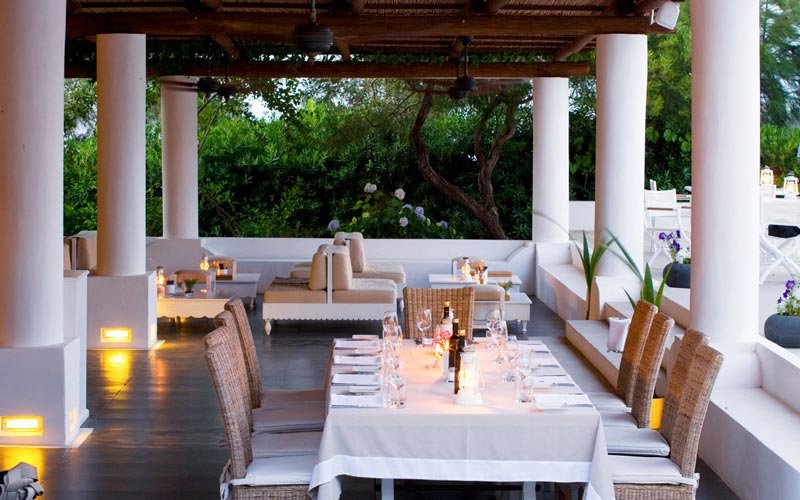
Salina's Volcanic Pantry and the Cooking That Comes From It
Arriving at Salina by hydrofoil from Milazzo or the other Aeolian islands, the shift in register is immediate. The island is quieter than Lipari, greener than Stromboli, and less developed than its neighbours. The road to Malfa climbs through terraced Malvasia vines and caper bushes that grow directly out of volcanic rock. This is not incidental scenery. It is the agricultural system that defines what ends up on the plate at Capofaro, a Relais & Châteaux property positioned at the edge of a working vineyard above the Tyrrhenian Sea. The lighthouse that gives the property its name marks the point: you are at the far edge of Italy, and the cooking here reflects that geography more than it does any mainland tradition.
Aeolian Cooking as Its Own Regional Register
Sicilian cuisine is often discussed as a single tradition, but that flattens considerable internal variation. The island's western provinces draw on Arab and Norman influences — couscous in Trapani, the sweet-sour agrodolce architecture of Palermo street food. The southeast works with ragusano cheese and carob. The Aeolian archipelago operates by a different logic entirely. Distance from the mainland and limited arable land have historically made the Aeolian table austere and specific: capers cured in sea salt, sun-dried tomatoes concentrated by summer heat, Malvasia grapes that produce both a passito dessert wine and a dry table wine that matches the salinity of the surrounding sea. This is a pantry shaped by insularity, and it produces flavours that bear little resemblance to the tomato-and-basil shorthand that gets called "Sicilian" in most international contexts.
The shortlist, unlocked.
Hard-to-book tables, cellar releases, and concierge-planned trips.
Get Exclusive Access →Capofaro's kitchen, led by Chef Nicolas Rondelli, works within this Aeolian register. The Relais & Châteaux designation — the property holds that affiliation , signals a commitment to place-specific hospitality that goes beyond décor. The award highlight listed for Capofaro is direct: Expression of the Terroir. That framing is not a marketing phrase here; it describes a culinary approach where the vineyard, the caper fields, and the sea are the primary ingredients, and the chef's role is to translate them faithfully rather than impose a separate technical vocabulary. This positions Capofaro in a different conversation from, say, the creative Italian cooking at Le Calandre in Rubano or the progressive ambition at Osteria Francescana in Modena, both of which treat Italian tradition as a starting point for invention rather than the endpoint itself.
The Setting as Part of the Meal
The physical context at Capofaro is inseparable from the dining experience in a way that is rarely true of urban restaurants. Tables sit among or overlook the Malvasia vines; the lighthouse is visible from the terrace; the sea below is the same sea that supplies the kitchen's fish. This kind of integration between landscape and table has become a studied effect at many luxury properties , staged to look inevitable. At Capofaro, it reads as structural rather than decorative, because the vineyard is productive and the caper plants are harvested. The property grows ingredients and produces wine. The meal arrives with a traceable local supply chain that is short enough to verify by looking out from the table.
Italy has a handful of properties that manage this kind of genuine agricultural embeddedness at a premium level. Atelier Moessmer Norbert Niederkofler in Brunico has built a reputation on Alpine ingredient sourcing as a philosophical foundation. Reale in Castel di Sangro draws on Abruzzo's mountain products as its primary creative material. Capofaro's equivalent reference points are oceanic and volcanic rather than alpine or landlocked, which gives its version of terroir-driven cooking a flavour profile with very few domestic comparators.
Where Capofaro Sits in the Italian Fine Dining Map
Italy's premium restaurant tier is largely concentrated on the mainland and in a handful of well-established fine dining corridors: Piedmont, Emilia-Romagna, Lombardy, coastal Campania. The south and the islands are represented more thinly at the upper end. Quattro Passi in Marina del Cantone makes the case for coastal southern Italian cooking at a serious level. Uliassi in Senigallia demonstrates what Adriatic seafood cooking looks like when treated with ambition. Capofaro is the Aeolian point on that map: geographically remote, seasonally constrained, and drawing on a pantry that few chefs anywhere have the proximity to use.
For readers already familiar with Italy's broader fine dining scene , the three-Michelin-star registers of Enoteca Pinchiorri in Florence, Dal Pescatore in Runate, or Piazza Duomo in Alba , Capofaro offers a deliberately different proposition. The emphasis is not on technical elaboration or the orchestration of a long tasting menu in a formal setting. It is on eating in a place where the ingredients have a geographic address you can see from your table. That is a rarer offer than it sounds, even at premium price points. The Google rating of 4.5 across 199 reviews, while a modest sample for a property of this standing, reflects consistent satisfaction from a guest base that has made a significant logistical commitment to reach Salina in the first place.
On the Island: Context and Comparisons
Malfa is the quieter end of Salina relative to Santa Marina. The village has a handful of places to eat, but the dining options narrow sharply above a certain level of ambition. Signum, also in Malfa, operates as the other serious address for modern Sicilian cooking on the island. Between Capofaro and Signum, visitors to Salina have two distinct approaches to the same Aeolian pantry: one anchored in a hotel-and-vineyard context, the other in a family-run property with its own Michelin recognition. Travelling to Salina for food alone is defensible on the basis of these two kitchens.
For a broader view of what the island offers, our full Malfa restaurants guide covers the dining options across categories and price points. Our Malfa hotels guide covers accommodation for those planning to stay, and our Malfa bars guide, wineries guide, and experiences guide round out the picture for a longer visit.
Getting There and Planning a Visit
Salina is accessible by hydrofoil from Milazzo on the Sicilian coast, with journey times of around 90 minutes, or by connections from the other Aeolian islands. Capofaro is a seasonal property by the nature of its island setting; visiting outside the peak summer window can mean a quieter experience but may reduce what the kitchen has available. The property operates as a hotel as well as a restaurant, which means the most direct approach is to book accommodation and dining together. Reservations and inquiries go through capofaro@relaischateaux.com or by calling +39 090 984 4330; the website is at capofaro.it. The Relais & Châteaux affiliation also allows booking through that network's central system, which some travellers find more convenient when planning a multi-property itinerary through Italy.
Italian cooking at this level of geographic specificity travels poorly in one direction: the dishes exist because the ingredients are there. That is the case for the Aeolian kitchen as much as for the Alto Adige cooking explored at Enrico Bartolini in Milan or the Japanese-Italian dialogue at cenci in Kyoto. Capofaro is the version of that argument made from a volcanic island in the Tyrrhenian Sea, with a lighthouse at the edge of the property and capers growing in the rocks below.
What to Eat at Capofaro
Capofaro's menu is built around the Aeolian pantry: cured capers from the island's own fields, Malvasia-based preparations, locally caught fish, and the concentrated flavours that come from sun-drying and preserving in the island tradition. Chef Nicolas Rondelli's approach, recognised specifically for its expression of terroir, focuses on translating those ingredients into a format appropriate to a Relais & Châteaux dining room without stripping out the rougher, more mineral qualities that make Aeolian cooking distinctive. Specific dishes change with the season and the catch, and the full current menu is leading confirmed directly with the property before visiting.
Quick Comparison
A fast peer set for context, pulled from similar venues in our database.
| Venue | Cuisine | Price | Awards | Notes |
|---|---|---|---|---|
| Capofaro | Italian | HIGHLIGHTS: • EXPRESSION OF THE TERROIR DIRECTIONS & ACCESS: Website and co… | This venue | |
| Atelier Moessmer Norbert Niederkofler | Italian, Creative | €€€€ | Michelin 3 Star | Italian, Creative, €€€€ |
| Dal Pescatore | Italian, Italian Contemporary | €€€€ | Michelin 3 Star | Italian, Italian Contemporary, €€€€ |
| Enoteca Pinchiorri | Italian - French, Italian Contemporary | €€€€ | Michelin 3 Star | Italian - French, Italian Contemporary, €€€€ |
| Enrico Bartolini | Creative | €€€€ | Michelin 3 Star | Creative, €€€€ |
| Osteria Francescana | Progressive Italian, Creative | €€€€ | Michelin 3 Star | Progressive Italian, Creative, €€€€ |
Need a table?
Our members enjoy priority alerts and concierge-led booking support for the world's most difficult tables.
Get Exclusive AccessThe shortlist, unlocked.
Hard-to-book tables, cellar releases, and concierge-planned trips.
Get Exclusive Access →