Cameo
Our verdict
Cameo sits within Beverly Hills' mid-to-upper dining tier, where California's ingredient-driven tradition meets precision technique drawn from broader American and European kitchens. The restaurant occupies a city where competition for the discerning dinner reservation is intense, placing it alongside stalwarts like Spago and CUT while carving its own position in the local scene. Check the venue directly for current hours, pricing, and seasonal availability.

Pearl is the En Primeur Club membership app, where members save venues, book tables and use the concierge.
The menu
What to order
- Lomo Saltado
- Cebiche
- Smoked yellowtail crudo
Beverly Hills at the Table: Where California Product Meets Imported Precision
The stretch of Beverly Hills that draws serious diners operates on a different rhythm than the rest of Los Angeles. This is a district where the expectation at any given dinner is high and the competition among restaurants is correspondingly intense. Within that context, Cameo occupies a position that reflects one of the defining tensions in California fine dining: how much of the plate should owe itself to local provenance, and how much to technique imported from elsewhere? It is a question that has shaped the city's restaurant identity for decades, and venues that answer it with clarity tend to be the ones that build lasting reputations.
Beverly Hills sits at the convergence of California's extraordinary agricultural output and a cosmopolitan dining population that has eaten at Le Bernardin in New York City, Alinea in Chicago, and The French Laundry in Napa. The audience knows the reference points, which means restaurants here are implicitly measured against national and international peers, not just local ones. That pressure tends to sort venues quickly: those that lean on provenance alone without technical discipline, and those that apply serious method to serious product.
The California Ingredient Argument
No American state makes the case for local ingredients more forcefully than California, and no part of California makes the case more expensively than the strip running from West Hollywood through Beverly Hills to Bel Air. The produce arriving from the Central Valley and coastal farms, the seafood from the Pacific, the lamb and beef from ranches a few hours north, these are not selling points unique to any single restaurant. They are the baseline. What separates kitchens in this district is how those ingredients are treated once they arrive.
The broader American fine dining movement has moved decisively toward what might be called technique-as-frame: the kitchen's job is to apply rigorous method (whether French classical, Japanese precision, or contemporary fermentation and preservation) to create a canvas that foregrounds local product rather than obscuring it. Kitchens at venues like Single Thread Farm in Healdsburg and Blue Hill at Stone Barns in Tarrytown have made that philosophy central to their identity. In Beverly Hills, the same dialogue plays out at a different register, one shaped by the expectations of a clientele accustomed to both Hollywood expense accounts and serious personal engagement with food.
Cameo sits within this broader shift. For current menu composition, seasonal focus, and pricing, the venue's own channels are the definitive source, as the kitchen's offering will reflect what is available and what the team is currently interested in doing with it.
The Competitive Set in Beverly Hills
Understanding where Cameo fits requires understanding the tier structure of Beverly Hills dining. At the top of the price bracket sit venues like CUT Beverly Hills, where the format is steakhouse at $$$$, and Spago Beverly Hills, where California Fusion built Wolfgang Puck's national reputation over decades. These are anchor references for the district, the places that define the ceiling and set the visual language of what a serious Beverly Hills dinner looks like.
Below that bracket, and in some cases operating with greater culinary ambition than the anchors, are restaurants that attract a more food-focused clientele rather than one primarily motivated by occasion or celebrity. Places like Baldi and Cipriani represent one strand: the European import, arriving with brand identity already established. 208 Rodeo, Cafe Amici, and Beverly Hills Grill represent another: the established local with a loyal following built over years. Cameo's position in this landscape rewards direct research, as the most current information on format, cuisine type, and price positioning comes from the venue itself.
For a fuller map of where Beverly Hills dining is currently concentrated and what each neighbourhood pocket within the city offers, the full Beverly Hills restaurants guide provides context across price tiers and cuisine categories.
Los Angeles as a National Reference Point
The broader Los Angeles dining conversation has shifted in recent years. The city now appears regularly in discussions alongside New York and Chicago as a driver of American culinary direction, not just a recipient of it. Venues like Providence in Los Angeles have earned Michelin recognition that places them in conversation with Addison in San Diego, Atomix in New York City, and The Inn at Little Washington in Washington as examples of American fine dining operating at full confidence. That national credibility filters into Beverly Hills and raises expectations for every restaurant in the district.
The international dimension matters too. Los Angeles has a meaningful Asian dining influence, and techniques from Japanese, Korean, and Chinese kitchens have moved from ethnic-specific venues into the broader fine dining conversation. 8 1/2 Otto e Mezzo Bombana (Hong Kong) in Hong Kong represents the kind of cross-cultural technical transfer that has become a reference point globally, and its influence on how Western restaurants engage with Asian precision is visible in kitchens across Los Angeles. Venues that bring this kind of technical cross-pollination to California product are the ones defining the next chapter of the region's dining identity.
Planning Your Visit
Beverly Hills restaurants at this tier typically require advance booking, particularly for Friday and Saturday evenings when demand from both local and hotel-based visitors peaks. Seasonal considerations apply: the autumn and spring months tend to draw the most concentrated dining traffic in the district, while summer months see a different rhythm driven by hotel guests and industry events. For Cameo specifically, booking method, hours, and any tasting menu format details should be confirmed directly with the venue, as these are subject to change and the venue's current channels will carry the most accurate information. For first-time visitors to the Beverly Hills dining scene, arriving with a clear sense of the tier structure, from the celebrity-anchor restaurants on the main strip to the more quietly ambitious rooms a block or two away, helps calibrate expectations and makes the choice of where to eat a more deliberate one. Cameo warrants direct investigation as part of that process, particularly for diners whose primary interest is in the technique-meets-local-ingredient conversation that is currently driving the most interesting cooking in this part of California. Restaurants like Lazy Bear in San Francisco and Emeril's in New Orleans demonstrate how regional identity and technical ambition can coexist productively, and Beverly Hills has its own version of that conversation playing out across multiple venues, Cameo among them.
Frequently asked questions
Is Cameo in Beverly Hills suitable for a business dinner?
Beverly Hills has a long-established reputation as the preferred setting for industry and business dining in the Los Angeles area, and Cameo's positioning within that district places it naturally in that conversation. A Beverly Hills address carries specific social weight for deal-making dinners that restaurants elsewhere in LA do not always replicate. Confirming the room's noise level and private dining options directly with the venue before booking for a business occasion is advisable.
What do people recommend at Cameo?
What is well-established about Beverly Hills dining at this tier is that California-sourced produce drives the menu, with kitchen decisions often rotating by season. Arrive open to the chef's current direction rather than seeking a fixed signature.
What's the best way to book Cameo?
Beverly Hills restaurants operating at this level typically require reservations made several weeks in advance, with Friday and Saturday evenings filling fastest. Checking the venue directly or through a concierge service at your hotel is the most reliable route.
What's the standout thing about Cameo?
Cameo operates in Beverly Hills, a district where dining expectations are set by venues like CUT and other nationally referenced rooms. Within that competitive set, a Beverly Hills address alone signals a calibre of sourcing, service, and room investment that restaurants elsewhere in Los Angeles do not always match.
What if I have allergies at Cameo?
At Beverly Hills restaurants operating at this price tier, the standard practice is to notify the reservation team at the time of booking rather than on arrival. That gives the kitchen time to adjust without compromising the flow of service for your table.
Does Cameo justify its prices?
Beverly Hills as a dining district commands some of the highest per-cover costs in California, reflecting real estate, ingredient provenance, and the service-to-staff ratios that formal rooms require. Whether the spend is proportionate depends partly on how you weight location and ambience against plate-level value.
When should I go to Cameo?
In Beverly Hills broadly, weeknight visits between Tuesday and Thursday offer shorter waits and a less compressed room, while weekend evenings carry higher demand from both local residents and hotel guests in the area. If flexibility exists, a midweek booking typically allows more attention from the front-of-house team.
City Peers
| Venue | Cuisine | Price | Awards | Notes |
|---|---|---|---|---|
| CameoThis venue (the venue you are viewing) | Peruvian-Japanese Nikkei | Not listed | Not listed | Not listed |
| CUT Beverly Hills | Premium Steakhouse | $200–300 | Michelin Plate · World's Best Steaks 50 Best #27 | Steakhouse |
| Spago Beverly Hills | California Fine Dining | $150–200 | La Liste Top Restaurants · Star Wine List | Not listed |
| Wally’s Wine & Spirits | American Wine Bar Fare | $100–150 | Wine Spectator Grand Award · World's Best Wine Lists Awards WBWL 3-Star | Not listed |
| La Scala 🇮🇹 | Classic Italian Trattoria | $50–100 | Not listed | Not listed |
| Genwa Korea BBQ | Korean BBQ | $50–100 | Not listed | Not listed |
Continue exploring
More in Beverly Hills
Restaurants in Beverly Hills
All restaurants in Beverly Hills →
Bars in Beverly Hills
All bars in Beverly Hills →
Hotels in Beverly Hills
All hotels in Beverly Hills →
Wineries in Beverly Hills
Browse all →
Details
- Modern
- Elegant
- Sophisticated
- Date Night
- Special Occasion
- Business Dinner
- Hotel Restaurant
- Craft Cocktails
- Skyline
- A La Carte
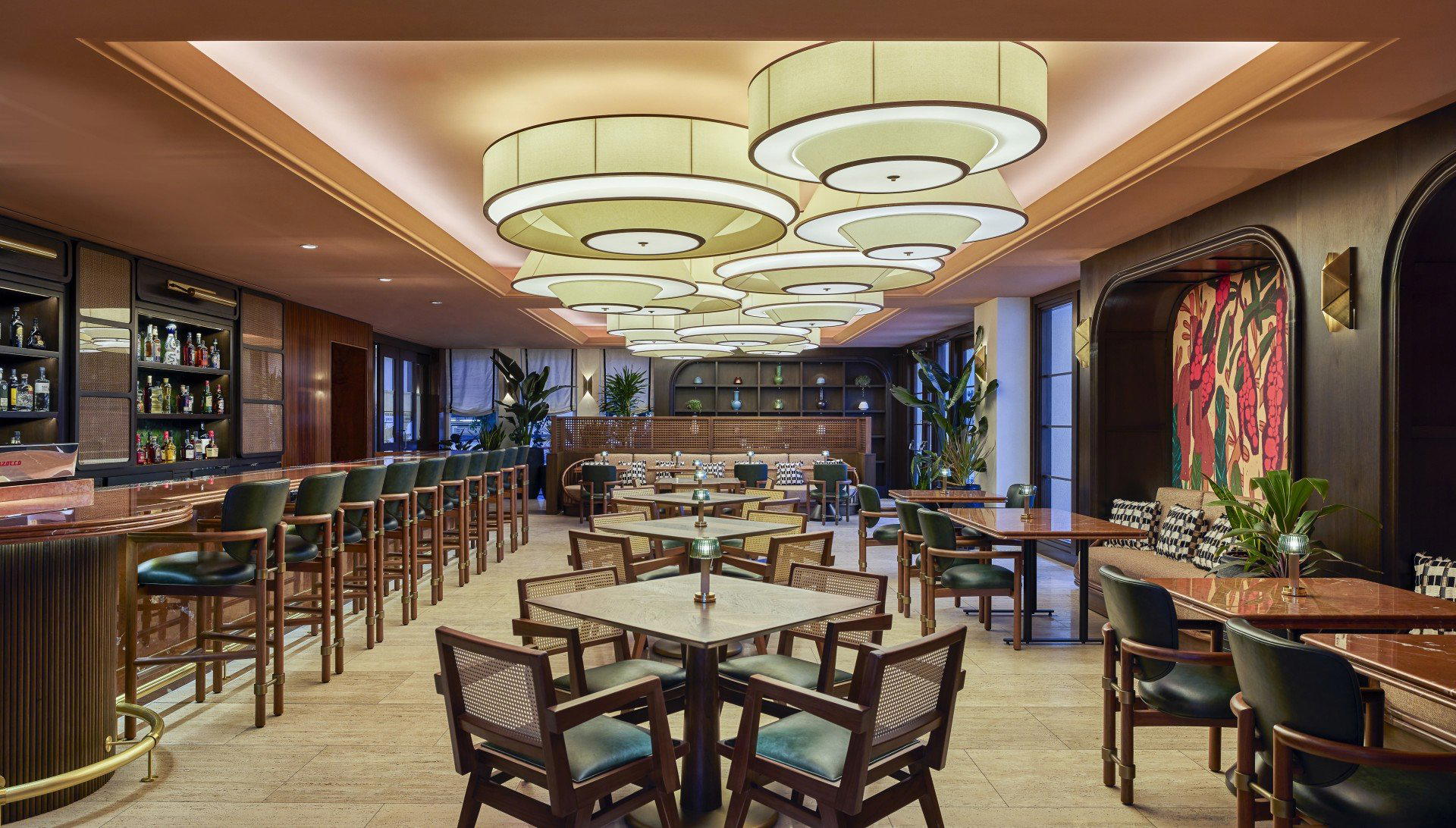
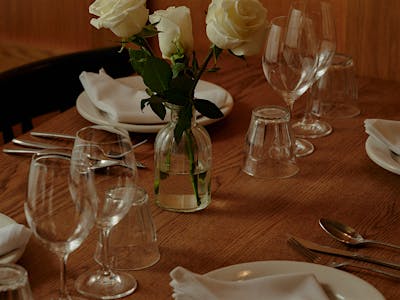
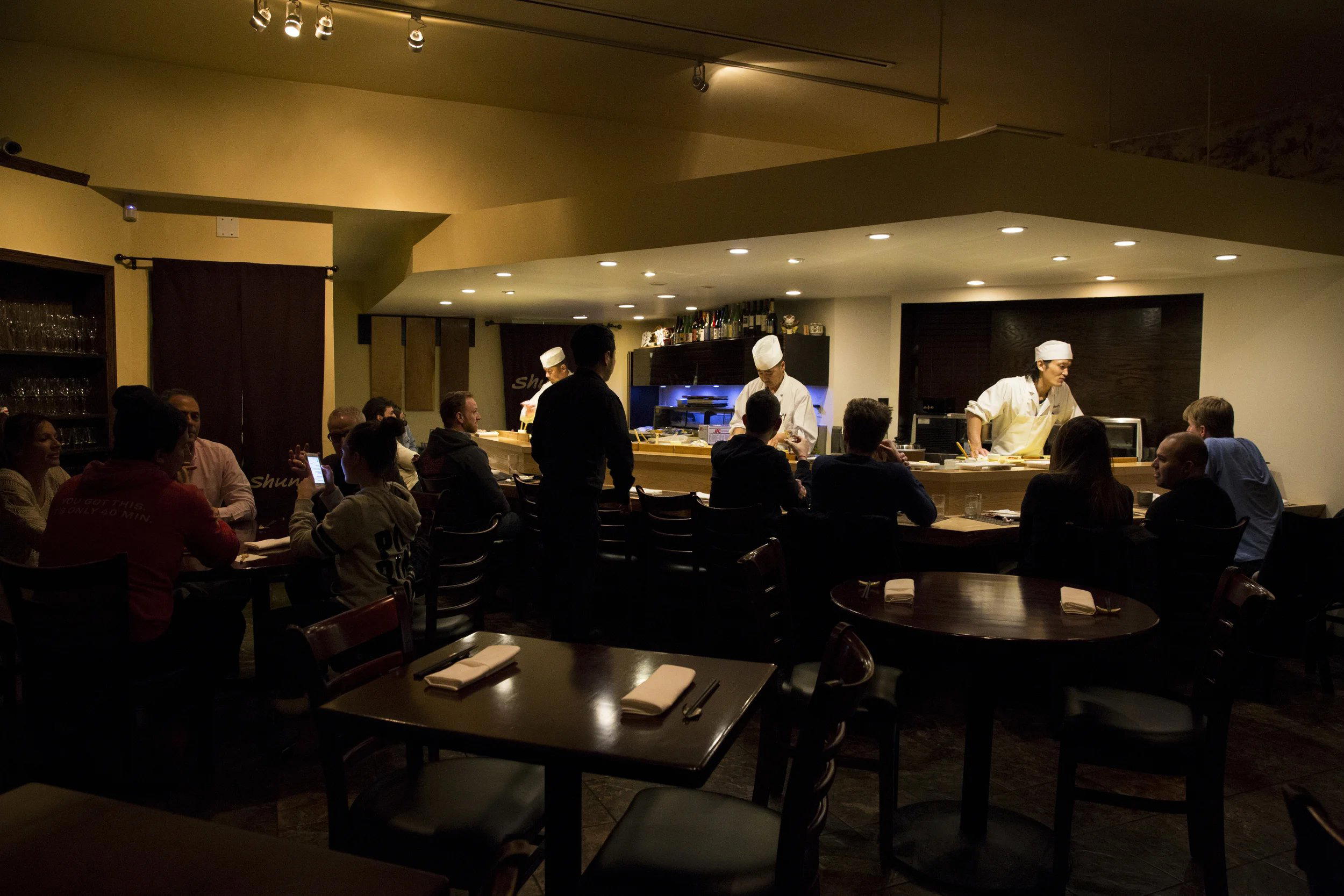
Warm modern setting with terrazzo and travertine accents, offering a laid-back yet sophisticated atmosphere for culinary connection.