Camarón buchón DIANA
Our verdict
On Paseo de la Reforma, one of Mexico City's most trafficked corridors, Camarón buchón DIANA occupies a position in the city's seafood-casual scene that rewards those who know where to look. The name references both the crustacean and a distinctly northern Mexican street-food register, placing it at an interesting intersection of Chilango appetite and regional coastal tradition.

Pearl is the En Primeur Club membership app — saves, bookings, and concierge access live there. Same editors, same standards.
- Address
- Av. P.º de la Reforma 423, Cuauhtémoc, 06500 Ciudad de México, CDMX, Mexico
- Phone
- +525571307249
- Hours
- Mon–Thu 10 AM–9 PMFri 10 AM–11 PMSat–Sun 9 AM–11 PM
- Website
- opentable.com
- Directions
- Get directions
- Booking
- Book on OpenTable
The menu
What to order
- Battered shrimp
- Tuna tostadas
- Chocolate clams
Reforma's Seafood Counter and What It Says About the City
Paseo de la Reforma does not traditionally signal street-level seafood culture. The boulevard is better known for its corporate towers, diplomatic missions, and the arc of fine-dining rooms that curve southward toward Polanco — places like Pujol and Quintonil, where tasting menus run several hours and reservations require planning weeks in advance. Camarón buchón DIANA occupies a different register entirely. It sits at Reforma 423, near the Diana Cazadora roundabout, and the name itself signals the editorial point: buchón is slang rooted in Sinaloan and broader northern Mexican coastal culture, a word that carries connotations of a certain unfiltered, abundance-forward approach to seafood eating. That sensibility, transplanted to one of the capital's most formal arteries, is the interesting friction here.
Mexico City's appetite for mariscos has always run deeper than its fine-dining reputation suggests. Long before Em was threading indigenous ingredients through contemporary tasting menus, or Rosetta was reframing Italian technique through a Mexican lens, the city's working-class lunch counters were stacking tostadas de atún and cóctel de camarón into architectural arrangements that had nothing to do with restraint. What venues like Camarón buchón DIANA represent is the formalisation — or at least the streetside institutionalisation, of that appetite in areas of the city where it was previously absent.
The Buchón Tradition: What the Name Actually Means
The buchón register in Mexican seafood culture is worth understanding before you arrive. In Sinaloa, Sonora, and the broader Pacific Northwest coast of Mexico, seafood consumption is characterised by scale, directness, and a kind of aggressive freshness: raw oysters shucked at speed, shrimp arriving in kilos rather than portions, tostadas piled past structural stability. The aesthetic has its own visual grammar, styrofoam cups, lime wedges, Clamato, Valentina, and it operates on a logic of generosity over precision. This is not the same register as, say, the controlled coastal minimalism you'd encounter at Le Chique in Puerto Morelos, where European technique meets Yucatecan product, or the terroir-led seafood approach at Animalón in Valle de Guadalupe. Those venues are in conversation with fine-dining tradition. Camarón buchón DIANA is in conversation with the cooler in the back of a Mazatlán marisquería.
What makes this worth noting in a city like Mexico City is that the buchón format has been arriving in the capital in waves over the past decade, carried by internal migration and accelerated by social-media documentation of northern food culture. Venues operating in this register are not trying to compete with the Reforma fine-dining tier; they're tapping a parallel demand track, one that values maximum shrimp over minimalist plating, and that draws a crowd less interested in wine pairings than in a cold beer and something aggressively seasoned.
Atmosphere and Sensory Register
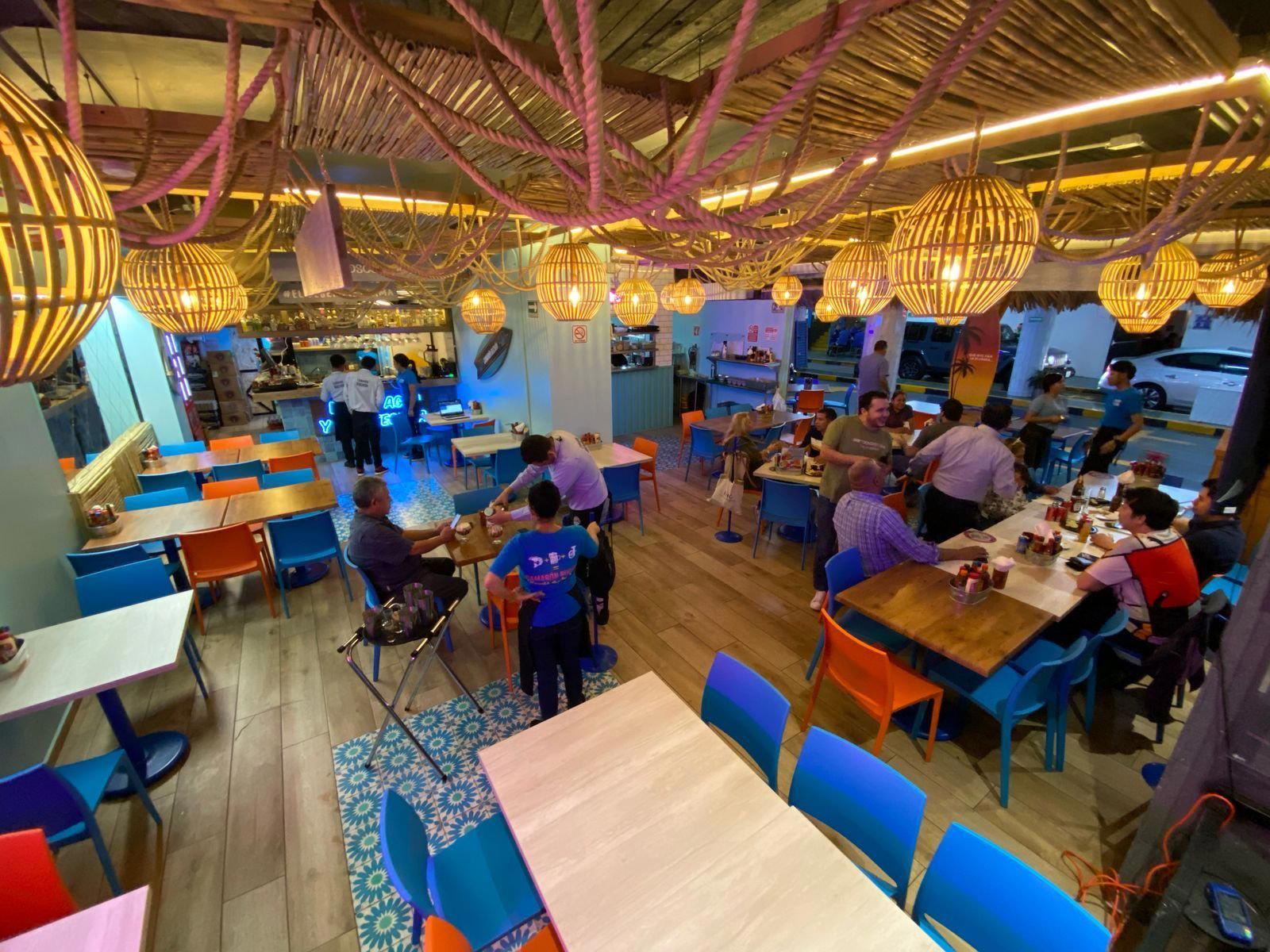
The location on Reforma, one of Mexico City's widest and loudest thoroughfares, shapes the experience before you've ordered anything. This is not a quiet room. The boulevard carries a constant undertow of traffic noise, and venues at street level on this corridor absorb that energy. The Diana Cazadora roundabout nearby is one of the city's most photographed public sculptures, and the surrounding blocks draw a mix of office workers, tourists from the adjacent hotels, and locals making deliberate detours. For a seafood counter in the buchón mode, this is appropriate context: the format was never designed for silence.
In northern Mexico's original marisquería format, the sensory markers are consistent: the smell of lime juice on raw shellfish, the plastic-and-chrome aesthetic of fast-moving service, the sound of ice shifting in coolers. Whether a Reforma outpost fully replicates that atmosphere or adapts it to a more urban, mixed clientele is part of what makes this category of venue worth tracking. The tension between a blue-collar coastal food tradition and its deployment in a high-rent urban corridor is not incidental, it's the whole point of the exercise.
How This Fits the Broader Mexico City Dining Scene
Mexico City's dining range is now wider than most international visitors expect. At one end, you have tasting-menu rooms competing for attention with Sud 777's creative Mexican cooking or the nationally recognised programs at KOLI Cocina de Origen in Monterrey and Alcalde in Guadalajara. At the other, you have the city's enormous street-food infrastructure, which runs on its own logic entirely. Venues like Camarón buchón DIANA occupy a middle tier that the city's dining conversation often skips: not fine dining, not a taco stand, but a regional format operating at a fixed address with a specific regional identity.
For visitors who have exhausted the reservation-required tier, or who want to understand how Mexico City eats outside of its most celebrated rooms, this register matters. The same impulse that sends food-focused travellers to Levadura de Olla in Oaxaca to understand regional Oaxacan cooking at an accessible level, or to Pangea in San Pedro Garza García to read Monterrey's steakhouse tradition through a refined lens, should send them toward venues that document how regional Mexican food cultures travel and adapt. Camarón buchón DIANA is one data point in that map.
For a fuller picture of where this venue sits in the capital's dining geography, our Mexico City restaurants guide covers the full range of the city's dining tiers, from Michelin-recognised rooms to neighbourhood-specific formats worth knowing. Further afield, the coastal and regional registers that inform venues like this one are also visible at HA' in Playa del Carmen, Arca in Tulum, Olivea Farm to Table in Ensenada, and Lunario in El Porvenir, each a different argument about how Mexican coastal and regional product reaches the table. For international comparison, the seafood-forward precision of Le Bernardin in New York City and the communal-format dining of Lazy Bear in San Francisco illustrate how different the buchón register is from the way seafood and experiential dining operate in the northern hemisphere's leading restaurant cities.
Know Before You Go
- Address: Av. P.º de la Reforma 423, Cuauhtémoc, 06500 Ciudad de México, CDMX
- Neighbourhood: Cuauhtémoc, near the Diana Cazadora roundabout
- Format: Seafood counter in the northern Mexican buchón register
- Price range:, budget in line with casual marisquería pricing as a reasonable baseline
- Reservations: Booking details not available; walk-in format likely given the category
- Getting there: Reforma 423 is accessible from the Sevilla or Insurgentes metro stations, and from Metrobús stops along the corridor
Frequently asked questions
What do people recommend at Camarón buchón DIANA?
The venue's name points directly to its focus: shrimp, prepared in the northern Mexican coastal tradition where abundance and bold seasoning take precedence over minimalist presentation. In the buchón register more broadly, standout items typically include aguachile, cóctel de camarón, and tostadas loaded with seafood, though specific menu confirmation for this location requires a direct visit, as no dish-level data is available in public records.
How far ahead should I plan for Camarón buchón DIANA?
Given its location on a high-traffic Reforma block and its casual marisquería format, advance booking is likely unnecessary, this category of venue in Mexico City typically operates on a walk-in basis. Peak lunch hours on weekdays, when the surrounding Cuauhtémoc office district fills nearby restaurants, are worth accounting for if you want immediate seating. No formal reservation system has been confirmed.
What has Camarón buchón DIANA built its reputation on?
The venue's identity rests on its deployment of a distinctly northern Mexican seafood culture, specifically the Sinaloa-inflected buchón register, in a Reforma address that more commonly signals corporate or fine-dining contexts. That regional specificity, rather than a tasting-menu format or a named chef, is the primary signal the venue sends. It positions itself within a growing category of Mexico City venues that bring defined regional food identities to the capital's central corridors.
Is Camarón buchón DIANA part of a wider chain or local group operating in Mexico City?
No group affiliation or multi-site operation is confirmed in available data. In the broader Mexico City marisquería scene, buchón-format venues have arrived both as independent outposts and as satellite locations of northern Mexican originals, the distinction matters because it affects consistency and product sourcing. Whether this location is a standalone operation or part of a wider concept is worth confirming directly when you visit.
Comparable Venues
Comparable venues nearby, for context on price, style, and recognition.
| Venue | Cuisine | Price | Awards | Notes |
|---|---|---|---|---|
| Camarón buchón DIANAThis venue — the venue you are viewing | Zarandeado-Style Seafood from Sinaloa | Not listed | Not listed | Not listed |
| Mi Compa Chava | Sinaloa-Style Seafood Cevicheria | $30–50 | Opinionated About Dining Casual in North America | Villa Coyoacan |
| De Costa a Costa | Mexican Seafood | Not listed | Not listed | San Pedro |
| Fisher's | Mexican Avant-Garde Seafood | $30–50 | Not listed | Ampl Napoles |
| Vecchio Forno | Authentic Italian Pizza and Pasta | $20–30 | Not listed | Nva Anzures |
| Cafebrería El Péndulo Polanco | Mexican Café & Bar | $10–20 | Not listed | Polanco Chapultepec |
Continue exploring
More in Mexico City
Restaurants in Mexico City
Browse all →
Bars in Mexico City
Browse all →
Details
- Lively
- Energetic
- Casual Hangout
- Group Dining
- Open Kitchen
- Beer Program
- Local Sourcing
- A La Carte
- Beer
Current opening hours
- Monday
- 10 AM–9 PM
- Tuesday
- 10 AM–9 PM
- Wednesday
- 10 AM–9 PM
- Thursday
- 10 AM–9 PM
- Friday
- 10 AM–11 PM
- Saturday
- 9 AM–11 PM
- Sunday
- 9 AM–11 PM
Hours can change for holidays and private events. Last verified .
Energetic seafood bar atmosphere.