Cal Viva


Cal Viva holds a Michelin Plate, unusual credentials for a restaurant on an industrial estate outside Seville. Chef Leonardo Ramos runs two daily-changing omakase menus rooted in Andalusian seasonal produce, alongside off-menu soups, stews, and rice dishes that shift with what the local supply chain delivers each morning.
Pearl is the En Primeur Club membership app — saves, bookings, and concierge access live there. Same editors, same standards.
- Address
- C. Gutemberg, 20, 41530 Morón de la Frontera, Sevilla, Spain
- Phone
- +34 854 80 22 65
- Website
- calvivarestaurante.com
- Directions
- Get directions
 Saves & bookings on Pearl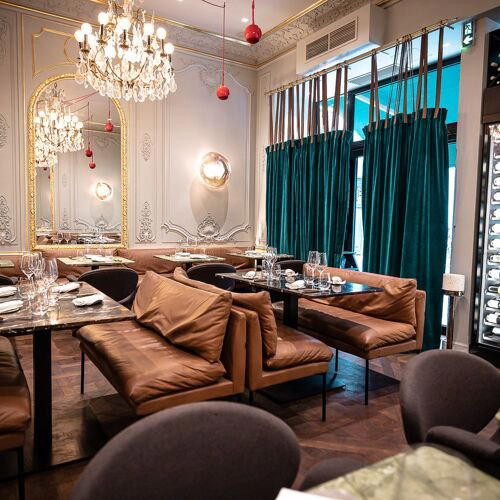
An Industrial Estate, a Lime Kiln, and a Michelin Plate
Morón de la Frontera sits about 60 kilometres southeast of Seville, in the sierra country where Andalusia starts to crease and fold. The town built much of its historical economy on cal viva, quicklime, quarried and processed locally for centuries, a trade so embedded in local identity that a restaurant naming itself after the substance is making a genuine cultural statement, not a branding flourish. That the restaurant in question occupies space on an industrial estate, rather than a whitewashed plaza or a converted cortijo, only sharpens the point: the location is deliberate, grounding the project in the working geography of the place rather than its picturesque version.
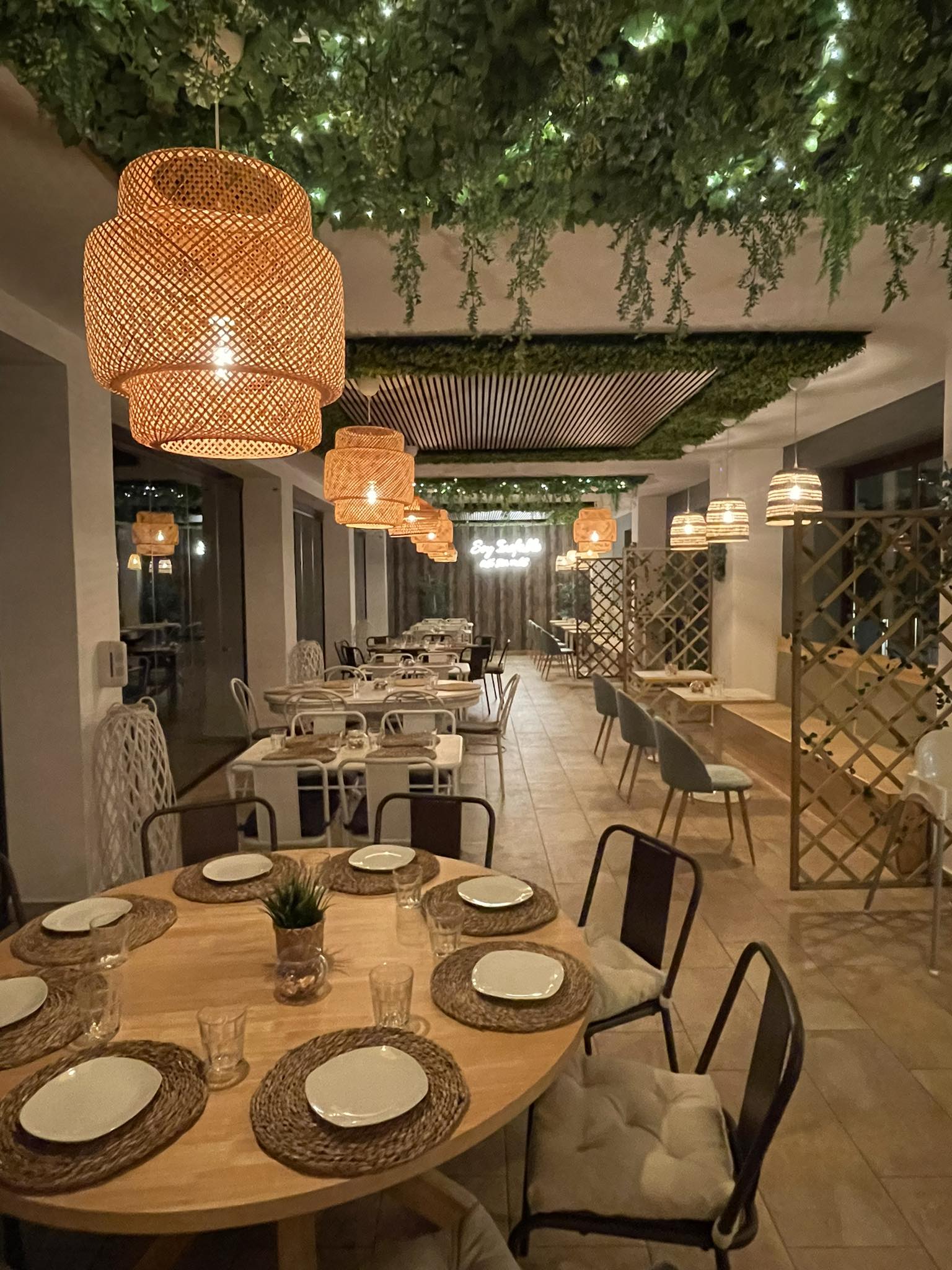
Walking into Cal Viva, the contrast between the exterior approach and the interior register is the first thing visitors notice. The décor is considered and calm, the kind of space where the food is clearly meant to hold the room's attention. Michelin inspectors noted the setting as genuinely surprising.
Seasonal Sourcing as the Operational Logic
In much of Spain's Michelin-recognised restaurant tier, seasonal and local sourcing has become standard language, cited on menus, referenced in press materials, occasionally meaningful in practice. At Cal Viva, the sourcing commitment has a structural consequence that sets it apart from venues where the language is mostly decorative: both tasting menus change daily. The Omakase Andaluz and the Homenaje Omakase do not rotate weekly or seasonally in the conventional sense. They respond to what is available on a given morning, which means the kitchen's relationship with local suppliers is not a marketing asset but an operational dependency.
That kind of format requires genuine supply chain discipline. Andalusia's agricultural calendar is generous, the region produces some of Spain's most significant volumes of olive oil, Ibérico pork, fresh vegetables, and seafood from the Atlantic coast, but translating daily availability into coherent, structured menus requires a kitchen that thinks in terms of ingredients first and dishes second. The restaurant's menu architecture is built around exactly that inversion. The guest, as the omakase format implies, cedes dish selection to the chef, trusting that what arrives reflects both what is at peak condition and what the kitchen can execute with precision on that specific day.
This is a meaningfully different proposition from the fixed tasting menu model that dominates Spain's broader fine dining tier. Houses like Aponiente in El Puerto de Santa María, El Celler de Can Roca in Girona, or Arzak in San Sebastián operate at the three-star level with menus that are tested, refined, and held for extended periods. The daily-change model that restaurant runs is considerably more demanding logistically and considerably more exposed if the sourcing chain falters. That it has sustained Michelin recognition at the Plate level while operating this way says something about the kitchen's consistency and its supplier relationships.
Where Cal Viva Sits in Andalusia's Dining Picture
Andalusia's recognised restaurant tier is not uniform. The region has a handful of starred addresses, Aponiente being the prominent, with three stars for its marine-focused creative cooking, but much of the Michelin-acknowledged work in the south happens at Plate and Bib Gourmand level, in towns and cities where traditional technique applied with genuine rigour earns recognition without the theatrical production that characterises Spain's most decorated kitchens at DiverXO in Madrid, Azurmendi in Larrabetzu, or Mugaritz in Errenteria.
The restaurant operates in the traditional cuisine register, which in the Michelin taxonomy means the kitchen's ambition is to do justice to established preparations rather than to reinvent them. The Andalusian tradition that forms its reference point includes some of Spain's most technically demanding dishes, rice dishes, slow-cooked stews, soups with long preparation times, and executing these well, daily, from changing ingredients, is a different kind of discipline from creative cooking. The off-menu soups, stews, and rice dishes that sit alongside the two omakase formats give the restaurant a practical flexibility that few tasting-menu-only venues manage: guests who want structure get the omakase, guests who want to eat in the local idiom without a fixed progression can do so.
For broader comparison on what traditional cuisine looks like when applied rigorously across different Spanish regions, Auga in Gijón and Atrio in Cáceres offer useful reference points, as does Auberge Grand'Maison in Mûr-de-Bretagne for the French equivalent. Across those examples, the common thread is that traditional cuisine recognition from Michelin depends less on concept and more on sustained craft, the same principle that applies at the restaurant, at a price point (€€, mid-range by Michelin-acknowledged standards) that makes it accessible relative to peers like Cocina Hermanos Torres in Barcelona, Quique Dacosta in Dénia, Ricard Camarena in València, or Martin Berasategui in Lasarte-Oria.
Planning a Visit
The restaurant is at C. Gutemberg, 20, in the industrial zone of Morón de la Frontera, a roughly one-hour drive from Seville by car. The address is not the kind of location that rewards walking up without a reservation: the omakase format requires the kitchen to know numbers in advance, and the daily-changing menu means there is no printed record of what you will eat until you arrive. Booking ahead is essential here. The price range at €€ places this in the accessible mid-range tier for tasting-menu dining in Spain.
- Omakase Andaluz
- Homenaje Omakase
- Ensalada de tomate
- Hígado aliñado
- Verdinas con oreja
- Atún encebollado
- Almejas al oloroso
Fast Comparison
Comparable venues nearby, for context on price, style, and recognition.
| Venue | Cuisine | Price | Awards | Notes |
|---|---|---|---|---|
| Cal VivaThis venue — the venue you are viewing | Contemporary Andalusian Farm-to-Table | $$$ | Michelin Plate | Not listed |
| La Marmita de Ancha | Modern Andalusian with Asian Influences and Red Tuna Focus | $$$ | Michelin Plate | Centro |
| El Faro de Cádiz | Traditional Cádiz Seafood | $$$ | Not listed | La Viña |
| Casa Eladio | Modern Spanish Fine Dining | $$$ | Michelin Plate | Old Town |
| Celia Jiménez | Modern Andalusian Fine Dining | $$$ | Michelin Plate | Poniente Sur |
| Arbequina | Modern Spanish Fusion | $$$ | Michelin Plate | city center |
Recognition history
Dated appearances from independent guides and award organizations, with the underlying list record or original source where available.
Macarfi 7.9 Food Rating
Macarfi
Michelin Plate
Michelin
Michelin Plate
Michelin
Continue exploring
More in Morón de la Frontera
Restaurants in Morón de la Frontera
Browse all →
Bars in Morón de la Frontera
Browse all →Hotels in Morón de la Frontera
Browse all →

Wineries in Morón de la Frontera
Browse all →
At a Glance
- Elegant
- Sophisticated
- Modern
- Intimate
- Date Night
- Special Occasion
- Celebration
- Group Dining
- Open Kitchen
- Private Dining
- Extensive Wine List
- Sommelier Led
- Farm To Table
- Local Sourcing
Current opening hours
- Monday
- Closed
- Tuesday
- 1:30–4 PM
- Wednesday
- 1:30–4 PM
- Thursday
- 1:30–4 PM
- Friday
- 1:30–4 PM, 9–11 PM
- Saturday
- 1:30–4 PM, 9–11 PM
- Sunday
- 1:30–4 PM
Hours can change for holidays and private events. Last verified .
Spacious, well-decorated modern interior with pleasant decor that surprises guests given its industrial estate location; warm and welcoming service atmosphere.