Caffe Mingo
Caffe Mingo has held its place on NW 21st Avenue as one of Portland's most dependable Italian-leaning neighborhood restaurants for decades, drawing a loyal crowd to its compact, warmly lit room. The kitchen works within a tradition of Italian-American cooking that prioritizes restraint over ambition, letting the dining room, not the plate, do the theatrical work. For a city with a growing roster of technically ambitious restaurants, Caffe Mingo represents a different kind of reliability.
- Address
- 807 NW 21st Ave, Portland, OR 97209
- Phone
- +15032264646
- Website
- caffemingonw.com
- Directions
- Get directions
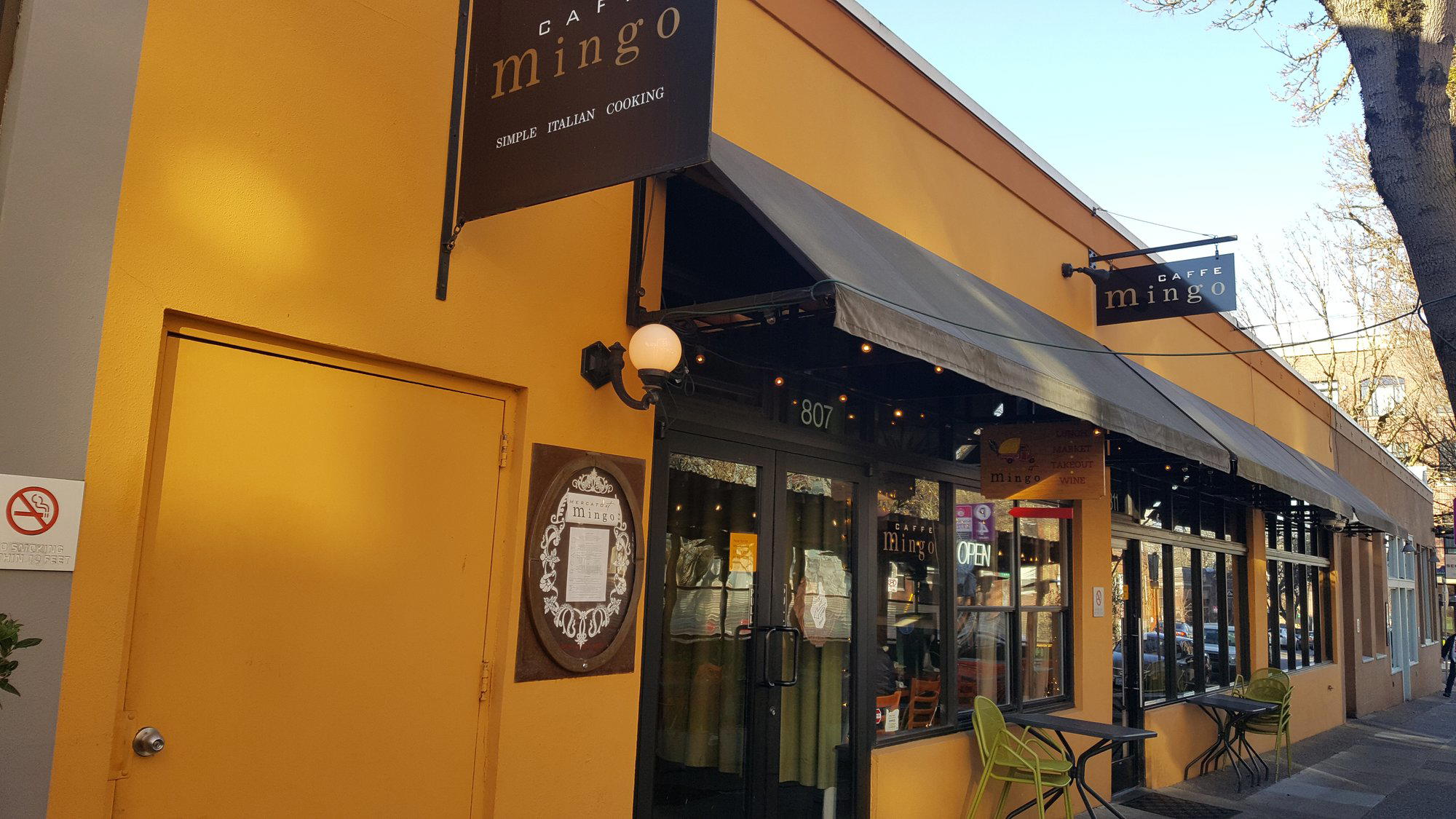
NW 21st and the Tradition It Carries
Portland's Northwest District has a particular relationship with the kind of restaurant that doesn't announce itself. NW 21st Avenue runs through a residential corridor that predates the city's food-media moment, and the restaurants that have survived along it tend to do so on repeat custom rather than destination traffic. Caffe Mingo is a closed restaurant at 807 NW 21st Ave, Portland, OR 97209.
To understand where Caffe Mingo sits in Portland's current dining picture, it helps to map the Italian-leaning category more broadly. The city's Italian and Italian-adjacent restaurants occupy a wide range, from wood-fired Neapolitan operations like Ken's Artisan Pizza and Nostrana at one end, to smaller trattoria-format rooms at the other. Caffe Mingo belongs to the trattoria tier, where the value proposition is consistency, a practiced room, and food that doesn't require explanation. It is permanently closed.
Portland has also developed a parallel track of highly technical, cuisine-forward restaurants, places like Langbaan for its Thai tasting format, Berlu for contemporary Vietnamese, and Kann for Haitian cooking with serious culinary intent. These venues compete in a different register entirely.
The Arc of the Meal
Italian trattoria cooking in the American context has a structure that most diners internalize without thinking about it: something antipasto, a pasta that functions as the emotional center of the meal, a secondi for those who want a full arc, and a dessert that rarely surprises but earns its place. The leading versions of this format hold tension between simplicity and execution, the pasta has to be right, the sauce has to be honest, and the room has to make the whole thing feel worth lingering over.
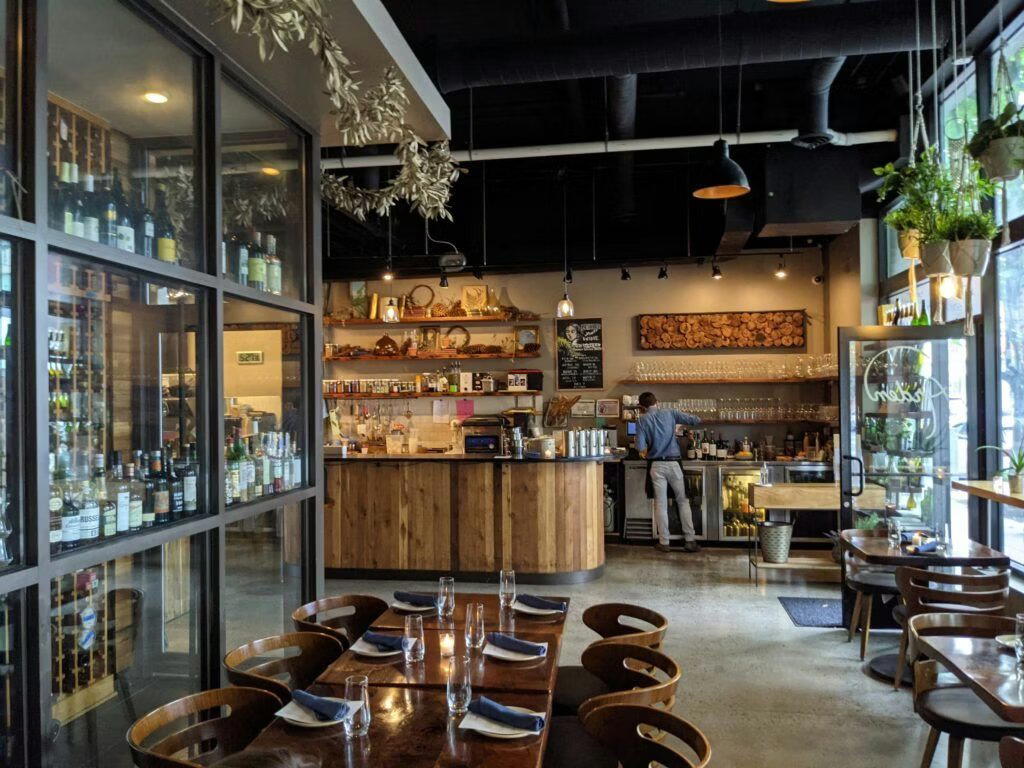
At Caffe Mingo, the physical environment did significant work toward that last point. The room on NW 21st is compact and warmly lit, with the kind of ambient noise level that makes conversation easy without requiring effort. This mattered more than it sounds: the dining room atmosphere in a trattoria-format restaurant is half the meal, and Portland's Northwest District evenings have a specific quality, unhurried, slightly insular, that this room reflected rather than fought against.
The progression of a meal here followed the Italian-American logic described above. The early courses set register and pace; the pasta course is where the kitchen's competency becomes legible; the secondi, if ordered, extends the meal into a more substantial register. Diners who want to eat lightly can stop after pasta without feeling the meal is incomplete. This flexibility is a feature of the format, not an accident of menu design.
For comparison, consider how the tasting-menu format at destination restaurants like Lazy Bear in San Francisco or Smyth in Chicago locks the diner into a predetermined arc. The trattoria model inverts that control: the diner sequences their own meal, and the kitchen's job is to execute each component well enough that any combination feels coherent. It's a less dramatic contract, but often a more satisfying one for a Tuesday evening.
Where It Fits in the Portland Picture
Portland's restaurant culture has matured considerably over the past fifteen years, developing the kind of layered ecosystem where multiple price tiers and formats coexist without one cannibalizing the other. The high-ambition restaurants, the ones that draw comparison to Le Bernardin in New York City, The French Laundry in Napa, or Blue Hill at Stone Barns in Tarrytown, exist in a separate orbit from a neighborhood Italian room. But any city worth eating in needs both.
The restaurant sits in the middle tier of Portland's dining ecosystem: above the casual pizza-by-the-slice category, below the prix-fixe destination tier. Its longevity on NW 21st is itself a data point. Portland's restaurant turnover, like most American cities, runs high. A restaurant that holds its address for an extended period, in a residential-leaning neighborhood rather than a tourist corridor, is doing something right at the operational level, even if that something is difficult to articulate beyond consistency and repeat custom.
Restaurants in comparable category positions in other cities, think the mid-tier Italian rooms that anchor neighborhoods in San Francisco or Chicago, tend to survive on a combination of locals who trust them and occasional visitors who find them through word of mouth rather than algorithmic recommendation. The restaurant operates in that same register. It is not a destination you fly to Portland to eat at, in the way you might plan a trip around Providence in Los Angeles or Addison in San Diego. It is the restaurant you go to when you're staying in the Northwest District and want a meal that will hold its end of a conversation without demanding attention.
For visitors oriented around Portland's food scene, the practical strategy was to anchor higher-ambition meals at restaurants with more technical scope and let the restaurant fill the slot where you wanted Italian-format reliability without making a production of the evening.
Context Beyond Portland
The trattoria format has proven durable across American cities precisely because it satisfies a need that tasting menus and fast-casual formats don't address: the mid-week dinner that feels civilized without requiring a reservation made six weeks in advance or a three-hour commitment. Restaurants like Emeril's in New Orleans or The Inn at Little Washington operate in entirely different registers, built around occasion dining and culinary theater. The neighborhood trattoria is the antithesis of that model, and not apologetically so.
What separates a trattoria that earns loyalty from one that coasts on format familiarity is usually the pasta and the room. The pasta because it is where there is nowhere to hide, a good ragù requires attention, not technique in the modernist sense, and diners who eat Italian food regularly notice immediately when the execution is lazy. The room because Italian-format dining is fundamentally social, and a room that gets the noise level, the lighting, and the table spacing right creates conditions for the meal to succeed independently of what's on the plate. Globally, rooms like Atelier Moessmer Norbert Niederkofler in Brunico or Atomix in New York City demonstrate how room design and meal sequencing can be fused into a single statement. At the trattoria level, the room simply has to not get in the way, and ideally, to make things feel a little warmer than the street outside.
The restaurant's NW 21st address had the advantage of a neighborhood that cooperated with this intention. The walk to the restaurant, the density of residential buildings around it, the relative absence of tourist-facing retail, all of it primes the diner for the kind of meal the room is designed to deliver. That alignment between neighborhood and format was part of why this address held its restaurant character for as long as it did. The restaurant is permanently closed.
Know Before You Go
- Address
- 807 NW 21st Ave, Portland, OR 97209
- Neighborhood
- Northwest District (NW 21st Avenue corridor)
- Format
- Trattoria-style Italian-American; à la carte
- Booking
- Price Tier
- Mid-range by Portland standards.
- Leading For
- Neighborhood dinners, Italian-format evenings without high commitment, repeat visits
- Nearby Alternatives
- Ken's Artisan Pizza and Nostrana for wood-fired Italian; Langbaan for a more technically ambitious tasting format
Pricing, Compared
Comparable venues nearby, for context on price, style, and recognition.
| Venue | Cuisine | Price | Notes |
|---|---|---|---|
| Caffe MingoThis venue — the venue you are viewing | Nob Hill, Simple Italian Trattoria | $$ | Not listed |
| Firehouse Restaurant | Not listed | $$ | Woodlawn, Italian Wood-Fired Pizza and Grill |
| Gracie’s Apizza | Not listed | $$ | St. Johns, Wood-Fired Italian Pizza |
| Piazza Italia | Pearl, Authentic Italian Trattoria | $$ | Not listed |
| Sizzle Pie | Downtown, East Coast-Style Pizza | $ | Not listed |
| Cibo | Not listed | $$ | Richmond, Neighborhood Italian with Wood-Fired Pizza |
Continue exploring
More in Portland
Restaurants in Portland
Browse all →
Bars in Portland
Browse all →
Hotels in Portland
Browse all →
At a Glance
- Cozy
- Rustic
- Intimate
- Date Night
- Casual Hangout
- Open Kitchen
- Local Sourcing
Cozy and rustic atmosphere with a neighborhood feel, featuring simple Italian cooking.