Cafe Pesto

Diners, Drive-Ins and Dives Featured Restaurant
Our verdict
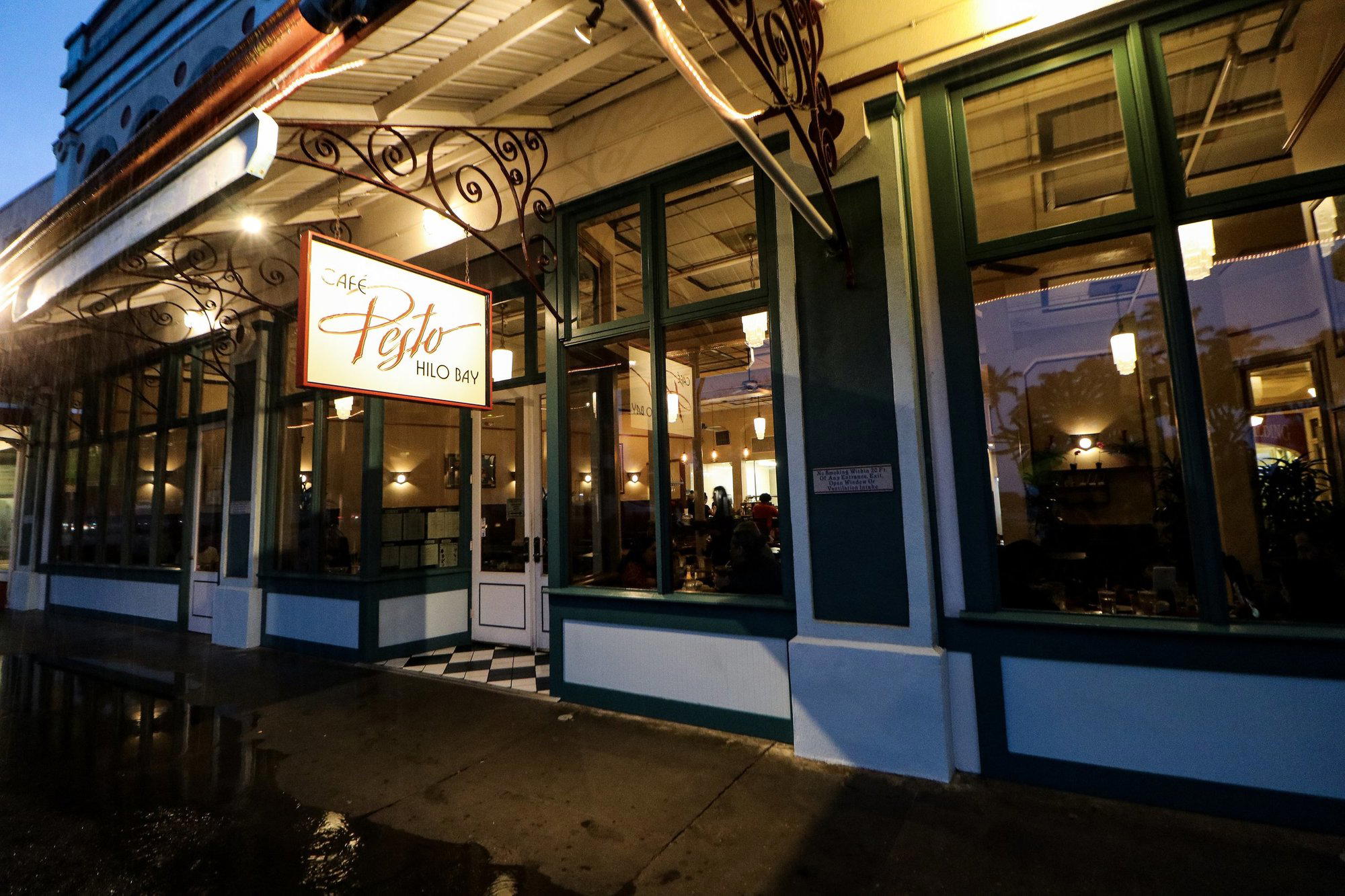
On Kamehameha Avenue in downtown Hilo, Cafe Pesto occupies a corner of the historic S. Hata Building, one of the few surviving pre-war commercial structures on Hawaii Island's east side. The kitchen draws on Pacific Rim influences to produce wood-fired pizzas and locally sourced plates that sit comfortably between casual and considered. For a city with limited fine-dining infrastructure, it fills a recognizable gap.

Pearl is the En Primeur Club membership app, where members save venues, book tables and use the concierge.
The menu
What to order
- Korean Cream Cheese Garlic Bread
- Wood-Fired Pizzas
Downtown Hilo and the Case for Eating Well on the East Side
Hilo does not market itself the way Kona does. The east side of Hawaii Island gets the rain, the farmers' markets, the old storefronts, and the visitors who came specifically because it is quieter. The dining scene reflects that character: a handful of long-running local institutions, a few newer arrivals, and very little in the way of the polished Pacific Rim cooking that defines the resort corridors on the Kohala Coast. Cafe Pesto, at 308 Kamehameha Avenue, has operated inside that gap for long enough that it has become a fixed reference point for the city. The address alone tells you something: the S. Hata Building is one of downtown Hilo's most recognized pre-war commercial structures, a 1912 reinforced-concrete block that survived the 1946 and 1960 tsunamis that reshaped the bayfront. The room carries that history without making a project of it.
What the Room Tells You Before the Menu Arrives
Approaching the corner entrance on Kamehameha, the building's high ceilings and original facade signal something older than most Hawaii Island dining rooms. Inside, the space reads as casual without being careless: the kind of room where a table of tourists sits two over from a local family celebrating a birthday, and neither group feels out of place. That demographic spread is not accidental. In a city the size of Hilo, restaurants that survive decades tend to be the ones that serve more than one kind of occasion. The room is large enough to absorb a busy Friday without becoming a din, and the Hilo Bay light that comes through the windows in the late afternoon is the kind of thing that makes people stay longer than they planned.
Pacific Rim Cooking in a City Without Many Options for It
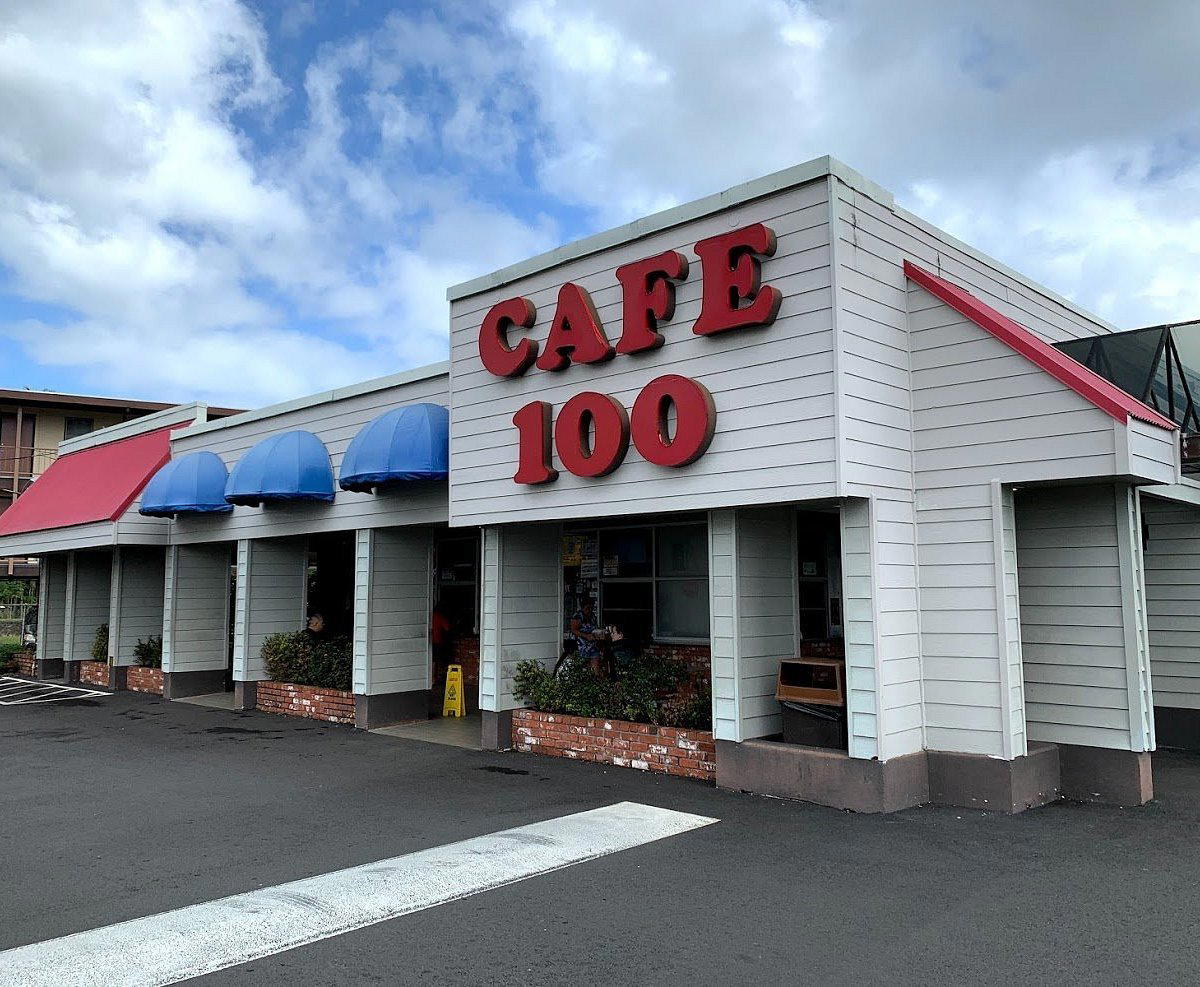
Hawaii's culinary identity has always been a layered one: Native Hawaiian, Japanese, Filipino, Portuguese, Chinese, and later, the deliberate regional sourcing movement that chefs like Alan Wong and Roy Yamaguchi formalized in the 1990s. That movement found its fullest expression in Honolulu and the Maui resort belt. On the east side of the Big Island, the supply chain and the customer base made the same approach harder to execute at the same price point. Cafe Pesto's model, wood-fired pizzas alongside plates that draw on local agricultural and fishing sources, is a workable middle position: accessible enough for a weeknight dinner, considered enough to hold up as a destination meal for visitors who have already eaten their way through Cafe 100 and Ken's House of Pancakes.
The Pacific Rim framing matters because it positions Cafe Pesto differently from the plate-lunch and local-comfort tier represented by Hawaiian Style Cafe Hilo and Don's Grill, and also from the more ingredient-driven approach that Hilo Bay Cafe occupies at the upper end of the local market. It sits in the middle tier: neither a destination meal by the standards of, say, Single Thread Farm in Healdsburg or Blue Hill at Stone Barns in Tarrytown, nor a purely functional lunch stop. For Hilo, that middle position is harder to hold than it sounds.
Planning a Visit: What the Booking Experience Actually Looks Like
Cafe Pesto operates in a city where the majority of restaurants do not require advance reservations at all. By the standards of the broader EP Club portfolio, which includes properties like Le Bernardin in New York City, The French Laundry in Napa, and Atomix in New York City, the logistics here are uncomplicated. That said, Hilo's dining scene is thin enough that the handful of restaurants doing something more ambitious than plate lunch will fill on weekend evenings, particularly when cruise ships are in port. Hilo Harbor sees regular cruise traffic, and on those days the downtown corridor is noticeably busier than baseline.
The practical advice is this: for a Thursday through Saturday dinner, a same-day call or a reservation made a day or two ahead is worth the effort, even if it is not strictly necessary every week. For weekday lunches and early dinners, walk-ins are the norm. The restaurant's location on Kamehameha Avenue puts it within a short walk of the bayfront, the Farmers' Market site at Mamo Street, and the majority of downtown Hilo's retail and cultural points of interest, which makes it a natural anchor for an afternoon that starts at the market and ends with dinner. There is no valet operation and no dress code expectation beyond the general Hawaii Island standard of clean casual.
Travelers arriving at Hilo International Airport, which sits roughly three miles from downtown, will find the address direct to reach by rental car, which remains the dominant transport mode on the east side of the island. Rideshare coverage exists but is less reliable here than in Honolulu. For visitors spending more than a night or two in Hilo, the downtown area is compact enough to make Cafe Pesto a repeatable option across multiple meal occasions, which is not something you can say about many restaurants in a city this size.
Where Cafe Pesto Sits in the Broader EP Club Context
It is worth being direct about the frame of reference. The EP Club editorial scope runs from neighborhood institutions to multi-Michelin properties like Smyth in Chicago, Providence in Los Angeles, Addison in San Diego, Lazy Bear in San Francisco, The Inn at Little Washington, Emeril's in New Orleans, and Atelier Moessmer Norbert Niederkofler in Brunico. Cafe Pesto does not compete in that tier. What it represents is something the EP Club takes seriously regardless of price point: a restaurant that has earned a durable position in its city by doing something specific, in a city where that kind of consistency is rarer than it looks. Hilo's dining scene is not wide. The restaurants that have lasted here have lasted because they understood the room, the supply chain, and the customer base better than the ones that did not. See our full Hilo restaurants guide for the broader picture of where this fits.
Frequently asked questions
Is Cafe Pesto child-friendly?
Hilo's downtown dining scene skews toward relaxed, all-ages environments, and Cafe Pesto fits that character. The high-ceilinged room on Kamehameha Ave is spacious enough that families are not out of place. Nothing in the format suggests this is a strict adult-only environment.
Is Cafe Pesto better for a quiet night or a lively one?
The building's older architecture and corner placement on Kamehameha Ave give the room a social energy without tipping into loud. Hilo itself operates at a slower register than Kona, so expect a convivial but unhurried atmosphere, closer to a neighborhood institution than a scene restaurant.
Is Cafe Pesto a good option for visitors staying on the Hilo side of Hawaii Island rather than Kona?
For travelers based in Hilo, Cafe Pesto on Kamehameha Ave fills a gap that the east side does not have many answers for: sit-down Pacific Rim cooking in a room with some architectural character. The west side of the island has more resort-driven dining infrastructure, but Hilo's farmers' markets and local producer network give east-side kitchens a sourcing advantage worth noting.
What should I eat at Cafe Pesto?
The kitchen works within a Pacific Rim framework, which on Hawaii Island means influences drawn from Japanese, Filipino, Portuguese, and Chinese culinary traditions alongside regional produce. Specific current dishes are best confirmed directly with the restaurant, as menus reflect seasonal and local availability.
Where is Cafe Pesto in Hilo?
Cafe Pesto is located at 308 Kamehameha Ave #101, Hilo, HI 96720.
How hard is it to get a table at Cafe Pesto?
In a city where most restaurants operate without reservations, Cafe Pesto requires slightly more forward planning than the Hilo norm. It is not in the three-months-out bracket of a Honolulu omakase counter, but arriving without any plan on a weekend evening carries risk. Checking ahead is the practical move.
What has Cafe Pesto built its reputation on?
Cafe Pesto holds ground as one of downtown Hilo's more consistent Pacific Rim addresses in a city that does not have many options at that register. Its longevity in a historic Kamehameha Ave building, in a market that does not reward mediocrity with loyalty, is the clearest evidence of what it has earned.
Fast Comparison
Comparable venues nearby, for context on price, style, and recognition.
| Venue | Cuisine | Price | Awards | Notes |
|---|---|---|---|---|
| Cafe PestoThis venue (the venue you are viewing) | Hawaii Regional Italian Pizza | $20–30 | Diners, Drive-Ins and Dives Featured Restaurant | Not listed |
| Thai Thai Restaurant | Traditional Central Thai | $10–20 | Not listed | Downtown Hilo |
| Lava Rock Cafe | Hawaiian Fusion Cafe | $20–30 | Not listed | Volcano Village |
| Suisan | Fresh Hawaiian Poke | $10–20 | Not listed | Hilo Bay |
| Hilo Bay Cafe | Contemporary Hawaiian Fusion with Sushi | $20–30 | Diners, Drive-Ins and Dives Featured Bar | Hilo |
| Pineapples Island Fresh Cuisine | Island-Inspired Fresh Cuisine with Local Seafood | $20–30 | Not listed | Downtown Hilo |
Recognition history
Dated appearances from independent guides and award organizations, with the underlying list record or original source where available.
Diners, Drive-Ins and Dives Featured Restaurant
Diners, Drive-Ins and Dives · 2026 Diners, Drive-Ins and Dives Featured Restaurants
Continue exploring
More in Hilo
Restaurants in Hilo
All restaurants in Hilo →

Bars in Hilo
Browse all →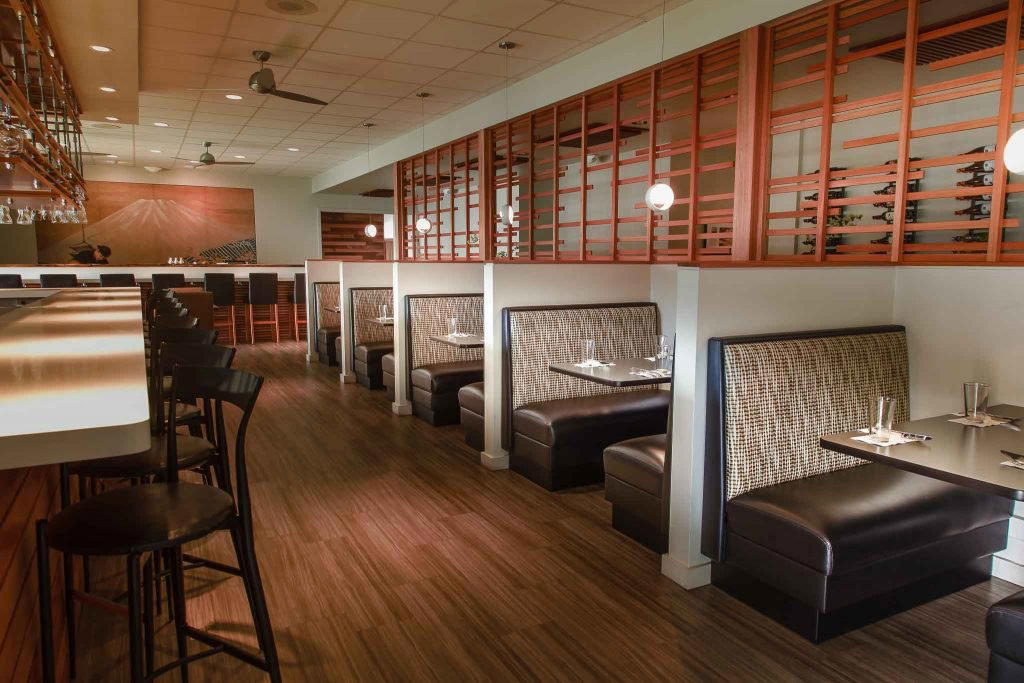
Details
- Lively
- Scenic
- Family
- Date Night
- Casual Hangout
- Waterfront
- Open Kitchen
- Historic Building
- Local Sourcing
- Waterfront
- A La Carte
- Vegetarian Friendly
- Vegan Options
- Gluten Free Options
Current opening hours
- Monday
- 11 AM–8:30 PM
- Tuesday
- 11 AM–8:30 PM
- Wednesday
- 11 AM–8:30 PM
- Thursday
- 11 AM–8:30 PM
- Friday
- 11 AM–8:30 PM
- Saturday
- 11 AM–8:30 PM
- Sunday
- 11 AM–8:30 PM
Hours can change for holidays and private events. Last verified .
Lively atmosphere with tall ceilings, brass-detailed exhibition kitchen, and colorful meal presentations in a historic setting.