Café No Sé
Café No Sé occupies a corner of South Congress Avenue where Austin's sustainability-minded dining conversation plays out at street level. Positioned among the neighbourhood's mid-range independents, it draws a crowd that treats ethical sourcing as a given rather than a selling point. The address at 1603 S Congress Ave places it within walking distance of several of the city's most-discussed casual venues.
Pearl is the En Primeur Club membership app — saves, bookings, and concierge access live there. Same editors, same standards.
- Address
- 1603 S Congress Ave, Austin, TX 78704
- Phone
- +1 512 942 2061
- Website
- cafenoseaustin.com
- Directions
- Get directions
 Saves & bookings on Pearl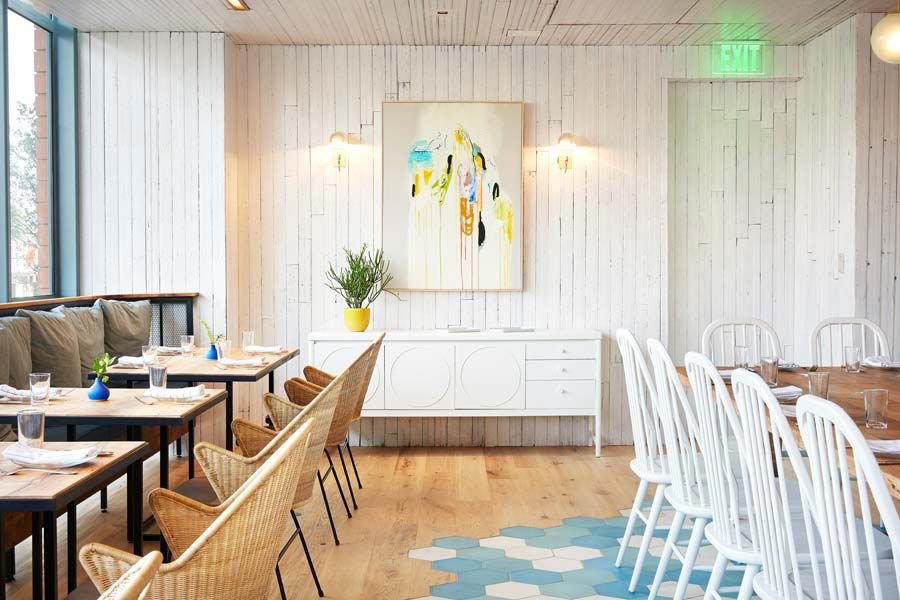
South Congress and the Ethics of the Everyday Café
South Congress Avenue has spent the last decade sorting itself into two distinct registers: the tourist-facing retail strip north of Annie Street, and the working neighbourhood blocks below it, where the businesses tend to be smaller, less polished, and considerably more local in orientation. Café No Sé at 1603 S Congress Ave sits in the latter zone, at an address that functions as a barometer for the kind of dining Austin's permanent residents actually sustain. This part of SoCo does not require a reservation weeks in advance or a familiarity with tasting-menu protocol. What it does reward is attention to where ingredients come from and how a kitchen makes decisions about waste, sourcing, and the daily economics of running an honest operation.
That framing matters because sustainability in American café culture has bifurcated sharply. On one side: high-profile, press-driven declarations of environmental intent, often attached to restaurants whose price points insulate them from the real cost pressures of ethical sourcing. On the other: neighbourhood spots that absorb those costs quietly, adjust their menus to what is seasonally and locally available, and rely on repeat custom rather than destination dining to stay viable. Café No Sé occupies territory closer to the second model, which makes it a more instructive case study in what ground-level sustainable practice actually looks like in a mid-sized American city.
Where SoCo Fits in Austin's Dining Geography
Austin's dining reputation is built on a handful of well-documented pillars: the live-fire programs at places like Hestia, the genre-defining barbecue operations at la Barbecue and InterStellar BBQ, and the produce-led New American cooking that Barley Swine has refined over multiple iterations. These are destination venues with documented followings and in some cases multi-week booking windows. Café No Sé operates at a different altitude, one that requires no advance planning but delivers something those larger operations cannot: the texture of a neighbourhood with a point of view about how food should be produced and consumed.
South Congress in 2024 is under the same development pressure that has reshaped East Sixth and the Domain. Independent operators are working against rising rents and a customer base that has grown more cost-conscious since the post-pandemic surge in Austin's cost of living. In that context, a café that maintains a genuine commitment to sourcing — rather than using sustainability as a marketing posture — is doing something structurally harder than it appears from the outside.
The Sustainability Question at Street Level
The most rigorous sustainability programs in American dining currently operate at the high-investment end of the market. Blue Hill at Stone Barns in Tarrytown has made farm-to-kitchen integration a defining project across decades. Single Thread Farm in Healdsburg builds its entire format around an owned agricultural operation. Smyth in Chicago uses its downstairs larder as a working demonstration of fermentation and preservation logic. These are resource-intensive models, financially and operationally.
What neighbourhood cafés in cities like Austin have to work with is different: relationships with specific regional producers, menu flexibility calibrated to what is actually available rather than what is conceptually desirable, and a willingness to change a dish based on supply rather than brand consistency. The ecological argument for this model is not trivial. Shorter supply chains reduce transport emissions. Smaller batch purchasing reduces over-ordering and spoilage. Menus that change with seasonal availability reflect what the land around a city is actually producing, rather than what a global commodity market makes available year-round.
Comparable sustainability-led fine dining operations internationally, such as Atelier Moessmer Norbert Niederkofler in Brunico, have formalised these principles into a named philosophy and an internationally recognised program. At street level in Austin, the same logic operates without the formal apparatus, which arguably makes it more durable and less dependent on external validation.
Peer Context: What the SoCo Block Signals
Café No Sé's position on South Congress places it in a peer group defined less by cuisine type and more by operating philosophy. The comparison set that matters here is not the city's tasting-menu tier, represented by venues like Craft Omakase at the top of the Japanese counter format, but rather the independent, mid-format operators who have chosen South Austin as their base precisely because it still supports a certain kind of unpretentious, ingredient-conscious hospitality.
Nationally, the restaurants that most clearly articulate the relationship between sourcing ethics and dining experience tend to operate at price points that put them out of reach for everyday visits. Providence in Los Angeles, Le Bernardin in New York City, and Addison in San Diego have each built sustainability credentials into programs that run at fine-dining price points. Lazy Bear in San Francisco and Atomix in New York City operate within fixed tasting formats that allow for precise waste management. The café format that Café No Sé occupies is structurally different: higher volume, lower margin, and more exposed to the daily variables of produce availability and customer traffic.
Planning a Visit
1603 S Congress Ave is accessible by foot from most of the South Congress hotel corridor and sits near the SoCo bus routes that connect to downtown Austin. The address does not require advance booking in the way that Austin's seated tasting-menu restaurants do, which makes it a practical option for visits where schedule flexibility matters. Given the café's neighbourhood positioning, arriving outside peak breakfast and lunch windows typically means shorter waits. South Congress parking is constrained on weekends, and the MetroBike network has docking stations within a short walk of the block. For visitors building a fuller South Austin itinerary, the full Austin restaurants guide maps the neighbourhood's dining options across price tiers and formats, including the barbecue programs and produce-driven dinner restaurants that define the city's current reputation.
Those extending their trip beyond Austin can reference the broader EP Club coverage of sustainability-conscious dining across the United States, from The French Laundry in Napa to Emeril's in New Orleans and The Inn at Little Washington in Virginia, each of which represents a different approach to the sourcing question at a higher price tier.
How Café No Sé Austin compares with similar nearby venues.
| Venue | Cuisine | Price |
|---|---|---|
| Otoko | Sushi | Not listed |
| Maie Day | Steakhouse | $$$ |
Continue exploring
More in Austin
Restaurants in Austin
Browse all →
Bars in Austin
Browse all →
Hotels in Austin
Browse all →
At a Glance
- Modern
- Minimalist
- Cozy
- Trendy
- Brunch
- Casual Hangout
- After Work
- Hotel Restaurant
- Terrace
- Craft Cocktails
- Street Scene
Current opening hours
- Monday
- 7 AM–3 PM
- Tuesday
- 7 AM–3 PM
- Wednesday
- 7 AM–3 PM
- Thursday
- 7 AM–3 PM
- Friday
- 7 AM–3 PM
- Saturday
- 7 AM–3 PM
- Sunday
- 7 AM–3 PM
Hours can change for holidays and private events. Last verified .
Bright, sunny corner space with clean, crisp modern aesthetic featuring sandy beiges, wicker chairs, sky-blue pillows, and tiled walls evoking a coastal California dreamscape; warm and homey despite minimalist design.
Know Before You Go
- Getting there
- 1603 S Congress Ave, Austin, TX 78704