Cafe Flora
Cafe Flora has anchored Madison Valley's plant-forward dining scene since the early 1990s, occupying a converted space at 2901 E Madison St that draws a loyal neighbourhood following alongside visitors seeking serious vegetarian cooking in Seattle. The physical setting, with its greenhouse-style atrium and garden courtyard, does as much work as the kitchen in establishing what kind of meal to expect here.
Pearl is the En Primeur Club membership app — saves, bookings, and concierge access live there. Same editors, same standards.
- Address
- 2901 E Madison St, Seattle, WA 98112
- Phone
- +12063259100
- Website
- cafeflora.com
- Directions
- Get directions
 Saves & bookings on Pearl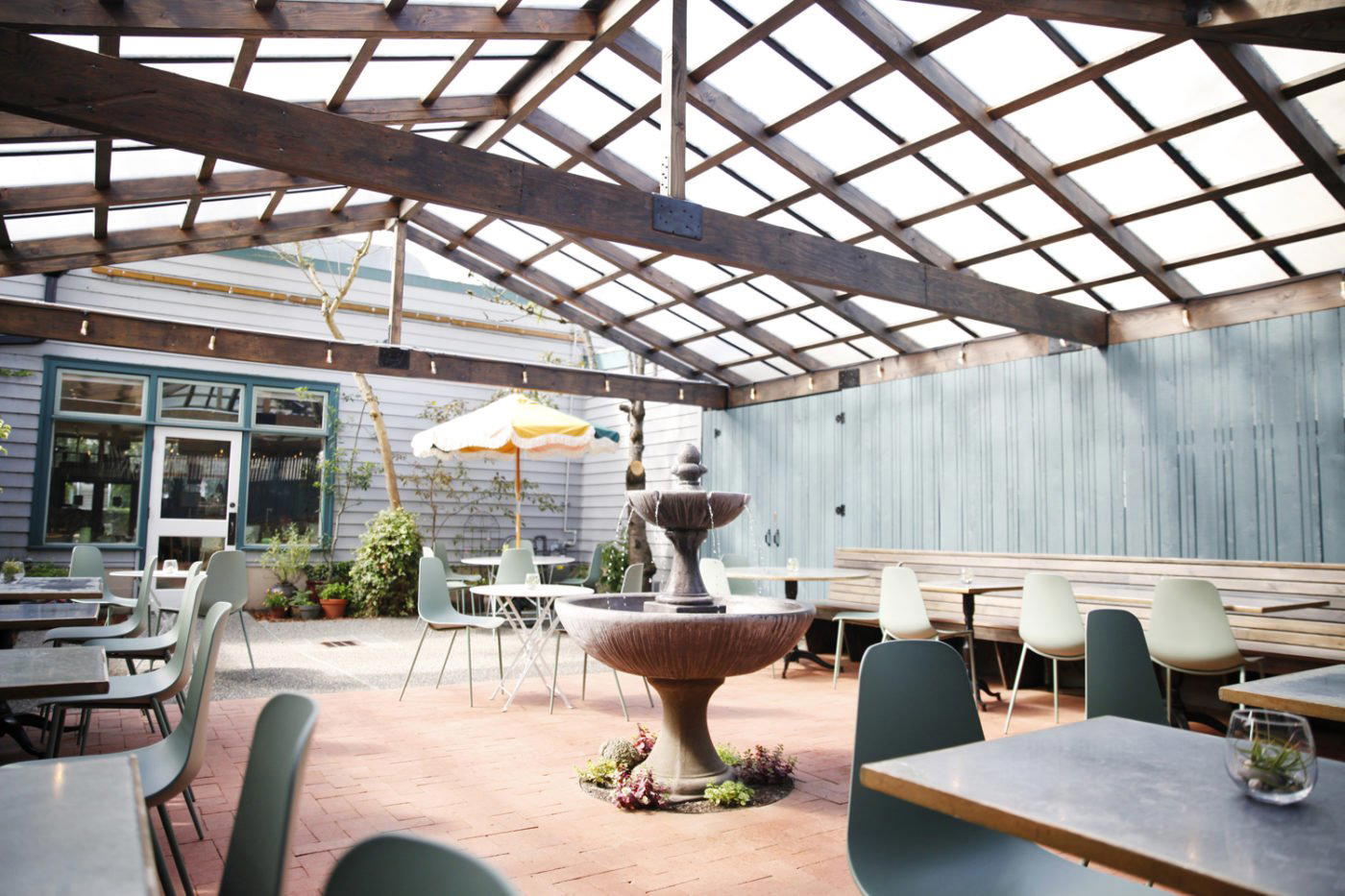
A Room That Sets the Agenda
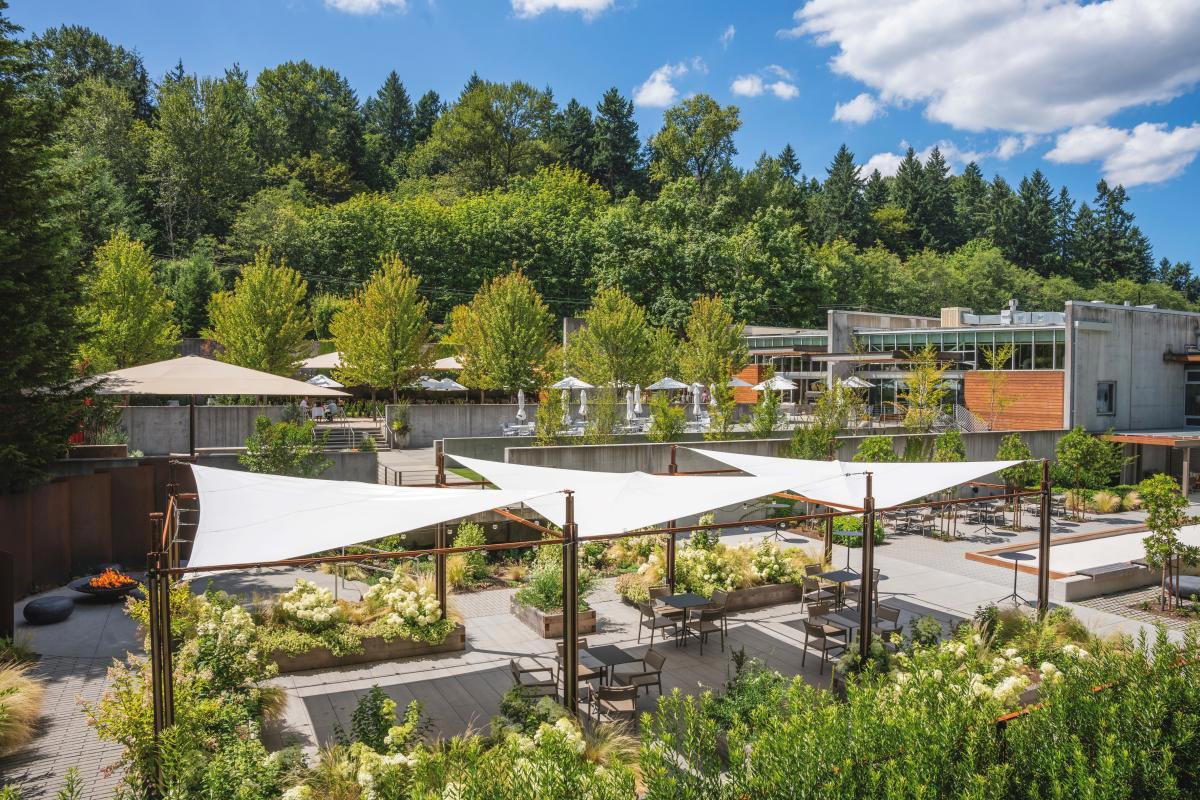
In Seattle's Madison Valley, a neighbourhood that sits at the eastern edge of the Washington Park Arboretum and draws a quieter residential crowd than Capitol Hill or South Lake Union, the physical design of a restaurant often signals its ambitions more directly than any press release could. Cafe Flora, at 2901 E Madison St, makes its position clear from the moment you step inside. The atrium dining room, flooded with natural light through a glass ceiling, and the garden courtyard operate as the dominant spatial logic of the place. This is a room designed around the idea that eating without meat does not require darkness, leather, or the vocabulary of asceticism. It is a greenhouse sensibility, in both the literal and philosophical sense.
That spatial choice has consequences for how the food is received. Vegetable-forward cooking reads differently in a room that feels cultivated rather than clinical. The green-lit atrium format, which became a signature element of the space long before plant-based dining reached its current cultural prominence in American cities, now feels less like a stylistic decision and more like an architectural argument. Seattle's vegetarian restaurant tradition is older and more serious than most American cities give it credit for, and Cafe Flora has been one of its most persistent institutions since opening in 1991.
Where Cafe Flora Sits in Seattle's Dining Order
Seattle's restaurant scene has developed two fairly distinct tracks over the past two decades. One runs through high-concept New American and Asian-influenced tasting menus, exemplified by places like Canlis and Joule, where the format is structured and the experience is curated from arrival to departure. The other track is neighbourhood-anchored, rooted in a specific community, and built for repeat visits rather than single-occasion pilgrimages. Cafe Flora belongs firmly to the second track, and has done so for over three decades.
That longevity is its own form of credential. In a city where restaurant tenures shorter than five years are common and concepts turn over rapidly, a vegetarian restaurant that has held the same address since 1991 has earned a different kind of authority. It is not the authority of Michelin stars or tasting-menu accolades, but the authority of a neighbourhood institution that has outlasted trends, survived the mainstreaming of its own category, and continued to draw a room.
The comparison set for the restaurant is not the modernist vegetable-focused tasting menus that have emerged at places like Blue Hill at Stone Barns in Tarrytown or the farm-driven format of Single Thread Farm in Healdsburg. The restaurant's comparable set is the long-running neighbourhood restaurant that serves a specific community with consistency and a defined point of view, operating outside the awards-driven validation cycle that governs places like Le Bernardin in New York or Atomix.
The Architecture of a Plant-Forward Room
The design logic at the restaurant deserves direct attention because it shaped the restaurant's identity before the kitchen even comes into the picture. The atrium, with its glass roof and abundant plantings, creates a dining environment that is unusual in American vegetarian restaurants, which have historically oscillated between two defaults: the utilitarian co-op aesthetic and the self-consciously upscale register that tries too hard to prove a point. The restaurant occupies neither position. The room is warm without being precious, structured without being formal.
Courtyard element adds a seasonal variable. In Seattle, where the window for comfortable outdoor dining is genuine but not unlimited, a protected courtyard changes the calculus for warm-weather bookings. The combination of interior atrium and exterior garden gives the space a flexibility that most single-format restaurants at this price tier do not have. It also reinforces the restaurant's central spatial argument: that plant-based cooking belongs in rooms designed around light, growth, and something closer to a garden than a dining hall.
This is worth noting in the context of how American cities have treated vegetarian restaurants architecturally. In New York, Chicago, and Los Angeles, the plant-forward fine dining spaces that have attracted serious attention, including venues in the orbit of Smyth in Chicago or Providence in Los Angeles, tend toward sleek minimalism. The restaurant's greenhouse vernacular is a different choice, and one that has proven durable across three decades of shifts in how Americans think about and design spaces for eating without meat.
The Vegetarian Dining Tradition in Seattle
Seattle's relationship with vegetarian and plant-focused cooking runs deeper than the recent national wave of interest in the category. The Pacific Northwest's access to year-round produce, including wild mushrooms, brassicas, root vegetables, and the full range of Pacific Coast growing conditions, has meant that serious vegetable cooking here is not a concession to dietary preference but a response to genuine ingredient quality. Restaurants across the city, from 1415 1st Ave to spots in South Seattle like 2963 4th Ave S, reflect this broader Pacific Northwest ingredient orientation in different ways.
The restaurant predates the current mainstream moment for plant-based cooking by roughly two decades. When it opened in 1991, the category was niche and the design vocabulary for vegetarian restaurants had not yet been seriously interrogated. The fact that the restaurant chose a light-filled atrium rather than the prevailing aesthetic of that period is, in retrospect, a design decision that has aged in its favour. Cities like San Francisco, where Lazy Bear and its contemporaries have pushed American cooking in more experimental directions, and New Orleans, where institutions like Emeril's have defined a different kind of longevity, each have their own versions of the durable neighbourhood anchor. In Seattle, the restaurant occupies that role within the vegetarian category specifically.
Planning Your Visit
- Address: 2901 E Madison St, Seattle, WA 98112
- Neighbourhood: Madison Valley, eastern Seattle, close to the Washington Park Arboretum
- Nearby: 1744 NW Market St for reference on Seattle's broader neighbourhood dining spread
- Format: Neighbourhood restaurant with atrium and courtyard seating; vegetarian-focused menu
- Practical note: Madison Valley is a residential neighbourhood with limited street parking on busy evenings; allow extra travel time if arriving by car
Reputation First
Comparable venues nearby, for context on price, style, and recognition.
| Venue | Cuisine | Price | Notes |
|---|---|---|---|
| Cafe FloraThis venue — the venue you are viewing | Vegetarian | $$ | Not listed |
| Ada's Technical Books and Cafe | Vegetarian & Vegan Cafe | $$ | Broadway |
| Miyabi 45th | Handmade Soba Noodles | $$ | Wallingford |
| Samurai Noodle | Japanese Ramen Noodle Bar | $$ | University District |
| Smith | American Gastropub | $$ | Stevens |
| Coastal Kitchen | Global Coastal Seafood | $$ | Broadway |
Continue exploring
More in Seattle
Restaurants in Seattle
Browse all →
Bars in Seattle
Browse all →
Hotels in Seattle
Browse all →

At a Glance
- Cozy
- Whimsical
- Brunch
- Family
- Casual Hangout
- Farm To Table
- Organic
- Local Sourcing
Current opening hours
- Monday
- 9 AM–9 PM
- Tuesday
- 9 AM–9 PM
- Wednesday
- 9 AM–9 PM
- Thursday
- 9 AM–9 PM
- Friday
- 9 AM–9 PM
- Saturday
- 8 AM–2:30 PM, 5–9 PM
- Sunday
- 8 AM–2:30 PM, 5–9 PM
Hours can change for holidays and private events. Last verified .
Light-filled atrium with lush plants, open airy spaces, cozy dining room, and beautiful outdoor patio creating a bright and bustling neighborhood atmosphere.