A fixture on Rue St Sabin in the 11th arrondissement, Café de l'Industrie occupies the kind of worn-in, tobacco-coloured brasserie space that Paris does better than anywhere. The room draws a neighbourhood crowd that returns for consistency rather than novelty, placing it firmly in the city's tradition of everyday dining done without ceremony, and without compromise.
Pearl is the En Primeur Club membership app — saves, bookings, and concierge access live there. Same editors, same standards.
- Address
- 16 Rue St Sabin, 75011 Paris, France
- Phone
- +33147001353
- Website
- cafedelindustrieparis.fr
- Directions
- Get directions
 Saves & bookings on Pearl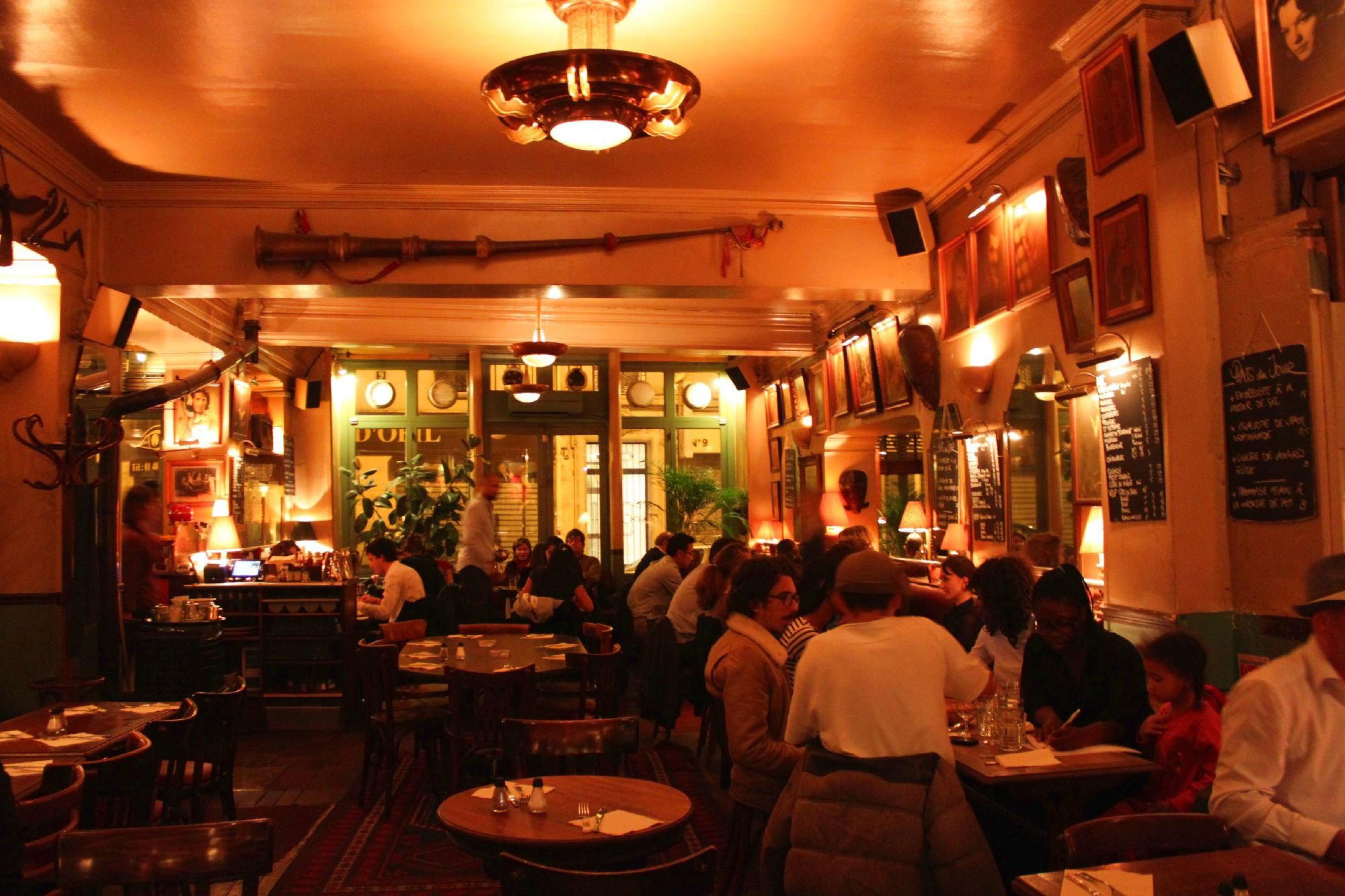
The 11th Arrondissement's Brasserie Tradition, Grounded on Rue St Sabin
Café de l'Industrie is a Classic French Brasserie in Paris's 11th arrondissement, at 16 Rue St Sabin. Paris has spent the last decade sorting its dining culture into increasingly legible tiers. At one end sit the formal tasting-menu addresses, Alléno Paris au Pavillon Ledoyen, Arpège, and Le Cinq, where a meal is a scheduled event with a dress code and a reservation booked weeks in advance. At the other end, the neighbourhood brasserie endures as something more functional and, in many ways, more honest. Café de l'Industrie, at 16 Rue St Sabin in the 11th, belongs to this second category, not as a consolation prize, but as a deliberate choice made by a neighbourhood that has long preferred its pleasures without pretension.
The 11th arrondissement has been a reliable indicator of where Parisian daily life actually happens. Oberkampf and its surrounding streets have attracted a mix of long-established residents, independent creative workers, and the kind of regulars who eat out three or four nights a week without treating it as an occasion. The brasseries and cafés that serve this crowd operate under a different set of pressures than their counterparts on the Rive Gauche or in the 8th: the room has to work at lunch, it has to work on a Tuesday evening, and it has to give people a reason to return without offering anything dramatically new.
The Room Itself: What the Environment Tells You
Approach Café de l'Industrie from Rue St Sabin and the physical cues are immediately legible. The kind of brasserie interior it represents, aged wood, worn leather or rattan seating, walls hung with objects that have accumulated over years rather than been styled into place, signals a room that has earned its patina rather than simulated it. This aesthetic category of Parisian café-brasserie is increasingly rare not because the format has died, but because the economics of opening a new room now almost always produce something shinier. The spaces that genuinely read as lived-in are, by definition, the ones that have survived long enough to become so.
That kind of continuity carries its own editorial weight. In a city where French restaurant culture has fragmented between high-modernist gastronomy (see Kei or L'Ambroisie) and trend-driven neo-bistro formats, the mid-register brasserie that simply continues, serving food at reasonable hours to people who live nearby, has become something worth paying attention to precisely because it asks for no particular attention at all.
Everyday Dining and the Ethics of Continuity
The sustainability conversation in Paris dining has largely centred on high-end kitchens: sourcing narratives at three-star addresses, the farm-to-table programming that defines French regional restaurants like Bras in Laguiole or Mirazur in Menton, the zero-waste ambitions that have become almost obligatory in ambitious tasting-menu formats. But there is a quieter, less-discussed form of environmental logic embedded in the everyday brasserie model that places like Café de l'Industrie represent.
A neighbourhood restaurant that turns a room twice at lunch and twice at dinner, cooking from a menu that rotates with market availability rather than seasonal concept launches, generates far less structural waste than a destination restaurant cycling elaborate multi-component dishes through a small number of covers. The brasserie's reliance on recognisable, adaptable formats, roast dishes, composed salads, simple proteins with sauce, means that prep is calibrated to demand rather than to theatrical effect. Portion of vegetable trim that would be discarded in a more elaborate kitchen becomes stock. The menu's relative simplicity is not a limitation; it is a form of operational discipline that the fine-dining sector has spent years trying to retrofit into formats that were never designed for it.
This is not distinctive to the restaurant, it is a structural feature of the brasserie model across France, visible in institutions from Auberge de l'Ill in Alsace to the more modest tables of the Auvergne. But in the 11th, where the neighbourhood's eating culture has remained relatively resistant to high-concept programming, the everyday logic of the brasserie kitchen is easier to see in its unadorned form.
Where Café de l'Industrie Sits in the Paris Picture
Comparing the restaurant to the formal end of the Paris dining tier is a category error. The relevant comparable set is the mid-register brasserie and café-restaurant, rooms that serve wine by the glass, write a plat du jour on a chalkboard, and close the kitchen between service rather than offering all-day grazing. Within that comparable set, location matters considerably. The 11th has the density of regular customers that can sustain a room through the shoulder hours; it also has the foot traffic from Bastille and the surrounding streets to ensure that a slow Tuesday is not a crisis.
The contrast with Paris's destination-restaurant circuit is instructive. The kitchens at Troisgros or Flocons de Sel require a journey and a commitment; even the Paris three-stars, Les Prés d'Eugénie, Paul Bocuse, Georges Blanc in the broader French context, ask for a certain kind of occasion-building that most evenings simply do not call for. The neighbourhood brasserie fills the space those rooms deliberately leave empty: the ordinary evening, the long lunch, the catch-up over a carafe rather than a curated wine list.
For visitors building a Paris itinerary that mixes formal and informal eating, the 11th's brasserie circuit is worth treating as a distinct category. It is not a warm-up for a Michelin dinner; it is a different argument about what restaurant culture is for. Rooms like Café de l'Industrie are where that argument is made most plainly. For a broader map of where to eat across the city, our full Paris restaurants guide covers the range from this tier upward.
Planning Your Visit
Address: 16 Rue St Sabin, 75011 Paris. Neighbourhood: 11th arrondissement, between Bastille and Oberkampf, well served by the Bréguet-Sabin and Bastille Métro stops. Reservations: Walk-ins are welcome, and arriving early for lunch is advisable at busy periods. Dress: No formal code; the room is smart-casual in the way that most Parisian neighbourhood restaurants default to without stating it. Budget: About $25 per person, with a price tier of $$. Auberge du Vieux Puits or La Table du Castellet.
Awards and Standing
Comparable venues nearby, for context on price, style, and recognition.
| Venue | Cuisine | Price | Notes |
|---|---|---|---|
| Café de l'IndustrieThis venue — the venue you are viewing | Classic French Brasserie | $$ | Not listed |
| Chez Janou | Provençal Bistro | $$ | Le Marais |
| RESTAURANT AU PASSAGE | Modern French Bistrot | $$ | 11e Arrondissement |
| Maison Plisson | Modern French Bistro | $$ | Le Marais |
| Le Petit Baiona | Basque Bistro | $$ | Bastille |
| La Belle Équipe | Parisian Bistro | $$ | Bastille |
Continue exploring
More in Paris
Restaurants in Paris
Browse all →
Bars in Paris
Browse all →
Hotels in Paris
Browse all →
Wineries in Paris
Browse all →
At a Glance
- Classic
- Cozy
- Rustic
- Casual Hangout
- Group Dining
- After Work
- Brunch
- Late Night
- Standalone
- Beer Program
- Local Sourcing
Current opening hours
- Monday
- 8:30 AM–1 AM
- Tuesday
- 8:30 AM–2 AM
- Wednesday
- 8:30 AM–2 AM
- Thursday
- 8:30 AM–2 AM
- Friday
- 8:30 AM–2 AM
- Saturday
- 8:30 AM–2 AM
- Sunday
- 8:30 AM–1 AM
Hours can change for holidays and private events. Last verified .
Retro French bistro aesthetic with warm, inviting lighting and a nostalgic atmosphere; divided smoking and non-smoking sections; casual neighborhood feel with vintage charm.