Burg Deutschlandsberg
Our verdict
A medieval castle rising above the Styrian market town of Deutschlandsberg, Burg Deutschlandsberg is one of western Styria's most historically layered sites. The fortress traces its origins to the twelfth century and today functions as a cultural and events venue set against forested hillsides. For dining context in the same town, see Kollar Göbl and Theresas - Eine Art Gasthaus.

Pearl is the En Primeur Club membership app, where members save venues, book tables and use the concierge.
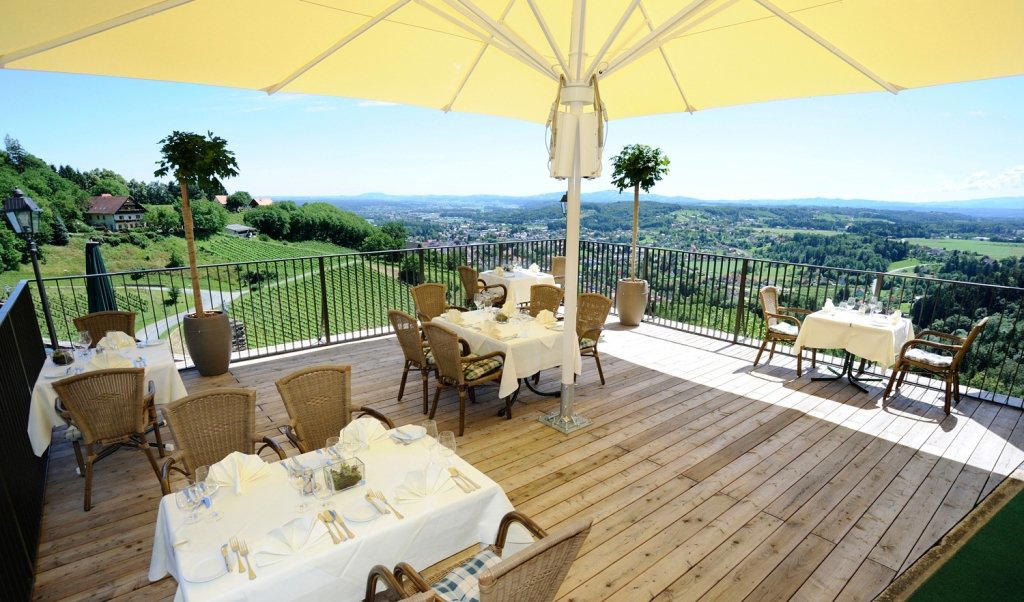
A Fortress Above the Styrian Foothills
Approaching Deutschlandsberg from the valley floor, the silhouette of Burg Deutschlandsberg reads before the town does. The castle sits on a promontory above Burgplatz 1, its stone walls climbing out of the tree line in a way that makes clear this was never a decorative structure. Western Styria has few fortifications of this scale still standing in anything close to their original massing, and the visual weight of the complex sets a particular tone before you have crossed the threshold. The air at this elevation carries the cool, resinous quality typical of Styrian hillside sites, where mixed forest begins almost immediately beyond the cultivated slopes below.
Styria as a region has long occupied a distinctive position in Austrian cultural geography. The province produces some of the country's most interesting white wines and has developed a farm-to-table sensibility in its hospitality culture that precedes the term's fashionable currency elsewhere. That regional identity matters here because any experience at a site like Burg Deutschlandsberg is inseparable from the agricultural and forested terrain surrounding it. The castle does not exist in isolation from that landscape; it has been embedded in it for centuries, and the produce, game, and timber traditions of this corner of Styria inform what gets served and celebrated in its precincts.
Castle Sites as Ingredient Country
Historic castle venues in Alpine Austria occupy a specific niche in the country's food and hospitality tradition. Because many were built to command agricultural land and trade routes, they tend to sit inside or adjacent to the very source regions that define regional cooking: mushroom-rich forests, game-bearing hillsides, orchards running along south-facing slopes. Burg Deutschlandsberg is positioned in territory that fits this pattern closely. The Deutschlandsberg district lies within the Schilcher wine country of western Styria, an area producing the rosé-style wine made from the Blauer Wildbacher grape that appears almost nowhere else in Austria. The proximity to that producing region alone gives any food or drink event staged at the castle a geographical specificity that venues in metropolitan settings cannot replicate.
Austrian castle hospitality has historically leaned into seasonal and local sourcing not as a contemporary marketing posture but as a practical necessity rooted in how such sites were provisioned. Game from surrounding forests, root vegetables from kitchen gardens, dairy from valley farms: these supply chains predate modern distribution networks by centuries. The contemporary revival of interest in regional Austrian cuisine, represented at the high end by places like Steirereck im Stadtpark in Vienna and Landhaus Bacher in Mautern an der Donau, draws on exactly these traditions. A castle site in Styria sits at the origin point of that supply chain in a way that urban and resort venues do not.
Further afield, Austrian regional cooking has found expression in restaurants willing to commit to a single geographical identity. Obauer in Werfen and Döllerer in Golling an der Salzach both demonstrate that smaller Austrian towns can sustain serious culinary operations when the surrounding terrain provides sufficient ingredient depth. Styria, with its game, pumpkin oil, Schilcher, and wild herbs, has that depth in abundance.
Deutschlandsberg in the Styrian Dining Context
The town of Deutschlandsberg is not a major gastronomic destination in the way that Graz or the Wachau wine corridor are, but it carries enough regional culinary identity to reward visitors who seek out its better tables. Kollar Göbl and Theresas - Eine Art Gasthaus represent the current serious dining options in town, and both operate within a Styrian regional framework. The castle sits above this modest but coherent food scene and functions as the town's most architecturally significant venue for events and cultural programming.
For readers planning a broader Austrian dining itinerary around Styria and the Alpine provinces, the EP Club coverage spans the full range, from Taubenkobel in Schützen am Gebirge on the Burgenland border to the Tyrolean rooms of Schwarzer Adler in Hall in Tirol and Gourmetrestaurant Tannenhof in Sankt Anton am Arlberg. The alpine-province circuit also includes Stüva in Ischgl, Griggeler Stuba in Lech, Ikarus in Salzburg, Kräuterreich by Vitus Winkler in Sankt Veit im Pongau, Restaurant 141 by Joachim Jaud in Mieming, and Ois in Neufelden. For international comparison points in the farm-to-table castle-estate tradition, Lazy Bear in San Francisco and Le Bernardin in New York City illustrate how different geographies have approached ingredient narrative at the premium end of the spectrum, even if the format and setting differ sharply from what western Styria offers.
Our full Deutschlandsberg restaurants guide covers the town's dining options with the same regional lens.
Planning a Visit
Burg Deutschlandsberg is located at Burgplatz 1, 8530 Deutschlandsberg, in western Styria. The castle is accessible from Graz in roughly forty-five minutes by road, making it a viable day-trip anchor for visitors based in the provincial capital. Given the site's function as a cultural and events venue, programming varies by season and visitors are advised to check current schedules directly before travelling specifically to attend a food or drink event at the castle. The surrounding Schilcher wine country is at its most active between late summer and the autumn harvest period, which tends to generate the highest concentration of regional food events in the district.
Frequently asked questions
Would Burg Deutschlandsberg be comfortable with kids?
Castle sites of this type in western Styria tend to appeal to children in a concrete way: stone ramparts, elevated terrain, and the physical scale of a medieval fortification are easier to explain than a gallery or a wine estate. The promontory setting at Burgplatz 1 means some sections may involve uneven ground or steps, so younger children should be supervised. It is worth contacting the castle directly before visiting to confirm current access and any age-relevant programming.
What kind of setting is Burg Deutschlandsberg?
Burg Deutschlandsberg is a hilltop fortress positioned above the town of Deutschlandsberg in western Styria, with views across the foothills toward the valley floor. The address at Burgplatz 1 places it at the elevated heart of the old settlement. As a historic castle rather than a purpose-built hospitality venue, the atmosphere is architectural and historically grounded rather than curated for dining or accommodation.
Is Burg Deutschlandsberg worth visiting as a day trip from Graz?
Graz sits roughly forty-five minutes from Deutschlandsberg, making the castle a practical half-day excursion from the Styrian capital. The fortress occupies a commanding position on the ridge above town at Burgplatz 1, which justifies the detour on architectural and landscape grounds alone. Pairing the visit with a drive through western Styria's wine country adds regional context that a castle visit on its own cannot provide.
What do regulars order at Burg Deutschlandsberg?
Visitors planning to eat in the area should look to Deutschlandsberg's town centre or make the forty-five-minute drive to Graz, which carries a broader range of Styrian dining options. Checking directly with the castle before your visit will clarify whether any on-site catering is currently available.
Where exactly is Burg Deutschlandsberg?
Burg Deutschlandsberg is located at Burgpl. 1, 8530 Deutschlandsberg, Austria, Deutschlandsberg.
Quick Comparison
Comparable venues nearby, for context on price, style, and recognition.
| Venue | Cuisine | Price | Awards | Notes |
|---|---|---|---|---|
| Burg DeutschlandsbergThis venue (the venue you are viewing) | Modern Austrian Fine Dining with Styrian Specialties | $50–100 | Not listed | Not listed |
| Theresas - Eine Art Gasthaus | Regional Austrian Gasthaus | $20–30 | Not listed | Deutschlandsberg |
| Kollar Göbl | Austrian Regional Cuisine | Not listed | Not listed | Hauptplatz |
| Jaglhof | Creative Regional South Styrian Cuisine | $100–150 | Not listed | Gamlitz |
| Steira Wirt | Creative Seasonal Styrian Fine Dining | Not listed | Michelin Plate · La Liste Top Restaurants | Trautmannsdorf |
| Edler im Landhaus Oswald | Modern Austrian Fine Dining | Not listed | Not listed | Unterbergla |
Continue exploring
More in Deutschlandsberg
Restaurants in Deutschlandsberg
All restaurants in Deutschlandsberg →
Bars in Deutschlandsberg
Browse all →
Hotels in Deutschlandsberg
Browse all →

Details
- Historic
- Elegant
- Romantic
- Scenic
- Special Occasion
- Celebration
- Private Event
- Historic Building
- Terrace
- Panoramic View
- Wine Cellar
- Extensive Wine List
- Local Sourcing
- Mountain
- Vineyard
- A La Carte
- Tasting Menu
- Wine Program
- Vegetarian Friendly
- Gluten Free Options
Current opening hours
- Monday
- Closed
- Tuesday
- Closed
- Wednesday
- 12–2:30 PM, 6–9:30 PM
- Thursday
- 12–2:30 PM, 6–9:30 PM
- Friday
- 12–2:30 PM, 6–9:30 PM
- Saturday
- 12–2:30 PM, 6–9:30 PM
- Sunday
- Closed
Hours can change for holidays and private events. Hours as of .
Historic castle ambiance with charming halls and sun terrace offering glorious views.