Brasserie des Jardins

Brasserie des Jardins holds a Michelin Plate for 2024 and 2025, placing it among Luxembourg's recognised addresses for traditional cuisine at a mid-range price point. For travellers seeking grounded, familiar cooking without the ceremony of the city's starred tier, it occupies a reliable position.
Pearl is the En Primeur Club membership app — saves, bookings, and concierge access live there. Same editors, same standards.
- Address
- 27B Bd Marcel Cahen, 1311 Märel Luxembourg
- Phone
- +352 26 25 93 48
- Website
- brasseriedesjardins.lu
- Directions
- Get directions
 Saves & bookings on Pearl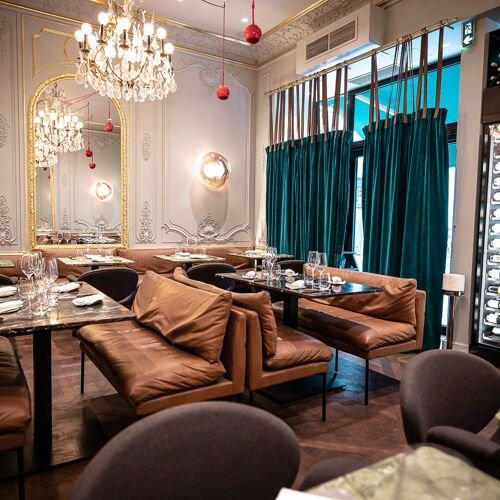
A Brasserie Format That Holds Its Ground in Luxembourg's Dining Scene
Boulevard Marcel Cahen runs through one of Luxembourg City's quieter residential stretches, where the pace slows compared to the financial district and the restaurant density thins considerably. In that context, a brasserie with a proper street-front address and consecutive Michelin Plate recognition sits in a different register from the flash of the city centre. Approaching Brasserie des Jardins at number 27B, the format announces itself clearly: this is a classic French brasserie in Märel, Luxembourg, operating at the middle of the market, where the obligation is consistency rather than spectacle.
The brasserie archetype across continental Europe has always occupied a specific social function, a space where the cooking is serious enough to justify a deliberate reservation but relaxed enough that the room does not impose its own grammar on the evening. Luxembourg's dining scene has moved aggressively upward over the past decade, with addresses like Ma Langue Sourit and Léa Linster anchoring a two-star tier and creative formats like Apdikt building credentialed one-star programs. The mid-range, by contrast, has been slower to consolidate its identity. Brasserie des Jardins, with two consecutive years of Michelin Plate recognition, represents one of the clearer data points in that tier.
The Physical Container: Brasserie Logic in a Residential Setting
The Michelin Plate, reintroduced in the guide's current format, is awarded to restaurants where inspectors find good cooking, a distinction that separates the recipient from the undifferentiated mass of the unrecognised, without implying the ambition or execution of a starred establishment. What it implies about the room is as instructive as what it implies about the plate: Michelin's inspectors tend to calibrate the award against the venue's own stated register. For a brasserie operating at the €€ price point, Plate recognition means the cooking is meeting or exceeding what the physical format and the price signal promise.
In brasserie terms, the spatial arrangement typically prioritises throughput and ease over theatre. Tables are set for conversation rather than inspection, lighting tends toward warmth over drama, and the room does not ask you to perform. That physical logic is part of what separates the brasserie category from Luxembourg's upper tier, where restaurants like Archibald De Prince and Brimer operate in more deliberate, curated spaces. A brasserie earns its repeat clientele not through memorable individual set pieces but through the cumulative reliability of the room working the same way every time.
That breadth of review base, at a consistent score, suggests the room is functioning as intended across variable conditions, a weeknight dinner, a weekend lunch, a table of four with varying expectations.
Traditional Cuisine at the Mid-Market: What the Category Signals
The classification of traditional cuisine, as Michelin uses it, encompasses cooking rooted in established regional or national techniques without the creative reframing that marks the contemporary or innovative categories. In Luxembourg, that tradition draws from the meeting of French, German, and Belgian culinary cultures, a country whose restaurant geography is small enough that its own vernacular gets absorbed quickly into broader European reference points. Traditional cuisine at the €€ tier means the kitchen is working with recognisable preparations: braised proteins, classical sauces, seasonal produce handled without deconstruction.
That approach puts Brasserie des Jardins in dialogue with traditional-cuisine addresses across the wider European mid-market. Comparable Michelin-recognised traditional addresses operate at this same register in different geographies: Auberge Grand'Maison in Mûr-de-Bretagne, Auga in Gijón, Boroa in Amorebieta-Etxano, and Can Bosch in Cambrils each hold Michelin recognition within established culinary traditions, priced for regular rather than occasional use. The pattern across these addresses is consistent: Michelin Plate kitchens working in traditional registers tend to succeed by depth of execution rather than novelty of concept. The cooking earns its recognition by doing familiar things with discipline.
Outside Europe, the same dynamic applies at addresses like Casa Lavanda in Istanbul and Gasthaus Zum Gupf in Rehetobel, where traditional technique and local grounding form the editorial through-line of the cooking. El Ermitaño in Benavente and Coto de Quevedo Evolución in Torre de Juan Abad extend the same logic into Spanish regional kitchens. In each case, the Plate signals consistent quality within a clearly stated culinary identity.
Planning a Visit: Practical Positioning
The restaurant sits at the €€ price point, placing it well below the €€€€ tier that defines Luxembourg's starred establishments and below the €€€ bracket occupied by addresses like Apdikt. For travellers building a multi-day itinerary across Luxembourg's restaurant range, the brasserie functions as a natural anchor for a lunch or early dinner that does not require the scheduling logistics of the city's more sought-after tasting-menu formats.
The address at 27B Boulevard Marcel Cahen in the Märel quarter positions it away from the more heavily trafficked dining zones near the Old Town and the Kirchberg plateau. That distance from the conventional tourist circuit is worth factoring into route planning, though it also means the room is more likely to be running at its own neighbourhood rhythm rather than calibrated for international visitors. Booking in advance is sensible given the Michelin Plate recognition, which tends to draw consistent demand even at addresses operating below the starred tier.
Comparable Venues
Comparable venues nearby, for context on price, style, and recognition.
| Venue | Cuisine | Price | Notes |
|---|---|---|---|
| Brasserie des JardinsThis venue — the venue you are viewing | Classic French Brasserie | $$$ | Not listed |
| Rôtisserie Ardennaise | Classic French Brasserie | $$$ | Belair |
| De Jangeli | Refined French Gastronomic | $$$ | Mondorf-les-Bains |
| Le Jardin de la Gaichel | Gastronomic French | $$$ | Gaichel |
| L'Atelier Windsor | Classical French Brasserie | $$$ | Rollingergrund / Belair-Nord |
| Le bistrot du Kachatelier | Modern Regional French Bistro | $$$ | Manternach |
Recognition history
Dated appearances from independent guides and award organizations, with the underlying list record or original source where available.
Michelin Plate
Michelin
Michelin Plate
Michelin
Michelin Plate
Michelin
Continue exploring
More in Luxembourg
Restaurants in Luxembourg
Browse all →
Bars in Luxembourg
Browse all →
Hotels in Luxembourg
Browse all →
Wineries in Luxembourg
Browse all →
At a Glance
- Elegant
- Modern
- Cozy
- Sophisticated
- Business Dinner
- Date Night
- Terrace
- Extensive Wine List
- Local Sourcing
Current opening hours
- Monday
- 12–2 PM, 6:30–9:30 PM
- Tuesday
- 12–2 PM, 6:30–9:30 PM
- Wednesday
- 12–2 PM, 6:30–9:30 PM
- Thursday
- 12–2 PM, 6:30–9:30 PM
- Friday
- 12–2 PM, 6:30–10 PM
- Saturday
- 12–2:30 PM, 6:30–10 PM
- Sunday
- 12–2:30 PM, 6:30–9:30 PM
Hours can change for holidays and private events. Last verified .
Chic and relaxed ambiance with warm contemporary setting, peaceful terrace, and thoughtful design elements.