Brass Door
Our verdict
Brass Door sits on San Ramon Valley Boulevard in the heart of the Tri-Valley corridor, a suburban stretch where American dining ambitions have grown steadily more serious over the past decade. The kitchen's sourcing choices and format position it within a broader East Bay conversation about where ingredient-driven cooking can take root outside of San Francisco proper. A practical address for those working or staying in the 680 corridor.
- Address
- 2154 San Ramon Valley Blvd, San Ramon, CA 94583
- Phone
- (925) 837-2501
- Website
- brassdoor.com
- Directions
- Get directions
The menu
What to order
- Prime rib
Dining Along the 680 Corridor: Where Brass Door Fits
The stretch of San Ramon Valley Boulevard running through San Ramon tells a story about how American suburban dining has changed. A decade ago, this corridor was defined almost entirely by chain operations and casual franchises serving the sprawling office parks and residential developments of the Tri-Valley. The shift toward independent, ingredient-attentive restaurants has arrived here more slowly than in Berkeley or Oakland, which makes venues that take sourcing seriously worth paying attention to. Brass Door, at 2154 San Ramon Valley Blvd, sits within that transition, serving a community that commutes between Silicon Valley to the north and the broader East Bay but increasingly expects the food on its doorstep to reflect those expectations.
San Ramon is not a dining destination in the way that Healdsburg, home to Single Thread Farm, has positioned itself around agriculture-driven fine dining, or the way that Napa anchors its identity around The French Laundry and a half-century of wine country gastronomy. It operates in a different register entirely: a working suburb with genuine appetite for better food. The most compelling independent restaurants in corridors like this one tend to live or die by how seriously they take the sourcing question, because without the scenic draw of wine country or the cultural density of a major city, the food itself carries more weight.
The Question of Where It Comes From
Ingredient sourcing is the clearest dividing line in American restaurants right now, and it runs across every price point and format. At the far end of that spectrum, places like Blue Hill at Stone Barns in Tarrytown have built an entire identity around the farm-to-table relationship, treating provenance as the central editorial statement of the menu. Oyster Oyster in Washington, D.C. frames sourcing through a sustainability lens that shapes every dish on the menu. Further west, Smyth in Chicago maintains its own farm as a direct supply chain for the kitchen.
These are the anchoring examples at the format's most rigorous tier. But sourcing discipline does not require Michelin recognition or a farm on the premises. What it requires is consistent decision-making about where proteins, produce, and dairy originate, and a kitchen that treats those decisions as load-bearing rather than decorative. The East Bay and greater Bay Area have a structural advantage here: proximity to some of California's most productive agricultural land, from the Sacramento Valley to the Salinas corridor, means that a restaurant making genuine sourcing commitments has more to work with than almost anywhere else in the country.
For Brass Door, positioned in a suburban market without the gravitational pull of a destination dining scene, the sourcing question becomes a practical differentiator. Diners along the 680 corridor who have eaten at Lazy Bear in San Francisco or made the drive to Providence in Los Angeles arrive with a reference point. They understand what intentional sourcing tastes like, and they notice when it is absent.
The Physical Environment and What It Signals
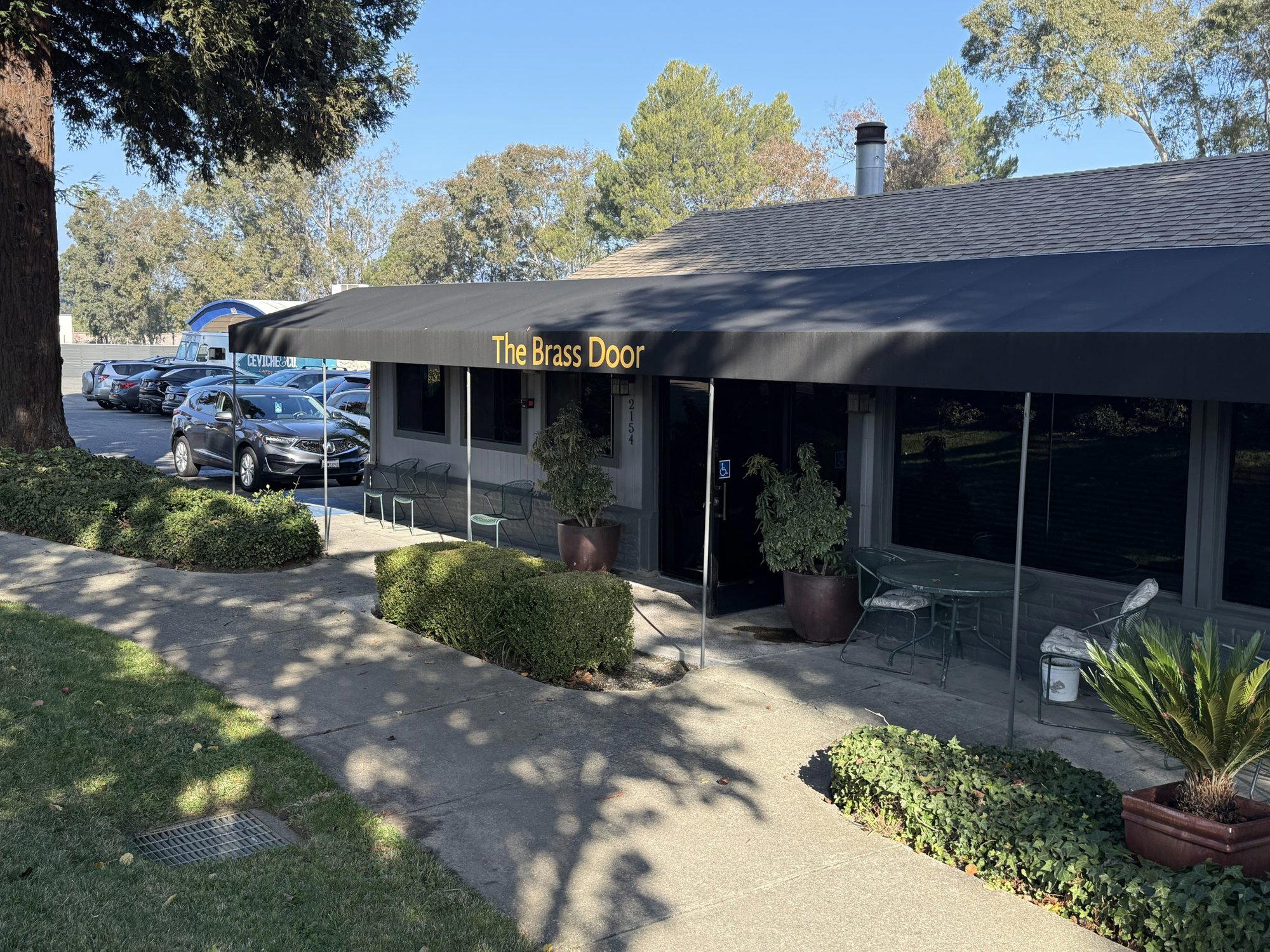
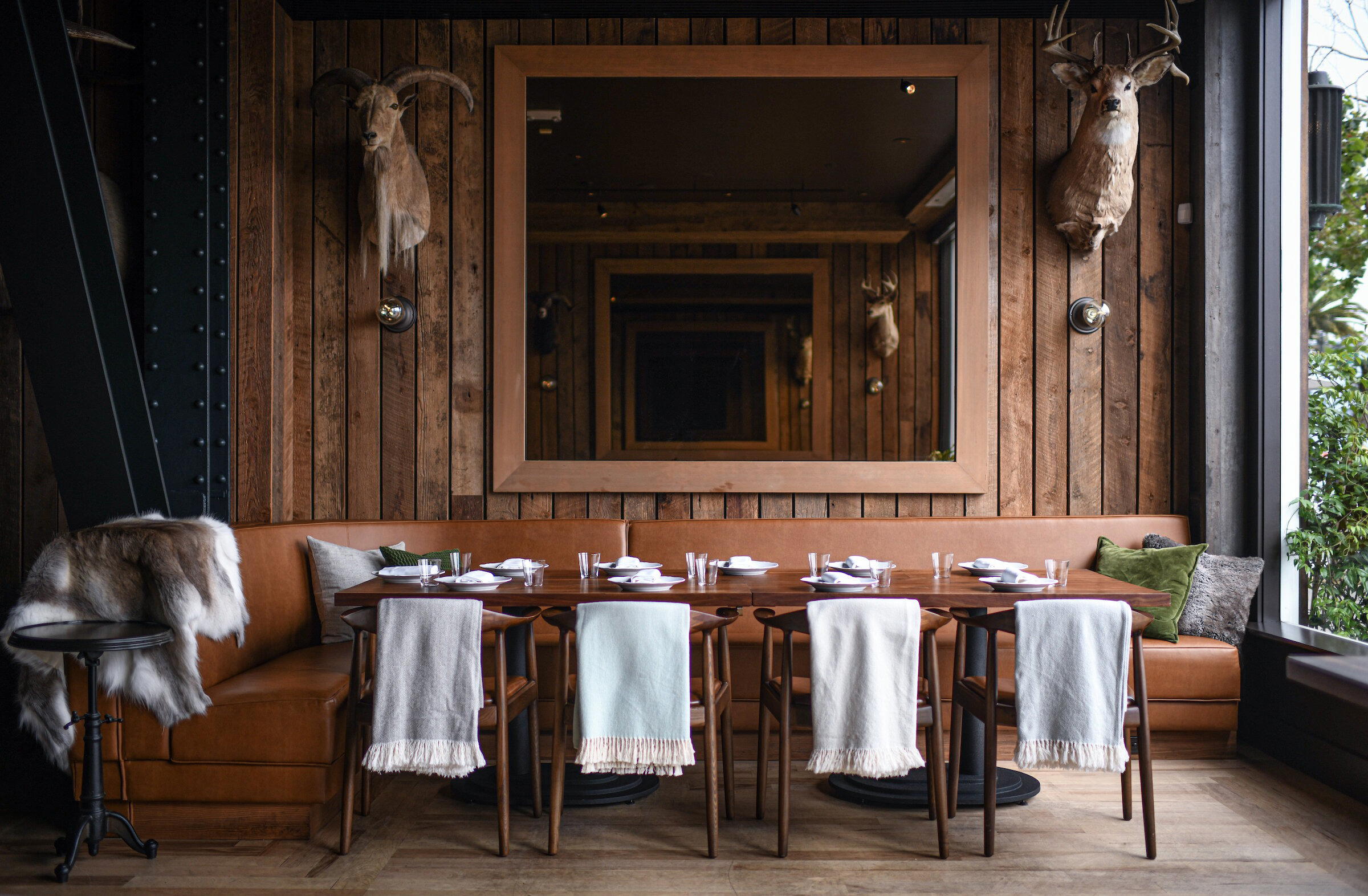
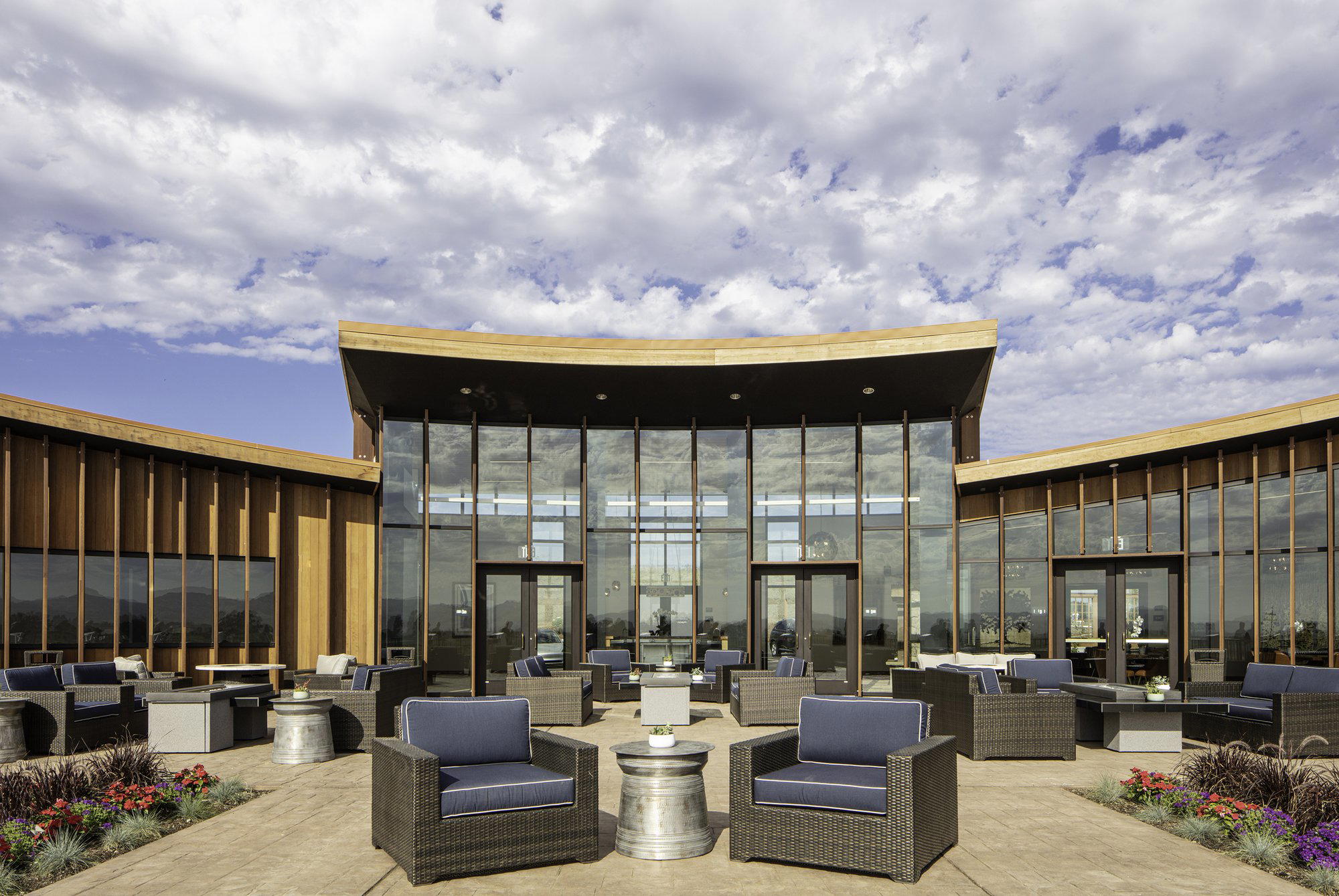
San Ramon Valley Boulevard is a wide commercial arterial road, and arriving at Brass Door involves the visual grammar of suburban California: parking lots, retail signage, the occasional palm. The name itself suggests a particular aesthetic register, the brass-and-dark-wood vocabulary of American bar-dining that positions a space as warmer and more serious than a chain but accessible enough to work for the after-work crowd. This format, common across Tri-Valley dining, tends to attract a mixed demographic: corporate diners on expense, local families, and regulars who have found something worth returning to. The question a restaurant in this mold has to answer is whether the food lives up to the implied ambition of the setting.
Across American dining, this category of restaurant, call it the serious suburban independent, has a complicated reputation. It lacks the press attention of urban fine dining flagships like Le Bernardin in New York or Atomix, and it does not carry the prestige signals of a destination property like The Inn at Little Washington. But the category has produced genuinely serious kitchens. Frasca Food and Wine in Boulder built a national reputation in a market that most food writers would have dismissed. Bacchanalia in Atlanta made similar ground in a city long overlooked by the critical establishment. The suburban or secondary-market setting is not disqualifying. It can, in fact, produce a kind of focused commitment that urban competition sometimes dilutes.
Context Within the Broader Bay Area Dining Conversation
The Bay Area's dining ecosystem is unusually stratified. At the leading, wine-country properties and San Francisco's most celebrated kitchens operate in a rarefied tier shaped by decades of critical attention and agricultural infrastructure. Below that, a dense layer of Oakland and Berkeley independents has developed around specific culinary traditions, sourcing ethics, and neighborhood identity. The Tri-Valley corridor, encompassing Walnut Creek, Pleasanton, Livermore, and San Ramon, sits adjacent to this ecosystem but operates in a separate market register, drawing from a population that is affluent, food-aware, and underserved by the kind of serious independent dining it seeks.
Restaurants in this market that get sourcing right, that build supplier relationships with Northern California farms and ranches rather than defaulting to broadline distributors, tend to develop loyal local followings precisely because the alternative is a long drive west on the 580. Addison in San Diego and The Wolf's Tailor in Denver both demonstrate that markets outside of coastal dining capitals can support restaurants with genuine sourcing discipline and cooking ambition. The geography of American fine and serious casual dining has decentralized significantly over the past fifteen years, and the Tri-Valley is part of that story.
For the practical reader: Brass Door is located at 2154 San Ramon Valley Blvd, San Ramon, CA 94583, accessible by car with direct parking typical of the boulevard's commercial strip. San Ramon sits roughly 35 miles east of San Francisco, making it an accessible dinner option for those based in the East Bay or working in the Bishop Ranch business park that anchors much of San Ramon's daytime population. For a broader sense of what the East Bay and surrounding areas offer, our full San Ramon restaurants guide maps the corridor in more detail.
Frequently asked questions
Is Brass Door okay with children?
Nothing in the available record for Brass Door at 2154 San Ramon Valley Blvd indicates an adults-only policy. Along commercial arterial dining corridors like San Ramon Valley Boulevard, most establishments operate as family-friendly environments by default. Calling ahead to confirm seating arrangements is advisable, particularly for larger groups.
What's the overall feel of Brass Door?
Brass Door sits on San Ramon Valley Boulevard, a wide commercial strip that shapes the arrival experience before you step inside. The surrounding context — suburban California parking lots, mixed retail — positions this as a neighbourhood destination rather than a destination-dining exercise. Within San Ramon's dining scene, that tends to mean a relaxed, approachable room rather than a formal one.
How does Brass Door compare to other dining options along the San Ramon Valley corridor?
The 680 corridor through San Ramon has shifted considerably over the past decade, moving from a chain-dominant strip toward a more varied mix of independent operators. Brass Door at 2154 San Ramon Valley Blvd is part of that shift, drawing editorial attention for where it sits within the local dining conversation rather than for any single award or chef credential on record. For East Bay diners who want something outside San Francisco's stratified restaurant hierarchy, the corridor offers a distinct alternative.
What should I eat at Brass Door?
The body of reporting on this venue addresses how ingredient sourcing divides American restaurants right now, which suggests menu composition is a point of editorial interest here. Checking directly with the restaurant at 2154 San Ramon Valley Blvd, San Ramon, CA 94583 will give you the most accurate current picture.
How do I find Brass Door?
Brass Door is located at 2154 San Ramon Valley Blvd, San Ramon, CA 94583, San Ramon.
At-a-Glance Comparison
| Venue | Cuisine | Price | Awards | Notes |
|---|---|---|---|---|
| Brass DoorThis venue — the venue you are viewing | Classic American Steakhouse | Not listed | Not listed | Not listed |
| Le Bernardin | French Seafood Fine Dining | $300–500 | 3 Michelin Stars · World's 50 Best #13 | French, Seafood |
| Lazy Bear | Modern American Tasting Menu | Not listed | 2 Michelin Stars · World's 50 Best #25 | Progressive American, Contemporary |
| Atomix | Modern Korean Tasting Menu | $300–500 | 2 Michelin Stars · World's 50 Best #7 | Modern Korean, Korean |
| Per Se | French Fine Dining Tasting Menu | $300–500 | 3 Michelin Stars · World's 50 Best #40 | French, Contemporary |
| Masa | Traditional Japanese Omakase | $500+ | 2 Michelin Stars · World's 50 Best #27 | Sushi, Japanese |
Continue exploring
More in San Ramon
Restaurants in San Ramon
Browse all →
Bars in San Ramon
Browse all →
Hotels in San Ramon
Browse all →
Details
- Classic
- Cozy
- Well Known
- Business Dinner
- Family
- Celebration
- Historic Building
- A La Carte
- Gluten Free Options