The Palatinate itself matters here. The area around Maßweiler sits within reach of the Pfalz wine region, one of Germany's warmest and most productive, and the broader Südwestpfalz is a range of forests, farmland, and managed food culture that has historically supplied kitchens rather than hosted them. When a Michelin-starred table operates in this context rather than in a larger city, the sourcing story is embedded in geography rather than constructed as a marketing point. High-quality ingredients prepared with classic technique is a description that carries more weight when the kitchen is this close to the land it draws from.
In the German fine-dining tier at the €€€€ end, French classicism has largely been filtered through contemporary ambition , Schwarzwaldstube in Baiersbronn holds three stars for its interpretation of that tradition, while Vendôme in Bergisch Gladbach pushes toward creative European territory. Borst, priced at €€€ and holding one Michelin star, occupies a different position: classically grounded, unpretentious in its confidence, and not attempting to compete in the avant-garde register. That is a considered place to stand.
The Menu Structure: Set Courses with Room to Adjust
Set menu formats at this level across Germany typically offer limited flexibility , a fixed progression that signals the kitchen's authority. Borst structures its offering with more pragmatism: three, four, five, or seven courses, with two additional starters available to swap in or add on. For a €€€-tier Michelin table, this is a notably guest-oriented format. It allows a couple to eat at different depths of investment without either feeling under- or over-committed, and it gives returning guests a reason to vary the experience across visits.
Chef Stefan Bacchelli's kitchen holds to the classic line , the cuisine is described as pleasingly unpretentious and refined, which in French culinary terms points toward technique over novelty, product quality over conceptual architecture. This positions the cooking in a peer set closer to Bagatelle in Trier or, further afield, the pure classicism of Waterside Inn in Bray and Cheval Blanc by Peter Knogl in Basel than toward the creative-contemporary kitchens earning higher star counts in Germany's major cities.
The wine program draws from the region. Pairing a classic French menu with Palatinate wines rather than defaulting to Burgundy or Bordeaux references is an editorial choice that reinforces the local identity of the meal. The Pfalz produces Riesling, Weißburgunder, and Spätburgunder with enough quality range to hold its own against a multi-course format, and integrating regional bottles makes the experience coherent from plate to glass.
The Family Dimension and the Service Register
Multi-generational restaurant ownership in Germany has produced some of the country's most stable fine-dining addresses. The continuity at Borst , Monika and Harry Borst having established the reputation over many years, now joined by their son Maximilian in the kitchen , places it in that pattern. The significance is practical: kitchens with generational investment in a specific address tend to maintain standards through cycles that newer openings often do not. The 2024 Michelin one-star recognition reflects accumulated quality, not a debut spike.
Service is described as cordial and attentive, which in the context of a family-run village restaurant at this price point means something specific. It is not the orchestrated formality of an eight-seat urban tasting counter , think JAN in Munich or Aqua in Wolfsburg , but neither is it the relaxed informality of a village Gasthaus. The register is warm precision: attentive without being theatrical, which suits the unpretentious-but-refined character of the food itself.
Google's 4.8 rating across 139 reviews is a secondary data point worth noting. At a small-scale venue in a village setting, that volume of reviews and that score consistency indicates a guest base that returns and reports positively, not a transient tourist audience. Satisfaction at this level is typically driven by coherence between expectation and experience , the room, the service, and the plate all pulling in the same direction.
Staying Over: The Guestrooms and Breakfast
The availability of overnight rooms at Borst shifts the experience from a dinner reservation into something closer to a short destination stay. In the Michelin world, restaurant-with-rooms formats , common across France and increasingly present in rural Germany , allow guests to extend a meal into an evening and morning without requiring a drive or a long transfer. Guestrooms are described as well-kept, and breakfast is served at table rather than buffet-style, which maintains the hospitality register of the evening. For visitors travelling specifically to eat here, the rooms remove the logistical friction that would otherwise limit the wine choices at dinner.
For those planning a broader stay in the region, our full Maßweiler hotels guide covers the accommodation options in and around the village. The surrounding area also has its own dining character , see our full Maßweiler restaurants guide , as well as wine producers worth visiting: our Maßweiler wineries guide maps the regional cellar options. For the full picture of what to do in and around the area, our Maßweiler experiences guide and our bars guide round out the planning picture.
Planning Your Visit
Borst sits at Luitpoldstraße 4 in Maßweiler, a village in the Südwestpfalz roughly equidistant between Kaiserslautern and the French border. As a Michelin-starred address in a small village with limited covers, advance booking is advisable , especially for weekend evenings and the seven-course menu, where the kitchen will need to plan capacity. The €€€ price point places it below the four-star creative kitchens like ES:SENZ in Grassau or CODA Dessert Dining in Berlin, and below the top-tier destinations like Restaurant Haerlin in Hamburg or Victor's Fine Dining by Christian Bau in Perl. For the standard of cooking and the completeness of the experience , meal, wine, overnight room, table-service breakfast , the value proposition relative to its star tier is clear. The terrace is the preferred seating in warmer months; reserving specifically for an outdoor table is worth considering if you are visiting in summer.
Frequently Asked Questions
- What should I eat at Borst?
- The kitchen under Chef Stefan Bacchelli operates in the classic French register , technique-driven, product-focused, without the conceptual experimentation that defines higher-starred German tables. The seven-course menu is the fullest expression of the kitchen's range, and the two swappable starters allow a degree of personalisation unusual at this level. The 2024 Michelin one-star recognition confirms the cooking quality; ordering at the longer menu length is the way to encounter the full scope of what the kitchen can do.
- What should I expect atmosphere-wise at Borst?
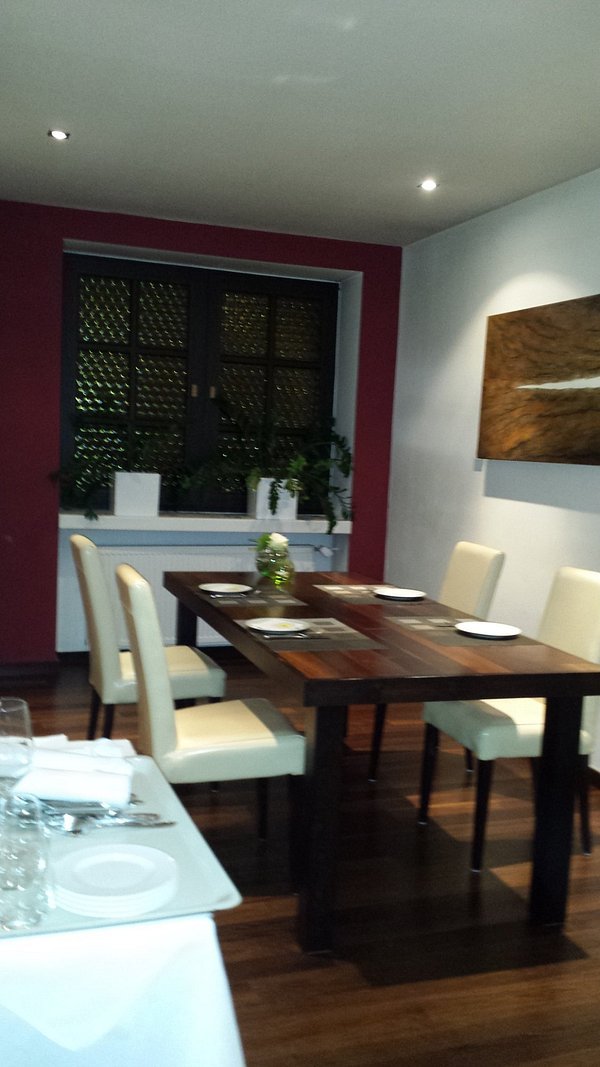
- The interior is modern and elegant without being cold or minimalist. As a family-run €€€ Michelin table in a small Palatinate village, the atmosphere lands in the space between formal fine dining and relaxed regional hospitality , attentive service, a composed room, and a terrace for warmer evenings. It does not perform the kind of theatrical precision associated with urban tasting-counter formats; the 4.8 Google rating across 139 reviews suggests guests consistently find the experience well-calibrated to its setting and price point.
- Does Borst work for a family meal?
- The flexible menu format , three, four, five, or seven courses , makes Borst more accommodating than many starred restaurants at this price tier. In Maßweiler, at €€€, the table is accessible without requiring the full commitment of a seven-course progression. Families with older children who eat seriously would find the format and service register appropriate; the cordial, attentive service style suits a relaxed group occasion as well as a formal dinner for two.

 Discover on Pearl