Bocconcino
Our verdict
Bocconcino serves Modern Italian Mediterranean cooking with craft cocktails, open kitchen and terrace seating at Kaistraße 4-6, suited to lunch, dinner or late night.

Pearl is the En Primeur Club membership app — saves, bookings, and concierge access live there. Same editors, same standards.
- Address
- Kaistraße 4-6, 40221 Düsseldorf, Germany
- Phone
- +4921156681482
- Hours
- Mon–Thu 12 PM–12 AMFri–Sat 12 PM–2 AMSun 12 PM–12 AM
- Website
- bocconcino-duesseldorf.de
- Directions
- Get directions
- Booking
- Book on the venue's website
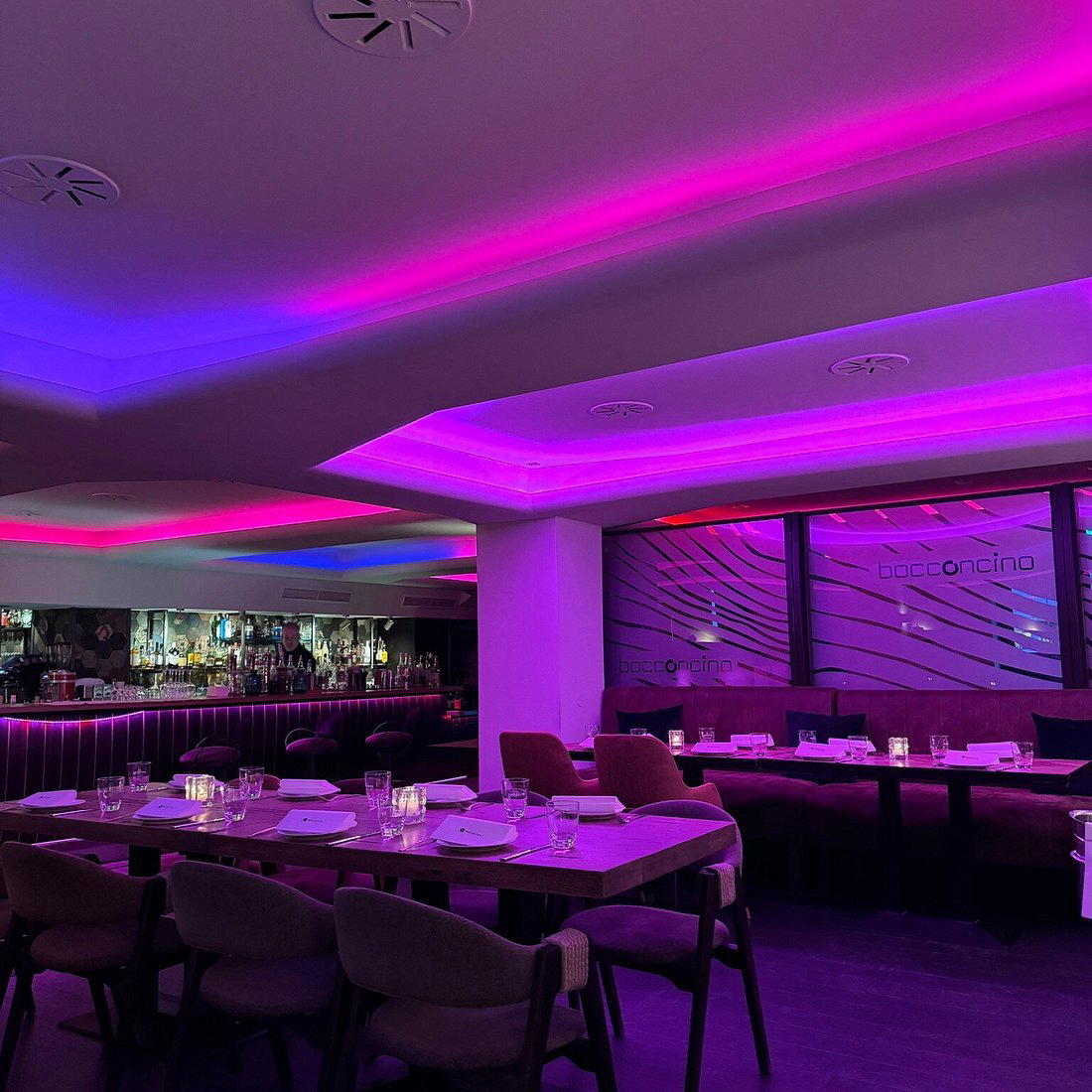
Kaistraße After Dark: What Düsseldorf's Italian Table Says About the City
Kaistraße runs along the Medienhafen waterfront, a stretch of Düsseldorf that shifted over the past two decades from industrial dockland to one of the city's more deliberate dining addresses. The architecture here is self-conscious — converted warehouses, Gehry's tilted towers visible from the water — and the restaurants that have taken root reflect that ambition. Bocconcino sits at numbers 4-6 on this strip, occupying a position that places it squarely within the city's ongoing negotiation between international appetite and local character.
Italian restaurants in German cities have followed a familiar arc: the early wave of red-checked tablecloth trattorias gave way to a generation of upscale interpretations, which in turn produced a more refined tier where wine selection, ingredient sourcing, and room design carry as much weight as the pasta itself. Bocconcino belongs to the latter conversation, positioned on one of Düsseldorf's most commercially active addresses rather than tucked into a residential neighbourhood, a location that signals a particular kind of confidence about its audience.
The Wine Argument at the Centre of the Room
What separates a credible Italian restaurant from a capable one, in any European city, is often the cellar rather than the kitchen. Italian wine taxonomy is among the most demanding in the world: the country produces commercial output from more than 350 authorised grape varieties across twenty regions, each with its own classification scaffolding. A genuinely considered Italian list demands curatorial choices that go well beyond stocking a Barolo and a Soave and calling it done.
At a restaurant like Bocconcino, the address on Kaistraße, a street that draws corporate expense accounts and design-sector regulars in roughly equal measure, creates real pressure on the wine program to perform at both ends of the table. The audience here is not looking for a house Montepulciano at the low end and a Sassicaia at the high end with nothing in between. Medienhafen diners have access to strong competition, including wine-focused alternatives like Amuni Wein- und Käsebar and Italian-adjacent operators such as Anfora and Arca Alacati. The expectation, earned by the postcode, is that the list will show genuine knowledge of sub-regional producers, Etna Rosso from the volcanic north face, aged Vermentino from Sardinia's interior, natural-leaning Friulian whites, rather than simply hitting the commercial highlights.
This kind of depth is what distinguishes the better Italian tables in Germany's major cities from their more casual counterparts. For comparison, the wine programs at Michelin-recognised German restaurants such as Schwarzwaldstube in Baiersbronn or Vendôme in Bergisch Gladbach demonstrate how seriously German fine dining now treats cellar curation as a standalone editorial statement. The expectation has migrated downmarket from the starred tier, and wine-forward Italian concepts in cities like Düsseldorf are absorbing that pressure.
Where Bocconcino Sits in Düsseldorf's Eating Map
Düsseldorf's dining identity is less singular than Hamburg or Munich, but it is not undifferentiated. The Altstadt remains the city's high-volume zone, running on volume rather than precision. The Medienhafen and the streets around Königsallee carry a different register, longer bookings, higher per-cover spend, guests who arrive with a specific idea of the evening they want. Bocconcino's Kaistraße address places it firmly in that second bracket.
The city's Italian options span from the fast-casual end, represented by operators like 3h's burger & chicken on the informal side of the spectrum, through to the kind of mid-to-upper tier table that Kaistraße supports. Understanding where a given restaurant sits in that range matters more in Düsseldorf than in cities with a more developed fine-dining infrastructure, because the city's starred scene is genuinely thin relative to Frankfurt or Munich. Venues like Aqua in Wolfsburg or JAN in Munich represent what the ceiling looks like in the broader region; Bocconcino is operating in a different register, serving a Düsseldorf audience that wants considered Italian cooking in a setting appropriate to the neighbourhood.
The Turkish and Greek operators in the city's mid-market, including Alanya Döner, function in an entirely separate competitive set. The meaningful comparison for Bocconcino is against other upscale European-kitchen concepts in the Medienhafen corridor, where the competitive pressure comes not from price but from specificity of offer.
Cooking Tradition and the Italian Kitchen in Germany
Italian cuisine's global diaspora has produced very different results depending on the host city. In New York, Italian cooking has been absorbed and remade over generations to the point where Le Bernardin and Italian-influenced fine dining occupy adjacent positions in the city's cultural imagination. In San Francisco, the Italian influence on seasonal ingredient sourcing runs through much of the restaurant scene, including collaborative-format operations like Lazy Bear. Germany's relationship with Italian cooking is more direct: it is the country's most popular foreign cuisine by cover count, which paradoxically makes it harder to do well at the serious end, because the category carries so much casual-dining association.
The restaurants that have navigated this tension most successfully in German cities tend to anchor their identity in either regional specificity (a Sicilian menu rather than a generic Italian one) or in wine depth that gives the room a reason to slow down and stay longer. Bocconcino's Kaistraße setting suggests the latter approach is in play, even where specific program details remain to be confirmed on a visit. The room and the address together frame a certain kind of evening, one where the wine conversation extends across multiple pours rather than defaulting to the house option.
Planning a Visit
Kaistraße 4-6 is accessible from Düsseldorf Hauptbahnhof by tram or a short taxi ride, with the Medienhafen area concentrated enough that several options sit within walking distance for anyone spending an evening on the waterfront. Booking ahead is advisable for any Medienhafen table on Thursday through Saturday evenings, when the corporate and leisure crowds converge. For deeper research into how Bocconcino compares to the full range of the city's options, our full Düsseldorf restaurants guide maps the dining scene by neighbourhood and price tier.
Those whose interest in the wine-forward Italian format extends to other German cities will find the cellar programs at Schanz in Piesport, Waldhotel Sonnora in Dreis, and Restaurant Haerlin in Hamburg worth examining for the sheer range of what serious German dining now expects from its bottles. At the experimental edge, CODA Dessert Dining in Berlin and ES:SENZ in Grassau demonstrate how far the country's dining ambition now reaches. Victor's Fine Dining by Christian Bau in Perl remains the regional reference point for what three-star ambition looks like in this part of Germany.
Frequently asked questions
How do I find Bocconcino?
Bocconcino is located at Kaistraße 4-6, 40221 Düsseldorf, Germany, Dusseldorf.
How does Bocconcino compare to other Italian restaurants in Düsseldorf's Medienhafen?
The Medienhafen strip has attracted international and upmarket concepts since its regeneration, but dedicated Italian rooms with wine-led dining programmes are relatively few in this postcode. Bocconcino's position at Kaistraße 4-6 puts it at the commercial and foot-traffic centre of the quarter, distinguishing it from Altstadt trattorias that serve a different, higher-volume crowd. For diners arriving from outside Düsseldorf, it offers a coherent Italian option in the city's most design-conscious dining district.
What should I order at Bocconcino?
The kitchen follows Italian tradition, so the strongest choices tend to track the season and the supplier rather than a fixed signature dish. The wine list at Kaistraße 4-6 is worth treating as a guide to the food: ask what the sommelier is pouring by the glass and build your meal from there. Pasta and protein courses are the structural pillars of this kind of Italian room.
Should I book Bocconcino in advance?
Kaistraße is Medienhafen's main commercial artery, and the area draws a weekday business crowd alongside weekend diners from across Düsseldorf. Tables at waterfront addresses in this district fill up on Thursday through Saturday evenings. Booking at least several days ahead is advisable, and further out for Friday or Saturday night.
What's the standout thing about Bocconcino?
The location on Kaistraße 4-6 places it squarely in Düsseldorf's Medienhafen quarter, a neighbourhood that has matured from dockland into the city's most architecturally consistent dining zone. In that context, an Italian room with a serious approach to the cellar occupies a specific and useful niche — the kind of place where a long lunch can move through several bottles without apology.
What if I have allergies at Bocconcino?
Italian kitchens of this type work with gluten, dairy, and tree nuts as structural ingredients across multiple courses. check the venue's official channels at Kaistraße 4-6 before your visit to discuss specific dietary requirements; this is standard practice at Medienhafen restaurants serving multi-course formats. Do not rely on assumptions about substitution availability.
Is Bocconcino good value for money?
Kaistraße addresses in the Medienhafen quarter sit in Düsseldorf's upper-middle dining tier, where a full evening with wine typically runs higher than the Altstadt average. Whether the spend feels proportionate will depend on how seriously the wine programme is engaged — in Italian restaurants of this positioning, the cellar is usually where the value gap between comparable addresses becomes apparent.
How It Stacks Up
A quick peer reference to anchor this venue in its category.
| Venue | Cuisine | Price |
|---|---|---|
| BocconcinoThis venue — the venue you are viewing | Modern Italian Mediterranean | $30–50 |
| Alanya Döner | Turkish Döner | $10–20 |
| Amuni Wein- und Käsebar | Sicilian Wine & Cheese Bar | $30–50 |
| Anfora | Modern Turkish Grill | $30–50 |
| Arca Alacati | Smashburger | $30–50 |
| Askitis greekcuisine | Authentic Greek Cuisine | $30–50 |
Continue exploring
More in Düsseldorf
Restaurants in Düsseldorf
Browse all →
Bars in Düsseldorf
Browse all →
Hotels in Düsseldorf
Browse all →
Wineries in Düsseldorf
Browse all →
Details
- Modern
- Elegant
- Lively
- Date Night
- Group Dining
- Late Night
- Terrace
- Open Kitchen
- Craft Cocktails
- Waterfront
- Street Scene
- A La Carte
- Vegetarian Friendly
- Vegan Options
- Gluten Free Options
Current opening hours
- Monday
- 12 PM–12 AM
- Tuesday
- 12 PM–12 AM
- Wednesday
- 12 PM–12 AM
- Thursday
- 12 PM–12 AM
- Friday
- 12 PM–2 AM
- Saturday
- 12 PM–2 AM
- Sunday
- 12 PM–12 AM
Hours can change for holidays and private events. Last verified .
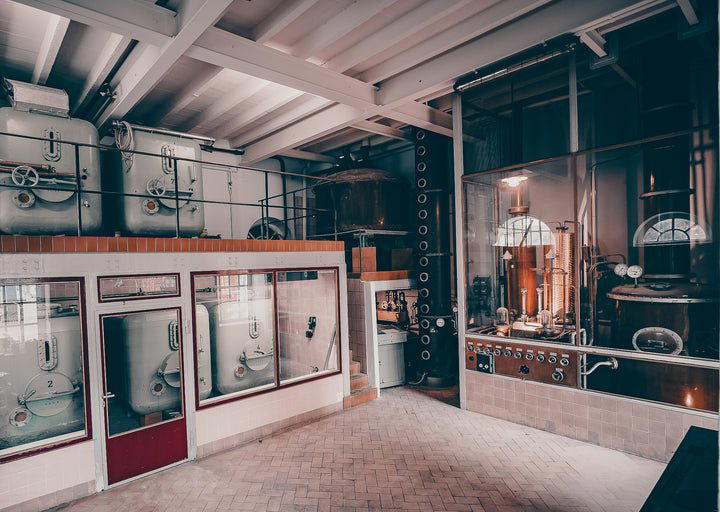
Modern lounge-like atmosphere with stylish decor, warm tones, light effects, and a lively, futuristic Italian flair.