Our verdict
Berghaus Tirol sits at Hahnenkamm 21, placing it at one of the most storied addresses in Alpine sport and hospitality. Where Kitzbühel's top-of-mountain dining splits between tourist-volume operations and genuinely place-rooted houses, Berghaus Tirol occupies the latter category, a high-altitude address where the setting does the heavy editorial work and the surrounding competitive set includes peers like Berggasthof Sonnbühel and Berggericht.

Pearl is the En Primeur Club membership app, where members save venues, book tables and use the concierge.

The menu
What to order
- Cremeschnitte
- Wiener Schnitzel
- Germknödel
- Fondue Chinoise
- Kaiserschmarrn
- Tyrolean Gröstl
At the top of Hahnenkamm: What Altitude Does to a Dining Experience
Approach Berghaus Tirol from the Hahnenkamm cable car and the context arrives before you do. The Hahnenkamm is not simply a ski run, it is the site of one of alpine sport's most demanding downhill courses, a name that carries weight far beyond Kitzbühel's town limits. The address at Hahnenkamm 21 positions Berghaus Tirol inside that geography, which means the dining experience is inseparable from where it sits. In the Austrian Alps, a small number of mountain houses occupy genuinely significant elevations with genuine sporting or cultural weight behind them. Most high-altitude eating in any ski town is volume catering dressed in Tyrolean timber. The ones that hold a different position tend to do so because the building has earned its place in the landscape through association, not because the kitchen chased recognition.
That distinction matters across the Kitzbühel dining scene. The town below offers a competitive spread: Berggericht (Modern Cuisine) operates at the €€€€ tier with serious culinary ambition, while DAS Kaps and 1st Lobster serve distinct identities within the resort's broader offer. What a Hahnenkamm address provides that no in-town address can replicate is an unambiguous relationship between elevation, effort, and the act of eating. You arrive having done something, descended a mountain, ridden the gondola, earned the view, and the meal takes on a different register because of it.
Kitzbühel's Mountain Dining Tier and Where Berghaus Tirol Sits Within It
Kitzbühel's restaurants divide roughly into three operating tiers. At ground level in town, you have the brasserie and international bracket, venues like the €€€ Modern French offer at Les Deux Kitzbühel and the regional register of Mocking das Wirtshaus at €€. Mid-tier mountain operations serve the slopes with speed as the primary metric. Then there is a smaller, more specific group that occupies named peaks or historically significant buildings where the address amplifies the proposition. Berghaus Tirol at Hahnenkamm 21 belongs to that third group by virtue of location alone.
The broader Austrian Alpine dining scene provides useful comparative coordinates. The Tyrolean region has produced serious mountain gastronomy at venues like Griggeler Stuba in Lech and Gourmetrestaurant Tannenhof in Sankt Anton am Arlberg, both of which demonstrate that altitude and culinary seriousness are not mutually exclusive in this part of Europe. Austria's wider dining infrastructure, anchored at the leading end by venues like Steirereck im Stadtpark in Vienna, Döllerer in Golling an der Salzach, and Obauer in Werfen, sets a national standard that filters down into regional expectations, even for mountain houses operating outside the Michelin circuit.
Berggasthof Sonnbühel represents the mountain-house tradition in a comparable vein, and Alpenhotel Kitzbühel am Schwarzsee extends the hospitality conversation to the lakeside. Each occupies a distinct geographic and atmospheric niche. The Hahnenkamm position is simply the most freighted of them, a mountain whose name is spoken at Hahnenkamm Race weekend by crowds that travel from across Europe specifically to witness it.
The Hahnenkamm Effect: Why Address Is the Primary Credential Here
In resort towns at the level of Kitzbühel, address functions as a form of credentialing that operates parallel to the culinary one. A kitchen attached to a name-carrying building benefits from a built-in context that restaurants in anonymous locations spend years trying to construct. The trade-off is that the setting can obscure or substitute for culinary substance, which is why the more serious mountain-dining operations in the Austrian Alps tend to be explicit about where their kitchens sit relative to the setting. The good ones treat the view as one element of a complete experience, not as the primary event.
For visitors planning around Kitzbühel's calendar, timing has a direct effect on what any mountain address delivers. The Hahnenkamm Race in January compresses the town and creates a different atmosphere entirely, mountain houses during race week operate at capacity and the experience skews toward energy over refinement. The quieter weeks of early December and late March offer a different register: fewer bodies on the mountain, clearer sightlines, and a meal that breathes at its own pace. Austria's alpine dining culture rewards off-peak timing in ways that not every travel market has fully absorbed.
Austrian Mountain Hospitality in Broader Context
The Tyrolean mountain house tradition draws from a long lineage of Gasthaus culture, where the quality of the Schnapps list and the weight of the blankets on the terrace were as much a signal of the house's character as anything on the plate. That tradition has evolved considerably. Across Austria, venues like Ikarus in Salzburg, Kräuterreich by Vitus Winkler in Sankt Veit im Pongau, Landhaus Bacher in Mautern an der Donau, Ois in Neufelden, and Restaurant 141 by Joachim Jaud in Mieming demonstrate that regional Austrian dining has moved well past the postcard version of itself. The better mountain houses in Tyrol have absorbed some of that energy, integrating regional produce, local provenance, and a more considered approach to the plate without abandoning the core logic of the Alpine table.
Kitzbühel sits at the upper end of the Austrian resort hierarchy by wealth and international footfall. That creates demand at the top of the dining range, which is why venues like Berggericht can operate at €€€€ in a town of this size. It also means that a mountain address with genuine historical weight, like the Hahnenkamm, carries real hospitality value that travels beyond the local market. Visitors who have made Kitzbühel a fixture of their winter calendar understand this calibration intuitively. Those arriving for the first time benefit from understanding it before they plan.
For those building a broader Austrian or international frame of reference, it is worth noting that the precision and technical ambition of the city's leading tables, from Le Bernardin in New York City to Atomix in New York City, represents a different competitive conversation entirely. The mountain house operates on a different logic: place, season, and physical context do work that the urban restaurant achieves through technique and curation. Both are legitimate frameworks. Knowing which one you are walking into shapes what you should expect and what you should ask of it.
For a full orientation to where Berghaus Tirol sits within the town's dining offer, the full Kitzbühel restaurants guide maps the competitive field by tier, cuisine type, and location.
Planning Your Visit
Berghaus Tirol is accessible via the Hahnenkamm cable car from Kitzbühel town. Given the mountain location, access is tied to cable car operating hours, which shift across the ski season and outside of it. Visiting outside the main winter season (December through March) and the summer hiking period requires verifying access in advance. For current hours, booking arrangements, and any seasonal closures, contacting the venue directly or checking with Kitzbühel's mountain operations is the most reliable route. Specific pricing, dietary accommodations, and reservation policies are best confirmed at the point of booking, as mountain house operations at this elevation often adjust their format and offer between high season and shoulder periods.
Frequently asked questions
How do I find Berghaus Tirol?
Berghaus Tirol is located at Hahnenkamm 21, 6370 Kitzbühel, Austria, Kitzbühel.
Is Berghaus Tirol open year-round or only during ski season?
Access to Berghaus Tirol depends on the Hahnenkamm cable car operating out of Kitzbühel, which ties the venue's opening calendar directly to lift schedules. In the Kitzbühel Alps, cable car operations typically cover the winter ski season and a summer hiking window, with closures for maintenance between seasons. Verifying current cable car and venue hours before planning a visit is essential, as mountain access can be suspended at short notice due to weather.
What dish is Berghaus Tirol famous for?
No specific signature dish is documented in available editorial records for Berghaus Tirol. Given its position on the Hahnenkamm above Kitzbühel and the Tyrolean Gasthaus tradition that shapes mountain houses at this altitude, expect the kitchen to lean on regional staples, hearty, warming, and rooted in Austrian alpine cooking. Confirming the current menu directly with the venue before visiting is advisable.
Do they take walk-ins at Berghaus Tirol?
Berghaus Tirol sits on the Hahnenkamm, accessible only via the cable car from Kitzbühel town, which means footfall is shaped by lift operating hours and mountain conditions rather than street traffic. During peak ski season and the annual Hahnenkamm race period, walk-in capacity is likely constrained. Contacting the venue directly to check availability before making the cable car journey is advisable.
What's the defining dish or idea at Berghaus Tirol?
The defining idea at Berghaus Tirol is location as experience: the venue sits at Hahnenkamm 21, atop one of Alpine racing's most recognised descents, which frames every visit before food arrives. The Tyrolean mountain house format prioritises warmth and regional character over culinary showmanship.
How does Berghaus Tirol handle allergies?
No documented allergy policy is available for Berghaus Tirol. Austrian food labelling regulations require hospitality venues to declare the 14 major allergens, so staff at Kitzbühel's mountain restaurants are generally equipped to field those questions. Anyone with serious dietary requirements should contact Berghaus Tirol directly before visiting, particularly given the remote cable car access, there is limited flexibility to change plans once on the mountain.
Compact Comparison
| Venue | Cuisine | Price | Awards | Notes |
|---|---|---|---|---|
| Berghaus TirolThis venue (the venue you are viewing) | Tyrolean Alpine Home Cooking | $30–50 | Not listed | Not listed |
| Berggericht | Alpine Fine Dining | $200–300 | 1 Michelin Star | Modern Cuisine |
| Les Deux Kitzbühel - Brasserie & Bar | Modern French Brasserie | $100–150 | 1 Michelin Star · Falstaff Restaurant - 95 Falstaff Points | Modern French |
| Lois Stern | Asian-European Fusion | Not listed | Michelin Plate | Fusion |
| Mocking das Wirtshaus | Modern Austrian Regional | $30–50 | Michelin Bib Gourmand · Star Wine List | Regional Cuisine |
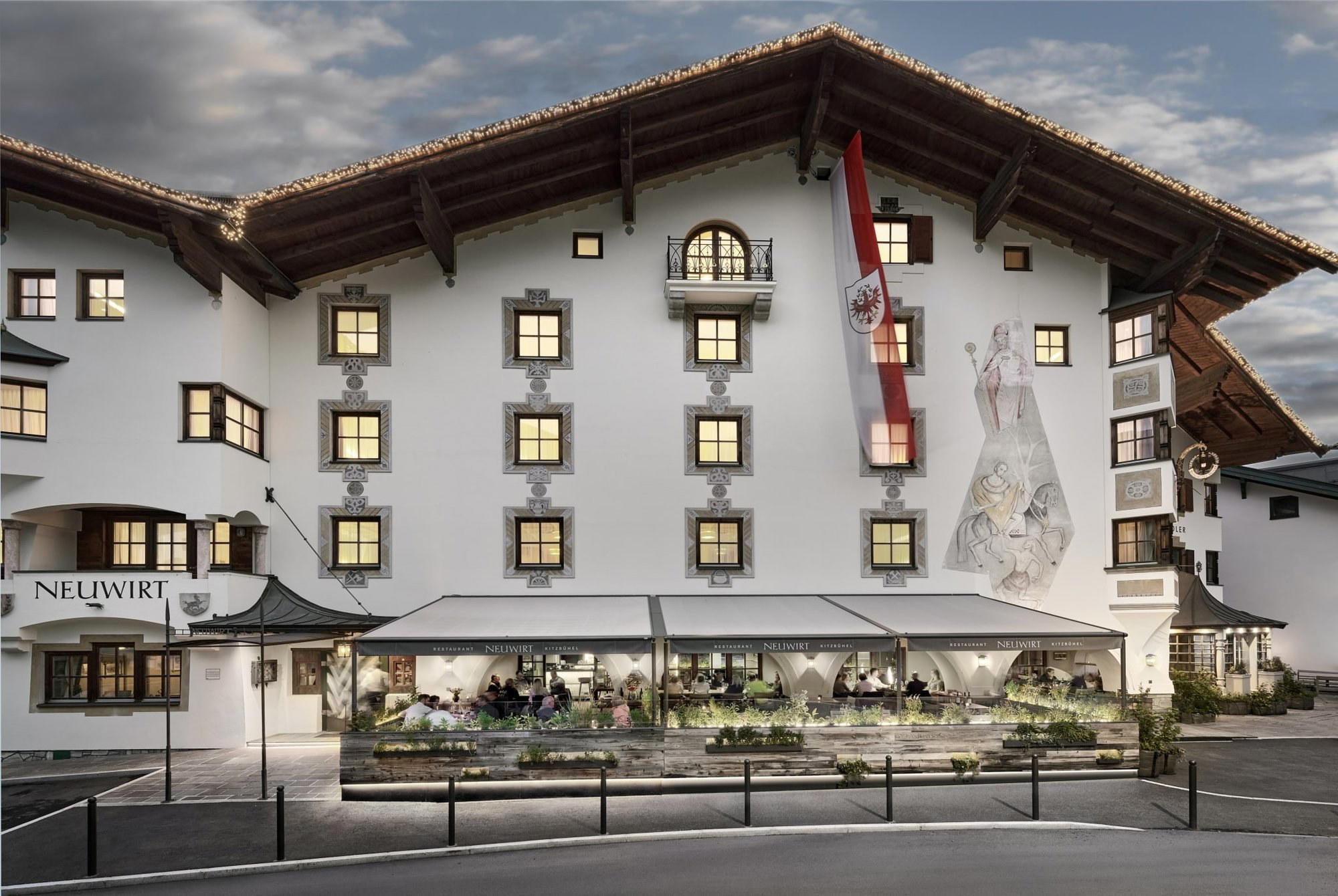
| Neuwirt | Modern Austrian Alpine Fine Dining | $100–150 | Michelin Plate | International |
Continue exploring
More in Kitzbühel
Restaurants in Kitzbühel
All restaurants in Kitzbühel →
Bars in Kitzbühel
Browse all →
Hotels in Kitzbühel
All hotels in Kitzbühel →
Wineries in Kitzbühel
Browse all →
Details
- Rustic
- Cozy
- Scenic
- Classic
- Family
- Group Dining
- Celebration
- Casual Hangout
- Terrace
- Panoramic View
- Historic Building
- Standalone
- Local Sourcing
- Mountain
- A La Carte
- Family Style
- Beer
- Wine
- Vegetarian Friendly
- Vegan Options
Cozy mountain hut atmosphere with warm, welcoming ambiance enhanced by covered terrace with radiant heaters and dramatic alpine scenery; popular with hikers, skiers, and families.