



1 Michelin Star · Wine Spectator Best of Award of Excellence · Relais Chateaux Award
Our verdict
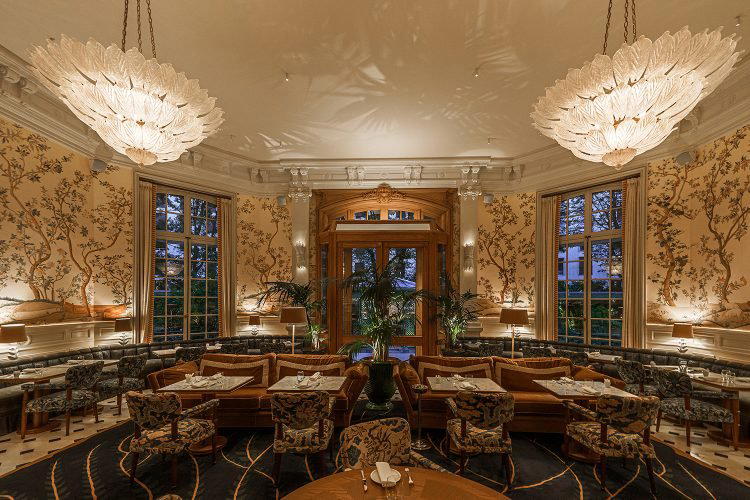
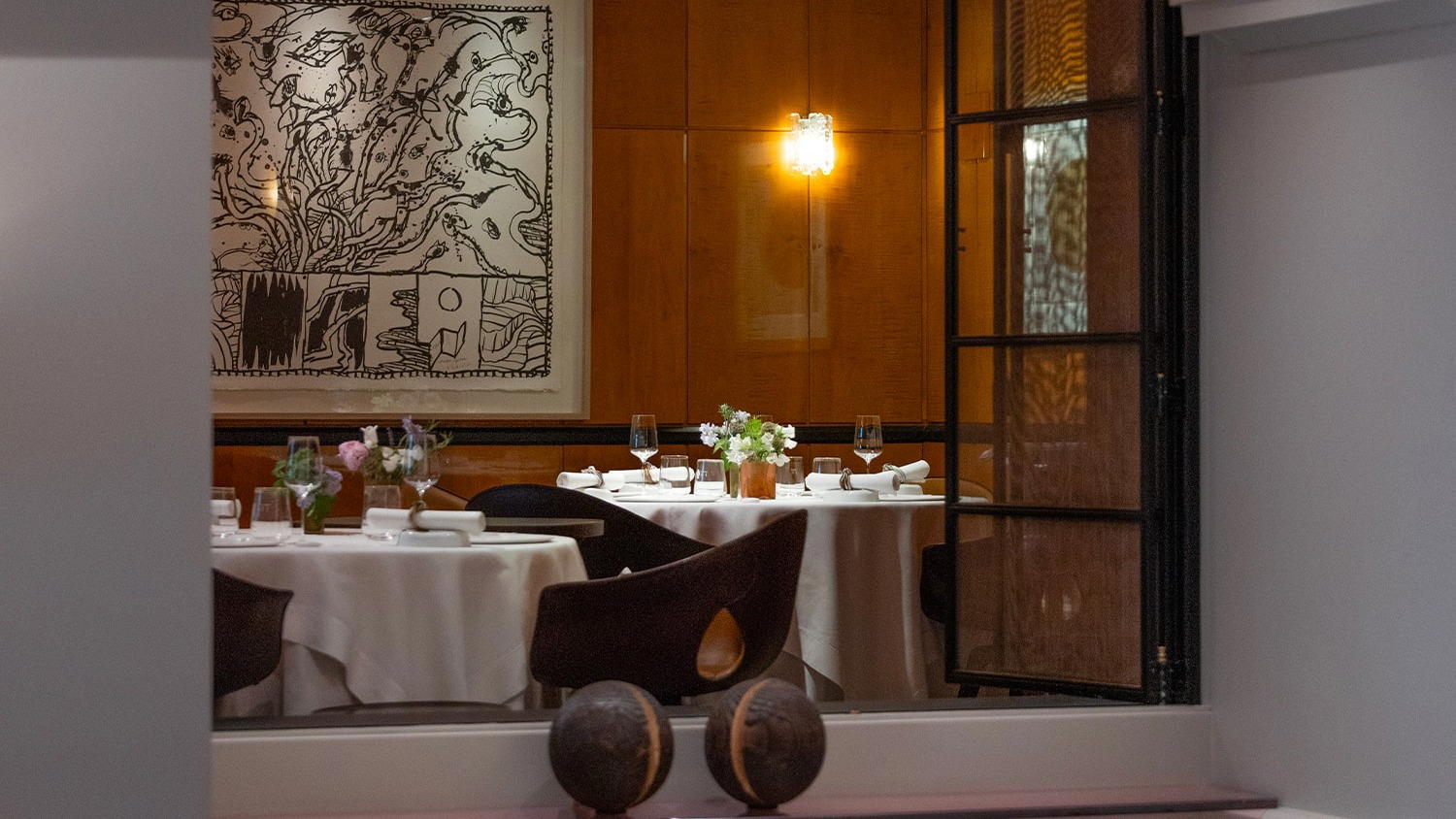
Set within a 19th-century private mansion in Paris's 16th arrondissement, Bellefeuille holds a Michelin star and an Opinionated About Dining ranking for its vegetable- and seafood-focused French gastronomic menu, much of it sourced from the property's own garden. The wine list runs to 1,450 selections across 10,000 bottles, with particular depth in Burgundy, Champagne, and the Loire.

Pearl is the En Primeur Club membership app — saves, bookings, and concierge access live there. Same editors, same standards.
- Address
- 5 Pl. du Chancelier Adenauer, 75116 Paris, France
- Phone
- +33 1 44 05 81 88
- Hours
- Mon–Fri 7:30–9:30 PMSat–Sun Closed
- Website
- saint-james-paris.com
- Directions
- Get directions
- Booking
- Book on TheFork
The menu
What to order
- Hare à la Royale
- Pithiviers de Colvert
- Spider Crab with Caviar
- Chocolate and Pine Needles
- Truffle Menu
A Private Mansion in the 16th, Turned Dining Destination
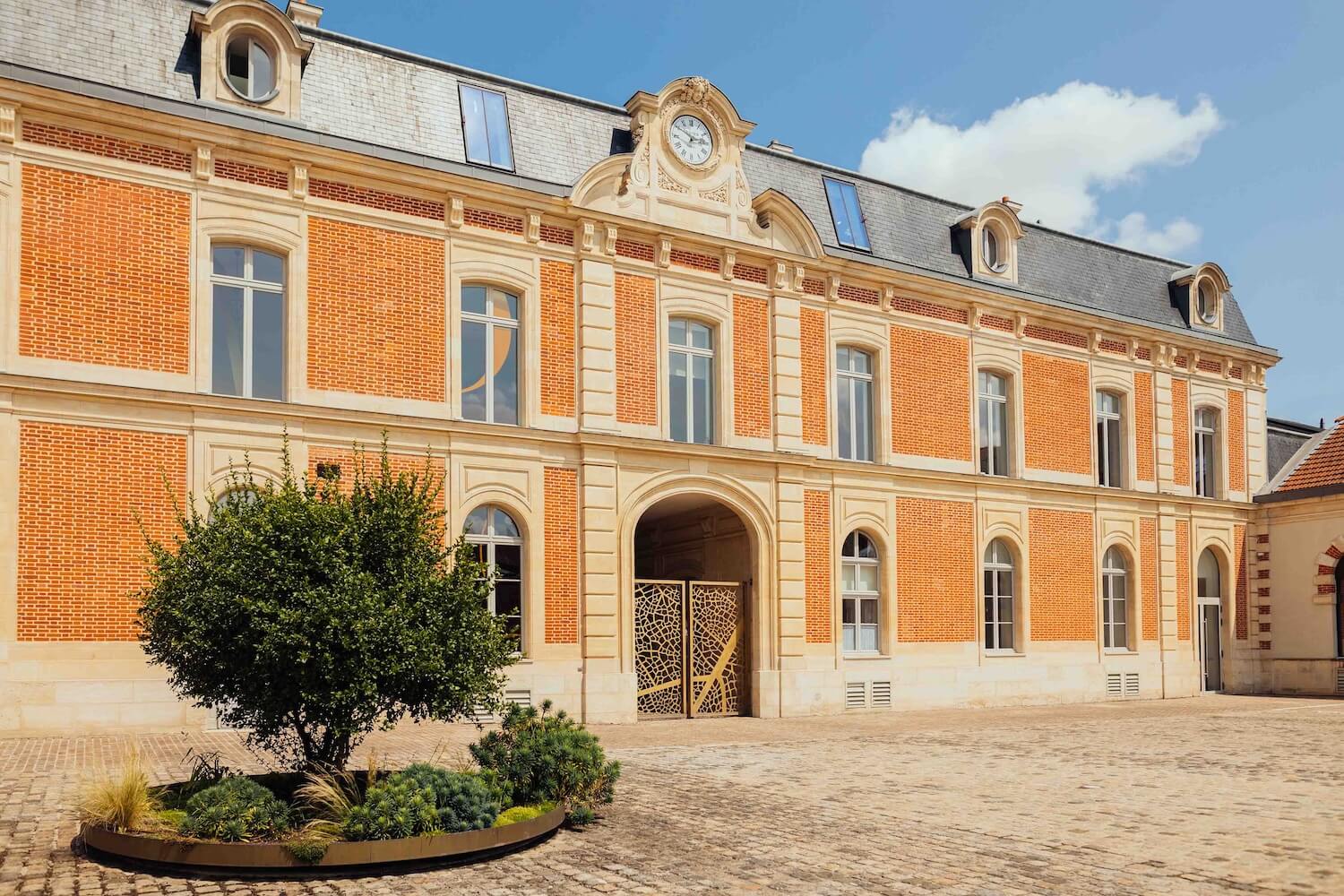
The 16th arrondissement has long been Paris's quieter counterpoint to the grand-boulevard restaurant culture of the 7th and 8th. Its gastronomic addresses tend toward discretion: hotel dining rooms, private members' spaces, and residences that opened their doors gradually rather than with fanfare. Bellefeuille sits squarely in that tradition. The restaurant operates within a property built in 1892 as a private mansion, its architecture closer to a small château than a hotel, surrounded by greenery in a part of the city where green space is still a luxury. The building became a hotel in the early 1990s, and the restaurant only opened to non-residents in 2013, which means the broader dining public has had less than fifteen years to discover what was previously a closely held address.
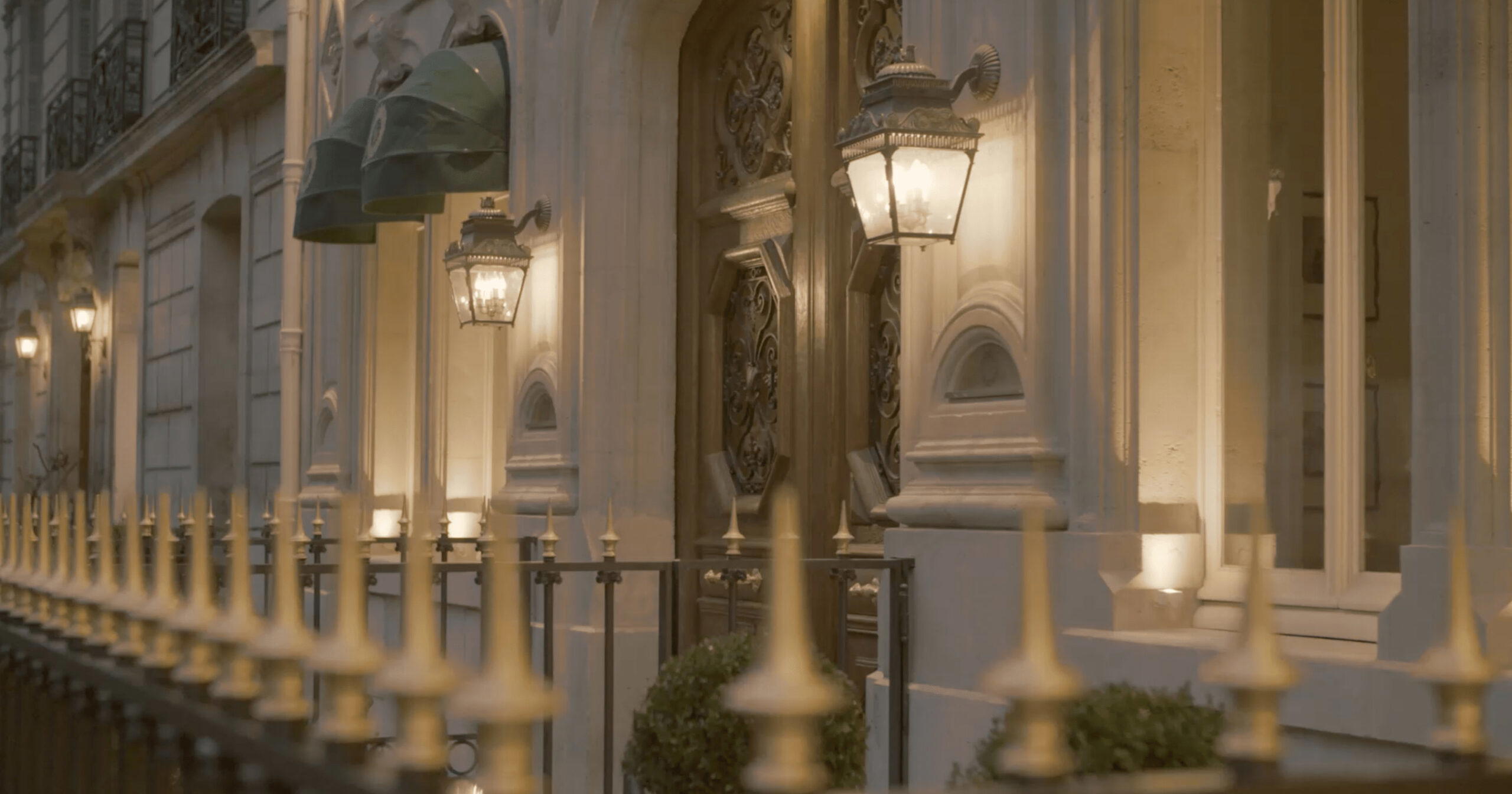
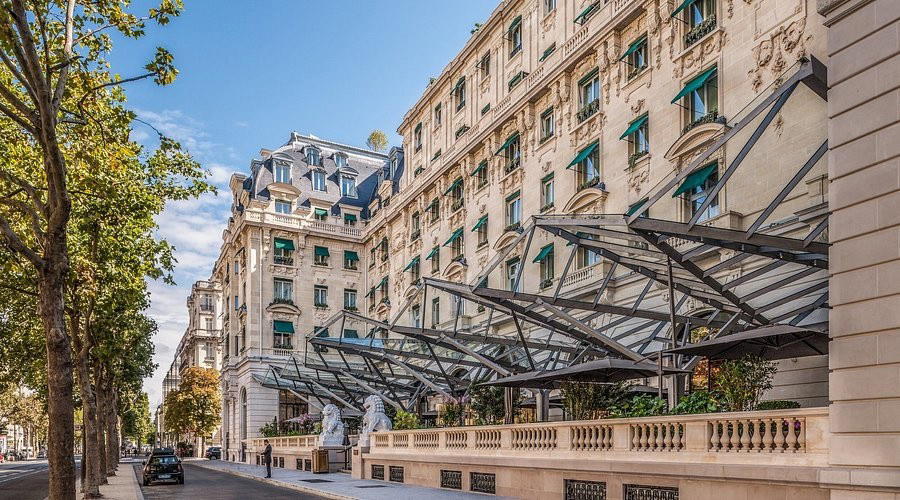
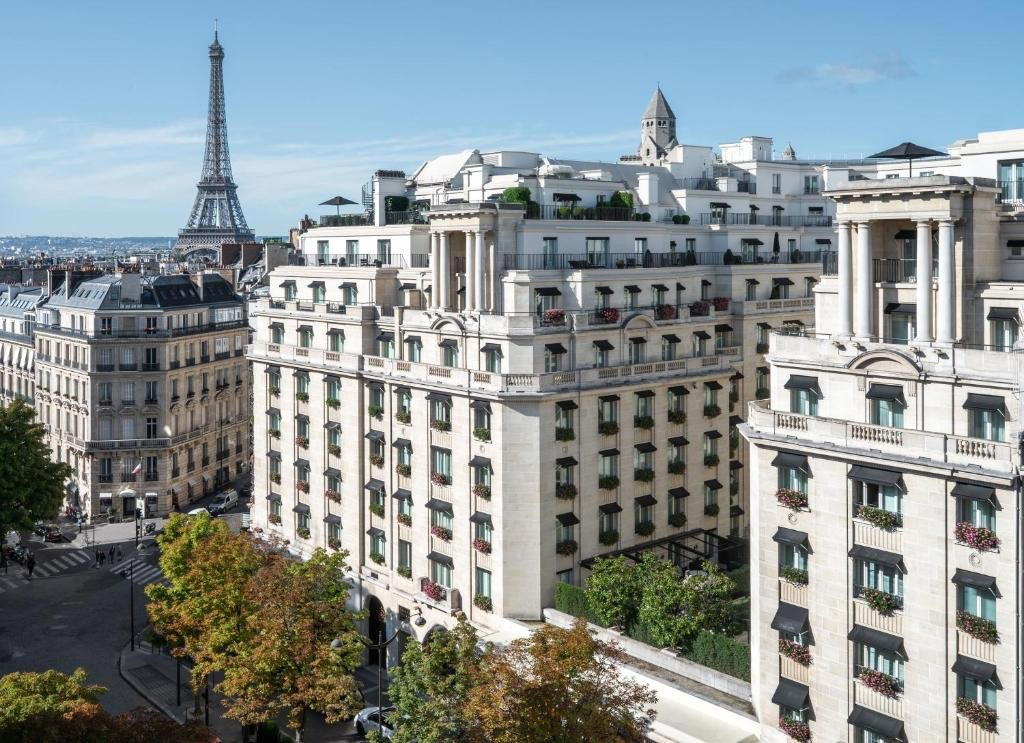
Approaching the property on Place du Chancelier Adenauer, the visual register shifts abruptly from the Haussmann uniformity of the surrounding streets. The stone façade, the scale of the grounds, and the absence of the usual restaurant signage all signal that this is not a conventional table. That contrast, between the formal grandeur of the exterior and the focused culinary program inside, is part of what gives the dining experience its particular character.
The Logic of the Menu: Vegetables, Seafood, and the Garden Behind Them
French gastronomic cuisine in Paris spans a wide range of editorial positions, from the hyper-technical creative programs at addresses like Alléno Paris au Pavillon Ledoyen to the classic canon preserved at L'Ambroisie. Bellefeuille occupies a different position: a menu that frames vegetables and seafood as its primary subjects, with produce drawn substantially from the property's own vegetable garden. That garden supplies over 250 varieties of fruit, vegetables, and herbs. At that scale, the garden functions as a genuine supply chain rather than a marketing footnote.
Chef Gregory Garimbay leads the kitchen, with the program bearing the hallmarks of a cuisine that takes restraint seriously. The Michelin star awarded in 2025 reflects recognition of technical consistency and a defined point of view, not spectacle. Opinionated About Dining, whose Classical in Europe list ranked Bellefeuille at number 447 in 2025 (up from 360 in 2024), is particularly attentive to kitchens that privilege ingredient quality and classical discipline over novelty for its own sake. Movement up that ranking over a single year is a meaningful signal in a field where positions are contested across hundreds of European addresses.
The prix fixe format here is not incidental. A structured multi-course meal is the appropriate delivery mechanism for a kitchen working at this level of source specificity: the sequence allows the kitchen to build an argument through the meal, introducing the garden's produce in succession, pairing the delicacy of the seafood courses against the earthier registers of the vegetable program, and giving the wine team room to construct a coherent arc through the list. Diners arriving with an à la carte expectation will find the format more meaningful once the internal logic of the menu becomes clear across the first two or three courses.
The Wine List as a Document of French Terroir
At 1,450 selections and an inventory of 10,000 bottles, the wine list at Bellefeuille is substantial by any standard for a single-restaurant property. Wine Director Arnaud Fatôme and sommelier Tom Raoult manage a list whose stated strengths lie in France, Burgundy, Champagne, Bordeaux, the Loire, and the Rhône. The pricing sits in the $$$ tier, meaning many bottles cross the €100 mark, which places it in the same bracket as hotel dining rooms of comparable ambition.
What the OAD data notes specifically is the presence of "unexpected tipples" alongside the expected French classics, a detail that matters in a list of this size. A wine program of 1,450 references built entirely on familiar appellations would be competent but predictable. The willingness to bring in less-obvious selections, likely from smaller producers within those same regions, gives the sommelier team material to work with when diners want guidance rather than simply recognition. That front-of-house orientation, described in the OAD notes as both knowledgeable and animated by the kitchen's sustainable farming philosophy, suggests the wine service and food service are aligned rather than operating in parallel.
For context within Paris hotel dining, compare the list depth here against the wine program at Le Cinq at the Four Seasons George V, which operates at three Michelin stars and a higher price point, or the more vegetable-forward program at Arpège in the 7th. Each represents a different expression of what serious French dining at this level can look like.
Where Bellefeuille Sits in the Broader French Gastronomic Field
France's gastronomic tradition outside Paris includes a number of foundational addresses that give useful coordinates for understanding where a property like Bellefeuille sits. The multi-generational institution model, represented by places like Auberge de l'Ill in Alsace or Paul Bocuse outside Lyon, is one pole. The terroir-anchored single-estate model, associated with places like Bras in Laguiole or Flocons de Sel in Megève, is another. Bellefeuille draws more on the latter tradition: the property's own garden is the supply anchor, the kitchen's editorial position is restraint over showmanship, and the Michelin recognition confirms execution rather than ambition as the primary signal.
The comparison with Mirazur in Menton is instructive. Both kitchens work with on-site gardens as genuine production sources rather than decorative gestures, and both have sought Michelin recognition through produce discipline rather than technical pyrotechnics. The difference is scale and context: Mirazur operates at three stars with an international profile, while Bellefeuille remains a Parisian address with the specificity of a private estate in a residential arrondissement.
Other French gastronomic addresses worth placing in this broader picture include Troisgros in Ouches, Kei in Paris, Jardin des Sens in Montpellier, and La Maison de Marc Veyrat in Manigod, each of which defines the field differently.
Planning a Visit
Bellefeuille is located at 5 Place du Chancelier Adenauer in the 16th arrondissement. The restaurant serves dinner, and the cuisine pricing sits in the $$$ tier (above €66 for a typical two-course meal before beverages). Given the Michelin star and the limited non-resident capacity of what was historically a private hotel dining room, booking in advance is advisable; the combination of a recognized star and a manageable room size tends to compress availability at Paris addresses of this type. The property is managed by Famille Bertrand, with General Manager Laure Pertusier overseeing the front of house alongside sommelier team members Tom Raoult and Bruna Silva De Souza.
For broader Paris planning, see our full Paris restaurants guide, our full Paris hotels guide, our full Paris bars guide, our full Paris wineries guide, and our full Paris experiences guide.
Frequently asked questions
What dish is Bellefeuille famous for?
Bellefeuille does not publish a single signature dish in the conventional sense. The kitchen's identity is built around its vegetable and seafood program, with produce sourced from the property's garden across more than 250 varieties. The menu's logic is sequential and seasonal: the garden supplies the produce, the kitchen sequences it through the multi-course format, and the wine team constructs pairings around it. What Michelin and Opinionated About Dining have both recognized is consistency of execution and editorial clarity rather than a single showpiece preparation. The Michelin star awarded in 2025 and the OAD Classical in Europe ranking reflect the kitchen's discipline with its primary ingredients, particularly the vegetables and seafood that define the menu's character under chef Gregory Garimbay.
Standing Among Peers
| Venue | Cuisine | Price | Awards | Notes |
|---|---|---|---|---|
| BellefeuilleThis venue — the venue you are viewing | Modern French Gastronomy | $200–300 | 1 Michelin Star · Wine Spectator Best of Award of Excellence | Not listed |
| Alléno Paris au Pavillon Ledoyen | Modern French Fine Dining | $150–200 | 3 Michelin Stars · World's 50 Best #79 | Creative |
| Kei | Modern French with Japanese Influences | $300–500 | 3 Michelin Stars · World's 50 Best #93 | Contemporary French, Modern Cuisine |
| L'Ambroisie | Classic French Haute Cuisine | $300–500 | 2 Michelin Stars · World's 50 Best #23 | French, Classic Cuisine |
| Le Cinq - Four Seasons Hôtel George V | French, Modern Cuisine | Not listed | Michelin 3 Star | Not listed |
| Plénitude | Modern French Sauce-Led Fine Dining | $300–500 | 3 Michelin Stars · World's 50 Best #14 | Contemporary French |
Recognition history
Dated appearances from independent guides and award organizations, with the underlying list record or original source where available.
Michelin 1 Star
Michelin
Relais Chateaux Award
Relais Chateaux
Wine Spectator Best of Award of Excellence
Wine Spectator
Opinionated About Dining Classical in Europe Ranked #447
Opinionated About Dining
Full recognition history (8 entries)
Michelin 1 Star
Michelin
Relais Chateaux Award
Relais Chateaux
Wine Spectator Best of Award of Excellence
Wine Spectator
Opinionated About Dining Classical in Europe Ranked #360
Opinionated About Dining
Continue exploring
More in Paris
Restaurants in Paris
Browse all →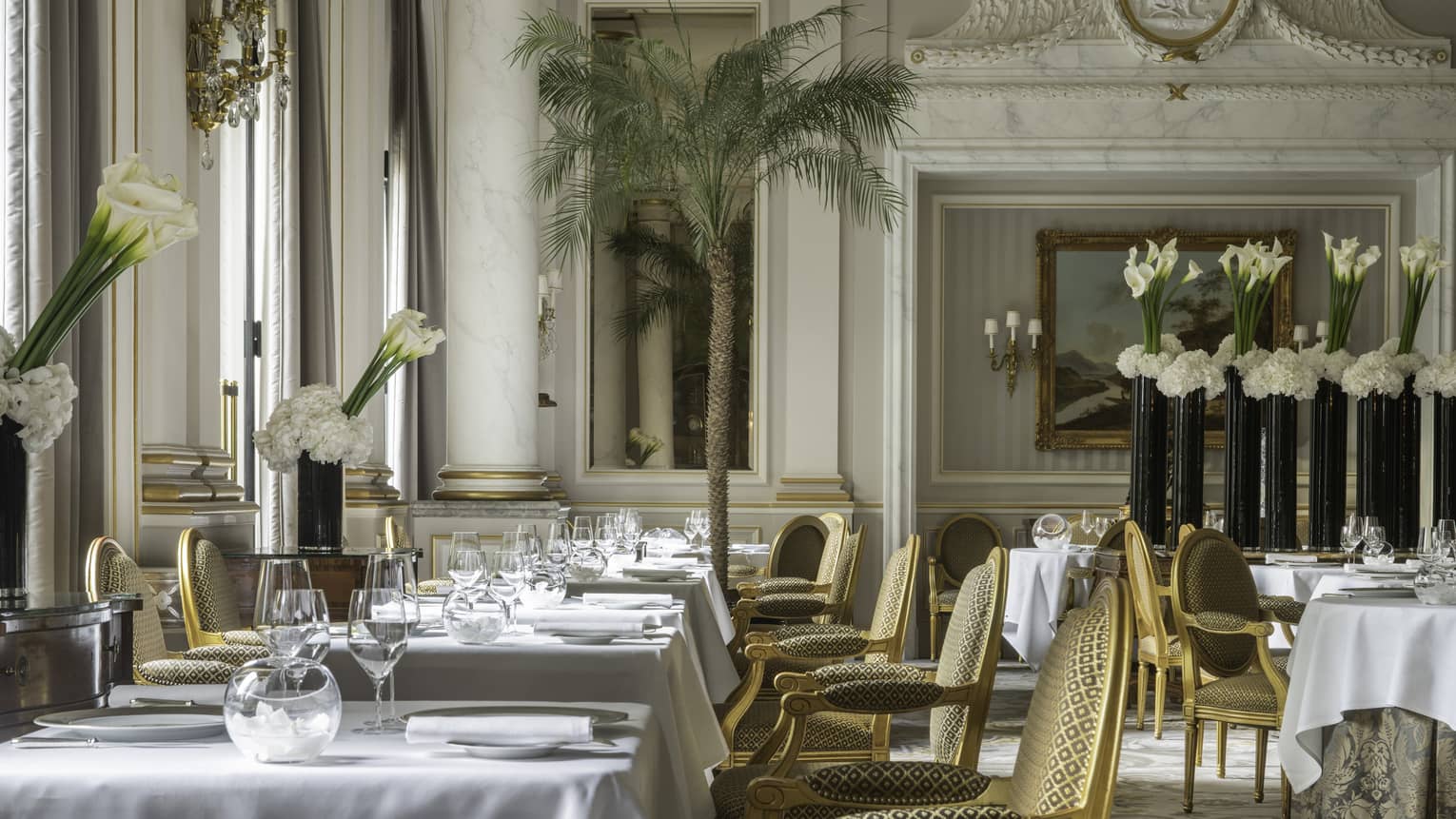

Bars in Paris
Browse all →
Hotels in Paris
Browse all →

Bellefeuille
The wine
Bellefeuille holds the Wine Spectator Best of Award of Excellence, which Wine Spectator gives to lists of usually 350 or more selections.
- Wine program
- Curated wine list
- Wine Spectator
- Wine Spectator Best of Award of Excellence
- Selections
- 1,450
- Bottles in cellar
- 10,000
- List strengths
- France, Burgundy, Champagne, Bordeaux, Loire, Rhône
- Wine director
- Arnaud Fatôme
- Sommelier-led
Details
- Romantic
- Elegant
- Sophisticated
- Quiet
- Date Night
- Special Occasion
- Celebration
- Open Kitchen
- Garden
- Terrace
- Historic Building
- Hotel Restaurant
- Sommelier Led
- Farm To Table
- Organic
- Local Sourcing
- Sustainable Seafood
- Garden
- Tasting Menu
- Prix Fixe
- Wine
- Vegetarian Friendly
- Organic Focus
- Allergy Accommodating
Current opening hours
- Monday
- 7:30–9:30 PM
- Tuesday
- 7:30–9:30 PM
- Wednesday
- 7:30–9:30 PM
- Thursday
- 7:30–9:30 PM
- Friday
- 7:30–9:30 PM
- Saturday
- Closed
- Sunday
- Closed
Hours can change for holidays and private events. Last verified .
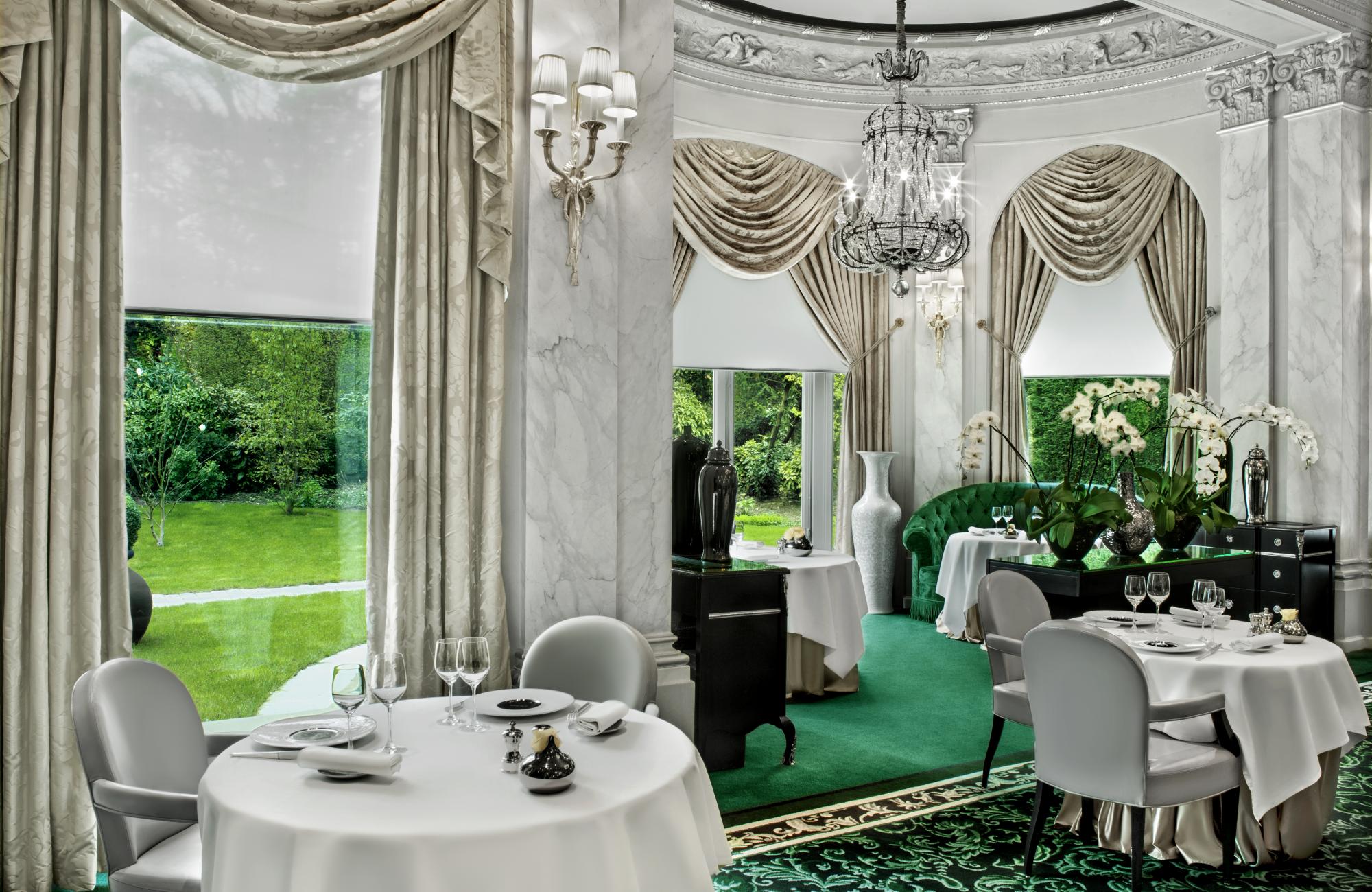
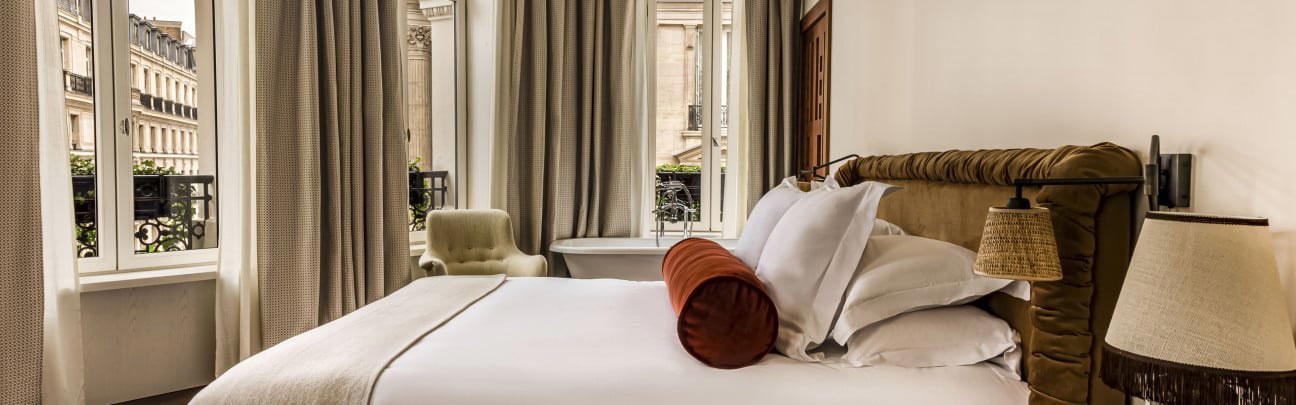
Winter-garden ambiance with delicate panoramas, period fireplace, black and beige tiling, reflected greenery, and Auduze pottery vases; hushed, luxurious, and timeless atmosphere blurring indoor-outdoor lines.