Beijing Noodle No. 9
Beijing Noodle No. 9 sits inside Caesars Palace on the Las Vegas Strip, bringing northern Chinese noodle traditions into a setting defined by dramatic aquarium installations and a considered spatial arrangement. The format positions it apart from the steakhouses and European fine dining that dominate Strip dining rooms, offering a distinct entry point into Chinese culinary craft within a casino resort context. For a broader view of the city's dining options, see our full Las Vegas restaurants guide.
Pearl is the En Primeur Club membership app — saves, bookings, and concierge access live there. Same editors, same standards.
- Address
- 3570 Las Vegas Blvd S, Las Vegas, NV 89109
- Phone
- +18773464642
- Website
- caesars.com
- Directions
- Get directions
 Saves & bookings on Pearl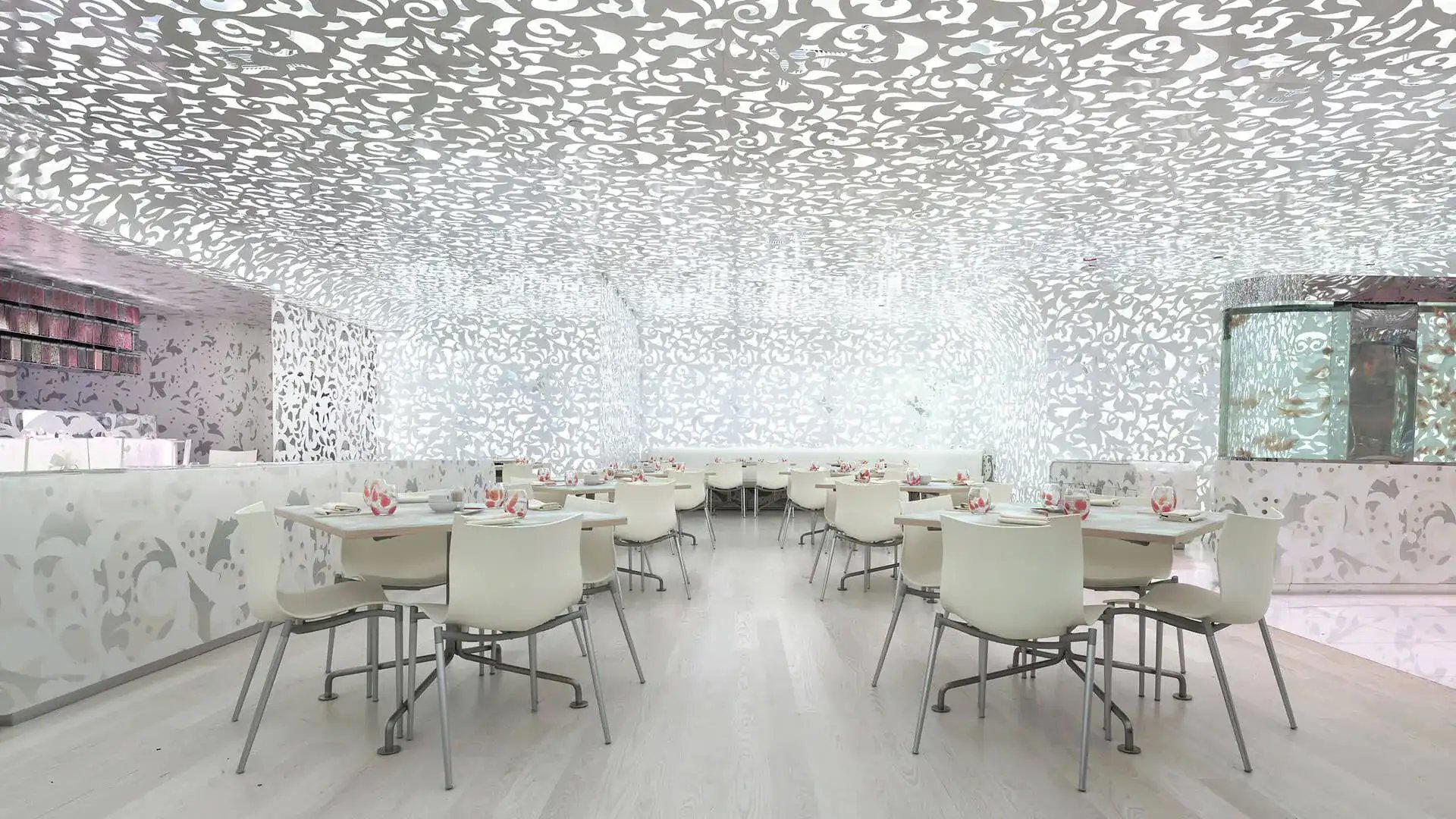
Glass, Water, and Northern Chinese Craft on the Strip
The Las Vegas Strip has long operated as a compression chamber for global dining, stacking European fine dining, American steakhouses, and celebrity chef outposts inside casino floors that run without natural light or discernible time of day. Within that context, a restaurant built around the noodle traditions of northern China occupies a genuinely distinct position. Beijing Noodle No. 9, located at 3570 Las Vegas Blvd S inside Caesars Palace, sits in a dining tier that bets on specificity rather than spectacle — at least in culinary terms. The physical space, however, does not shy away from the theatrical.
What defines the room at first encounter is the aquarium installation: floor-to-ceiling tanks that line the perimeter and create a cool, subaqueous light across the interior. In a casino district where ambient design typically defaults to warmth and enclosure, this blue-tinted environment reads as a deliberate departure. The water elements accomplish something that conventional restaurant décor rarely does on the Strip — they slow the pace of a room. The visual weight of moving water has a quieting effect, and the spatial logic of Beijing Noodle No. 9 leans into that: the seating arrangement gives tables enough separation that the room does not feel compressed despite the visual density of the aquarium walls around it.
The Spatial Logic of the Room
Casino restaurant design tends to resolve in one of two directions: either the room is engineered for throughput, with tight covers and efficient sight lines to the kitchen, or it is constructed as a destination in itself, with design investment that justifies a detour from the gaming floor. Beijing Noodle No. 9 falls into the second category. The aquarium concept is not incidental décor, it is the structural premise of the space. The tanks create natural partitions, giving different sections of the dining room a degree of enclosure without hard walls, which works particularly well in a venue that needs to serve both smaller groups and larger tables simultaneously.
This approach to interior architecture places Beijing Noodle No. 9 in a specific niche within Strip dining: properties that use a distinctive physical environment as part of the value proposition, alongside the food. That peer group is smaller than it appears. Many Strip restaurants invest in spectacle at the entrance and then deliver a fairly conventional dining room once you are seated. Here, the spatial experience continues through the meal, with the aquarium lighting shifting slightly as the evening progresses and the ambient noise from the casino floor staying at a remove.
Northern Chinese Noodles in a Las Vegas Context
The culinary framing of Beijing Noodle No. 9 positions it differently from the Cantonese and dim sum traditions that have historically anchored Chinese restaurant dining in American cities. Northern Chinese cuisine draws on wheat-based preparations, hand-pulled and knife-cut noodle techniques, and braised meat dishes that reflect a colder, more agricultural culinary history than southern Chinese regional cooking. On the Las Vegas Strip, where the dominant Chinese restaurant format has typically been banquet-oriented or oriented toward a broad pan-Asian menu, a restaurant focused on northern noodle craft occupies a narrower, more specific position.
That specificity matters on the Strip because the competitive set is wide. A diner choosing between Beijing Noodle No. 9 and a venue like Craftsteak is not making a close comparison, the cuisine categories are entirely different. But within the broader question of where to eat at Caesars Palace or along the Strip, the noodle-focused format signals a different kind of meal: faster paced, more focused on a single culinary tradition, and less structured around the multi-course progression that defines the fine dining rooms at properties across the boulevard. For diners who want something closer to the register of 108 Eats or 18bin in terms of format, Beijing Noodle No. 9 offers a different culinary tradition but a similarly direct dining proposition.
For context on how this kind of focused regional Chinese cooking sits within the broader American restaurant scene, it is worth noting that some of the country's most awarded dining rooms, from Le Bernardin in New York City to The French Laundry in Napa to Smyth in Chicago, derive their authority from deep commitment to a single culinary tradition. The principle applies at any price point: focus tends to produce better cooking than breadth.
Where It Sits in the Strip's Competitive Set
The Las Vegas Strip dining market has bifurcated sharply over the past two decades. At one end sit the high-investment fine dining rooms: Michelin-recognized venues and celebrity chef operations that price themselves against destination restaurants in New York, San Francisco, and Los Angeles. At the other end, casino-floor casual dining handles volume and speed. Beijing Noodle No. 9 occupies a middle register, a restaurant with a considered physical design and a specific culinary identity, positioned for diners who want more than a buffet line but are not committing to a tasting menu format. That middle register is where most visitors actually eat on the Strip, and it is arguably where the most interesting dining decisions happen.
Venues in this tier across other American cities worth cross-referencing include Providence in Los Angeles, Addison in San Diego, and Lazy Bear in San Francisco, all of which demonstrate that regional specificity and strong spatial design are not exclusive to the ultra-premium tier. The comparison also extends to venues in the EP Club network that prioritize format discipline: Atomix in New York City, Single Thread Farm in Healdsburg, and Blue Hill at Stone Barns in Tarrytown each show how a defining conceptual frame, whether that is Korean fine dining, Japanese-influenced farm cuisine, or northern Chinese noodles, creates clarity for the diner. At the international end of the spectrum, Atelier Moessmer Norbert Niederkofler in Brunico demonstrates the same principle in a European context.
For diners also considering Korean options nearby, 777 Korean Restaurant and A Different Beast represent different points on the Las Vegas Asian dining spectrum, while Emeril's in New Orleans, The Inn at Little Washington, and comparable American dining institutions occupy an entirely different register of investment and occasion.
Planning a Visit
Beijing Noodle No. 9 is located inside Caesars Palace at 3570 Las Vegas Blvd S, accessible directly from the hotel's casino floor. As a casino resort restaurant, it is generally easier to secure a table than at standalone Strip dining rooms with significant award recognition, the large-format hotel context means capacity is higher and turnover more predictable than at a smaller independent. Walk-ins are more viable here than at the city's more tightly controlled reservation-only counters, such as the omakase-format sushi venues that have grown in number along the Strip. For visitors cross-referencing the full range of what Las Vegas dining offers, the EP Club Las Vegas guide covers the broader competitive set across cuisine types and price tiers.
Cuisine-First Comparison
A quick peer list to put this venue’s basics in context.
| Venue | Cuisine |
|---|---|
| Beijing Noodle No. 9This venue — the venue you are viewing | Not listed |
| Bacchanal Buffet | International |
| Chica | Latin |
| Sinatra | Italian |
| Yui Edomae Sushi | Sushi |
Continue exploring
More in Las Vegas
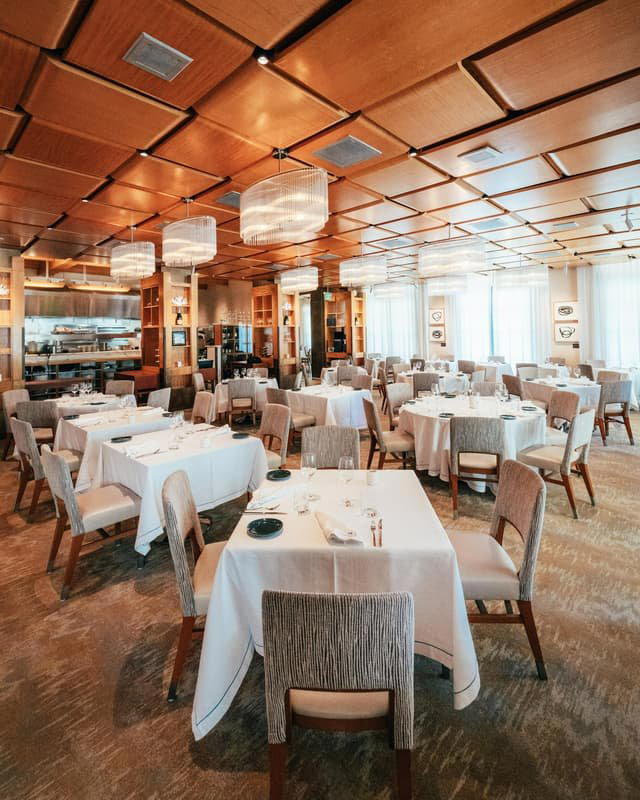
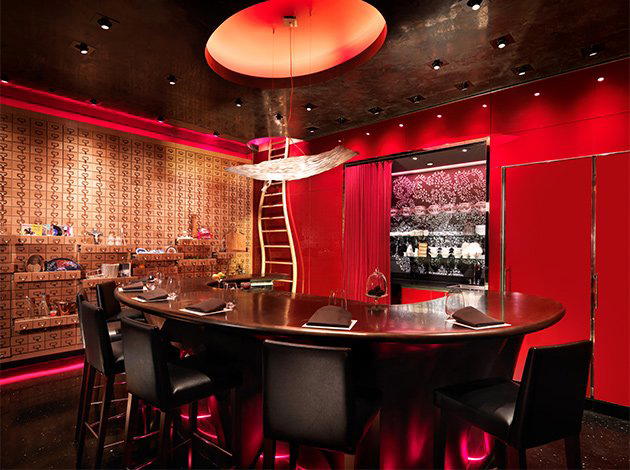
Restaurants in Las Vegas
Browse all →
Bars in Las Vegas
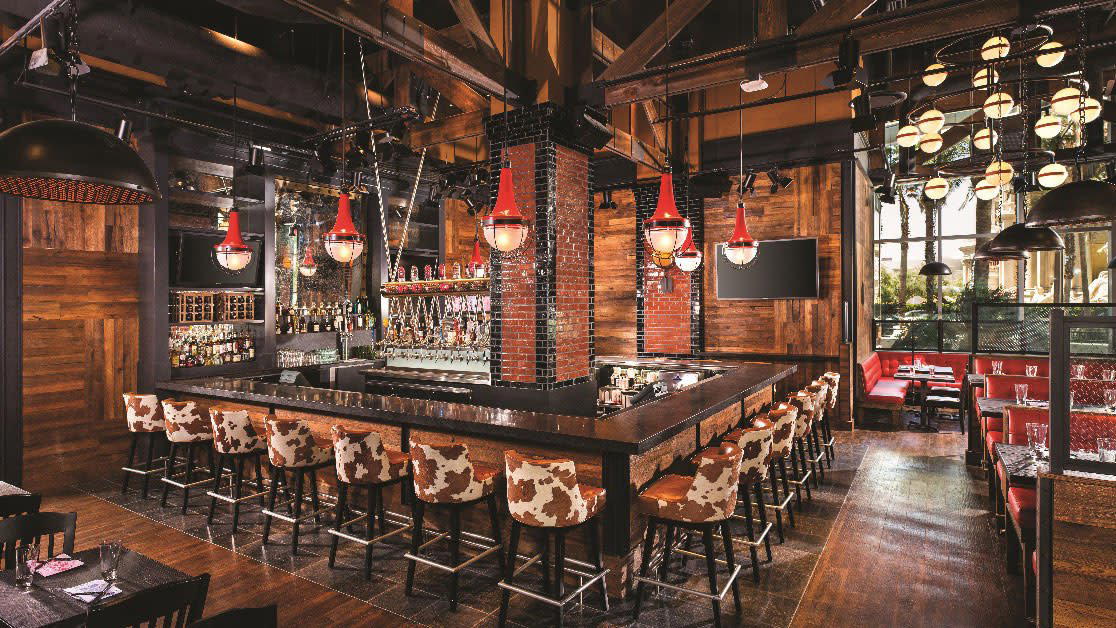
Browse all →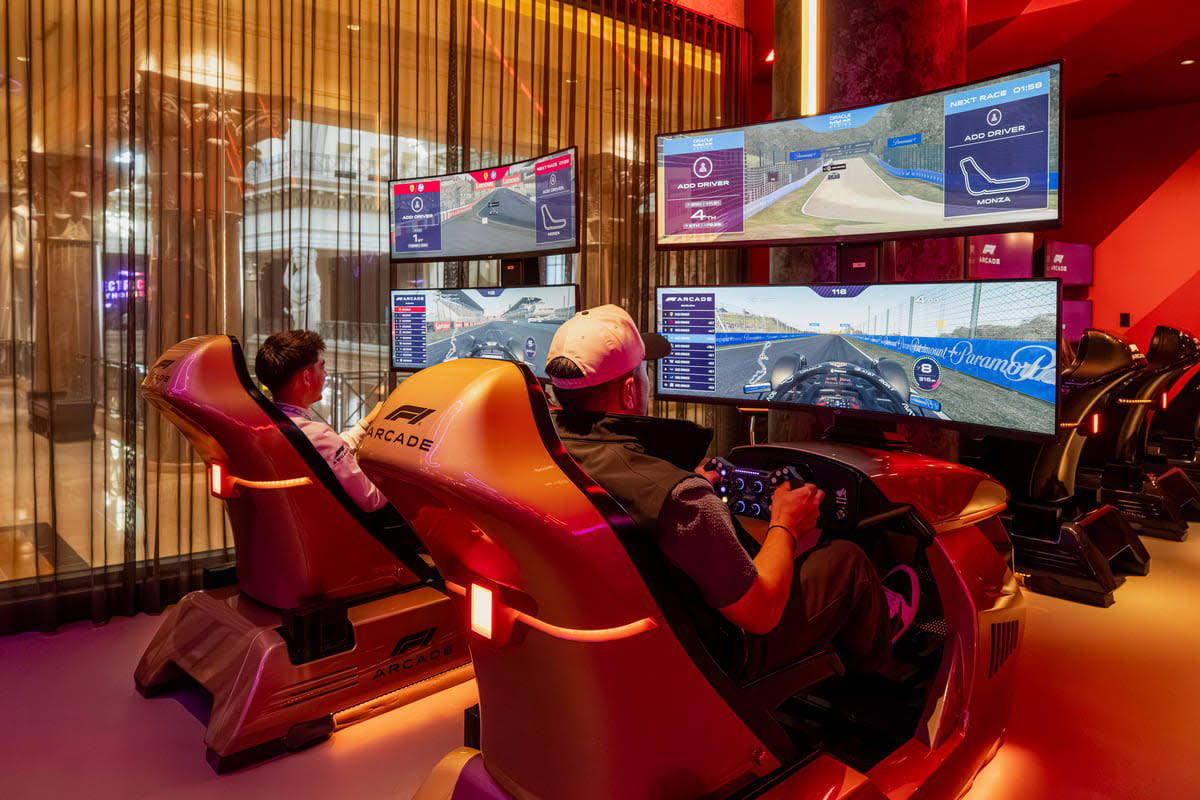
At a Glance
- Modern
- Energetic
- Trendy
- Group Dining
- Casual Hangout
- Late Night
- Open Kitchen
- Hotel Restaurant
Current opening hours
- Monday
- 11 AM–11 PM
- Tuesday
- 11 AM–11 PM
- Wednesday
- 11 AM–11 PM
- Thursday
- 11 AM–11 PM
- Friday
- 11 AM–11 PM
- Saturday
- 11 AM–11 PM
- Sunday
- 11 AM–11 PM
Hours can change for holidays and private events. Last verified .
Lively and energetic with modern, eye-catching decor featuring fish tanks and an open kitchen.
Know Before You Go
- Getting there
- 3570 Las Vegas Blvd S, Las Vegas, NV 89109