




1 Michelin Star · La Liste Top Restaurants · Tabelog 100 #25
Our verdict
BEIGE Alain Ducasse occupies the tenth floor of the Chanel Ginza Building, holding one Michelin star and an 83-point La Liste score for 2026. Chef Kei Kojima frames classic French technique around seasonal vegetables sourced from Kamakura's farmers market, producing a lighter register than most Ginza fine-dining rooms. Tuesday through Sunday, with lunch and dinner seatings.

Pearl is the En Primeur Club membership app, where members save venues, book tables and use the concierge.
The Tenth Floor as Setting
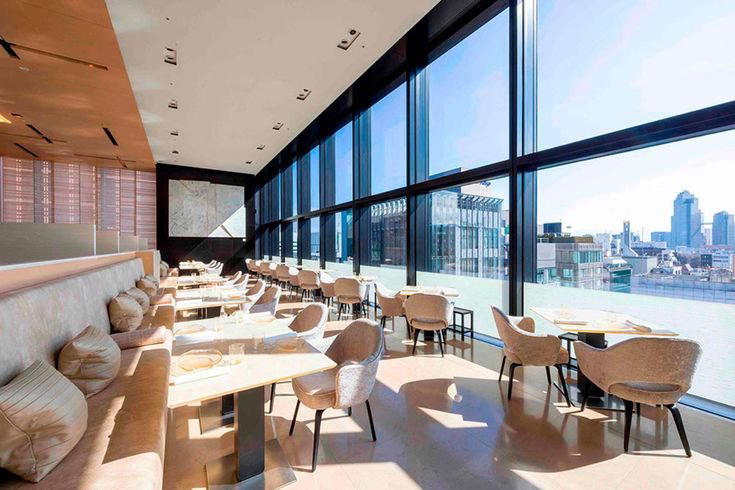
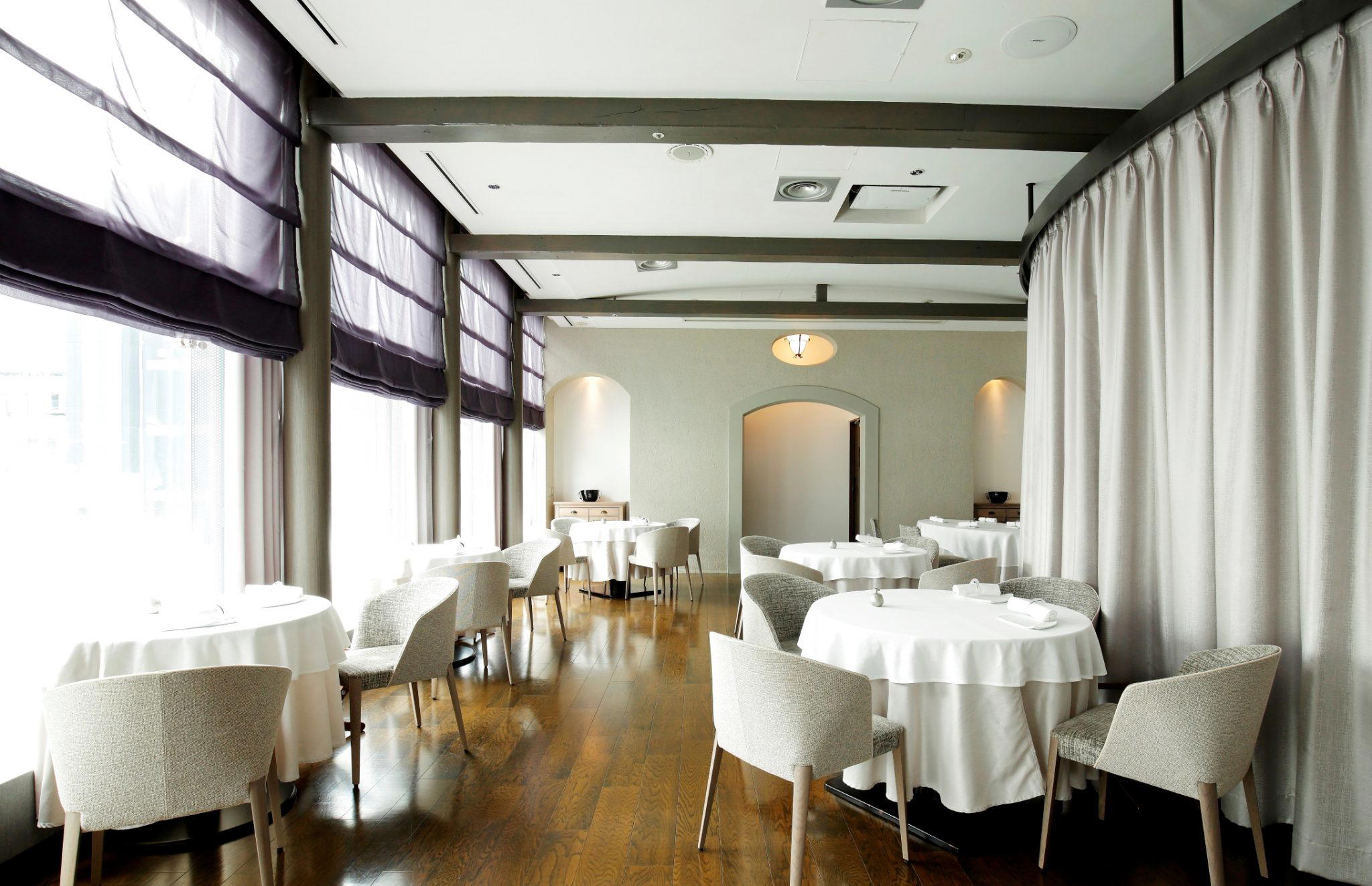
Ginza's fine-dining floor plan tends to compress ambition into small rooms: counter seats, hushed lighting, service that moves in measured increments. BEIGE Alain Ducasse breaks that pattern by occupying the entire tenth floor of the Chanel Ginza Building, a space where the interior language, beige tones, Jacquard fabrics, design references drawn directly from Coco Chanel's aesthetic vocabulary, does the contextual work before a single dish arrives. The effect is less restaurant-as-room and more restaurant-as-considered-environment, the kind of space where the dining ritual has already begun in the lift on the way up.
That ritual matters here. French fine dining in Tokyo sits at an interesting intersection: the city's precision-service culture and its deep familiarity with tasting-menu pacing have made it one of the more demanding audiences for any imported tradition. Venues like Sézanne and ESqUISSE have each found distinct positions within that context. BEIGE operates from a different premise: the Alain Ducasse framework, applied with Japanese product sourcing and a lighter compositional register than Ducasse's European flagship addresses.
The Meal as Argument
The editorial point La Liste made in awarding BEIGE 90.5 points in 2025 (revised to 83 in 2026) is worth unpacking. Their assessment noted that Ducasse was among the first major French chefs to dial back fats and sugars in favour of vegetables and cereals, an approach that reads as prescient now that plant-forward tasting menus have become a reference point across multiple price tiers. At BEIGE, that philosophy is localised through Chef Kei Kojima's focus on produce from the Kamakura area, where a daily farmers market determines what seasonal sourcing actually means rather than what it says on a menu card.
This is not vegetarian cooking in any programmatic sense. It is French structure applied to ingredients that happen to prioritise vegetables because the season and the sourcing logic demand it. La Liste's reviewers observed specifically that both flavour and the feeling after the meal are light, a distinction that separates this kitchen from the richer, more classically butter-forward tradition that still defines much of formal French dining in Tokyo. Compare the approach at L'Effervescence, another Ginza-adjacent address working through a French lens with Japanese material, and the contrast in weight and register becomes instructive.
The Kamakura supply line gives the kitchen a seasonal logic that changes the pacing and character of the meal across the year. Sitting at a Michelin one-star table and working through a menu that was partially determined by what arrived from a specific regional farmers market that morning is a different experience from eating a composed tasting menu where every element has been planned weeks in advance. The rhythm of the meal at BEIGE, how the courses build, where the kitchen places emphasis, how protein and vegetable portions relate, reflects that supply relationship rather than a fixed artistic statement.
Where It Sits in the Tokyo French Tier
Tokyo's French restaurant set covers a wide range of registers and price points. At the upper end, Château Restaurant Joël Robuchon operates within a similarly international framework, while Florilège has built its reputation around a more locally grounded, produce-driven approach in a compact counter format. BEIGE occupies a middle register: international pedigree and a well-resourced dining room, priced at ¥¥¥ rather than the ¥¥¥¥ tier occupied by some of its peers. That pricing decision is not incidental, it places the restaurant in reach of a slightly broader audience while the Michelin star and La Liste recognition confirm it operates at a serious level.
The Opinionated About Dining rankings track this position across several years: Recommended in 2023, Ranked 357th in Japan in 2024, moving to 423rd in 2025. The shift in ranking between those years does not necessarily indicate a decline in quality; OAD rankings reflect the preferences and votes of a specific critical community, and movement within the ranked tier at a Michelin-starred address can indicate changes in how the dining public is prioritising different styles of cooking. For context on the broader Japan French dining scene, addresses like HAJIME in Osaka and akordu in Nara show how French technique is being applied across the country at different scales and with different local sourcing frameworks.
Service, Pacing, and the Etiquette of the Room
French fine dining in Tokyo follows certain conventions that differ from the Paris original in instructive ways. Service in Japanese fine-dining contexts tends toward attentiveness without intrusion, courses are timed with a precision that rarely forces the guest to wait, but also does not rush a table through a meal. The dining ritual at a room like BEIGE is designed to be read as a progression: the environment sets the register at arrival, the menu's vegetable-led structure establishes the kitchen's argument early, and the pacing allows that argument to develop across the meal's full duration.
La Liste's reviewers specifically noted BEIGE as an attraction for European travellers who find the combination of Ducasse's name and Japanese product knowledge compelling. That cross-audience appeal, Japanese diners familiar with the Chanel building's cultural weight and international visitors drawn by the Ducasse framework, shapes the room's atmosphere in ways that affect the dining experience. This is not an intimate counter in the vein of Tokyo's sushi or kaiseki traditions; it is a full-service French dining room operating at a considered remove from both of those formats.
For the meal to work on its own terms, the guest needs to engage with that pacing rather than treat the experience as a delivery mechanism for individual dishes. The vegetable emphasis, the Kamakura sourcing, and the light postprandial register are not incidental features, they are the meal's central proposition, delivered across a service that assumes the guest has time to receive it properly.
Planning Your Visit
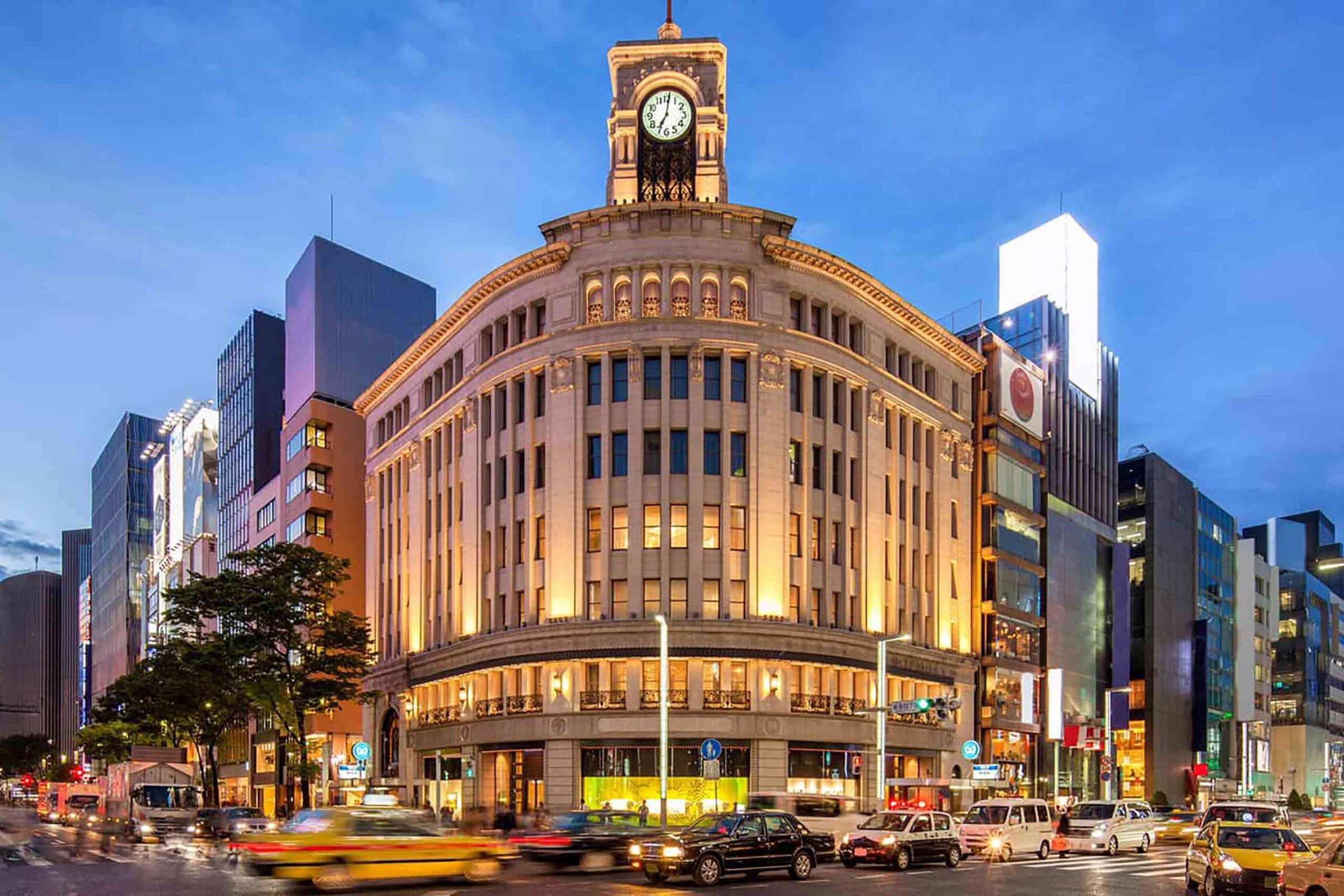
BEIGE Alain Ducasse is closed on Mondays and operates both lunch (11:30am to 3:30pm) and dinner (5:30pm to 10pm) Tuesday through Sunday, including weekends. The restaurant is located on the tenth floor of the Chanel Ginza Building at 3 Chome-5-3 Ginza, Chuo City, accessible from Ginza Station. Priced at ¥¥¥, it sits below the ¥¥¥¥ tier of comparable French addresses in the city, which affects both the booking window and the practical cost of the meal.
For broader planning in the area, our full Tokyo restaurants guide covers the city's dining range in detail, and our full Tokyo hotels guide addresses where to stay relative to Ginza. Those extending beyond Tokyo should also consider Gion Sasaki in Kyoto, Goh in Fukuoka, 1000 in Yokohama, and 6 in Okinawa for regional comparisons. For French cooking in comparable international contexts, Hotel de Ville Crissier in Crissier and Les Amis in Singapore offer instructive reference points for how French technique translates across different cultural settings. Additional Tokyo context is available through our full Tokyo bars guide, our full Tokyo wineries guide, and our full Tokyo experiences guide.
Frequently asked questions
Is BEIGE Alain Ducasse formal or casual?
The room is formal by Tokyo standards: a full-service French dining environment in an architecturally considered space inside the Chanel Ginza Building, holding one Michelin star. The service follows French fine-dining conventions adapted for a Japanese audience, which means attentive and precisely timed. Given the ¥¥¥ price point and the awards profile, this is a structured dining occasion rather than a casual meal, dress and pace yourself accordingly.
What should I order at BEIGE Alain Ducasse?
The kitchen's distinctive position is its vegetable-forward approach within a French fine-dining framework. Chef Kei Kojima sources produce from the Kamakura area, and the menu's character reflects what is arriving seasonally from that region. La Liste reviewers specifically noted the light flavour and postprandial register that the vegetable and cereal emphasis produces. Rather than selecting individual dishes, the most coherent way to experience the kitchen's argument is through the full tasting format, which allows the seasonal sourcing logic to develop across multiple courses.
Is BEIGE Alain Ducasse good for families?
At ¥¥¥ in Ginza, with a Michelin star and a formal French dining room, this is not a setting designed around children. The pacing of a multi-course French meal, the service register, and the pricing make it a better fit for adult dining occasions. Families with older teenagers who are accustomed to formal dining could find the experience appropriate, but the environment and format are not calibrated for younger children.
Price Lens
| Venue | Cuisine | Price | Awards | Notes |
|---|---|---|---|---|
| BEIGE Alain DucasseThis venue (the venue you are viewing) | Modern French with Japanese Influences | $200–300 | 1 Michelin Star · La Liste Top Restaurants | Not listed |
| Harutaka | Edo-Style Omakase Sushi | $200–300 | 3 Michelin Stars · World's 50 Best #76 | Sushi |
| RyuGin | Modern Kaiseki | $500+ | 3 Michelin Stars · World's 50 Best #41 | Kaiseki, Japanese |
| L'Effervescence | Modern French with Japanese Influences | $200–300 | 3 Michelin Stars · World's 50 Best #69 | French |
| HOMMAGE | Modern French with Japanese Influences | $150–200 | 2 Michelin Stars · World's 50 Best #78 | Innovtive French, French |
| MAZ | Innovative Peruvian-Japanese Fusion | $150–200 | 2 Michelin Stars · World's 50 Best #28 | Innovative |
Recognition history
Dated appearances from independent guides and award organizations, with the underlying list record or original source where available.
Michelin 1 Star
Michelin
La Liste Top Restaurants
La Liste
Opinionated About Dining Top Restaurants in Japan Recommended
Opinionated About Dining
Tabelog 100 #25 · No. 25
Tabelog · Tabelog 100 - French - TOKYO - 2025
We're Smart World 3 Radishes
We're Smart World
Full recognition history (10 entries)
La Liste Top Restaurants
La Liste
Opinionated About Dining Top Restaurants in Japan Ranked #423
Opinionated About Dining
Michelin 1 Star
Michelin
Opinionated About Dining Top Restaurants in Japan Ranked #357
Opinionated About Dining
Opinionated About Dining Top Restaurants in Japan Recommended
Opinionated About Dining
Continue exploring
More in Tokyo
Restaurants in Tokyo
All restaurants in Tokyo →
Bars in Tokyo
All bars in Tokyo →
BEIGE Alain Ducasse
The wine
- Wine program
- Deep wine list
- Extensive wine list
- Sommelier-led
- Sake program
Details
- Elegant
- Sophisticated
- Modern
- Ornate
- Date Night
- Business Dinner
- Special Occasion
- Celebration
- Hotel Restaurant
- Panoramic View
- Private Dining
- Extensive Wine List
- Sommelier Led
- Sake Program
- Local Sourcing
- Skyline
- Street Scene
- Prix Fixe
- Tasting Menu
- Omakase
- Wine
- Sake
- Vegetarian Friendly
Current opening hours
- Monday
- Closed
- Tuesday
- 11:30 AM–3:30 PM, 5:30–10 PM
- Wednesday
- 11:30 AM–3:30 PM, 5:30–10 PM
- Thursday
- 11:30 AM–3:30 PM, 5:30–10 PM
- Friday
- 11:30 AM–3:30 PM, 5:30–10 PM
- Saturday
- 11:30 AM–3:30 PM, 5:30–10 PM
- Sunday
- 11:30 AM–3:30 PM, 5:30–10 PM
Hours can change for holidays and private events. Last verified .
Elegant beige interior with Jacquard fabrics and Coco Chanel-inspired design, offering serene sophistication and city views from the top floor.