Beehive
Beehive occupies a converted basement space in Boston's South End, where the neighbourhood's long-standing creative identity shapes a room that doubles as live music venue and full-service restaurant. The format places it in a distinct local tier: casual enough for a weeknight, considered enough for a longer evening. South End regulars treat it as a reliable anchor on Tremont Street.
Pearl is the En Primeur Club membership app — saves, bookings, and concierge access live there. Same editors, same standards.
- Address
- 541 Tremont St, Boston, MA 02116
- Phone
- +16174230069
- Website
- beehiveboston.com
- Directions
- Get directions
 Saves & bookings on Pearl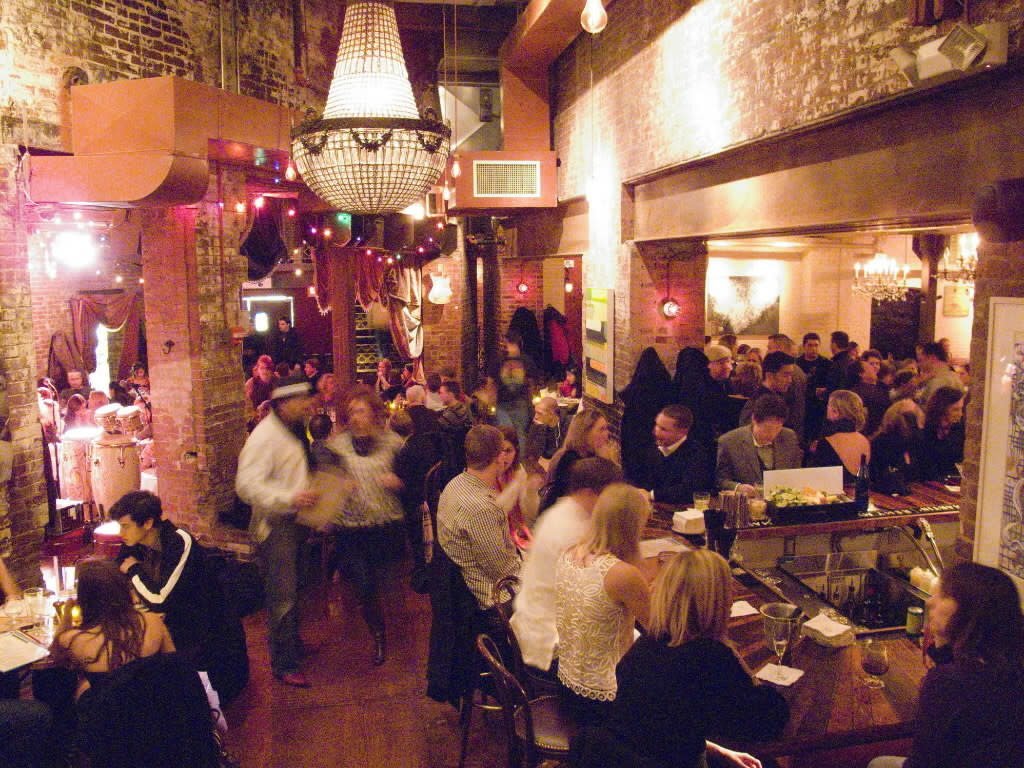
South End After Dark: What Beehive Represents on Tremont Street
Tremont Street in Boston's South End has spent the better part of three decades accumulating a particular kind of creative credibility. The neighbourhood that once housed artists' studios and independent galleries now supports one of the city's more consistent concentrations of independent restaurants, and the stretch around the Boston Center for the Arts has developed its own gravitational pull for locals who want a room with some texture to it. Beehive, a restaurant at 541 Tremont St, Boston, serves rustic comfort food with Middle Eastern and Eastern European influences. Beehive, at 541 Tremont St, sits directly in that pull. The basement-level space is the kind of room that Boston's dining scene has historically struggled to sustain: wide enough for a live band, relaxed enough to feel like a neighbourhood fixture, but with a kitchen that takes the food seriously enough to justify the trip on its own terms.
That dual identity, music venue and restaurant operating at roughly equal weight, puts Beehive in a category that most American cities can claim only a handful of examples in. The format is less common than it appears. Many rooms that bill themselves as live music dining experiences resolve, in practice, to one or the other: either the kitchen becomes secondary to the show, or the music becomes background noise to a restaurant that happened to install a stage. The South End location holds the balance more deliberately than most, and that discipline is the reason the room has maintained its local standing across a competitive period for Boston dining.
The Room and What It Does
The physical environment at Beehive does a specific amount of work before a single plate arrives. The converted basement format, low ceilings, exposed brick, warm light, creates the kind of acoustic intimacy that above-ground rooms rarely achieve. Live music in this context is not amplified spectacle but something closer to a shared experience between performers and a room that seats in their immediate proximity. That compression changes how you sit, how long you stay, and what you order. It is the kind of room that encourages unhurried eating, which is itself a form of editorial pressure on the kitchen: the food has to hold up across an evening rather than deliver a single peak moment.
Boston's South End has historically attracted a dining public that appreciates this kind of prolonged engagement. The neighbourhood's residential character means that many guests are within walking distance, which filters the room toward regulars rather than visitors on a tight itinerary. That local weighting tends to produce more honest feedback loops between kitchen and audience than tourist-heavy rooms elsewhere in the city.
Where Local Ingredients Meet Broader American Technique
The editorial angle that matters most when placing Beehive in its broader context is the relationship between New England's ingredient base and the American bistro technique that shapes menus in this tier of the market. Boston sits in among the more historically productive seafood regions in the country. The waters off Massachusetts, Cape Cod, the Gulf of Maine, the islands, generate oysters, clams, lobster, and fin fish that form the backbone of the local culinary identity. Restaurants in the South End and across the city have, over the past decade, moved progressively toward using that regional supply more explicitly, treating local sourcing not as a marketing position but as a structural approach to menu building.
This places Beehive in a broader national conversation that venues like Blue Hill at Stone Barns in Tarrytown and Single Thread Farm in Healdsburg occupy at the higher end of the price and formality register. Those rooms make the local-to-global technique exchange explicit in their editorial identity; at the bistro tier, the same logic applies without the tasting menu architecture. Boston also has more format-specific comparisons: Agosto, the Portuguese-inspired chef's counter in the city, and 311 Omakase work the local ingredient question from different cultural starting points. Beehive operates at a more accessible price and formality tier than either, which makes it a different kind of entry point into the same regional conversation.
For broader American reference, the question of how technique trained in European or fine dining contexts translates to casual-leaning rooms with live entertainment is one that venues like Lazy Bear in San Francisco and Emeril's in New Orleans have approached from their own angles. The throughline is the same: kitchens that came up through technically demanding environments applying that discipline to rooms that prioritise accessibility and atmosphere over ceremony.
The South End Competitive Set
Beehive's immediate competitive set on and around Tremont Street includes rooms that span a fairly wide range of cuisine types and price points. The South End is not a monoculture. Sarma's Turkish-influenced mezze format and La Brasa's Mexican cooking both draw from similar South End dining publics while operating with distinct culinary identities. Further afield, Abe and Louie's anchors the steakhouse tier, and 75 on Liberty Wharf and 1928 Rowes Wharf represent the waterfront dining character that is an entirely different register of the Boston dining identity. Beehive does not compete directly with any of these on cuisine type, which is part of its staying power: the room occupies a format niche that others in the immediate area have not replicated.
The live music and dining combination is genuinely rare in this market. Neptune Oyster and O Ya, both well-regarded Boston addresses, are defined by their kitchens alone. The music component at Beehive creates a different reason to be there on a given evening, which insulates it partially from direct comparison on food alone.
Planning Your Visit
Beehive's position on Tremont Street puts it within comfortable walking distance of the Back Bay and steps from the Boston Center for the Arts, making it a logical choice for an evening that might extend before or after a performance nearby. The live music schedule varies by evening, so checking programming in advance is worthwhile if the music is central to your reason for going. For those treating the restaurant as the primary draw, the room operates across a range of party sizes, and the layout accommodates groups more naturally than many of the smaller South End independents.
Where the Accolades Land
Comparable venues nearby, for context on price, style, and recognition.
| Venue | Cuisine | Price | Notes |
|---|---|---|---|
| BeehiveThis venue — the venue you are viewing | Rustic Comfort Food with Middle Eastern and Eastern European Influences | $$ | Not listed |
| Hurricane's at the Garden | American Sports Bar | $$ | West End |
| North Street Grille | American Brunch Grill | $$ | North End |
| Ward 8 | New American Gastropub | $$ | Bulfinch Triangle |
| Shy Bird - Fenway | American Rotisserie | $$ | Kenmore |
| Back Deck | Charcoal-Grilled American Comfort Food | $$ | Downtown Crossing |
Continue exploring
More in Boston
Restaurants in Boston
Browse all →
Bars in Boston
Browse all →
Hotels in Boston
Browse all →
Wineries in Boston
Browse all →
At a Glance
- Bohemian
- Cozy
- Lively
- Trendy
- Casual Hangout
- Date Night
- Late Night
- Brunch
- Live Music
- Open Kitchen
- Craft Cocktails
- Local Sourcing
Current opening hours
- Monday
- 5–11 PM
- Tuesday
- 5–11 PM
- Wednesday
- 5–11 PM
- Thursday
- 5 PM–12 AM
- Friday
- 5 PM–1:30 AM
- Saturday
- 10 AM–1:30 AM
- Sunday
- 10 AM–11 PM
Hours can change for holidays and private events. Last verified .
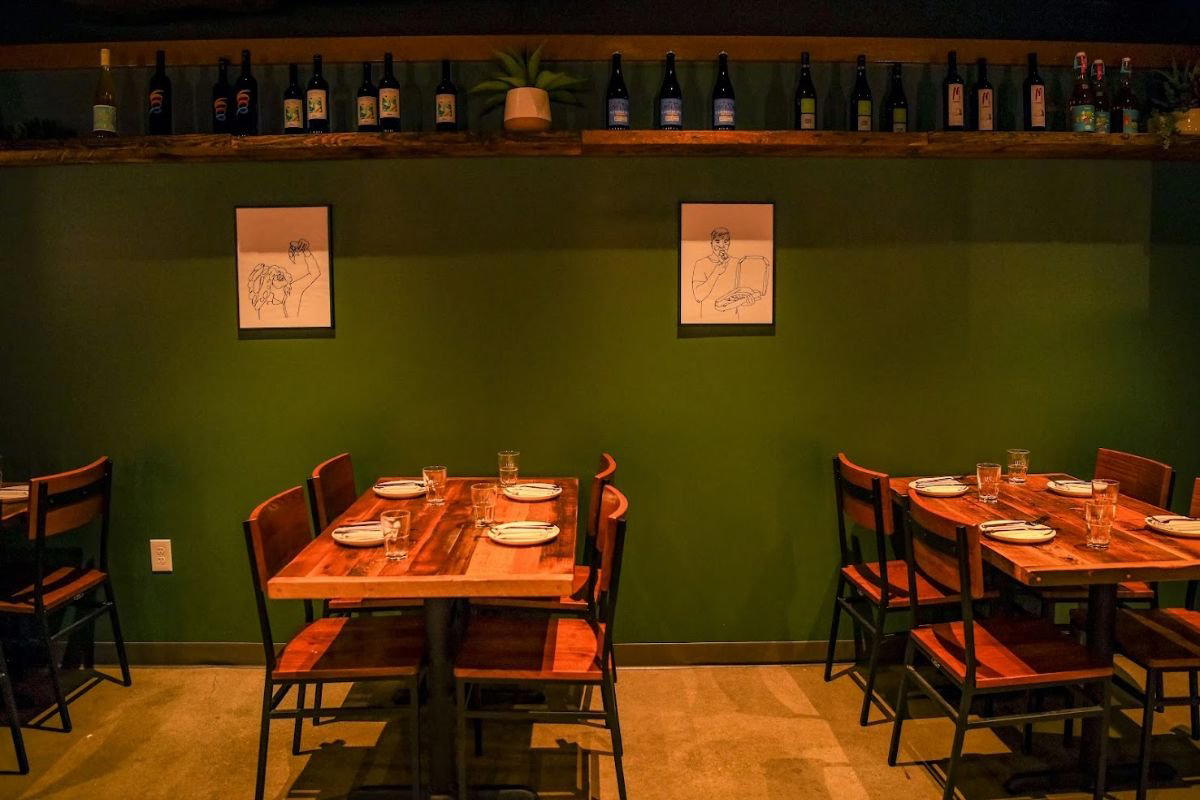
Funky yet elegant art-filled interior with exposed brick walls, cozy lighting, and a lively atmosphere from live music performances.