

Michelin Plate · Gault & Millau Türkiye 2 Toques
Our verdict
Basta Neo Bistro occupies a counter-forward space in Caddebostan, Kadıköy, where chefs Kaan Sakarya and Derin Aribaş translate European bistro technique into a market-driven Istanbul idiom. The format is lively and deliberate, with seasonal ingredients shaping a menu that moves between Turkish pantry staples and European bistro tradition. Booking ahead is advised for counter seats.

Pearl is the En Primeur Club membership app, where members save venues, book tables and use the concierge.
The menu
What to order
- Hummus med torra köttet
- Lökravioli
- Pan con tomate with anchovies
Kadıköy's Shifting Culinary Gravity
For most of Istanbul's recent dining history, the restaurants drawing serious attention sat on the European side: Beyoğlu rooftops, Karaköy wine bars, the Bosphorus-facing rooms where Mikla and Neolokal planted their flags. The Asian side was residential, comfortable, and largely overlooked by destination diners. That calculus has been shifting. Kadıköy, and specifically its quieter southern extension into Caddebostan, has started producing the kind of cooking that earns repeat visits from across the Bosphorus. Basta Neo Bistro sits inside that shift, operating from Operatör Cemil Topuzlu Caddesi in a format more common to Paris's 11th arrondissement than to the Istanbul dining scene of a decade ago.
The Counter as the Room's Argument
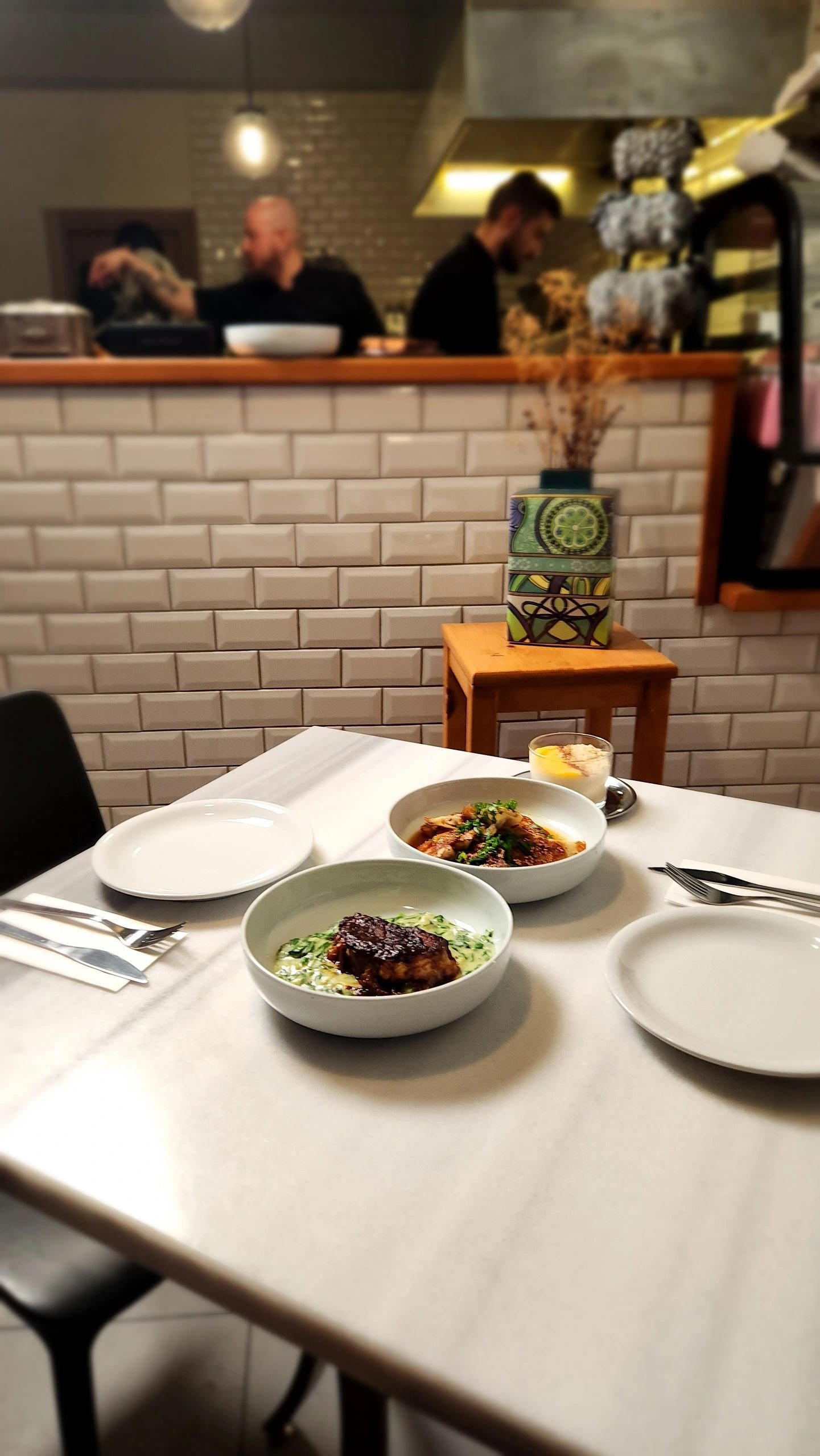
The neo-bistro format has a particular logic: strip the room back, put the kitchen forward, let the cooking carry the atmosphere. In cities where this model has taken hold, from Copenhagen to Lyon to London's Soho, the counter seat has become the prestige position, not despite the proximity to the kitchen, but because of it. At Basta, the counter functions the same way. Watching Kaan Sakarya and Derin Aribaş work gives the meal a different quality of attention than table service allows. Both chefs arrived here via top-flight European kitchens, and that training is visible not in grand gestures but in the economy of movement and the consistency of execution at what is, by design, a lively and unpretentious operation.
The bistro idiom rewards this kind of transparency. Unlike tasting-menu rooms where the kitchen is deliberately hidden behind ceremony, the neo-bistro stakes its credibility on the coherence between what you see and what arrives on the plate. Istanbul's version of this format, still relatively new, positions Basta alongside a small cohort of neighbourhood-scale restaurants making a European-influenced argument without the ₺₺₺₺ price tier that defines venues like Turk Fatih Tutak or Arkestra. The format at Basta is more casual, and consciously so.
Where the Turkish Pantry Meets European Bistro Tradition
Cultural context of Istanbul's contemporary restaurant scene matters here. The city has a long and complicated relationship with European culinary influence, stretching back to the late Ottoman period when Galata and Pera absorbed French and Italian cooking alongside Levantine trade. What has changed in the current generation of Istanbul chefs is the direction of the negotiation. Earlier waves of European influence tended to subordinate Turkish ingredients to French technique. The more interesting restaurants now work the other way: the technique is European, the pantry is Turkish, and the street-food register is present without being treated as a limitation.
Basta's menu operates in this mode. The brioche filled with tomato jam, onion, and stracciatella draws simultaneously on Istanbul's love of tomato-based preparations and the European enriched-bread tradition. The combination is neither fusion in the diluted sense nor Turkish cooking in a traditional frame. It is something more specific: a dish that reads as cosmopolitan without erasing its local referents. The pan con tomate with salted anchovies makes a similar move, taking a Catalan archetype and running it through an Istanbul sensibility where anchovy quality and salt calibration carry real cultural weight. On the Bosphorus coast, anchovies are not garnish; they are a serious ingredient with a serious local vocabulary, and the dish acknowledges that without making a lecture of it.
This is the kind of cooking that restaurants like Casa Lavanda approach from a more traditional angle, and that the established modern Turkish rooms address from a more formal register. Basta's position in between, street-food energy inside a bistro frame, is a less occupied space in Istanbul's current scene. For comparison, the same synthesis is being attempted at various price points elsewhere in Turkey: Narımor in Izmir and Ahãma in Göcek both work European-Turkish crossover territory, though in coastal settings with different seasonal pressures. In Istanbul, Basta is working it in a neighbourhood context, which changes the tempo and the expectation considerably.
Seasonal Discipline as Editorial Position
Market-driven cooking is a phrase deployed so frequently in restaurant descriptions that it has lost most of its meaning. What it should signal is a kitchen that changes its offer in response to what is actually available, rather than anchoring a static menu to a fixed identity. Sakarya and Aribaş run a menu shaped by seasonal availability, which in Istanbul means access to one of the most varied and densely stocked market systems in the region. The spice traders of the Grand Bazaar, the fishmongers of Karaköy, the vegetable sellers of Kadıköy market itself, the supply infrastructure for a chef willing to shop it is substantial. Basta's seasonal commitment, in this context, is less a philosophical statement than a practical acknowledgment of what the city offers and how to use it well.
The parallels to other chef-driven market operations are instructive. Restaurants like Le Bernardin in New York have built long-term identities around ingredient sourcing as a primary value. At Basta the scale is entirely different, but the underlying logic is the same: the menu should reflect what is at peak condition now, not what was agreed upon six months ago. For a Caddebostan neighbourhood restaurant, that discipline is a meaningful differentiator.
Planning Your Visit
Basta Neo Bistro is located at Operatör Cemil Topuzlu Caddesi No:39 in Caddebostan, a residential stretch of Kadıköy on Istanbul's Asian side, accessible from the city centre by ferry to Kadıköy or by metro. The counter seats are the ones to request; they offer a direct sightline into the kitchen and a different rhythm of service than table positions. Given the size of the operation and the format's growing reputation, booking ahead is the practical approach rather than the cautious one. The energy in the room leans lively rather than hushed, which makes it a reasonable choice for a dinner that is meant to feel like an evening rather than an event. For a broader picture of where Basta sits within Istanbul's dining options, see our full Istanbul restaurants guide, and for context on where to stay, drink, or explore nearby, consult our Istanbul hotels guide, bars guide, and experiences guide. If travel beyond Istanbul is on the agenda, Maçakızı in Bodrum, 7 Mehmet in Antalya, and Aravan Evi in Ürgüp represent the range of what serious regional cooking looks like across Turkey. Agora Pansiyon in Milas and Istanbul's wine producers complete a picture of the country's broader gastronomic range.
Frequently asked questions
Is Basta Neo Bistro good for families?
Kadıköy is a residential neighbourhood with a relaxed street-level tempo, and Basta fits that context reasonably well. That said, the counter-focused layout is oriented around the open kitchen and the cooking itself, which suits adults more naturally than young children. Families with older kids who engage with food will find it manageable; those with very young children may find the format constraining.
Is Basta Neo Bistro better for a quiet night or a lively one?
Basta skews lively by design. The open kitchen, counter seating, and market-driven menu built around European-Turkish synthesis generate an energy that suits animated evenings more than quiet ones. Chefs Kaan Sakarya and Derin Aribaş trained in top European restaurants and have constructed a room where the cooking is the atmosphere, conversation and activity are part of the format.
Is Basta Neo Bistro Michelin-listed?
Basta Neo Bistro has received recognition including: Kaan Sakarya and Derin Aribaş honed their skills in top-flight European restaurants before opening this lively bistro. A seat at the counter offers the best view of how they blend European and Turkish traditions with a street-food twist. Th….
What should I order at Basta Neo Bistro?
The brioche filled with tomato jam, onion, and stracciatella and the pan con tomate with salted anchovies are the two dishes the venue is specifically noted for, both show how the kitchen folds Turkish pantry instincts into European bistro forms. Counter seats give the clearest view of how the kitchen operates, so request one when booking if the format interests you.
Where is Basta Neo Bistro located?
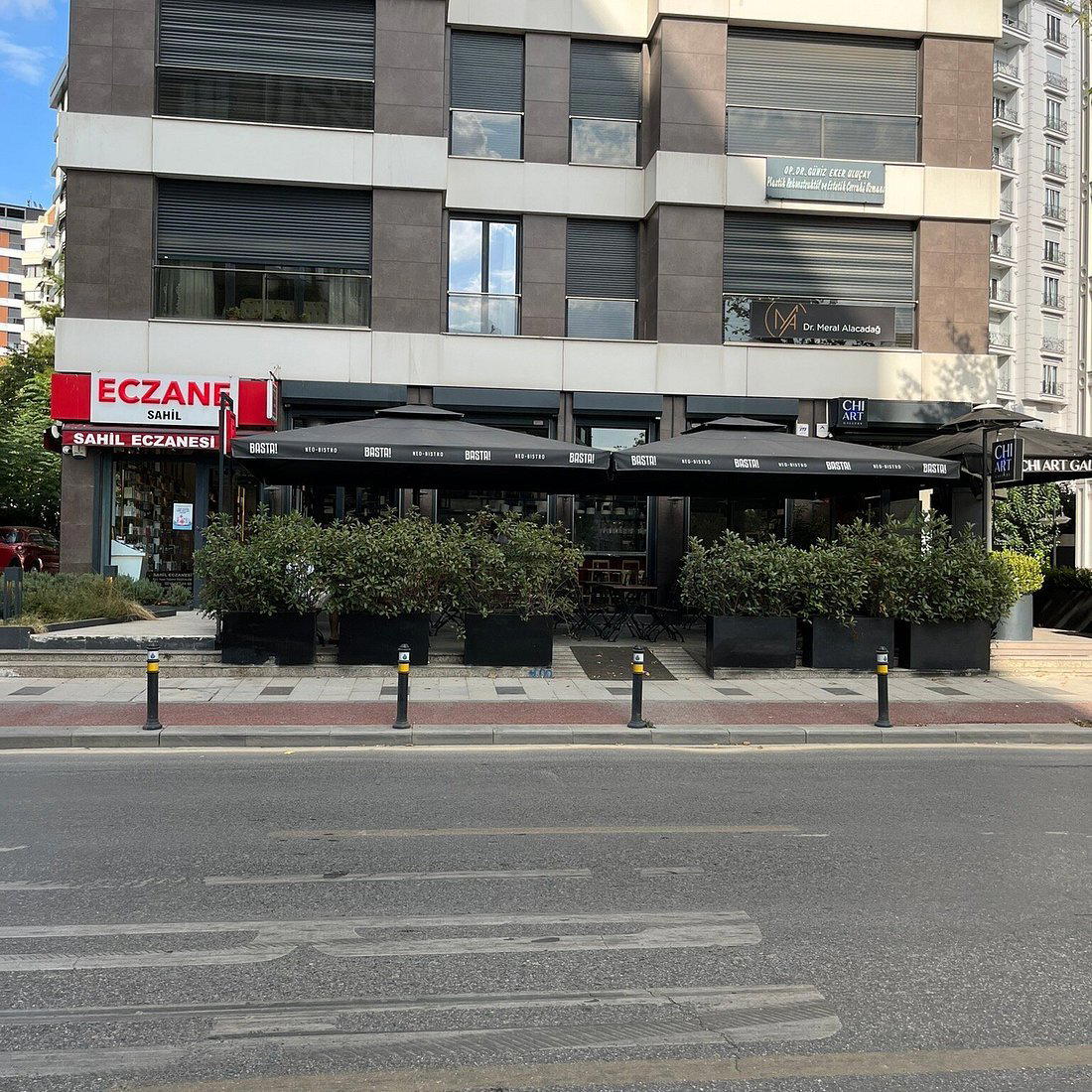
Basta Neo Bistro is located at Caddebostan, Operatör Cemil Topuzlu Caddesi No:39, Kadıköy, Istanbul.
Budget and Context
Comparable venues nearby, for context on price, style, and recognition.
| Venue | Cuisine | Price | Awards | Notes |
|---|---|---|---|---|
| Basta Neo BistroThis venue (the venue you are viewing) | Modern Neo Bistro Fusion | $50–100 | Michelin Plate · Gault & Millau Türkiye 2 Toques | Not listed |
| OCAK | Modern Turkish-Anatolian Fine Dining | $50–100 | Michelin Plate · Gault & Millau Türkiye 1 Toque | Hobyar, Modern Turkish-Anatolian Fine Dining |
| Calipso Fish | Aegean Seafood | $50–100 | Michelin Plate · Gault & Millau Türkiye 1 Toque | Kucukyali Merkez, Aegean Seafood |
| Sapa İstanbul | Modern Turkish Fine Dining | Not listed | Michelin Plate · Wine Spectator Award of Excellence | Kucukbakkalkoy, Modern Turkish Fine Dining |
| Liman İstanbul | Modern Ottoman Turkish with Seafood | $50–100 | Michelin Plate · Gault & Millau Türkiye 1 Toque | Kilicali Pasa, Modern Ottoman Turkish with Seafood |
| Apartıman Yeniköy | Modern Turkish Bistro | $50–100 | Michelin Plate · Gault & Millau Türkiye 2 Toques | Yenikoy, Modern Turkish Bistro |
Recognition history
Dated appearances from independent guides and award organizations, with the underlying list record or original source where available.
Michelin Plate
Michelin · 2026 Michelin Plate
Gault & Millau Türkiye 2 Toques
Gault & Millau · Gault & Millau Türkiye 2026 - 2 Toques
Continue exploring
More in Istanbul
Restaurants in Istanbul
All restaurants in Istanbul →
Bars in Istanbul
All bars in Istanbul →

Details
- Modern
- Lively
- Trendy
- Date Night
- Casual Hangout
- Open Kitchen
- Local Sourcing
- A La Carte
- Small Plates
- Vegetarian Friendly
- Gluten Free Options
Current opening hours
- Monday
- Closed
- Tuesday
- 3–10 PM
- Wednesday
- 3–10 PM
- Thursday
- 3–10 PM
- Friday
- 3–10 PM
- Saturday
- 2–10 PM
- Sunday
- 2–10 PM
Hours can change for holidays and private events. Hours as of .
Lively and welcoming casual atmosphere with stylish bistro decor and unadorned al fresco seating.