Barrio
Our verdict
Barrio sits at 4017 City Terrace Drive in East Los Angeles, a neighborhood whose dining identity has shifted considerably over the past decade as the city's appetite for community-rooted Mexican cooking has grown more sophisticated. The address places it squarely within a residential corridor that increasingly draws diners crossing from more established parts of the city.

Pearl is the En Primeur Club membership app — saves, bookings, and concierge access live there. Same editors, same standards.
- Address
- 4017 City Terrace Dr, Los Angeles, CA 90063
- Phone
- (323) 685-8033
- Hours
- Mon–Thu ClosedFri–Sat 6–9 PMSun Closed
- Website
- barriolosangeles.net
- Directions
- Get directions
- Booking
- Book on OpenTable
The menu
What to order
- Cacio e Pepe
- Pasta Primavera
- Bistro Burger
East Los Angeles and the Slow Repositioning of Mexican Dining
City Terrace is not where most visitors to Los Angeles begin their dining itinerary. The neighborhood sits east of Boyle Heights, away from the restaurant corridors that attract the city's food press and the reservation platforms that funnel attention toward higher-profile zip codes. That geography has historically sorted restaurants in this part of the city into a different register: community-facing, price-accessible, operating on word of mouth rather than editorial coverage. Barrio, at 4017 City Terrace Drive, sits within that tradition — and the interesting question is how much that tradition itself has changed around it.
Over the past decade, Los Angeles has developed a more layered relationship with Mexican and Mexican-American cooking. The city's critical conversation, which once concentrated almost entirely on fine-dining formats drawn from European or Japanese lineages, has gradually expanded to recognize the depth operating in neighborhoods like City Terrace, Boyle Heights, and East LA more broadly. That shift did not happen uniformly or quickly. It tracked a broader national recalibration — accelerated by the James Beard Foundation's expanded regional and community recognition programs, and by a generation of food writers willing to evaluate a taqueria or neighborhood restaurant on its own terms rather than against a Michelin-calibrated reference point. Venues like Kato demonstrated that Los Angeles diners would seek out serious cooking in unconventional settings, while the sustained recognition earned by Providence showed that the city could sustain fine-dining ambition at the highest tier. Barrio operates in a different register from both, but it exists in a city where those conversations are happening simultaneously.
The Neighborhood as Context
City Terrace Drive runs through a hillside residential area whose street-level commercial activity has always been oriented toward the people who live there. That is a different development model from the Arts District or Silver Lake, where restaurants are often the anchoring infrastructure for neighborhood identity. In City Terrace, the neighborhood comes first; the restaurants follow from it. That sequence shapes what a place like Barrio is and what it is not. It is not an outpost designed to draw a destination diner from the Westside. Its evolution, whatever form that has taken, is more likely to reflect changes in its immediate community than shifts in the city's broader dining trends.
That community-first orientation is worth understanding for any diner approaching from outside the neighborhood. East Los Angeles has a longer and more complex culinary history than its coverage in mainstream food media would suggest, generations of family-run restaurants, regional Mexican traditions carried by successive waves of migration, and a density of everyday cooking that operates below the threshold of formal recognition. When a restaurant in this area evolves or repositions, it does so against that backdrop, not against the tasting-menu arms race visible at Somni or Hayato.
Evolution Without a Press Cycle
The editorial angle most relevant to Barrio is one that applies to many neighborhood restaurants in cities where dining coverage concentrates in a small number of high-visibility corridors: the evolution that happens without documentation. Restaurants in areas like City Terrace often change significantly over years, menus narrow or broaden, formats shift from counter to table service or back, the kitchen absorbs new influences while retaining core preparations, without any of it appearing in the publications that track restaurant openings and closures elsewhere in the city.
That kind of evolution is not less real for being undocumented. In some respects it is more instructive about how restaurants actually function: they respond to their regulars, to supply, to the economics of their specific location, and to the skills available in their kitchen. Contrast that with the documented reinventions visible at destination restaurants elsewhere in the country, Lazy Bear in San Francisco, Smyth in Chicago, or Blue Hill at Stone Barns in Tarrytown, all of which have publicly narrated their pivots, and the contrast clarifies what kind of institution Barrio is.
This matters for how a visitor approaches the experience. Arriving with expectations calibrated to the format precision of The French Laundry in Napa or the sourcing transparency of Single Thread Farm in Healdsburg will produce a mismatch. The appropriate reference points are closer to home and more grounded in the community logic of East Los Angeles.
Los Angeles Mexican Cooking in a Broader Frame
For context on where neighborhood restaurants in this part of the city sit within the wider dining map, it helps to look at the range that LA's Mexican and Mexican-American dining scene now covers. At one end, market-style operations and taquerias operate on fast throughput and price accessibility, the category that has long defined the neighborhood's public reputation. At the other, a smaller number of venues have pushed toward more formal plating and beverage programs, drawing comparisons to the repositioning that Mexican cooking has undergone in other major American cities. Barrio's address in City Terrace places it geographically in the heart of that tradition, whatever specific position it occupies along that range.
The broader American dining conversation has paid increasing attention to this kind of repositioning. Institutions in other cities, Emeril's in New Orleans, Frasca Food and Wine in Boulder, Addison in San Diego, have each demonstrated that regional cooking traditions can anchor serious dining programs when the kitchen has the discipline to sustain them. The question for any Los Angeles restaurant rooted in Mexican-American cooking is whether that same seriousness is being applied, and for whom.
Planning Your Visit
For a broader orientation to Los Angeles dining, see our full Los Angeles restaurants guide. Those planning a longer itinerary across the western United States may also consider Osteria Mozza within Los Angeles, or extend to Le Bernardin in New York City, Atomix in New York City, or The Inn at Little Washington for comparable ambition in other markets. For those drawn to restaurants where place and sourcing define the menu, Atelier Moessmer Norbert Niederkofler in Brunico represents the international end of that approach.
Frequently asked questions
Where is Barrio located?
Barrio is located at 4017 City Terrace Dr, Los Angeles, CA 90063, Los Angeles.
Is Barrio in City Terrace worth visiting if I'm coming from central or west Los Angeles?
Barrio's address at 4017 City Terrace Drive places it in a part of Los Angeles that dining coverage has consistently overlooked in favor of higher-profile corridors. The draw is the neighborhood itself: City Terrace represents a strand of East LA Mexican dining culture that developed without press attention rather than because of it. For visitors willing to drive east of Boyle Heights, that context is a credential in its own right, even without awards or a chef name attached to the record.
What do people recommend at Barrio?
Barrio sits in City Terrace, a hillside residential neighborhood east of Boyle Heights, where the menu is oriented toward the local community rather than a rotating roster of visiting critics. Without a published menu on record, the most reliable approach is to ask staff directly about the day's offerings or what regulars return for. That kind of on-the-ground conversation is typical of neighborhood restaurants in this part of Los Angeles, where the programming tends to be consistent rather than seasonal-rotation-driven.
How far ahead should I plan for Barrio?
Barrio operates in City Terrace at 4017 City Terrace Drive, a neighborhood where dining traffic is largely residential rather than destination-driven. Walk-in availability at this type of community-anchored restaurant in East Los Angeles tends to be more accessible than at press-circuit destinations in Silver Lake or downtown.
Price Lens
| Venue | Cuisine | Price | Awards | Notes |
|---|---|---|---|---|
| BarrioThis venue — the venue you are viewing | Roman and Calabrian Italian Bistro | Not listed | Not listed | Not listed |
| Kato | Modern Taiwanese Fine Dining | $300–500 | 2 Michelin Stars · World's 50 Best #49 | New Taiwanese, Asian |
| Hayato | Traditional Japanese Kaiseki | $300–500 | 2 Michelin Stars · La Liste Top Restaurants | Japanese |
| Vespertine | Avant-Garde Tasting Menu | $200–300 | 2 Michelin Stars · La Liste Top Restaurants | Progressive, Contemporary |
| Holbox | Modern Mexican Seafood | $30–50 | 1 Michelin Star · World's 50 Best #26 | Mexican Seafood, Mexican |
| Sushi Kaneyoshi | Edomae Omakase | $300–500 | 1 Michelin Star · LA Times 101 Best Restaurants #24 | Sushi, Japanese |
Continue exploring
More in Los Angeles
Restaurants in Los Angeles
Browse all →
Bars in Los Angeles
Browse all →

Hotels in Los Angeles
Browse all →


Wineries in Los Angeles
Browse all →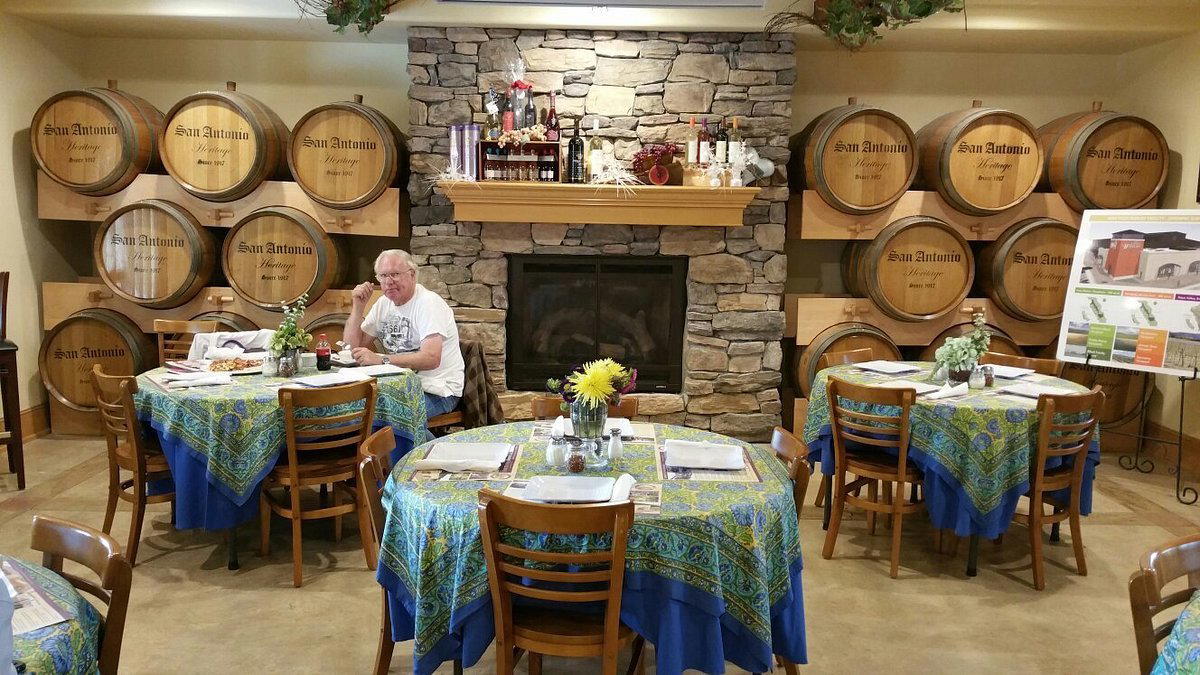

Details
- Cozy
- Classic
- Date Night
- Family
- Casual Hangout
- Standalone
- A La Carte
- Vegetarian Friendly
Current opening hours
- Monday
- Closed
- Tuesday
- Closed
- Wednesday
- Closed
- Thursday
- Closed
- Friday
- 6–9 PM
- Saturday
- 6–9 PM
- Sunday
- Closed
Hours can change for holidays and private events. Last verified .
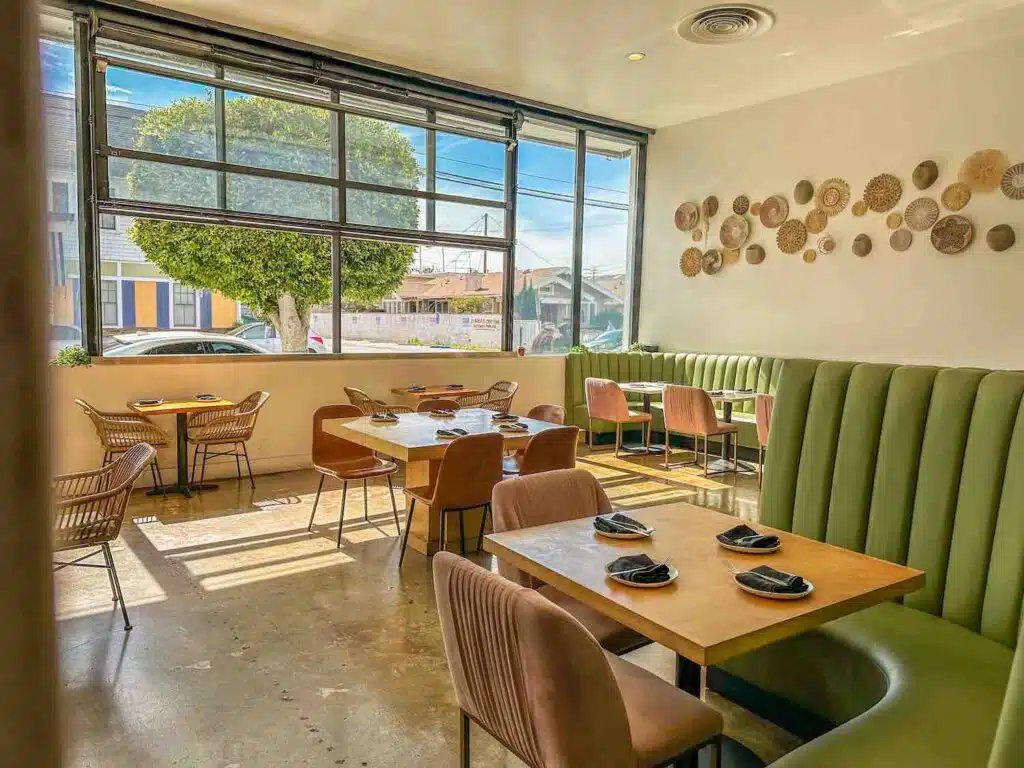
Warm and inviting atmosphere centered on comforting Italian classics with fresh bread and seasonal flavors