

Macarfi 7 Food Rating · We're Smart World 3 Radishes
Our verdict
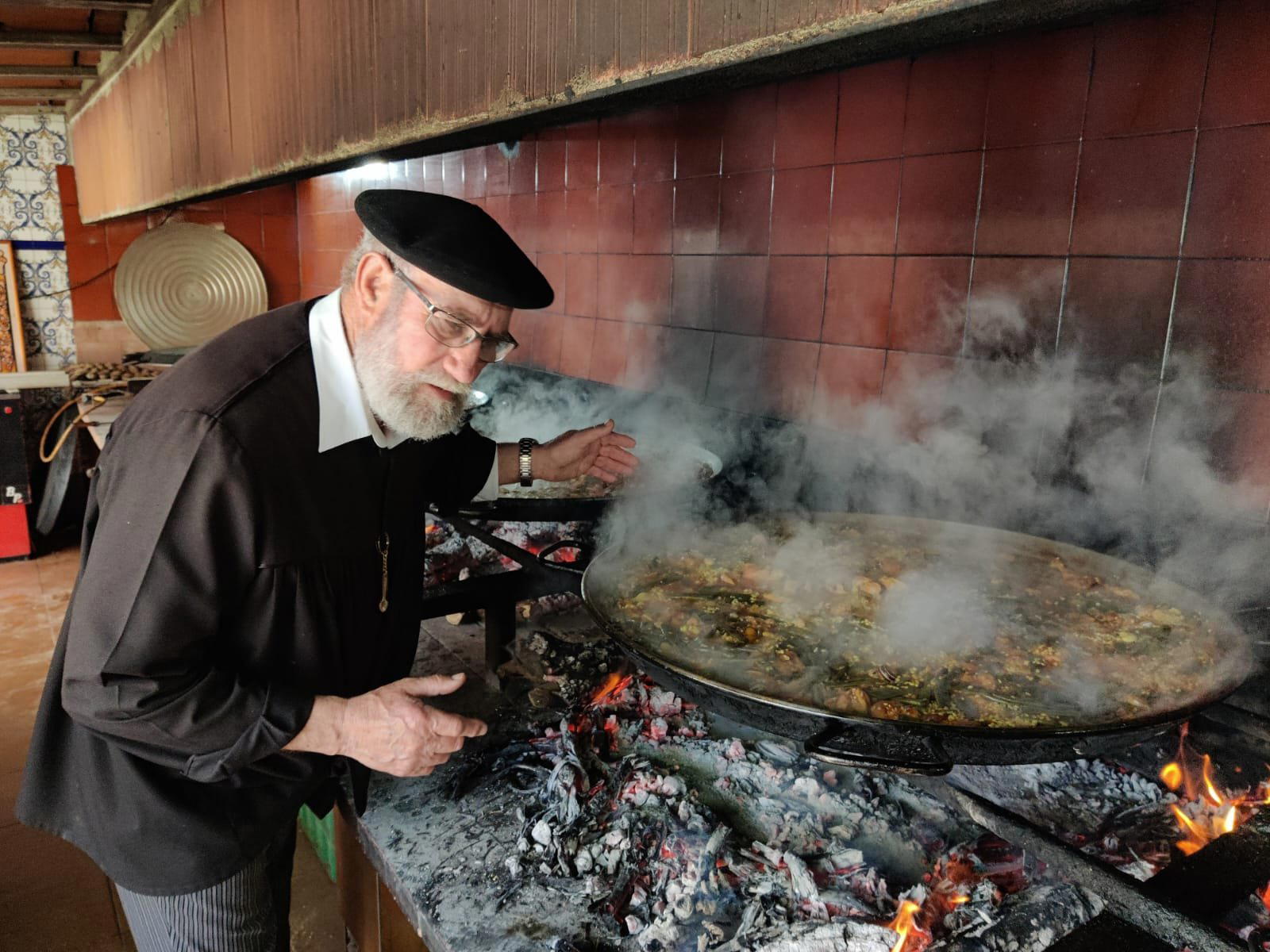
A working barraca on Valencia's agricultural fringe, Toni Montoliu draws Spanish families and informed visitors with homemade paella and produce grown on the surrounding land. The format is resolutely seasonal and deliberately low-key: opening days are limited, booking is advised, and the kitchen's credibility rests on soil rather than ceremony.

Pearl is the En Primeur Club membership app — saves, bookings, and concierge access live there. Same editors, same standards.
- Address
- Partida de l'Ermita, Polígon, 1, Parcel·la 25, 46133, Valencia, Spain
- Phone
- +34 603 73 37 14
- Hours
- Mon–Tue ClosedWed–Sun 2–5 PM
- Website
- barracatonimontoliu.com
- Directions
- Get directions
- Booking
- Book on the venue's website
The menu
What to order
- Valencian Paella
- Esgarraet
- All i Pebre
The road out to Partida de l'Ermita does not ease you in gently. The urban density of Valencia gives way to flat agricultural land, irrigation channels, and the kind of working rural infrastructure that the city's restaurant industry depends on but rarely acknowledges. Arriving at Barraca Toni Montoliu, you are not entering a curated rural experience. You are arriving at a place that has always been this — a farmstead barraca where the kitchen and the growing land are the same operation, not two separate things connected by a supply chain.
The Barraca Tradition and Where It Sits in Valencia's Culinary Identity
Valencia has a layered food culture that the international dining world tends to flatten into a single dish. Paella is the surface; beneath it is an agricultural tradition rooted in the huerta, the fertile market-garden belt that has surrounded the city for centuries. The barraca — a traditional thatched farmhouse, was the domestic centre of that agricultural world, and its kitchen was inseparable from what was growing outside. The format that Toni Montoliu operates belongs to this lineage. It is not a restaurant that evokes rustic heritage for atmosphere. The vegetables arrive from the surrounding plot, the menu responds to what is ready rather than what is fashionable, and the paella is cooked in the way that Valencia's domestic tradition has always cooked it: with attention to the socarrat, the correct rice variety, and the restraint that comes from not needing to perform for a crowd that doesn't know better.
This places Barraca Toni Montoliu in a distinct tier of the Valencia food scene, one that sits well apart from the fine-dining register occupied by Ricard Camarena in València or the avant-garde coastal ambition of Quique Dacosta in Dénia. Both of those represent Spanish fine dining at its most technically demanding, drawing comparisons with the innovation programs at El Celler de Can Roca in Girona, Azurmendi in Larrabetzu, or Mugaritz in Errenteria. Toni Montoliu operates on entirely different terms. The credibility here is agricultural, not culinary-laboratory. Knowing the difference matters when you are deciding which Valencia experience you actually want.
What Draws People Here
The description attached to this place in informed circles is consistent: Toni Montoliu is spoken of as a phenomenon, and the word is used without irony. The draw is the combination of a grower who cooks with genuine seasonal produce, and a host who brings an unaffected enthusiasm to feeding people. Spanish families, many of whom are particular about paella in the way that a Roman is particular about carbonara, make the drive here on the barraca's opening days. That is a meaningful signal. Locals who have grown up eating the dish prepared correctly are returning customers, which tells you more about the kitchen's credibility than any award certificate.
The seasonal vegetables, brought directly from the surrounding plot, arrive simply prepared. This is not minimalism as aesthetic statement. It is the outcome of cooking what is at peak condition and not overworking it. The paella, when it is on the menu, is the version that the huerta tradition produced before the dish became a global export product diluted for tourist expectations.
How This Compares to the Broader Spanish Scene
Spain's premium dining conversation is dominated by restaurants operating at the technical frontier: Arzak in San Sebastián, Martin Berasategui in Lasarte-Oria, DiverXO in Madrid, Aponiente in El Puerto de Santa María, Cocina Hermanos Torres in Barcelona. These are restaurants where the food's identity is constructed in the kitchen using technique as the primary tool. Toni Montoliu's kitchen inverts that logic. The primary tool is the soil. The cooking follows the growing, not the other way around. This is a position that a small number of places across Spain occupy with genuine conviction, and it is a harder position to maintain than it appears. Growing your own produce and cooking seasonally within a fixed agricultural cycle demands a discipline that has nothing to do with culinary trend-following.
For visitors who have arrived in Valencia from a circuit of technically ambitious Spanish restaurants, Barraca Toni Montoliu offers a recalibration. It is a reminder of what the city's food culture is built on before the fine-dining layer is added. That context makes both registers more legible. For a fuller picture of where this sits within the city's dining range, Anyora represents a different point on the same local-produce continuum, and our full Valencia restaurants guide maps the broader field.
Planning Your Visit
Barraca Toni Montoliu operates on a limited schedule, opening days rather than a standard weekly timetable, and booking is recommended. The combination of a constrained format and a word-of-mouth reputation among Spanish families means that seats go to people who plan ahead. The address is Partida de l'Ermita, Polígon 1, Parcel·la 25, on Valencia's agricultural periphery; this is not a venue you will walk past. You are making a deliberate trip, which is in keeping with the format. Arrive without tight time pressures. The experience does not fit into a one-hour lunch slot, and the journey out to the huerta is part of the context. For accommodation, bar, and broader planning resources, our full Valencia hotels guide, our full Valencia bars guide, our full Valencia wineries guide, and our full Valencia experiences guide cover the surrounding territory. For a point of international reference on what farm-driven, produce-led cooking can achieve at the highest level, Le Bernardin in New York City and Emeril's in New Orleans show how different culinary cultures build authority through ingredient fidelity and regional identity rather than through technical spectacle alone.
Frequently asked questions
Is Barraca Toni Montoliu okay with children?
Spanish families are among the most consistent visitors here, which speaks to the setting's suitability for all ages. The barraca format — open, informal, rooted in shared dishes like paella — fits the rhythm of a family meal rather than a formal dining room.
What's the vibe at Barraca Toni Montoliu?
This is a working agricultural property in Partida de l'Ermita, not a restaurant dressed up to look rustic. Toni Montoliu grows the vegetables served at the table, and the atmosphere reflects that directness — unhurried, grounded, and built around seasonal produce rather than spectacle.
What awards or recognition does Barraca Toni Montoliu have?
Barraca Toni Montoliu has received recognition including: Toni Montoliu is a phenomenon, in every possible positive thought. He grows his own vegetables, so he stands with his feet in the earth, is a barrel full of passion, and wants to spoil his guests on the restaurant's opening days with his ho….
What should I order at Barraca Toni Montoliu?
The homemade paella is the anchor of any visit, prepared on opening days as a signature rather than a set menu fixture. Seasonal vegetables from the property's own fields appear alongside it, varying with what is ready to harvest — so the menu follows the land rather than a fixed list.
Where is Barraca Toni Montoliu located?
Barraca Toni Montoliu is located at Partida de l'Ermita, Polígon, 1, Parcel·la 25, 46133, Valencia, Spain, Valencia.
How hard is it to get a table at Barraca Toni Montoliu?
Booking is recommended. The venue operates on opening days rather than a standard weekly schedule, and its following among Spanish families means seats fill before most out-of-town visitors think to call. Planning ahead is the practical minimum.
What has Barraca Toni Montoliu built its reputation on?
In informed circles, Toni Montoliu is described as a phenomenon — a grower-cook who raises his own vegetables and channels them into pure regional Valencian cooking, centred on paella made the way it has always been made in this part of Spain. That combination of agricultural self-sufficiency and genuine regional commitment is what draws Spanish families back repeatedly.
A Pricing-First Comparison
Comparable venues nearby, for context on price, style, and recognition.
| Venue | Cuisine | Price | Awards | Notes |
|---|---|---|---|---|
| Barraca Toni MontoliuThis venue — the venue you are viewing | Traditional Valencian Paella | $30–50 | Macarfi 7 Food Rating · We're Smart World 3 Radishes | Not listed |
| La Pepica | Traditional Valencian Paella | $20–30 | Macarfi 7.2 Food Rating | Cabanyal-Canyamelar, Traditional Valencian Paella |
| Teca | Traditional Spanish Tapas with Mediterranean Influences | $20–30 | Star Wine List | Arrancapins, Traditional Spanish Tapas with Mediterranean Influences |
| Ca' Pepico | Traditional Valencian Paella & Mediterranean | $50–100 | Star Wine List | Roca, Meliana, Traditional Valencian Paella & Mediterranean |
| Central Bar by Ricard Camerena | Modern Spanish Tapas | $20–30 | Macarfi 7 Food Rating | El Mercat, Modern Spanish Tapas |
| Anyora | Traditional Spanish Tapas Bodega | $20–30 | Star Wine List · Macarfi 7 Food Rating | Cabanyal-Canyamelar, Traditional Spanish Tapas Bodega |
Recognition history
Dated appearances from independent guides and award organizations, with the underlying list record or original source where available.
Macarfi 7 Food Rating
Macarfi
We're Smart World 3 Radishes
We're Smart World
Details
- Rustic
- Cozy
- Scenic
- Family
- Group Dining
- Celebration
- Open Kitchen
- Garden
- Private Dining
- Farm To Table
- Local Sourcing
- Garden
- Set Menu
- Vegetarian Friendly
Current opening hours
- Monday
- Closed
- Tuesday
- Closed
- Wednesday
- 2–5 PM
- Thursday
- 2–5 PM
- Friday
- 2–5 PM
- Saturday
- 2–5 PM
- Sunday
- 2–5 PM
Hours can change for holidays and private events. Last verified .
Rustic traditional Valencian barraca with thatched roof, natural farm setting, cozy indoor seating, and lively outdoor wood-fired cooking atmosphere.