

Star Wine List · Macarfi 7 Food Rating
Our verdict
Anyora occupies a quiet corner of Poblats Marítims, Valencia's working maritime district, where the formula is unapologetically traditional and the atmosphere runs at its own pace. The room reads like a neighbourhood place that has absorbed decades of local habit, offset by a music selection that quietly signals something more considered is going on. For visitors moving between Valencia's high-wire tasting menus and the city's rice-house circuit, it offers a different register entirely.

Pearl is the En Primeur Club membership app — saves, bookings, and concierge access live there. Same editors, same standards.
- Address
- C/ d'En Vicent Gallart, 15, Poblats Marítims, 46011 València, Valencia, Spain
- Phone
- +34 963 55 88 09
- Hours
- Mon–Sat 1–11 PMSun Closed
- Website
- anyora.es
- Directions
- Get directions
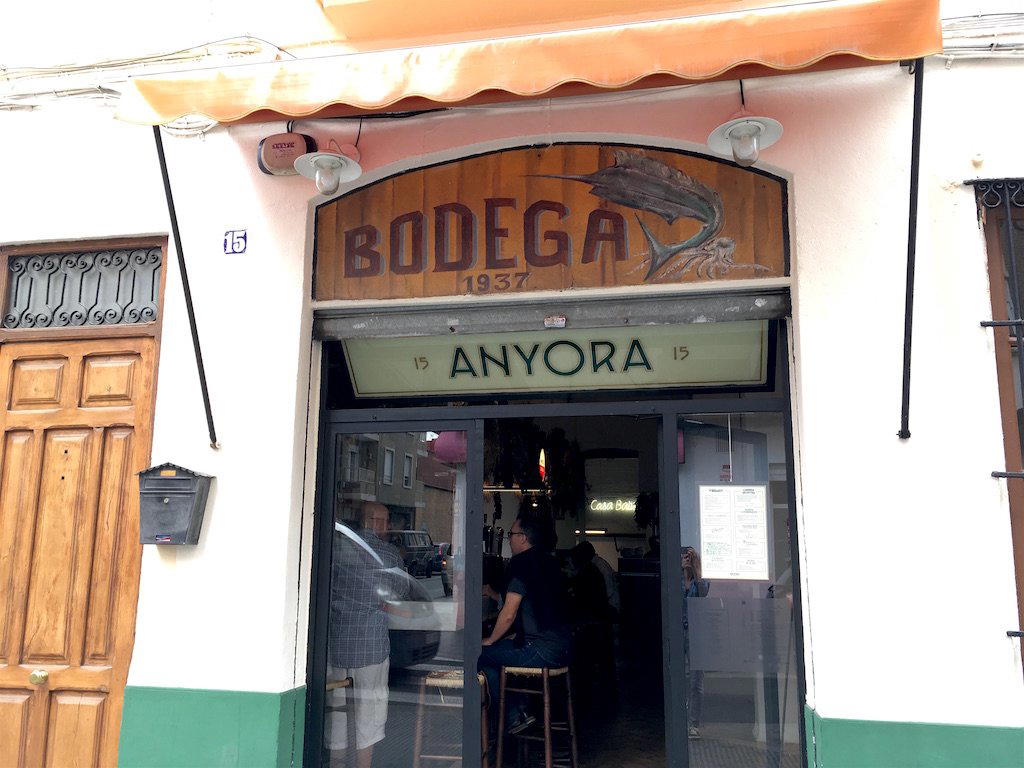
Where Poblats Marítims Sets the Tone
Valencia's restaurant conversation tends to funnel toward two poles: the technically demanding tasting-menu houses that have put the city on Spain's fine-dining map, and the paella-and-rice institutions closer to the beach that draw weekend crowds from across the region. Anyora, on Carrer d'En Vicent Gallart in the Poblats Marítims district, sits outside both categories. The neighbourhood itself frames what you find inside: a maritime barrio that developed independently from the historic centre, with its own pace, its own market logic, and a dining culture shaped by proximity to the water rather than proximity to tourism.
Approaching the address, the architectural register is domestic rather than declarative. Poblats Marítims has none of the polished commercial frontage of the Ruzafa dining corridor or the theatrical gestures of venues competing for destination-restaurant status. That absence is informative. Places that survive here do so on neighbourhood loyalty, which is a more demanding audience than the seasonal visitor trade, because regulars notice when something slips.
The Case for Unhurried Rooms
Across Spain, a specific category of restaurant has become increasingly difficult to find in city centres: the place where the room itself has not been redesigned in response to current aesthetic trends, where service follows the rhythm of the kitchen rather than a scripted sequence, and where the social contract between staff and regular is visible to any newcomer who pays attention. Anyora operates in this tradition. Accounts from visitors consistently note the friendliness of the environment and a quality that gets described, in various ways, as time having stood still — a phrase that usually signals authenticity of habit rather than neglect.
What complicates that reading, and makes it more interesting, is the music. In a room that otherwise reads as settled and familiar, the playlist tends toward more contemporary choices, which functions as a small but deliberate signal that the place is self-aware without being anxious about it. It is the kind of detail that separates a venue that happens to be traditional from one that has chosen to be.
Sourcing Logic in a Maritime District
The editorial angle that matters most in Poblats Marítims is provenance. The district's identity was built on fishing, on the Mercat de la Llotja del Peix, and on a supply chain that once ran directly from the Mediterranean to the table within hours. That logic does not operate in the same form today across the city, but it remains legible in neighbourhoods like this one, where the connection between what the sea produces and what appears on a plate is closer than it is in Valencia's more inland dining zones.
Traditional places in this part of Valencia tend to source within networks that are older and more direct than the chef-driven procurement systems associated with the high-end tasting-menu circuit. The result is a different kind of ingredient quality: not the engineered rarity of a single-origin product selected for a twelve-course progression, but the functional freshness of product that arrives because geography and habit make it the obvious choice. Spain's most technically sophisticated restaurants, from Aponiente in El Puerto de Santa María to Quique Dacosta in Dénia, have built entire intellectual frameworks around marine sourcing. Anyora operates at the other end of the same axis: the assumption that good product is simply what you use, without the framework needing to be articulated.
Where Anyora Sits in Valencia's Dining Field
Understanding Anyora requires a clear picture of Valencia's wider restaurant range. At the top of the city's fine-dining tier, Ricard Camarena in València represents the local benchmark for technique applied to regional produce, working within the Valencian ingredient tradition but at a level of elaboration that places it alongside national peers like El Celler de Can Roca in Girona, Arzak in San Sebastián, Azurmendi in Larrabetzu, Martin Berasategui in Lasarte-Oria, Mugaritz in Errenteria, and Cocina Hermanos Torres in Barcelona. Then there are the beach-adjacent rice houses — including Barraca Toni Montoliu, that anchor the city's weekend dining ritual. Anyora belongs to a third register: the neighbourhood traditional, which operates without the institutional apparatus of either camp and which tends to be underrepresented in the standard restaurant itinerary.
For visitors who have already experienced the tasting-menu tier, or who are constructing a broader picture of how Valencia actually eats across its different districts, this category is not a compromise. It is a different form of information. The same argument applies internationally: a traveller who has visited Le Bernardin in New York City or Emeril's in New Orleans and then seeks out that city's neighbourhood institutions is not trading down; they are completing the picture. DiverXO in Madrid and places like Anyora are not in competition; they answer different questions about a city's food culture.
Planning Your Visit
Anyora is located at Carrer d'En Vicent Gallart, 15, in the Poblats Marítims district, postcode 46011. The neighbourhood sits east of the historic centre, between the city and the sea, and is reachable by tram or by a short taxi ride from the main hotel zones. Traditional neighbourhood places in this part of Valencia typically operate a lunch service aligned with Spanish mealtimes, with midday service running later than northern European visitors might expect, often from 1:30 p.m. onward. Walk-in availability at places of this type is generally higher than at the tasting-menu tier, though weekend lunch is the period most likely to draw a full room. See our full Valencia restaurants guide for broader context, and explore the city further through our Valencia hotels guide, our Valencia bars guide, our Valencia wineries guide, and our Valencia experiences guide.
Frequently asked questions
What's Anyora known for in terms of accolades?
Anyora has received recognition including: This is one of those friendly, traditional places where time seems to have stood still. But not quite, the interesting relatively modern choice of music makes sure of that. The place is very friendly....
Where is Anyora located?
Anyora is located at C/ d'En Vicent Gallart, 15, Poblats Marítims, 46011 València, Valencia, Spain, Valencia.
What do people recommend at Anyora?
Visitor accounts point consistently to the atmosphere and the traditional character of the cooking rather than individual dishes. Anyora sits in the Poblats Marítims district, where proximity to Valencia's fishing heritage and the Mercat de la Llotja del Cabanyal shapes what neighbourhoods like this have historically put on the plate. The music selection — notably contemporary for a room that otherwise feels rooted in an earlier era — gets mentioned often enough to qualify as a house signature.
Do they take walk-ins at Anyora?
In Valencia's traditional neighbourhood dining tier, walk-ins are typically accommodated outside peak weekend lunch service, though arriving early in the sitting is the safer approach at any room with a loyal local following.
What do critics highlight about Anyora?
The consistent signal across accounts is the friendliness of the room combined with a format that has not chased trends — the kind of place that Valencia's own residents return to rather than discover. The detail that observers flag most specifically is the music: a relatively contemporary playlist that introduces a deliberate contrast to the otherwise settled, traditional character of the space.
Quick Comparison
Comparable venues nearby, for context on price, style, and recognition.
| Venue | Cuisine | Price | Awards | Notes |
|---|---|---|---|---|
| AnyoraThis venue — the venue you are viewing | Traditional Spanish Tapas Bodega | $20–30 | Star Wine List · Macarfi 7 Food Rating | Not listed |
| Mala Hierba | Modern Spanish Mediterranean | $30–50 | Michelin Plate · Macarfi 7.1 Food Rating | Mestalla |
| Central Bar by Ricard Camerena | Modern Spanish Tapas | $20–30 | Macarfi 7 Food Rating | El Mercat |
| Ca' Pepico | Traditional Valencian Paella & Mediterranean | $50–100 | Star Wine List | Roca, Meliana |
| La Pepica | Traditional Valencian Paella | $20–30 | Macarfi 7.2 Food Rating | Cabanyal-Canyamelar |
| Mercatbar | Modern Spanish Tapas | Not listed | Not listed | La Gran Via |
Recognition history
Dated appearances from independent guides and award organizations, with the underlying list record or original source where available.
Star Wine List
Star Wine List
Macarfi 7 Food Rating
Macarfi
Continue exploring
More in València
Restaurants in València
Browse all →
Bars in València
Browse all →
Hotels in València
Browse all →
Wineries in València
Browse all →
Details
- Cozy
- Rustic
- Classic
- Intimate
- Casual Hangout
- Date Night
- Standalone
- Natural Wine
- Local Sourcing
- Street Scene
- Small Plates
- A La Carte
- Vermouth
- Vegetarian Friendly
- Gluten Free Options
Current opening hours
- Monday
- 1–11 PM
- Tuesday
- 1–11 PM
- Wednesday
- 1–11 PM
- Thursday
- 1–11 PM
- Friday
- 1–11 PM
- Saturday
- 1–11 PM
- Sunday
- Closed
Hours can change for holidays and private events. Last verified .
Traditional rustic decor with simple wooden tables, hanging garlic and peppers, folksy murals, and a welcoming, homey atmosphere.