Barking Dog Hell's Kitchen
A Hell's Kitchen neighborhood fixture at 329 W 49th St, Barking Dog occupies the casual, convivial end of a Midtown West dining scene otherwise dominated by pre-theater prix fixe and high-end tasting counters. The room draws a cross-section of locals and visitors who want something grounded rather than grand, placing it in a different register than the area's more formal peers.
Pearl is the En Primeur Club membership app — saves, bookings, and concierge access live there. Same editors, same standards.
- Address
- 329 W 49th St, New York, NY 10019
- Phone
- +16467558009
- Website
- barkingdognyc.com
- Directions
- Get directions
 Saves & bookings on Pearl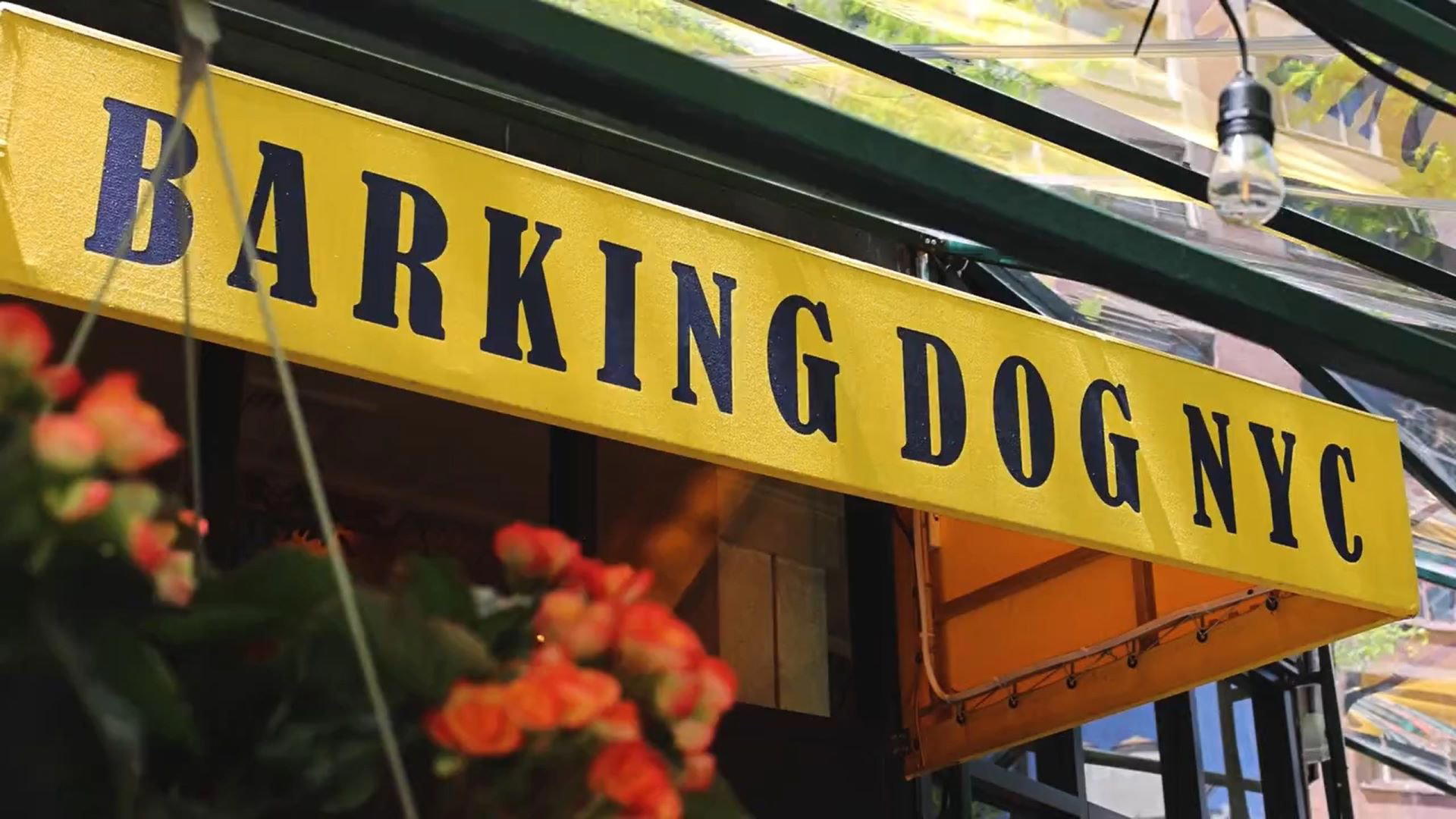
Hell's Kitchen and the Neighborhood Bar-Restaurant Format
The stretch of West 49th Street that Barking Dog Hell's Kitchen occupies sits inside one of Manhattan's most transitional dining corridors. Hell's Kitchen spent decades as a working-class Irish and Latino neighborhood whose restaurants served residents first and tourists incidentally. That changed in the 2000s and accelerated through the 2010s, as the area's proximity to the Theater District, the Hudson Yards development to the south, and rising rents elsewhere in Manhattan pushed a new wave of operators westward. The result is a block type you find throughout Midtown West: a mixture of pre-theater prix fixe rooms, fast-casual chains, and the occasional long-running neighborhood spot that predates the transition entirely.
Barking Dog at 329 W 49th St belongs to the latter category in spirit, if not necessarily in founding date. The neighborhood bar-restaurant format it represents has become rarer in this part of Manhattan as real estate pressure rewards higher-margin, higher-turnover concepts. Venues in this tier compete less against the $$$$ tasting-menu rooms of Midtown, the Le Bernardin tier, or the omakase formality of Masa, and more against the reliable, repeatable dining that sustains a neighborhood's weekly rhythm.
The Evolution of Casual Dining in Midtown West
Understanding where Barking Dog sits requires some sense of how the casual segment of Hell's Kitchen has shifted. A decade ago, the neighborhood's mid-range options leaned heavily on American comfort food and Irish pub menus, formats that held their ground through sheer familiarity. As the area gentrified, two competing pressures emerged: operators who repositioned toward trendier, higher-price formats to capture the incoming demographic, and those who held position as accessible, known quantities for the residents who had stayed.
The bar-restaurant that stays close to its roots through a neighborhood's gentrification faces a particular challenge. It must justify its place against new arrivals with more capital and more contemporary programming without losing the regulars who made it viable in the first place. Across American cities, this pivot rarely happens all at once. Emeril's in New Orleans navigated this kind of institutional identity question over decades; Frasca Food & Wine in Boulder held a community-anchor role while sustaining critical credibility. For neighborhood spots without that level of national profile, the calculus is quieter and more local.
In Hell's Kitchen specifically, the venues that have adapted most successfully tend to have done one of three things: sharpened a culinary identity that gives them a reason to exist beyond geography alone, built a bar program substantial enough to drive standalone traffic, or embedded themselves so deeply in the local social fabric that their absence would register as a genuine loss. Which of these trajectories Barking Dog has taken, or is taking, is the operative editorial question for the neighborhood.
Positioning Against the Broader New York Dining Field
New York City's dining field is stratified more sharply than almost any other American city. At the leading end, a cohort of restaurants, Eleven Madison Park, Per Se, Atomix, compete on the basis of tasting-menu depth, wine program investment, and Michelin recognition. Below that tier sits a large, competitive middle layer of neighborhood restaurants, wine bars, and casual formats fighting for frequency visits rather than special-occasion spend.
Barking Dog occupies a position in that middle and lower-middle register, which in New York is where the volume of daily dining decisions actually lives. The comparison set is not the $300-per-head tasting counter but the question of whether a West 49th Street address draws diners from their own block or from across the neighborhood. In a city where Blue Hill at Stone Barns commands a destination trip from Manhattan and Lazy Bear in San Francisco sets a precedent for communal-format dining earning serious critical attention, the neighborhood bar-restaurant earns its place through consistency and community function rather than culinary ambition alone.
That is not a diminishment. Cities like New York depend on this tier to function as dining ecosystems rather than collections of trophy rooms. The venues that survive multiple cycles of neighborhood change, the way The Inn at Little Washington has maintained its standing across decades in Virginia, or the way Providence in Los Angeles has remained a reference point through the city's restaurant boom, do so by being necessary rather than merely present.
The Hell's Kitchen Address as Context
329 W 49th St places Barking Dog within walking distance of the Theater District's pre-show traffic, the residential density of the 40s and 50s blocks west of Eighth Avenue, and the commuter flow through Columbus Circle and the 50th Street subway stops. These are not interchangeable audiences. Pre-theater diners want speed and a fixed time horizon; residents want a room they can return to without ceremony; commuters passing through want friction-free access and reliable food.
Venues in this position often find that their physical address determines their customer mix more than their menu does. The restaurants that thread this needle most effectively in similar positions across American cities tend to have clear bar programs, menus with range across price points, and service cultures that read the table rather than apply a single format uniformly.
The Quick Read
Comparable venues nearby, for context on price, style, and recognition.
| Venue | Cuisine | Price | Notes |
|---|---|---|---|
| Barking Dog Hell's KitchenThis venue — the venue you are viewing | Hell's Kitchen, American Comfort Food | $$ | Not listed |
| District Tap House | Midtown-Times Square, American Gastropub | $$ | Not listed |
| Funny Face Bakery | Not listed | $$ | Financial District-Battery Park City, Pop-Culture American Bakery |
| BareBurger | Not listed | $$ | Astoria (Central), Organic Grass-Fed Burgers |
| Morgan Café | Midtown-Times Square, American Café | $$ | Not listed |
| Henry & The Lions | Not listed | $$ | Chelsea-Hudson Yards, American Comfort Cafe |
Continue exploring
More in New York City
Restaurants in New York City
Browse all →
Bars in New York City
Browse all →

Hotels in New York City
Browse all →





At a Glance
- Cozy
- Lively
- Brunch
- Casual Hangout
- Family
- Terrace
Current opening hours
- Monday
- 8 AM–10 PM
- Tuesday
- 8 AM–10 PM
- Wednesday
- 8 AM–10 PM
- Thursday
- 8 AM–10 PM
- Friday
- 8 AM–10 PM
- Saturday
- 8 AM–10 PM
- Sunday
- 8 AM–10 PM
Hours can change for holidays and private events. Last verified .
Warm and inviting atmosphere well-suited for humans and their four-legged companions, with a casual neighborhood feel.