Bardō Brant
Our verdict
Bardō Brant occupies a notable address on Burlington's main commercial spine at 419 Brant St, placing it within a dining corridor that has grown increasingly considered over the past decade. The name's reference to the Tibetan concept of an in-between state hints at a sensibility that sits outside the city's more conventional offerings, positioning it as a point of interest for visitors mapping Burlington's evolving restaurant scene.

Pearl is the En Primeur Club membership app, where members save venues, book tables and use the concierge.
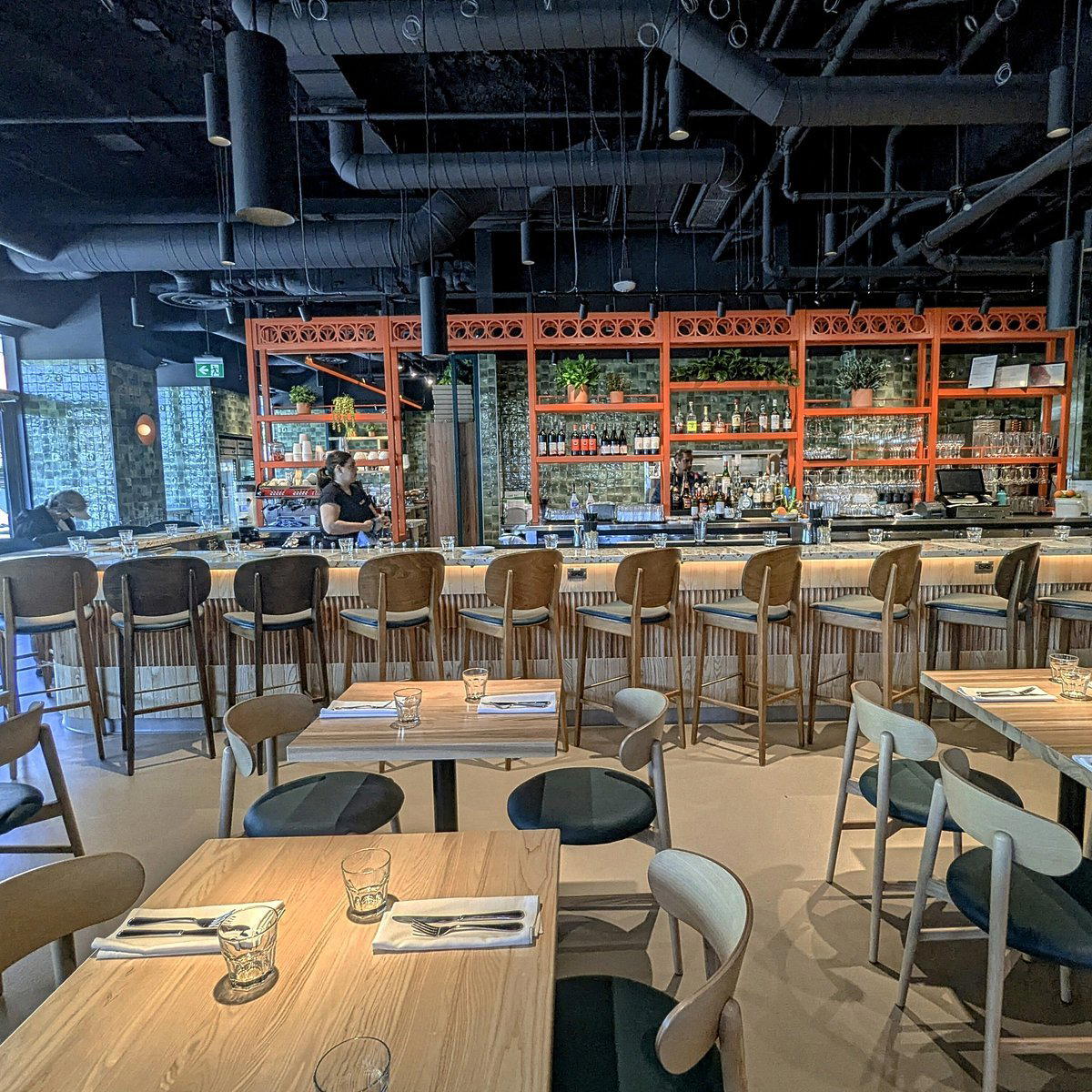
The menu
What to order
- Classic Pepperoni Pizza
- Burdella Bucatini
- Steak Frites
Brant Street and the Shape of Burlington Dining
Burlington's restaurant identity has long been shaped by its geography: a mid-sized city sitting between Hamilton's working-class food culture and Toronto's more competitive dining market, with a lakefront that draws seasonal visitors and a downtown core, centred on Brant Street, that serves as the primary address for the city's most discussed tables. Over the past several years, that corridor has moved from a strip of reliable neighbourhood staples toward something more varied, with operators arriving who treat Burlington as a destination rather than a convenience. Bardō Brant, at 419 Brant St, sits within that shift.
The name itself carries weight. Bardō, in Tibetan Buddhist tradition, refers to an intermediate state, the transitional space between death and rebirth, or more broadly, any threshold condition between two definite states. As a name for a dining room, it signals something deliberate: a positioning between categories, or a refusal to settle into a single, easily described identity. Whether the food and atmosphere honour that ambiguity is the question worth asking.
What the Brant Street Address Signals
On a street that includes Barra Fion, Burlington's most cited wine bar, and American Flatbread, which draws a consistent crowd for its wood-fired format, the 400-block of Brant St represents the more considered end of the city's dining offer. black & blue Steak and Crab operates nearby in the more familiar territory of premium proteins and polished service, while Bluebird Barbecue anchors the casual end of the street's range. Bardō Brant enters this context as a name with enough cultural specificity to suggest it is not pitching to the widest possible audience.
That kind of specificity matters in a city like Burlington, which has historically functioned more as a commuter catchment for Toronto than as an independent dining destination. Operators who open with a clear point of view, rather than a consensus-friendly menu built to offend no one, take a real risk in this market, and the willingness to take that risk is itself an editorial signal. For a broader map of where Bardō Brant sits within Burlington's current dining options, our full Burlington restaurants guide provides useful orientation.
The Cultural Register of the Name
Restaurants that draw on non-Western spiritual or philosophical traditions in their naming tend to cluster in two categories: those using the reference as atmosphere, a vibe gesture that goes no deeper than the signage, and those where the reference genuinely informs the format, the pacing, or the culinary approach. The bardō concept, drawn from Tibetan texts and most widely known in the West through the Bardo Thodol (the Tibetan Book of the Dead), is specific enough that it reads as intentional rather than decorative. It implies a kitchen or a room that is interested in thresholds: between flavour registers, between formal and informal service, between cuisines or traditions.
That kind of positioning places Bardō Brant in a conversation with a broader Canadian tendency toward restaurants that resist easy categorisation. Tanière³ in Quebec City operates in a subterranean space with a format built around Indigenous and hyperlocal ingredients, refusing to slot into standard French-Canadian bistro territory. AnnaLena in Vancouver has built its reputation on a menu that moves laterally across influences without anchoring to a single national cuisine. Restaurant Pearl Morissette in Lincoln, an hour from Burlington in Ontario's wine country, operates as one of the province's most discussed destination tables precisely because it refuses the obvious. These are not comparable venues in terms of scale or acclaim, but they share a resistance to the generic that Bardō Brant's name at least promises.
Burlington in a Wider Ontario Context
Ontario's dining geography is more layered than it appears from a Toronto vantage point. The province's mid-sized cities, Burlington, Guelph, Kingston, Peterborough, have each developed restaurant cultures that respond to local demographics and proximity to agricultural producers in ways that Toronto's density cannot replicate. Burlington's access to the Niagara Peninsula and its wine corridor, to Halton Region farm operations, and to Lake Ontario's seasonal rhythms gives any serious kitchen here a distinct set of raw materials to work with.
That proximity is relevant context for how Burlington's better operators source and structure their menus. A Single Pebble represents one strand of Burlington's range, while venues like Sorella, known for scratch-made pasta and Italian and Tuscan influences, suggest a different appetite in the local market. The question for any arriving restaurant is where it lands in relation to these established identities. Bardō Brant's name suggests it is not chasing the same audience as a neighbourhood pasta house or a wood-fired flatbread operation, it is reaching for something with a more particular cultural register.
For comparison across a wider Ontario geography, Eigensinn Farm in Singhampton remains the province's most radical example of a restaurant that defines its own terms entirely. Alo in Toronto operates at the other end of the formality spectrum, with a tasting menu format that benchmarks against national and international peers. The Pine in Creemore offers a regional counterpoint in small-town Ontario. None of these is a direct peer to Bardō Brant, but mapping the range gives a sense of where Burlington's newer entrants are reaching.
Planning Your Visit
Bardō Brant is located at 419 Brant St in downtown Burlington, easily reached from the Brant Street corridor on foot from the GO Transit Burlington station, which sits roughly ten minutes away. Current booking specifics, hours, and pricing are best confirmed directly with the venue, as these details are subject to change with any newer operation. For comparable experiences across Canada's broader premium dining tier, Jérôme Ferrer - Europea in Montréal, Narval in Rimouski, and Fogo Island Inn Dining Room in Joe Batt's Arm offer reference points across different scales and regional identities. Internationally, Le Bernardin in New York City and Lazy Bear in San Francisco and Busters Barbeque in Kenora represent the range of formats that have found sustained audiences outside major metropolitan centres.
Frequently asked questions
Where is Bardō Brant located?
Bardō Brant is located at 419 Brant St, Burlington, ON L7R 1H1, Canada, Burlington.
Is Bardō Brant in Burlington suitable for a special occasion dinner?
The name Bardō references a transitional state in Buddhist and Tibetan traditions, restaurants that choose that kind of referencing tend to invest in atmosphere and pacing as much as the plate. On Brant Street, which includes Burlington's most cited wine bar Barra Fion within the same corridor, Bardō occupies a stretch of downtown that skews toward considered, occasion-appropriate dining rather than casual turnover. Burlington's position between Hamilton and Toronto means its stronger restaurants draw a regional crowd that expects more than neighbourhood-level effort.
What do regulars order at Bardō Brant?
Specific menu data for Bardō Brant isn't publicly documented at this time, which is itself telling, the restaurant at 419 Brant St sits on a block where neighbours like American Flatbread draw crowds through defined signature formats. Bardō's name, drawn from non-Western philosophical tradition, suggests a kitchen operating with intention rather than breadth. Regulars in Burlington's tighter dining circles tend to report back on the overall register of a meal rather than single dishes, which usually points to a tasting-oriented or rotating approach.
How far ahead should I plan for Bardō Brant?
Burlington's downtown corridor, anchored by Brant Street, doesn't carry the same booking pressure as Toronto's most-discussed counters, but the city's better restaurants do fill on weekends given the GO Transit catchment pulling from Hamilton and Oakville. Bardō Brant at 419 Brant St is worth contacting directly before a Friday or Saturday visit. For a weeknight, same-week planning is generally sufficient in Burlington's current dining environment.
Cost Snapshot
Comparable venues nearby, for context on price, style, and recognition.
| Venue | Cuisine | Price | Awards | Notes |
|---|---|---|---|---|
| Bardō BrantThis venue (the venue you are viewing) | American Pizza and Comfort Food | $30–50 | Not listed | Not listed |
| Mandarin Restaurant | Chinese-Canadian Buffet | $30–50 | Not listed | Fairview, Chinese-Canadian Buffet |
| Downtown Bistro & Grill | French Bistro & Grill | $30–50 | Not listed | downtown, French Bistro & Grill |
| Sushi Masayuki | Authentic Japanese Sushi | $50–100 | Not listed | Alton, Authentic Japanese Sushi |
| DiMario's Trattoria | Traditional Italian Trattoria | $50–100 | Wine Spectator Award of Excellence | Downtown Burlington, Traditional Italian Trattoria |
| Goody's | Greek Subs & Gyros | Not listed | Not listed | . Concurrent, Greek Subs & Gyros |
Continue exploring
More in Burlington
Restaurants in Burlington
All restaurants in Burlington →
Bars in Burlington
Browse all →
Hotels in Burlington
All hotels in Burlington →
Wineries in Burlington
Browse all →

Details
- Lively
- Trendy
- Modern
- Date Night
- Group Dining
- Brunch
- Casual Hangout
- Open Kitchen
- Live Music
- Craft Cocktails
- Local Sourcing
- A La Carte
- Small Plates
- Craft Cocktails
- Vegetarian Friendly
- Gluten Free Options
Current opening hours
- Monday
- 7 AM–9 PM
- Tuesday
- 7 AM–9 PM
- Wednesday
- 7 AM–9 PM
- Thursday
- 7 AM–9 PM
- Friday
- 7 AM–10 PM
- Saturday
- 7 AM–10 PM
- Sunday
- 7 AM–9 PM
Hours can change for holidays and private events. Hours as of .
Lively and energetic with good vibes, well-suited for date nights and group gatherings.