A Single Pebble
A Single Pebble has anchored Chinese dining in Burlington, Vermont for decades, occupying a modest Bank Street address that belies its standing as among the more consistent regional Chinese restaurants in New England. The kitchen draws on Sichuan and Cantonese traditions, serving a city whose dining scene otherwise skews toward farm-to-table New England cooking. For Burlington, it represents a rare commitment to Chinese culinary depth.
Pearl is the En Primeur Club membership app — saves, bookings, and concierge access live there. Same editors, same standards.
- Address
- 133 Bank St, Burlington, VT 05401
- Phone
- +18028655200
- Website
- asinglepebble.com
- Directions
- Get directions
 Saves & bookings on Pearl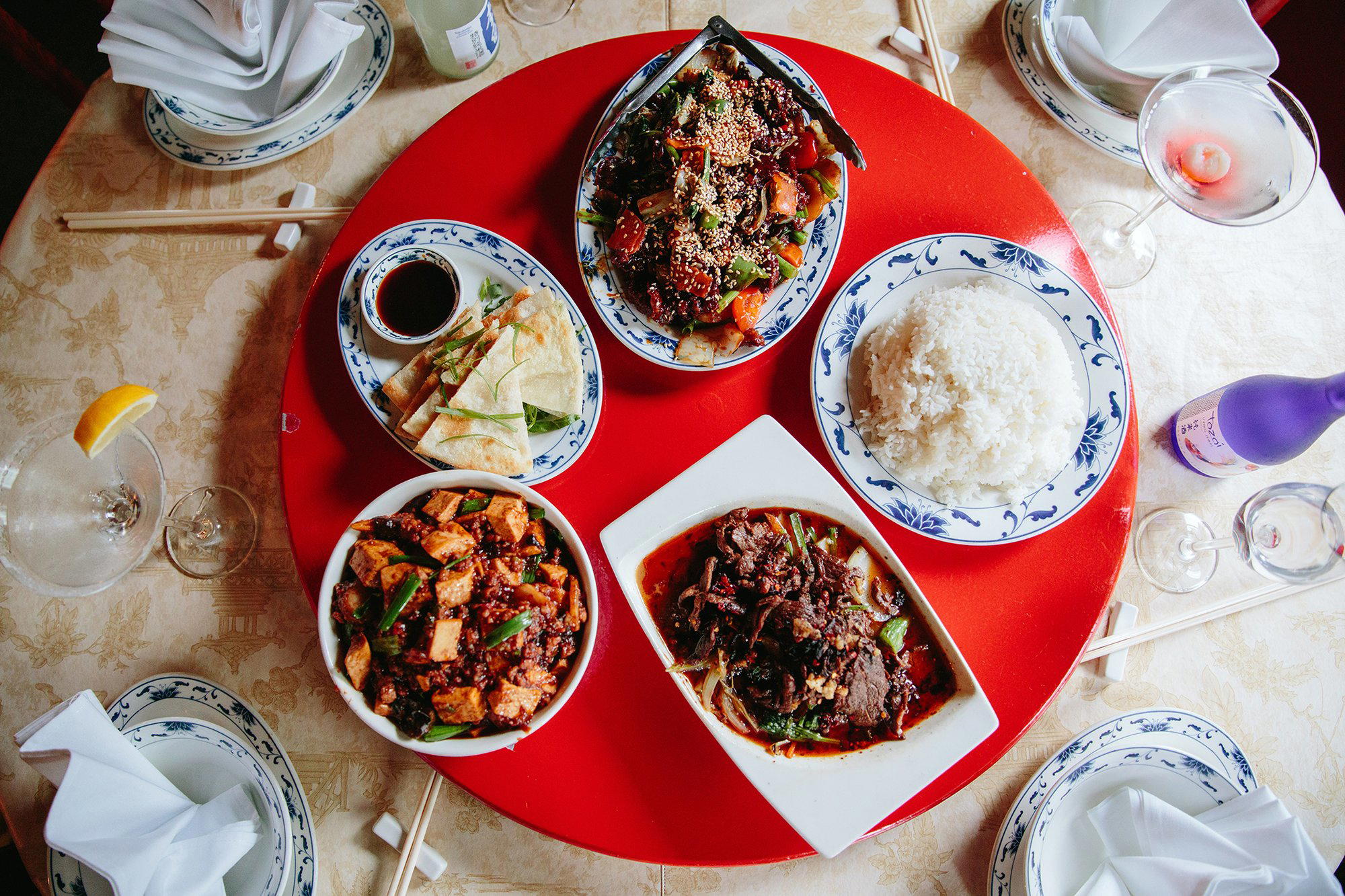
Chinese Cooking in a New England College Town
Burlington's dining identity is built around Vermont produce, local farms, and the kind of ingredient-driven cooking that places like American Flatbread and Bluebird Barbecue have defined over years of operation. Against that backdrop, a serious Chinese restaurant represents something different: a kitchen rooted not in Vermont terroir but in regional Chinese culinary traditions that predate farm-to-table as a concept by centuries. A Single Pebble, on Bank Street in Burlington's downtown, has occupied that position long enough to become a fixed reference point in the city's restaurant conversation.
In small American cities, Chinese restaurants often default to a generalized Americanized menu designed to reduce friction rather than reflect the actual range of Chinese regional cooking. The more interesting counterexamples tend to cluster in large coastal metros, which makes Burlington an instructive exception. A Single Pebble has built a sustained local reputation by working within Chinese culinary tradition rather than departing from it for mass-market palatability.
The Culinary Tradition Behind the Menu
Chinese cuisine is not a single tradition but a collection of regional ones, each with distinct techniques, flavor profiles, and philosophical approaches to heat, texture, and seasoning. Sichuan cooking, for instance, is structured around the interplay of dried chilies and Sichuan peppercorns, producing the characteristic ma la (numbing-hot) sensation that has no equivalent in Western culinary vocabulary. Cantonese cooking prioritizes freshness and restraint, relying on high-heat wok technique to preserve the integrity of ingredients rather than transform them through heavy sauce. The distinction matters because the leading Chinese restaurants in America tend to commit to a specific regional tradition rather than blending them into a lowest-common-denominator hybrid.
That regional specificity is what separates Chinese restaurants worth seeking out from those that exist primarily to fill a neighborhood gap. In the broader American dining conversation, Sichuan cooking has seen renewed interest over the past decade as Chinese-American chefs and restaurateurs have pushed toward authenticity and regional pride, a shift visible in cities like New York and San Francisco. Burlington is not New York, but A Single Pebble's longevity in a market that doesn't naturally support high-risk culinary programming suggests it has found a workable and respected position within that tradition.
Bank Street and Burlington's Downtown Core
Bank Street sits in Burlington's commercial downtown, a walkable district whose restaurant density is high relative to the city's size. The street-level approach to the restaurant is low-key: no grand entrance, no theatrical signage. Chinese restaurants operating in this register tend to let the kitchen do the communicating, and the physical modesty of the address is consistent with a dining culture that doesn't prioritize spectacle over content. For comparison, Burlington's more theatrical dining experiences tend to cluster elsewhere, in waterfront venues or redesigned industrial spaces. Bank Street's character is quieter and more functional.
Visitors to Burlington often anchor their dining itinerary around Church Street, the pedestrian marketplace that draws the bulk of tourist traffic. Bank Street runs parallel and is a short walk away, which means the restaurant is accessible without requiring a deliberate diversion. For planning purposes, Burlington's downtown is compact enough that most major dining options are within a ten-minute walk of one another, making a multi-restaurant evening realistic on foot. Nearby options like Barra Fion and Bardō Brant offer contrasting formats for travelers mapping a broader Burlington dining picture.
Where A Single Pebble Sits in the Regional Context
Within New England, serious regional Chinese cooking is more often associated with Boston's Chinatown or the Sichuan and Cantonese concentrations in suburban Massachusetts towns like Malden and Quincy. Vermont has no equivalent geographic cluster, which makes any Chinese restaurant operating at a meaningful culinary level in Burlington something of an outlier. The restaurant has held that outlier position long enough that it functions as a regional reference rather than merely a local option.
In the national context, the restaurants that have most successfully brought Chinese regional cooking into fine-dining conversation tend to operate in larger markets: New York, San Francisco, Los Angeles. When comparing ambition and scale, the comparable set for the restaurant is not Atomix in New York City or Alinea in Chicago, nor the farm-driven tasting-menu format of Blue Hill at Stone Barns in Tarrytown or Single Thread Farm in Healdsburg. Its relevance is more specific: it is one of the few places in Vermont where the Chinese kitchen is treated as a serious culinary proposition rather than a convenience format, and it holds that position without the metro-market infrastructure that usually supports such commitments.
For travelers moving through Burlington who have a reference point in Chinese cooking from larger cities, the restaurant offers a useful calibration of what a smaller-market Chinese restaurant can sustain when the commitment to the tradition is genuine.
Planning a Visit
The restaurant is located at 133 Bank Street, Burlington, Vermont 05401, in a downtown district that is walkable from most central accommodations. Burlington's restaurant scene has a compressed busy season in summer and during University of Vermont academic events, when reservations across the better-regarded local rooms become harder to secure. Given the city's scale, advance booking is advisable for weekend evenings regardless of season. The restaurant is recommended for reservations and is open Tuesday through Saturday from 4:30 to 9 PM, with Monday and Sunday closed. Burlington also draws from a regional audience rather than purely a tourist one, meaning local dining patterns differ from purely seasonal resort markets like parts of coastal Maine or the Champlain Valley's wine corridor.
Among Burlington restaurants, the restaurant occupies a distinct category position. Options like black & blue Steak and Crab address a different appetite in the same downtown corridor. Sorting your Burlington dining by cuisine type rather than neighborhood proximity will give the useful planning framework, and for Chinese cooking specifically, the restaurant is the address that comes up consistently in local conversation.
Price Lens
Comparable venues nearby, for context on price, style, and recognition.
| Venue | Cuisine | Price | Notes |
|---|---|---|---|
| A Single PebbleThis venue — the venue you are viewing | Downtown, Classic Chinese | $$$ | Not listed |
| Honey Road | Not listed | $$$ | Church Street Marketplace, Eastern Mediterranean Mezze |
| Burlington Beer Company | South End, Craft Beer Gastropub | $$ | Not listed |
| Farmhouse Tap & Grill | Downtown, Farm-to-Table Gastropub | $$ | Not listed |
| May Day | Not listed | $$ | Old North End, Seasonal American Small Plates |
| Bluebird Barbecue | Riverside, Regional American Barbecue | $$ | Not listed |
Continue exploring
More in Burlington
Restaurants in Burlington
Browse all →



At a Glance
- Cozy
- Intimate
- Rustic
- Group Dining
- Family
- Casual Hangout
- Open Kitchen
- Sake Program
- Local Sourcing
Current opening hours
- Monday
- Closed
- Tuesday
- 4:30–9 PM
- Wednesday
- 4:30–9 PM
- Thursday
- 4:30–9 PM
- Friday
- 4:30–9 PM
- Saturday
- 4:30–9 PM
- Sunday
- Closed
Hours can change for holidays and private events. Last verified .
Relaxed and welcoming atmosphere in a well-worn house-turned-restaurant with round tables for sharing.