Banchan Korean Bistro
Korean cooking occupies a small but growing niche in Bratislava's dining scene, and Banchan Korean Bistro on Obchodná street sits at its centre. The bistro format positions it as an accessible entry point into banchan-led sharing culture, a contrast to the heavier Central European plates that dominate the city. For visitors building a broader picture of Bratislava's international dining options, it belongs on the shortlist.
Pearl is the En Primeur Club membership app — saves, bookings, and concierge access live there. Same editors, same standards.
- Address
- Obchodná 511/10, 811 06 Bratislava, Slovakia
- Phone
- +421 950 401 828
- Website
- banchankoreanbistro.sk
- Directions
- Get directions
 Saves & bookings on Pearl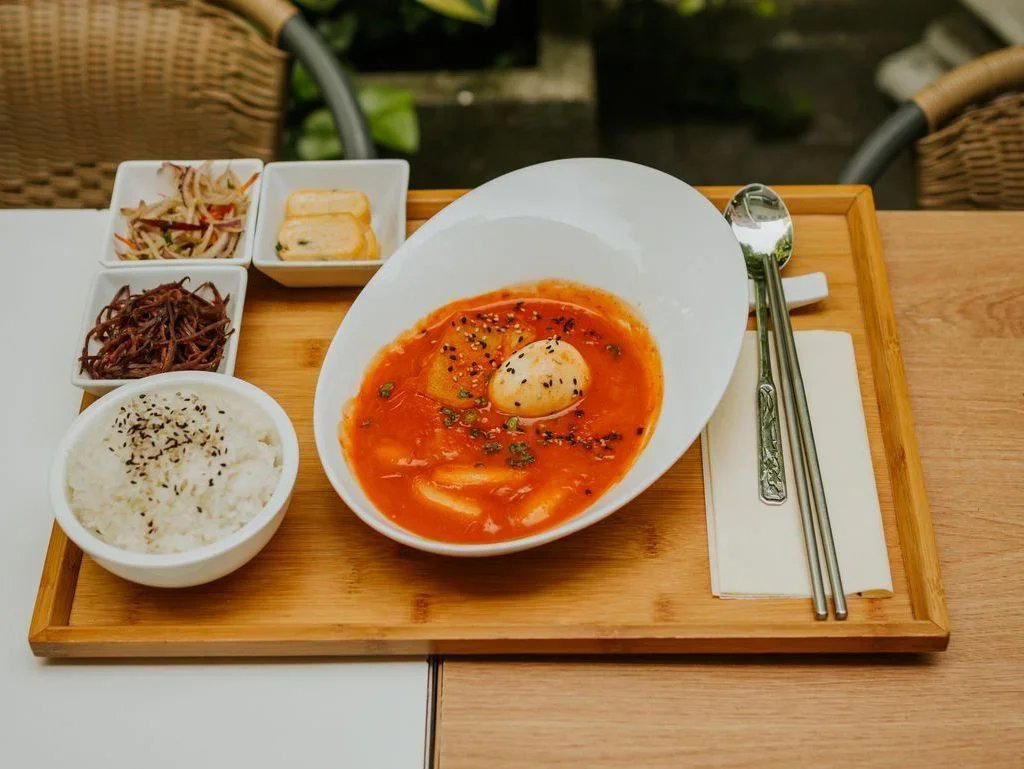
Korean Food in Bratislava: A Niche That Is Starting to Matter
Obchodná is Bratislava's main commercial artery, a long pedestrian stretch that runs from the Old Town edge toward the city's inner districts. The street is dense with cafes, fast-casual spots, and a handful of restaurants that lean into international cuisines rather than Slovak standards. It is, broadly speaking, where Bratislava experiments, and Banchan Korean Bistro, at Obchodná 511/10, is an Authentic Korean Bistro in Bratislava. Korean food remains rare across Slovakia's restaurant scene. A city that still defines its dining identity through roast meats, dumplings, and Central European comfort food does not naturally produce a deep pool of Korean kitchens. What exists tends to be concentrated in Bratislava, where a more internationally mobile population and a growing number of expats have created demand that simply does not exist elsewhere in the country.
The broader Slovak dining scene has become more varied over the past decade. Bratislava now supports Japanese counters, Italian trattorias, and modern Slovak kitchens alongside the traditional gastropubs. The Korean format sits alongside these, not as a novelty but as part of a genuine widening of the city's reference points. For context, Edomae Sushi Matsuki has established Japanese cuisine at a serious level in the city, and venues like Ako doma and UFO have pushed Slovak modern cooking in distinct directions. Korean fits into this picture as one more internationally grounded option in a city that is slowly diversifying its offer.
What the Banchan Format Actually Means
The name is a deliberate editorial statement about the food's structure. In Korean dining tradition, banchan refers to the small side dishes served alongside a main, kimchi, pickled vegetables, seasoned spinach, bean sprout salad, and a dozen other preparations that arrive at the table before or with the primary course. These are not appetisers in the Western sense. They are the communal texture of the meal, refillable and meant to be eaten across the full sitting. A restaurant that foregrounds banchan in its name is signalling something specific: a commitment to the sharing, table-centred eating culture that defines Korean food at its most traditional.
This contrasts with how Korean food sometimes gets packaged for Western markets, where the barbecue format (KBBQ) tends to dominate. Grill-your-own meat at a table is a high-energy, high-theatre format that travels well to Western dining rooms because it needs little explanation. Banchan-led dining is quieter and more nuanced, it asks diners to slow down and work across multiple small plates rather than focus on a centrepiece. That Bratislava's Korean kitchen has chosen to lead with this format, rather than KBBQ theatrics, suggests an intent to represent the cuisine with some seriousness.
Planning a Visit: What to Know Before You Go
Banchan Korean Bistro is open daily from 11 AM to 10 PM, and reservations are recommended.
Obchodná's location means the venue is walkable from the Old Town and accessible without a car, which simplifies the logistics for visitors staying centrally. For diners who want to build an evening around the area, the surrounding blocks have enough cafe and bar options to structure a longer evening, though the restaurant itself should be the anchor.
Reservations are recommended. APOLKA Restaurant similarly recommends advance planning for weekend visits. This is a city where the better international kitchens fill up with relatively little notice.
Korean Dining in a Central European Context
Part of what makes Korean food interesting in a city like Bratislava is the contrast it creates with the surrounding culinary default. Slovak cuisine is built around fermentation (kapusta, pickled vegetables), preserved meats, and slow-cooked legume dishes. Korean food shares some of these structural instincts, fermented kimchi, doenjang-based stews, slow-braised pork, while arriving at entirely different flavour profiles through its use of gochugaru, sesame, and doenjang. For diners already comfortable with Slovak food's sour and fermented notes, Korean cooking is not as foreign a reference point as it might initially appear.
That shared fermentation culture gives Korean food in this region a coherence it might lack in other European markets. It is not purely an exotic alternative; it rhymes with some of what Central European diners already understand. Whether a bistro format in a pedestrian-heavy commercial street can carry that cultural argument depends on execution that cannot be verified without current menu data, but the format choice positions it correctly for that ambition.
Slovakia's dining scene beyond Bratislava is also worth noting for context. Kitchens like Gašperov Mlyn in Batizovce, ARTE in Svätý Jur, and Origin in Lučenec each represent specific regional interpretations of Slovak hospitality. In Košice, Seven Restaurant Café by Villa Sandy and Bakoš Bistro have built serious local followings. The concentration of international cuisine in Bratislava, by contrast, reflects the capital's different demographic makeup, and Korean food is a clear beneficiary of that distinction.
For diners building a broader trip through Slovakia, the international kitchens are largely a Bratislava phenomenon. Elsewhere, the regional Slovak offer is the story, from Afrodita in Cerenany to Alej Bojnice in Bojnice and Cafe Sissi in Trencin. Even in Nitra, the options lean domestic, with Allora Fresh Pasta representing the Italian exception that proves the rule. Korean, in that national context, is a capital-city-only proposition.
For a full picture of where Banchan Korean Bistro sits within Bratislava's wider restaurant options, the EP Club Bratislava restaurants guide maps the city's dining scene across cuisines and price tiers. Internationally, the contrast in Korean fine dining ambition, relative to what venues like Le Bernardin in New York City or Lazy Bear in San Francisco represent in their respective categories, underscores how early-stage the Korean fine dining trajectory remains in Central Europe. A Bratislava bistro is a starting point, not an endpoint. And for a city with limited Korean options, a starting point still has value. Also worth a look is Dublin Cafe in the Presov District for those travelling further east.
How It Stacks Up
Comparable venues nearby, for context on price, style, and recognition.
| Venue | Cuisine | Price | Notes |
|---|---|---|---|
| Banchan Korean BistroThis venue — the venue you are viewing | Authentic Korean Bistro | $$ | Not listed |
| Urban House | Modern European All-Day Dining | $$ | Staré Mesto |
| RISTORANTE ITALIANO DA CONO I TRE SOMARI | Authentic Italian Trattoria | $$ | Staré Mesto |
| Zylinder Cafe Restaurant | Traditional Austro-Hungarian Pressburg Cuisine | $$ | Staré Mesto |
| Štefánka by Pulitzer | Traditional Slovak & Austro-Hungarian | $$ | Staré Mesto |
| RIO | Steakhouse with Lava Stone Grilling | $$ | Staré Mesto |
Continue exploring
More in Bratislava
Restaurants in Bratislava
Browse all →
Bars in Bratislava
Browse all →
Hotels in Bratislava
Browse all →
At a Glance
- Cozy
- Casual Hangout
- Family
- Terrace
- Open Kitchen
- Beer Program
Current opening hours
- Monday
- 11 AM–10 PM
- Tuesday
- 11 AM–10 PM
- Wednesday
- 11 AM–10 PM
- Thursday
- 11 AM–10 PM
- Friday
- 11 AM–10 PM
- Saturday
- 11 AM–10 PM
- Sunday
- 11 AM–10 PM
Hours can change for holidays and private events. Last verified .
Cozy environment tucked off the street with a beautiful hidden garden terrace in the city center.