Bakdash is one of Damascus's most enduring ice cream institutions, operating from the Al-Hamidiyah Souq and built around a tradition of stretching and pounding kaymak-laden booza that has defined Syrian frozen confectionery for generations. The spectacle of preparation is inseparable from the product itself, placing it at the intersection of street food culture and living culinary heritage in one of the Middle East's oldest continuously inhabited cities.
Pearl is the En Primeur Club membership app — saves, bookings, and concierge access live there. Same editors, same standards.
- Address
- Damascus, Syria
- Directions
- Get directions
 Saves & bookings on Pearl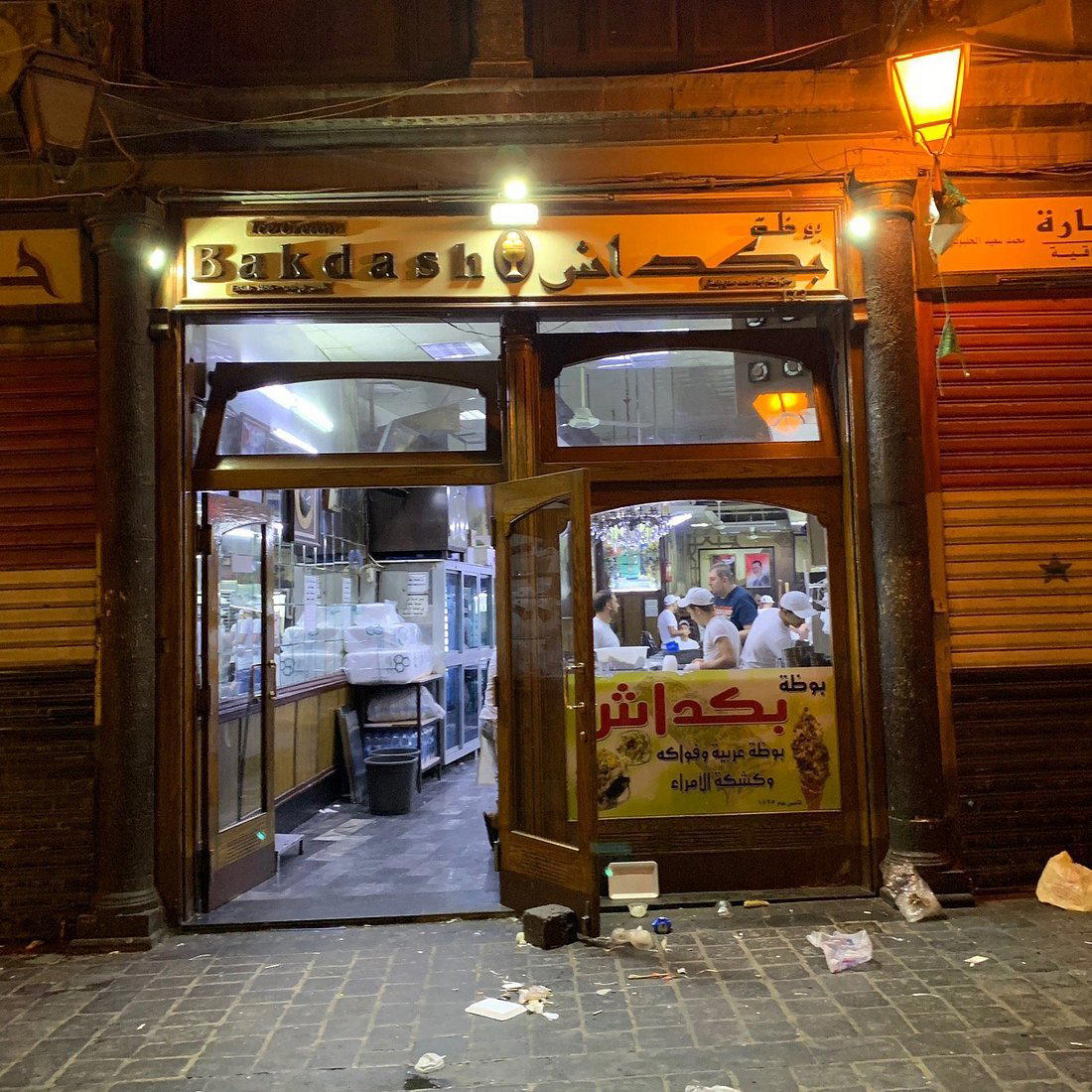
Where the Street and the Tradition Meet
In the covered arcade of Al-Hamidiyah Souq, the sound arrives before anything else: the rhythmic thudding of long wooden mallets against marble, the call of vendors stretching elastic ropes of booza over metal hooks, the crowd pressing in from the lane outside. This is how Syrian ice cream has been made and sold for well over a century, and Bakdash sits at the centre of that tradition in Damascus, operating as both a functioning confectionery and a working demonstration of pre-industrial food craft that most of the world has moved past entirely.
Damascus is among the oldest continuously inhabited cities on earth, and its food culture reflects that layered continuity. The souqs here are not heritage reconstructions; they remain functional commercial spaces where Damascenes buy spices, textiles, and sweets in the same physical corridors their grandparents used. Bakdash operates within that logic, embedded in the Al-Hamidiyah Souq rather than positioned as a destination apart from it. The context matters: this is street-level food culture that has retained its form not through deliberate preservation but through sustained demand.
The Ingredient Argument: What Booza Is Made From
Syrian booza is distinct from Western ice cream in composition and technique. The two defining ingredients are sahlab, a flour derived from the dried tubers of wild orchids harvested from mountain regions across the Levant and Anatolia, and mastic, a resin tapped from Pistacia lentiscus trees grown primarily on the Greek island of Chios. Sahlab functions as a stabiliser and gives booza its characteristic elasticity; mastic contributes a faintly piney, resinous flavour note that has no close equivalent in European confectionery traditions. Together they produce a frozen product that stretches under tension rather than breaking, holds its shape at warmer temperatures than standard ice cream, and carries a flavour profile that is specifically Levantine in character.
The kaymak that typically accompanies Bakdash's booza adds another sourced ingredient: a clotted cream product with roots in Ottoman dairy tradition, produced by slowly heating buffalo or cow's milk and skimming the thickened fat layer. The sourcing geography here is tight and regional. Sahlab, mastic, and kaymak are not globally standardised commodities; their quality varies by origin and harvest, and their availability connects Syrian confectionery to specific agricultural zones across the eastern Mediterranean. For a traveller tracing food back to its source, Bakdash represents a direct line from ingredient geography to finished product, with very little abstraction in between.
Across the broader Syrian food scene, this kind of ingredient specificity is a recurring pattern. Places like Naranj Restaurant in Al Qaimarryeh and Al Zammar House in Aleppo also draw on Levantine ingredient traditions with deep regional roots, and Kitaz Restaurant in Hama situates itself within the same agricultural geography that defines the region's kitchen. The common thread is an ingredient culture that predates modern supply chains and remains shaped by specific terroir.
The Production as the Experience
What Bakdash presents publicly, the pounding, stretching, and folding of booza, is not performance added for visitors. It is the actual production method, conducted in the open because the shop's physical layout requires it. The mallets aerate and develop the texture of the mixture; the stretching over hooks builds the elastic quality that sahlab enables. Watching this happen at counter level collapses the distance between kitchen and customer that most urban food establishments maintain. In cities where even street food has moved toward concealed prep kitchens and packaged components, the visible production at Bakdash functions as a direct counter-example.
The relevant comparison is not to a gelateria in Rome or a soft-serve counter in Tokyo but to working craft operations where process transparency is a given, not a marketing decision. Against that frame, the venue's format makes sense on its own terms rather than needing justification by external reference points.
Damascus as Dining Context
For travellers building a food itinerary around Damascus, the city's eating culture rewards specificity over breadth. The souq district, the old city, and the surrounding neighbourhoods contain a density of long-running food addresses that resist easy categorisation. Saddeq Shawerma and Sham Foods both represent the kind of focused, single-category operations that Damascus does particularly well, where a narrow product made consistently over time becomes the basis for a reputation. Shawrma Sharif fits a similar pattern. Bakdash occupies the dessert tier of that same logic: one product, one location, one tradition, executed continuously.
For broader planning context across Syria's food cities, Julia Palace Restaurant in Homs and restaurants in Latakia extend the picture beyond Damascus itself. Those looking for a comprehensive starting point for the capital's dining should consult our full Damascus restaurants guide.
Damascus also holds its own against the kind of serious food addresses that define other global cities. Operations like Le Bernardin in New York, Alinea in Chicago, or Alléno Paris au Pavillon Ledoyen represent the formal fine dining tier that Damascus does not specialise in. The city's strengths lie elsewhere: in long-running craft operations, ingredient-driven simplicity, and the kind of institutional continuity that takes generations to build. Bakdash is evidence of that. So, in a different register, are places like Emeril's in New Orleans or Lazy Bear in San Francisco, each of which is shaped by the specific food culture of its city rather than a generalisable luxury template.
Planning Your Visit
Bakdash operates within Al-Hamidiyah Souq, which means access follows the souq's rhythms rather than a fixed restaurant schedule. The crowd is densest in the afternoon and early evening, when the souq functions at full commercial capacity. Arriving mid-morning offers a quieter window, though the production spectacle is more visible when the counter is operating at full pace. No reservation is required or applicable; this is a walk-in, queue-based operation in the street food tradition. Current travel conditions to Syria require careful pre-trip research; the UK Foreign Office and equivalent bodies in other countries issue regularly updated advisories that should be consulted before planning any visit to Damascus.
Side-by-Side Snapshot
| Venue | Cuisine |
|---|---|
| BakdashThis venue — the venue you are viewing | This venue |
Continue exploring
More in Damascus
Restaurants in Damascus
Browse all →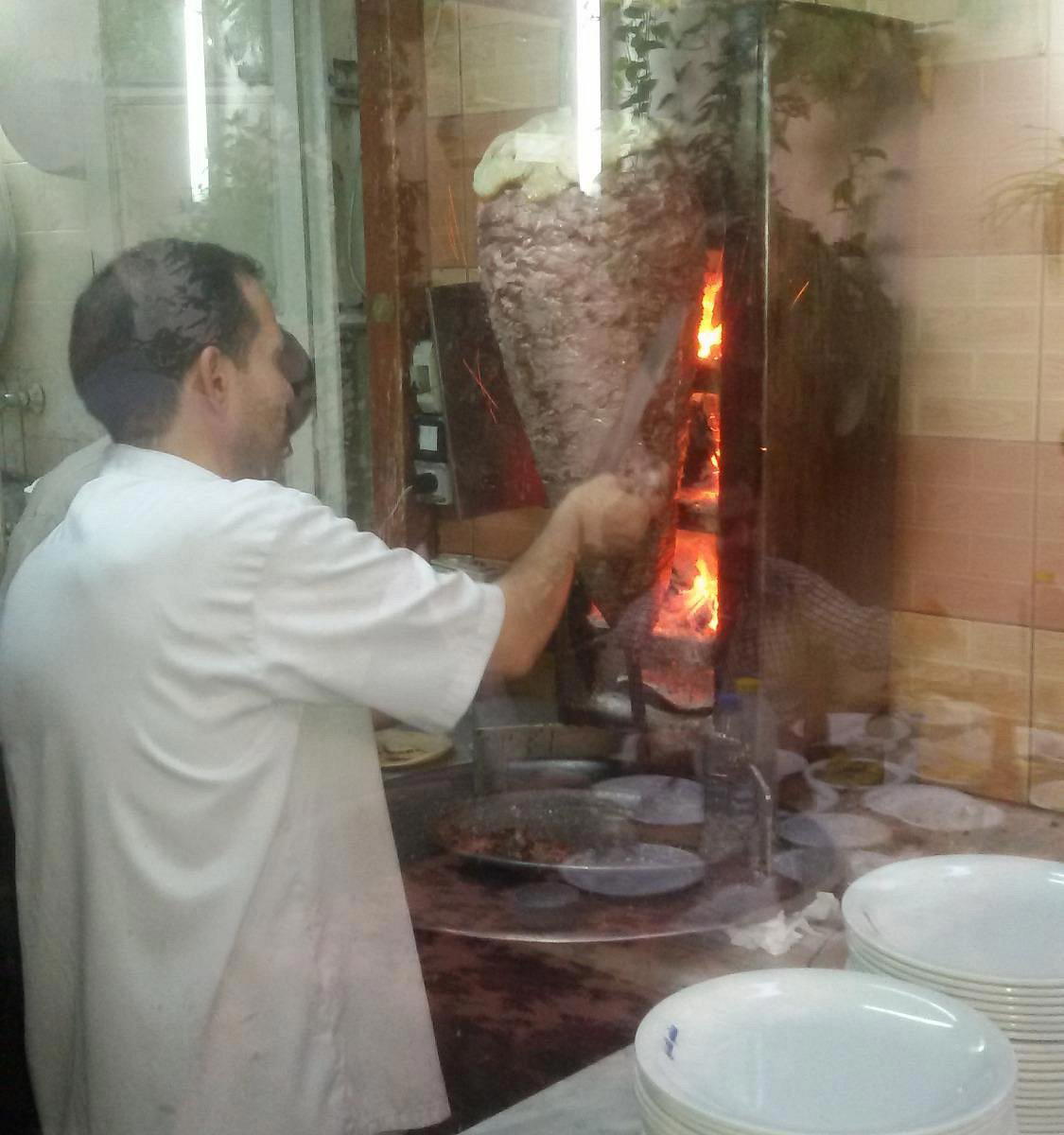

At a Glance
- Well Known
- Lively
- Classic
- Casual Hangout
- Family
- Solo
- Open Kitchen
- Historic Building