Au Moulin Cotant
Our verdict
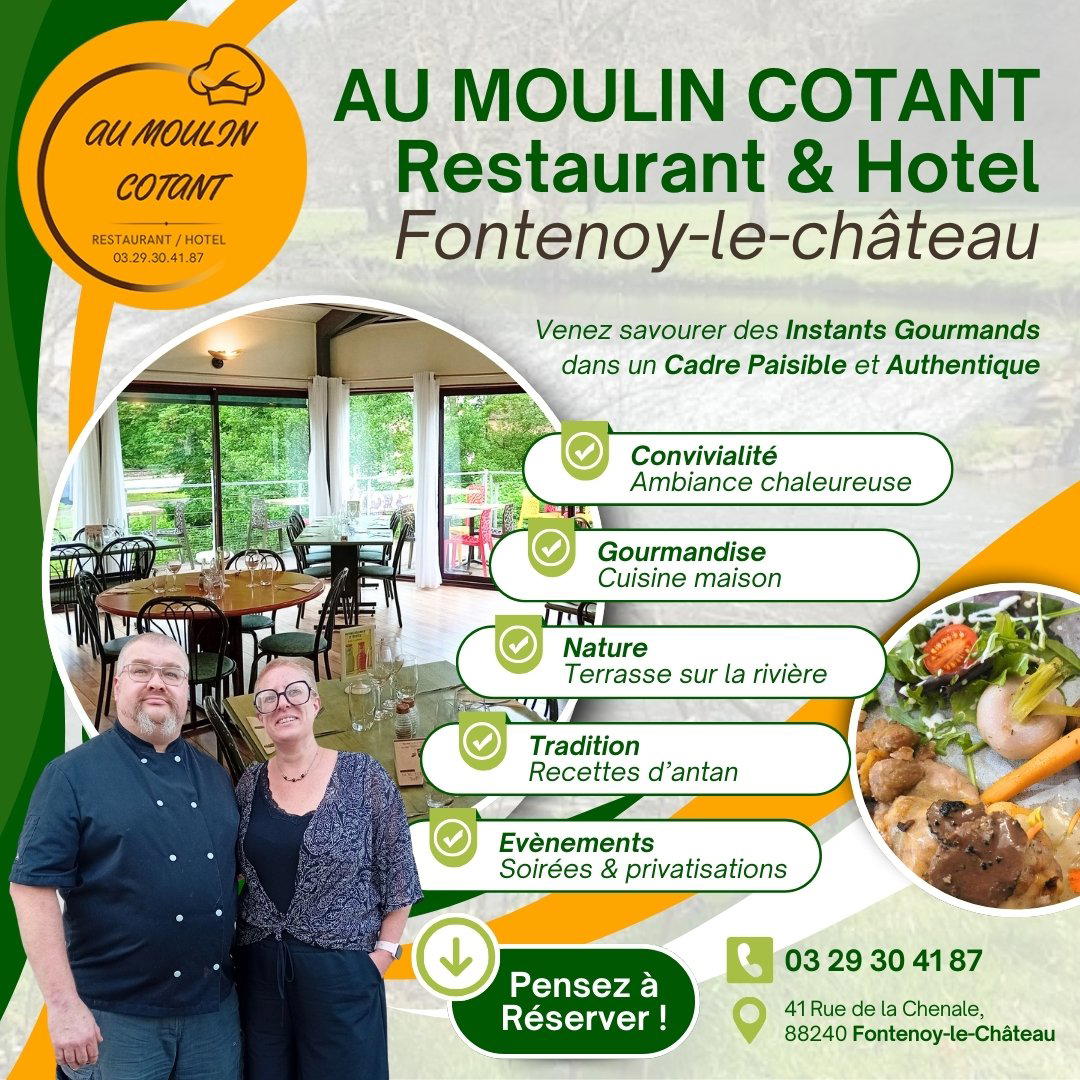
Au Moulin Cotant sits on the Rue de la Chenale in Fontenoy-le-Château, a village in the Vosges department where the cooking tradition has long drawn from the surrounding forests, farms, and waterways. The address places it within a broader current of rural French dining that privileges proximity over prestige, sourcing over spectacle. For those willing to travel beyond the well-mapped routes, it represents a serious argument for the Vosges as an overlooked dining region.

Pearl is the En Primeur Club membership app, where members save venues, book tables and use the concierge.
Fontenoy-le-Château and the Logic of the Rural Vosges Table
There is a category of French restaurant that never appears on the grands boulevards or inside a palace hotel, yet operates with a seriousness of purpose that the Paris institutions would recognise immediately. These places are defined not by their address but by their relationship to their surroundings: the farms a few kilometres away, the rivers that run through the valley, the seasonal rhythm that determines what appears on the plate. Au Moulin Cotant, at 41 Rue de la Chenale in Fontenoy-le-Château, belongs to this tradition. The village sits in the southern Vosges, a département that has historically fed its tables from the forest, the river, and the field rather than from the wholesale market. Understanding the restaurant means understanding that geography first.
The Vosges is not a region that French gastronomy has spent much time examining, at least not with the intensity it has directed at Burgundy, Alsace, or the Côte d'Azur. That relative inattention is part of what keeps places like this operating on their own terms. Fontenoy-le-Château itself is a small market town, the kind of place where the weekly rhythm still matters and where a restaurant's identity is inseparable from the producers it works with. For a broader map of what the region offers, our full Fontenoy-le-Château restaurants guide provides useful context alongside Au Moulin Cotant.
Ingredient Logic: Why Sourcing Defines the Vosges Kitchen
The French rural restaurant tradition has always made a virtue of necessity. When you are not in Paris or Lyon, you cook what is around you. In the Vosges, that means trout and crayfish from cold mountain streams, game from the heavily forested hillsides, dairy from farms on the plateau, and the foraged ingredients that the woodland produces across the seasons. This is not the consciously telegraphed farm-to-table positioning that urban restaurants have adopted as a marketing posture; it is simply the way the regional kitchen has always operated, because the supply chain was never built any other way.
This sourcing logic places a restaurant like Au Moulin Cotant in a very different competitive frame from the starred addresses in major French cities. Where Alléno Paris au Pavillon Ledoyen or Mirazur in Menton operate within a framework of national and international recognition, the rural Vosges restaurant answers to a different set of criteria: how well it reads and interprets its immediate territory, how consistently it sources locally, and whether the cooking has the kind of regional coherence that cannot be replicated elsewhere. The comparison is not flattering or unflattering to either category; it simply describes two different projects.
The broader French tradition of the auberge and moulin restaurant, of which Au Moulin Cotant is an example by name and by character, typically centres on this kind of embedded sourcing. A moulin, historically, was a working mill integrated into the local food economy. The name alone signals a relationship to place that predates any contemporary conversation about provenance. Restaurants in Alsace that have maintained this tradition over generations, like Auberge de l'Ill in Illhaeusern, demonstrate how deeply the form can develop when it remains rooted in its landscape over decades. Similarly, Bras in Laguiole has built its international reputation almost entirely on the argument that a specific terroir, the Aubrac plateau, can generate cooking of the highest order without deferring to any urban centre.
The Rural French Restaurant and Its Place in a Wider Conversation
France's most compelling rural dining addresses share a structural characteristic: they exist because someone decided to take the local larder seriously rather than import prestige ingredients from elsewhere. Auberge du Vieux Puits in Fontjoncouse operates from a village of fewer than 200 people in the Corbières and has held three Michelin stars, demonstrating that remoteness and recognition are not mutually exclusive. Les Prés d'Eugénie in Eugénie-les-Bains constructed an entire philosophy of cuisine around the thermal spa town's therapeutic context and its regional produce. The pattern repeats across the country: a serious kitchen embedded in a specific place, drawing from that place with discipline.
Au Moulin Cotant operates within this same current. The Vosges, with its forests, rivers, and farming communities, provides the kind of larder that rewards a kitchen paying attention to it.
Positioning and What to Expect
Visitors travelling from outside the region should approach Fontenoy-le-Château as a destination in itself rather than a detour from somewhere more obvious. The southern Vosges is within driving distance of the Alsace wine route to the east and the Burgundy region to the southwest, and it rewards the kind of slow itinerary that allows a meal to anchor a day rather than fill a gap between trains. Restaurants with a similar regional character and a comparable commitment to place, such as Maison Lameloise in Chagny or Georges Blanc in Vonnas, demonstrate that the deepest French dining experiences often require a deliberate journey. The same logic applies here.
For readers accustomed to the sharp precision of starred urban kitchens, from Flocons de Sel in Megève to Le 1947 à Cheval Blanc in Courchevel, the rural moulin format offers a different register: less architectural plating, more direct connection between the ingredient and the plate. That is not a concession; it is a different discipline, and one that demands equal skill from the kitchen. The restaurants that do it well, as Paul Bocuse's Auberge du Pont de Collonges and Troisgros in Ouches demonstrated across very different eras, have always understood that a clear-eyed relationship with local produce is the foundation rather than the ceiling of serious French cooking.
Booking and practical details for Au Moulin Cotant are best confirmed directly through the restaurant, as hours, seasonal availability, and format can shift with the time of year in rural addresses of this type. The restaurant is at 41 Rue de la Chenale, 88240 Fontenoy-le-Château, and the village is accessible by road from Épinal, the Vosges departmental capital, approximately 35 kilometres to the north.
Frequently asked questions
Is Au Moulin Cotant a family-friendly restaurant?
Au Moulin Cotant sits in Fontenoy-le-Château, a quiet rural commune in the Vosges, which sets the tone: this is a settled, unhurried environment rather than a high-energy urban dining room. The pace and context of a French country restaurant of this type tend to suit families comfortable with a traditional sit-down meal.
What's the overall feel of Au Moulin Cotant?
The address at 41 Rue de la Chenale places it firmly in small-town Vosges France, away from tourist circuits and urban dining noise. Expect the atmosphere of a serious rural French table: purposeful rather than performative, with the room's character shaped by the surrounding landscape and local custom rather than interior design trends. This is the kind of place that earns its reputation through the plate, not the fit-out.
Is Au Moulin Cotant worth travelling to from outside the Vosges region?
Fontenoy-le-Château sits in the southern Vosges, a part of France that receives relatively little through-traffic compared to Alsace to the east or Burgundy to the south, which is precisely what keeps restaurants here anchored to local produce and local custom rather than international expectation. Visitors who treat the journey as part of the point, building a stay around the rural Vosges rather than tagging the restaurant onto another itinerary, will get the most from a meal at Au Moulin Cotant. The address at 41 Rue de la Chenale, 88240, is a genuine destination stop rather than a convenient one.
What dish is Au Moulin Cotant famous for?
What the Vosges kitchen tradition consistently delivers, and what restaurants of this type in the region build their reputations on, is produce-driven cooking rooted in the local larder: cured meats, freshwater fish, forest mushrooms, and dairy from nearby farms. The menu at any given visit is likely shaped by season and supply more than by fixed house specialities.
Quick Comparison
| Venue | Cuisine | Price | Awards | Notes |
|---|---|---|---|---|
| Au Moulin CotantThis venue (the venue you are viewing) | Traditional French Terroir | $10–20 | Not listed | Not listed |
| Mirazur | Modern French Fine Dining | $300–500 | 3 Michelin Stars · World's 50 Best #1 | Modern French, Creative |
| Alléno Paris au Pavillon Ledoyen | Modern French Fine Dining | $150–200 | 3 Michelin Stars · World's 50 Best #79 | Creative |
| Kei | Modern French with Japanese Influences | $300–500 | 3 Michelin Stars · World's 50 Best #93 | Contemporary French, Modern Cuisine |
| L'Ambroisie | Classic French Haute Cuisine | $300–500 | 2 Michelin Stars · World's 50 Best #23 | French, Classic Cuisine |
| Le Cinq - Four Seasons Hôtel George V | Modern French Fine Dining | $300–500 | 3 Michelin Stars · World's 50 Best #24 | French, Modern Cuisine |
Continue exploring
More in Fontenoy Le Chateau
Details
- Rustic
- Cozy
- Scenic
- Family
- Casual Hangout
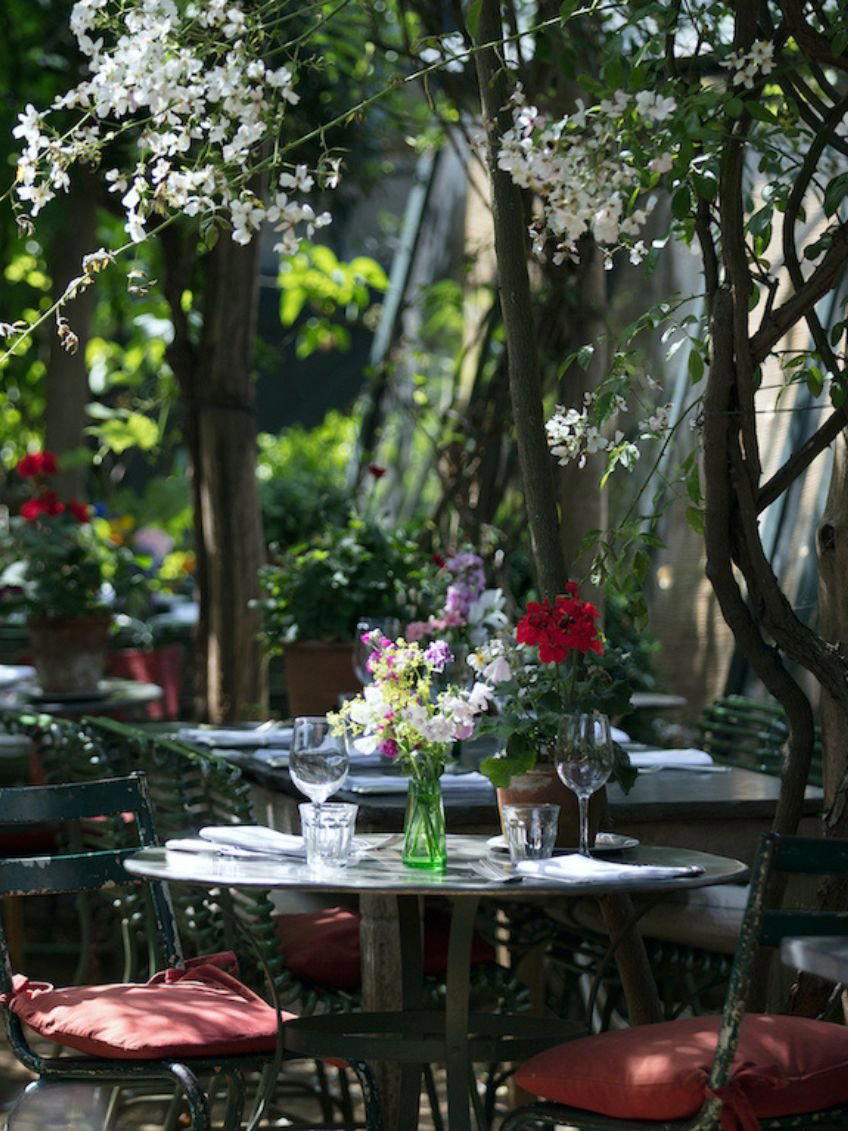
- Terrace
- Historic Building
- Local Sourcing
- Waterfront
- Garden
- A La Carte
- Buffet
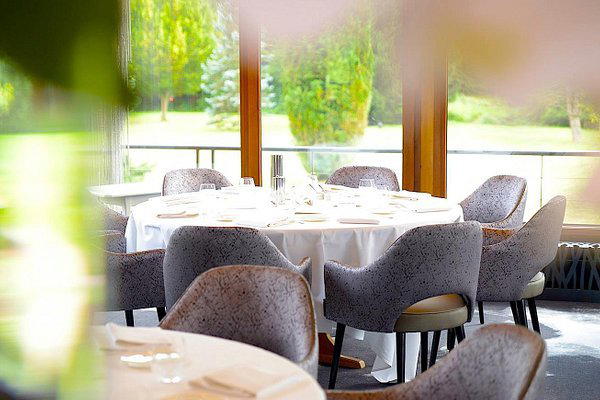
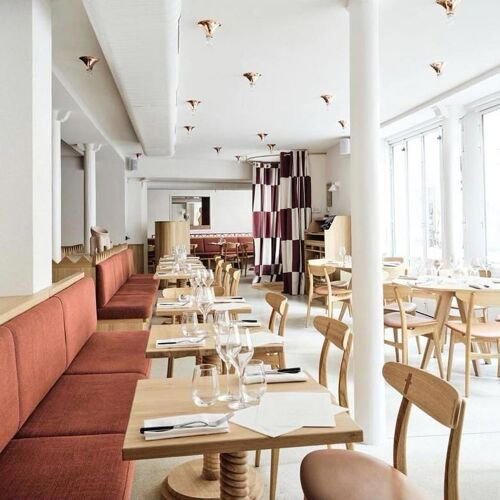
Bright and light-filled modern wooden setting in a bucolic countryside location near the river and meadows.