ARVI

ARVI earned Québec City's attention well before Michelin arrived in 2025 with a one-star designation. Chef Mardiros Barsoum operates out of a modest address on 3e Avenue, where modern cuisine meets the city's French-rooted dining tradition.
Pearl is the En Primeur Club membership app — saves, bookings, and concierge access live there. Same editors, same standards.
- Address
- 519 3e Ave, Québec City, Quebec G1L 2W4, Canada
- Phone
- +1 581-742-4202
- Website
- restaurantarvi.ca
- Directions
- Get directions
 Saves & bookings on Pearl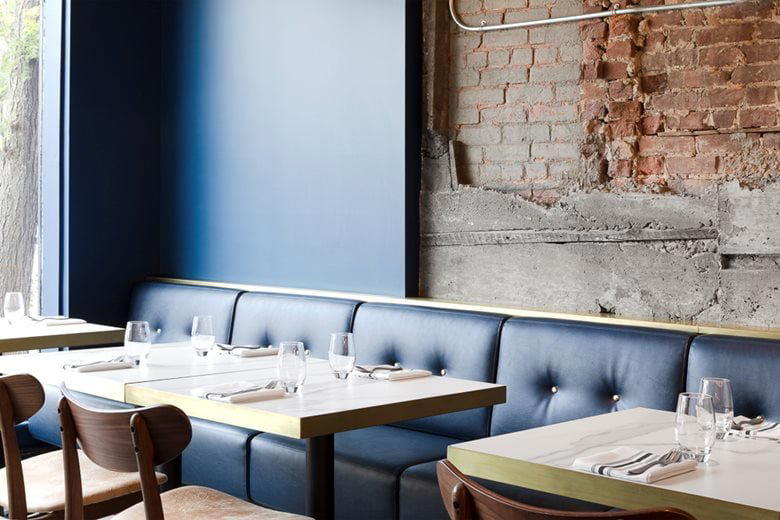
A Quiet Street, A Serious Kitchen
ARVI is a one-star Michelin restaurant in Québec City, led by chef Mardiros Barsoum, in the city’s $$$$ tier. ARVI sits at 519 3e Avenue, in the Saint-Roch neighbourhood, an area that spent the 1990s in industrial decline and the 2010s becoming the city's most concentrated zone for serious independent cooking. Arriving here, the architectural cues are lower-key than the Upper Town: flat brick facades, working-class scale, a streetscape without the theatrical backdrop that older Québec restaurants rely on. What that absence demands is that the cooking do the work.
That demand is now officially met. In 2025, ARVI received a Michelin one-star designation, placing it in the same tier as Laurie Raphaël, one of the city's longest-standing modern cuisine addresses, and a step below the two-star Tanière³.7 across 335 reviews adds a consistency signal to the institutional one: this is not a restaurant coasting on a single notable evening.
Modern Cuisine and Québec's French Inheritance
The phrase "modern cuisine" carries different weight in Québec than it does elsewhere in Canada. In cities like Toronto or Vancouver, where Alo in Toronto and AnnaLena in Vancouver have built fine-dining identities largely through their relationship with European technique and local sourcing, the category is essentially a negotiation between imported training and local ingredients. In Québec City, that negotiation runs deeper. The city has a functional French culinary tradition, not just an aspirational one. Bistros, brasseries, and charcuterie culture here are not affectations; they are the default register of eating out. A modern cuisine kitchen working in this environment must make conscious decisions about which parts of that inheritance it retains and which it pushes past.
Chef Mardiros Barsoum's kitchen at ARVI operates within that specific tension. The address is $$$$, Québec City's highest price tier, which aligns it with Laurie Raphaël and places it well above mid-range modern addresses like Ambre Buvette and the more accessibly priced Chez Boulay - Bistro Boréal. That price positioning signals a kitchen working at tasting-menu or multi-course register, where the French technical vocabulary, sauce work, precision in protein cookery, structured progression, is treated as a foundation rather than a reference point.
Internationally, modern cuisine at this level draws comparisons across a broad comparable set. Operations like Frantzén in Stockholm and FZN by Björn Frantzén in Dubai represent one pole of the category: hyper-technical, globally referenced, ingredient-driven regardless of latitude. Québec City's leading tables tend toward a different axis, one where the boreal larder, spruce, wild game, fresh-water fish, cold-climate root vegetables, provides both the ingredients and the aesthetic logic.
The Saint-Roch Context
Understanding ARVI requires understanding the neighbourhood it operates in. Saint-Roch's transformation over the past two decades follows a pattern common to post-industrial urban districts: artist studios, then independent cafés, then ambitious restaurants, then recognition that arrives from outside and changes the economics. The neighbourhood now holds several of the city's most-discussed addresses, and it functions as the counterweight to Old Québec's more tourist-oriented dining circuit. Restaurants here are chosen by Québec City residents; proximity to the château is not part of the appeal.
That local clientele creates a different pressure on a kitchen than a tourist-dependent one. Repeat visitors know when a menu has stagnated. They compare across the same neighbourhood's offerings with more frequency and less ceremony than visitors passing through. A 4.7 rating sustained across 335 reviews at a $$$$ price point in that context is a meaningful signal. For comparison, Champlain, the formal dining room inside the Château Frontenac, operates in a completely different clientele environment, one defined by hotel guests and occasion dining, rather than the repeat-visit local base that keeps Saint-Roch restaurants honest.
Where ARVI Sits in the City's Fine-Dining Order
Québec City now has a small but clearly defined Michelin tier. Tanière³ occupies the two-star position, the ambitious kitchen in the city, operating at a level that invites comparison outside Canada. ARVI and Laurie Raphaël share the one-star tier, with meaningfully different profiles: Laurie Raphaël has operated since 1990 and carries the institutional weight of three decades in the same location; ARVI represents a newer entry point into the same recognition band. Below that tier, Alentours and Ambre Buvette hold the mid-to-upper bracket, and Chez Boulay operates as one accessible modern cuisine option at the $$ price tier.
For a visitor calibrating how to spend evenings in Québec City, this ordering matters. ARVI's one-star designation and price tier position it as the city's most direct point of entry into Michelin-recognized cooking for those who want the current generation's interpretation of modern cuisine rather than an established institution's. Across Québec more broadly, the province's emerging fine-dining scene includes addresses like Narval in Rimouski and, in Montreal, Jérôme Ferrer - Europea, each representing different points on the province's modern cuisine spectrum. In Ontario, Restaurant Pearl Morissette in Lincoln and The Pine in Creemore show how the same farm-to-table logic plays out in wine-country contexts, offering a useful contrast to Québec City's urban, French-inflected register.
Planning Your Visit
ARVI is located at 519 3e Avenue in Saint-Roch, a walkable neighbourhood accessible from the Lower Town and a short cab or rideshare ride from Old Québec hotels. The $$$$ price designation places it at the summit of the city's spending tier, plan accordingly for a multi-course dinner with wine pairing. Given the Michelin recognition in 2025, reservation lead times at this level of Québec City dining typically run several weeks ahead, particularly on weekends; booking as early as possible is advisable.
What to Order at ARVI
ARVI holds a Michelin one-star designation under Chef Mardiros Barsoum, which in the context of modern cuisine at the $$$$ tier typically means a structured tasting progression rather than an à la carte selection. The kitchen's position within Québec City's boreal-influenced fine-dining scene suggests the menu draws on cold-climate ingredients, game, fresh-water fish, foraged elements, treated through classical French technique. One reliable approach at a kitchen of this type is to commit to the full tasting menu and let the sequence function as intended, rather than editing it down. Pairings, if offered, tend to carry more editorial value at one-star level than house wine selections, since the sommelier's choices are typically calibrated to reinforce the kitchen's ingredient logic.
Cuisine-First Comparison
Comparable venues nearby, for context on price, style, and recognition.
| Venue | Cuisine | Price | Awards | Notes |
|---|---|---|---|---|
| ARVIThis venue — the venue you are viewing | Modern Quebec Cuisine | $$$$ | Michelin 1 Star | Not listed |
| Laurie Raphaël | Modern French Gastronomic | $$$$ | Michelin 1 Star | Vieux-Québec, Cap-Blanc, Colline parlementaire |
| Échaudé | French Bistro with Québecois Influences | $$$ | Michelin Plate | Vieux-Québec, Cap-Blanc, Colline parlementaire |
| Champlain | Modern French Fine Dining | $$$$ | Michelin Plate | Vieux-Québec, Cap-Blanc, Colline parlementaire |
| Ouroboros | Modern French Market Cuisine | $$$ | Bib Gourmand | Saint-Roch |
| La Bête | Modern Steakhouse | $$$$ | Michelin Plate | Saint-Louis |
Recognition history
Dated appearances from independent guides and award organizations, with the underlying list record or original source where available.
Michelin 1 Star
Michelin
Michelin 1 Star
Michelin
Continue exploring
More in Quebec City
Restaurants in Quebec City
Browse all →
Bars in Quebec City
Browse all →
At a Glance
- Modern
- Intimate
- Elegant
- Trendy
- Sophisticated
- Date Night
- Special Occasion
- Celebration
- Open Kitchen
- Chefs Counter
- Sommelier Led
- Craft Cocktails
- Local Sourcing
- Farm To Table
Current opening hours
- Monday
- Closed
- Tuesday
- 6–10 PM
- Wednesday
- 6–10 PM
- Thursday
- 6–10 PM
- Friday
- 6–10 PM
- Saturday
- 6–10 PM
- Sunday
- Closed
Hours can change for holidays and private events. Last verified .
Urban industrial aesthetic with exposed brick and poured concrete, open-plan layout with kitchen visible from every table, curated playlist setting the tempo, warm and friendly atmosphere despite refined setting.