Ardor


On the Sunset Strip, Ardor applies a plant-forward Californian framework that earned back-to-back Michelin Plate recognition in 2024 and 2025, alongside inclusion in the We're Smart Green Guide for its vegetable-led approach. Chef John Fraser's kitchen operates at the $$$ tier, positioning the restaurant between West Hollywood's casual dining scene and the upper reaches of LA's fine-dining circuit.
Pearl is the En Primeur Club membership app — saves, bookings, and concierge access live there. Same editors, same standards.
- Address
- 9040 Sunset Blvd, West Hollywood, CA 90069
- Phone
- (424) 310-1197
- Website
- ardorweho.com
- Directions
- Get directions
 Saves & bookings on Pearl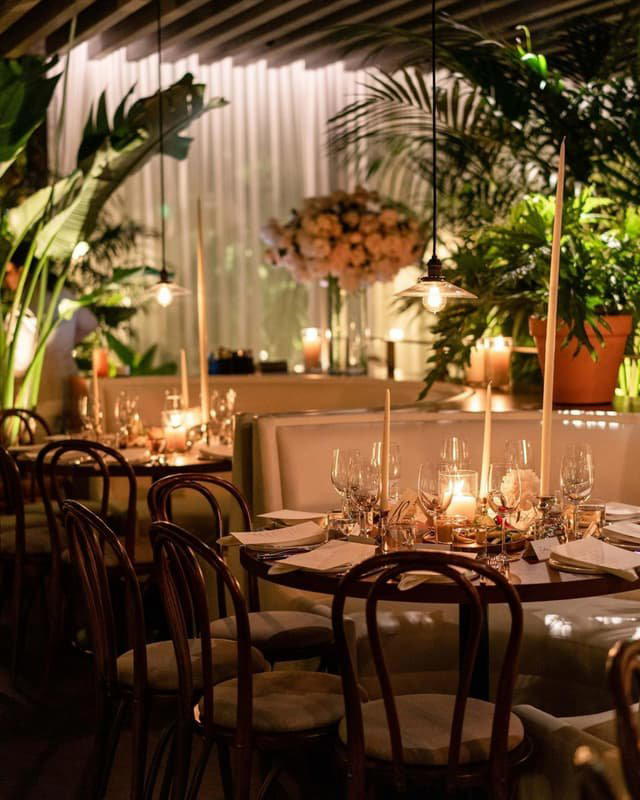
Where the Sunset Strip Meets Serious Produce
Sunset Boulevard at the West Hollywood stretch carries a particular kind of ambient pressure, valet lines, hotel lobbies, the low hum of an industry city performing for itself. Ardor, set within that corridor at 9040 Sunset Blvd, is a restaurant in West Hollywood. The space trades Strip theatrics for a warmer, more grounded atmosphere, one that signals intention before the first dish arrives. The visual language here tilts toward the botanical: greenery as structure, not decoration. It is an environment that makes the menu's plant-forward focus feel like a considered point of view rather than a dietary concession.
That distinction matters in a city where vegetable-led cooking has moved from wellness sidebar to credible culinary category. Ardor is priced at about $100 per person, with a smart casual dress code and recommended reservations. Los Angeles has been ahead of most American cities on this shift, farmers' market culture, proximity to California's Central Valley growing regions, and a dining public that arrived at produce-first eating earlier than Chicago or New York. Ardor sits inside that movement at a specific address: not a vegan restaurant, not a health concept, but a Californian kitchen where vegetables hold the structural role that protein occupies elsewhere.
Plant-Forward as a Kitchen Position, Not a Marketing Category
Ardor and Chef John Fraser have chosen to anchor the term to a specific reference point: the We're Smart philosophy of Think Vegetables, Think Fruit, where produce leads in terms of shape, colour, and quantity. That grounding earned Ardor a place in the We're Smart Green Guide, an international recognition system that evaluates restaurants on the seriousness of their vegetable programs rather than on aesthetic positioning or trend alignment.
Back-to-back Michelin Plate recognition in 2024 and 2025 confirms that the kitchen's standards hold across time, not just at launch. The Michelin Plate sits below star level but above the general field, it signals that inspectors found cooking worth noting on a return visit. For a plant-forward kitchen in a city where Michelin has also recognised technically demanding rooms like Kato and Hayato, that recognition places Ardor in a different competitive lane: one defined by ingredient quality and culinary discipline rather than by format spectacle or luxury signalling.
California's fine-dining tier has a clear upper bracket: the tasting-menu rooms that price into $$$$, often with extended reservation windows and multicourse formats. Ardor sits at the $$$ tier, which in West Hollywood represents the mid-serious category, more committed than neighbourhood bistros, less formally structured than destination tasting counters. That positioning gives it reach across a wider diner set without compromising on what the kitchen is trying to do. For context, comparable Californian kitchens at this price range in the broader state, such as Heritage in Long Beach and Lilo in Carlsbad, similarly use regional produce as the editorial centre of their menus.
The Wine Question at a Produce-Led Table
A plant-forward kitchen creates specific problems for a wine program. Vegetable-centric dishes lack the fat and tannin anchors that make conventional wine pairing logic function cleanly. Roasted roots, fermented vegetables, grain preparations, and fruit-driven sauces pull toward acidity, texture, and mid-weight structure rather than toward the bold reds that anchor most California wine lists. The curation challenge is therefore more demanding than at a protein-led kitchen, not less.
In produce-forward contexts, particularly coherent wine lists tend to reach toward natural and low-intervention producers, skin-contact whites, and lighter-bodied reds from Burgundy, the Jura, Alsace, or domestic regions like the Sta. Rita Hills and Sonoma Coast. These wines have the acidity and textural range to track with vegetable-driven cooking across multiple courses. A list built with this logic requires a sommelier with range beyond conventional California Cabernet fluency, the same kind of specialist positioning that distinguishes wine programs at rooms like Lazy Bear in San Francisco or Single Thread Farm in Healdsburg, where the beverage program is understood as an extension of the kitchen's ingredient philosophy rather than a separate revenue category.
The We're Smart and Michelin recognition at Ardor implies a kitchen operating with enough coherence that wine and food alignment is a genuine consideration. Whether the current list fully realises that potential is a question worth bringing to the table directly, a good sommelier at a plant-forward restaurant should be able to articulate why each pour tracks with produce-led cooking, not just what the glass is.
West Hollywood's Dining Position in the LA Map
West Hollywood functions differently from other LA dining corridors. It carries a hospitality-industry density that keeps standards competitive and a diner base that skews toward repeat visitors rather than tourists on a single outing. The Sunset Strip specifically has historically been more bar and entertainment than serious dining, which gives a kitchen like Ardor a cleaner lane. The nearest serious competition operates at different price points or with different culinary frames: Citrin and Kali represent the broader Californian fine-dining field, while neighbourhood options like Great White and Bar Etoile operate at a more casual register. Leopardo represents the Italian-leaning end of the West Hollywood dining range.
For visitors planning around Ardor, the location on Sunset provides access to the broader West Hollywood hotel corridor.
How Ardor Compares Nationally
Plant-forward cooking at this level of recognition remains relatively rare on the national fine-dining map. The rooms that operate with comparable produce-first seriousness at recognised award levels tend to cluster in the Bay Area or New York. Nationally recognised kitchens like Le Bernardin in New York City and Alinea in Chicago define their categories through protein or technique, respectively. Emeril's in New Orleans and The French Laundry in Napa anchor themselves to classical frameworks. Ardor's We're Smart Green Guide placement alongside its Michelin Plate history means it occupies a specific and less crowded position: a produce-led kitchen with verified external standards, at an accessible price tier, in a city whose agricultural proximity gives it genuine ingredient advantages over most of the country.
Planning Your Visit
Ardor operates at 9040 Sunset Blvd in West Hollywood, within the Sunset Boulevard corridor where parking and valet options are available given the hotel density of the strip. The price tier positions it as a booking-ahead dinner destination rather than a drop-in, and reservations are recommended, especially on Thursday through Saturday evenings. The plant-forward format suits diner groups with mixed dietary orientations, since the kitchen's vegetable focus is structural rather than restrictive, making it a more practical group booking than fully vegan or allergen-constrained rooms.
What People Recommend at Ardor
The We're Smart Green Guide recognition and back-to-back Michelin Plate citations, awarded in both 2024 and 2025 under Chef John Fraser, confirm that the kitchen's approach to plant-forward Californian cuisine meets an external standard, not just a local one. Diners arriving with an interest in how vegetables can anchor serious cooking rather than merely accompany it will find the kitchen's framework directly relevant to that question. The wine program, ideally, should be approached as a conversation with the floor team about what pairs with the produce-led menu rather than defaulting to a familiar California red.
Recognition Snapshot
Comparable venues nearby, for context on price, style, and recognition.
| Venue | Cuisine | Price | Awards | Notes |
|---|---|---|---|---|
| ArdorThis venue — the venue you are viewing | Vegetable-Forward California Contemporary | $$$$ | Michelin Plate | Not listed |
| 71above | Modern Fine Dining | $$$$ | Not listed | Financial District |
| The Polo Lounge | Classic American with Italian Edge | $$$$ | Not listed | Golden Triangle |
| Verse | Modern American Steakhouse with Seafood | $$$$ | Not listed | Toluca Lake |
| n/soto | California-Inspired Modern Japanese Izakaya | $$$$ | Not listed | Mid-City |
| Bar Sawa | Edomae-style Omakase with Cocktails | $$$$ | Michelin Plate | Little Tokyo |
Recognition history
Dated appearances from independent guides and award organizations, with the underlying list record or original source where available.
Michelin Plate
Michelin · 2026 Michelin Plate
Michelin Plate
Michelin
We're Smart World 3 Radishes
We're Smart World
Michelin Plate
Michelin
Continue exploring
More in Los Angeles
Restaurants in Los Angeles
Browse all →
Bars in Los Angeles
Browse all →
Hotels in Los Angeles
Browse all →

Wineries in Los Angeles
Browse all →
At a Glance
- Elegant
- Modern
- Sophisticated
- Trendy
- Intimate
- Date Night
- Special Occasion
- Business Dinner
- Hotel Restaurant
- Open Kitchen
- Craft Cocktails
- Local Sourcing
- Organic
Current opening hours
- Monday
- Closed
- Tuesday
- Closed
- Wednesday
- 6–10 PM
- Thursday
- 6–10 PM
- Friday
- 6–10 PM
- Saturday
- 6–10 PM
- Sunday
- 6–9 PM
Hours can change for holidays and private events. Last verified .
Lush greenery, subtle cinematic lighting, cushy white velvet booths creating a chic, sophisticated atmosphere.