n/soto



LA Times 101 Best Restaurants #90 · Esquire Best New Restaurants #6
Our verdict
The sister izakaya to n/naka brings Niki Nakayama and Carole Iida-Nakayama's Japanese-California sensibility to Mid-City at a register far easier to book. Head chef Yoji Tajima runs a menu that moves between crudités with mochi flatbread, seasonal donabe rice, and cocktails built on aged sake and California produce. Opinionated About Dining ranked it #196 in North America for 2025, and the LA Times placed it at #90 on its 2024 list of 101 best restaurants.

Pearl is the En Primeur Club membership app, where members save venues, book tables and use the concierge.
The menu
What to order
- Agedashi mochi
- Mentaiko mochi
- Miso bone marrow
- Brussels sprouts with salmon skin
- Carrot tartare
- Negima yakitori
Mid-City's Quiet Argument for the Izakaya Format
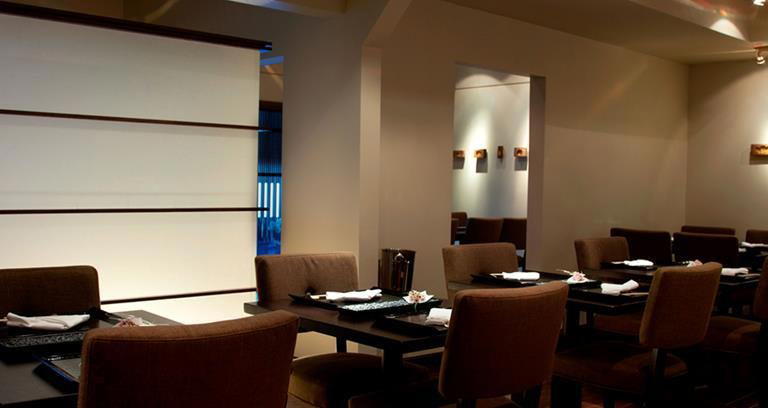
Washington Boulevard in Mid-City is not where most visitors to Los Angeles go looking for serious Japanese cooking. The izakaya format, at its core, is a democratic one: food designed to accompany drinks, a pace set by the table rather than the kitchen, and a menu that rewards exploration over a single signature dish. In Los Angeles, that tradition has been absorbed and reinterpreted across the city, but few rooms execute the Japanese-California version of it with the structural seriousness on display here.
The connection to Hayato and the broader Los Angeles Japanese dining tier matters as context. Where kaiseki restaurants like Hayato operate at the formal, high-ceremony end of Japanese dining in LA, the izakaya operates on different terms entirely: lower ceremony, more lateral movement across the menu, and a beverage program that sits at the center of the experience rather than the margin. n/soto sits in that second register, but with the credentialing of a serious culinary operation behind it.
The Nakayama Name and What It Signals Here
Los Angeles has a small cluster of restaurants that are genuinely difficult to book and whose reputation travels internationally. Kato, Somni, and n/naka occupy that bracket. The kaiseki counter n/naka, run by Niki Nakayama and Carole Iida-Nakayama, has become one of the hardest reservations in the country, a status it shares with rooms like The French Laundry in Napa and Alinea in Chicago. n/soto, their izakaya in Mid-City led by head chef Yoji Tajima, operates with considerably less friction on the booking side, a fact that the Opinionated About Dining community appears to have noticed only gradually: the restaurant was Highly Recommended in 2023, ranked #236 in North America in 2024, and moved to #196 in 2025.
That trajectory on the OAD list tracks with how izakayas tend to build reputation in American cities: slowly, through repeat visits and word-of-mouth rather than a single opening moment. Esquire named it one of the six leading new restaurants in America in 2022, which provided an initial signal, but the sustained climb since then reflects something more durable than launch attention. The LA Times placed it at #90 on its 2024 list of 101 best restaurants, a ranked list that spans every category and price point across the city.
How the Menu Moves
The izakaya tradition asks that a menu range widely and respond to season. At n/soto, that means the entry point to a meal is not a single dramatic dish but a progression of smaller ones, each calibrated to open appetite rather than satisfy it in full. The awards data includes a detailed account from the LA Times that functions as the most reliable available picture of the menu's logic: crudités with mochi flatbread described as crisp and elastic alongside a smoky eggplant dip with structural similarities to Persian kashke bademjan; a warm bowl of just-set tofu as a palate-settling mid-course; and larger dishes like mussels in garlicky udon with crème fraîche and bacon for cooler weather.
The seasonal pivot here is worth noting directly. Summer brings cooling constructions: King crab and uni with avocado dressing served in an edible rice flour cup. Winter menus turn toward the donabe, a Japanese clay pot used for steamed rice, with accompaniments that shift by season, autumnal mushrooms in one period, soft-boiled egg and chicken thigh in another. This kind of menu architecture, where the same format returns with different contents depending on the calendar, is one of the markers of a kitchen operating with intentionality rather than a static menu designed to minimize complexity.
Recommendation from the LA Times review is explicit on one point: skip the sushi. That instruction is itself a useful orientation. At many Japanese restaurants in Los Angeles, sushi functions as the safe choice, the familiar path for diners uncertain of the menu. A kitchen confident enough to redirect diners away from the familiar toward the donabe and the seasonal specials is one that trusts its own stronger work.
The Beverage Program as a Structural Element
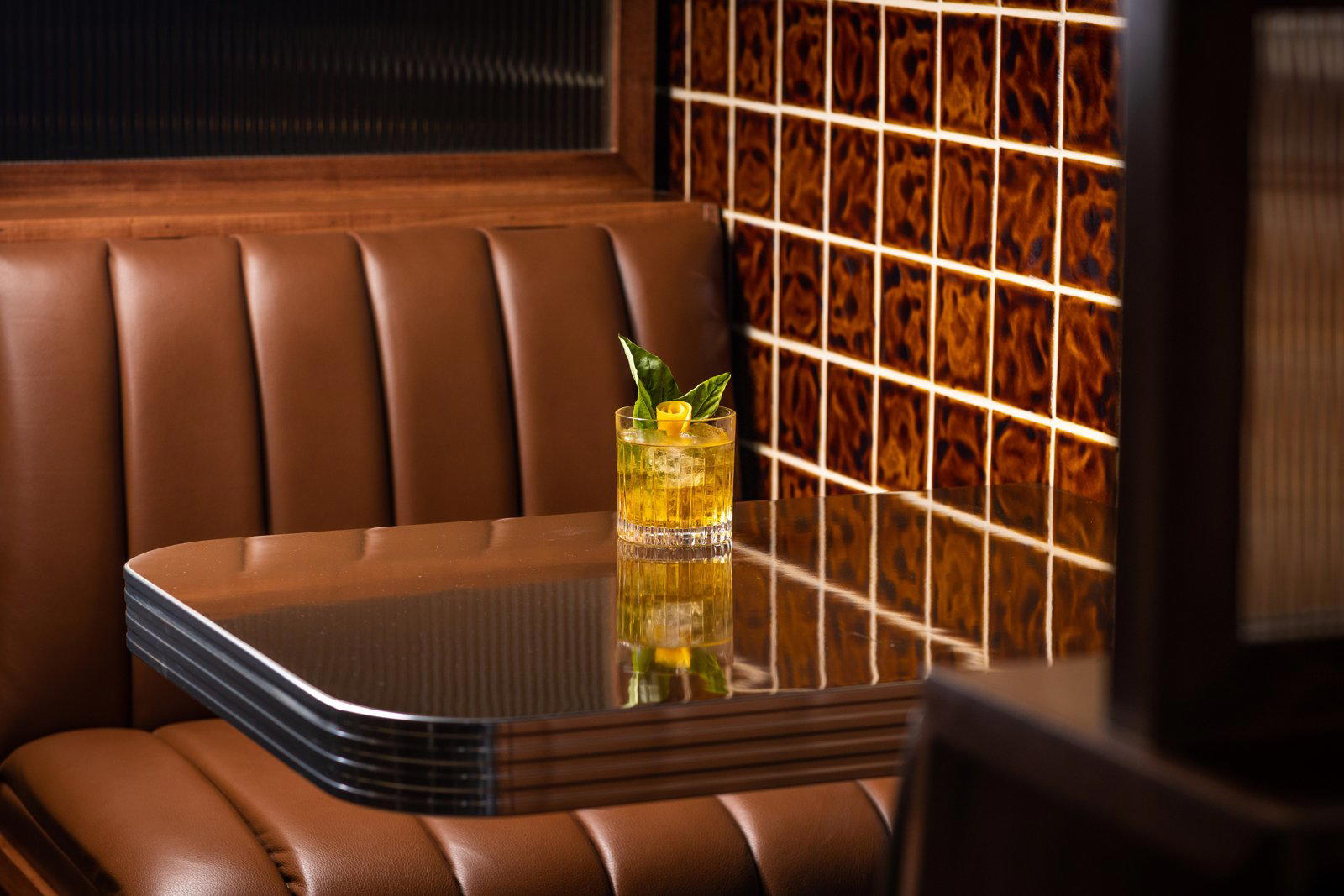
In the izakaya tradition, the drinks are not supplementary. The food exists, in part, to support the drinking, and the drinks are expected to hold their own as a menu category. n/soto's beverage program, led by bartender Reed Windle, operates along a Japanese-California axis: cocktails built around aged sake, sake vermouth, and California fruits and spices. The LA Times review names a specific cocktail, Time Goes So Fast, which combines rye, anise hyssop, Benedictine, aged sake, and sake vermouth. That kind of layered, technically precise construction places n/soto's bar program closer to the serious cocktail bars of New York (see Atomix's approach to pairing) than to the average izakaya beverage list.
This matters for how to approach the evening. Arriving with a drinks-first orientation and treating the food as a sequence of plates chosen to accompany those drinks is closer to the spirit of the format than arriving hungry and ordering food as the primary event.
Where n/soto Sits in the Los Angeles Japanese Dining Tier
Los Angeles has a more developed Japanese dining ecosystem than most American cities, extending from fast-casual ramen and conveyor-belt sushi to formal omakase counters and the kaiseki tier where n/naka operates. The comparison set for n/soto is not n/naka; it is the middle register of serious Japanese dining in the city, where the price point is lower, the format is looser, and the ceiling for cooking quality remains high.
Against peers in the Los Angeles restaurant scene, n/soto occupies a specific and somewhat underserved position: a Japanese kitchen with kaiseki-lineage credentials running a format that prices and operates well below the tasting-menu tier. For comparison, Osteria Mozza holds a similar position in the Italian category, a room where serious culinary credentialing meets a format that does not require the full commitment of a long tasting menu. The izakaya structure at n/soto allows for a shorter, cheaper, and more spontaneous evening than n/naka while drawing on the same culinary intelligence.
Restaurants with comparable cross-cultural ambitions at the casual end of the market, such as Lazy Bear in San Francisco or Single Thread Farm in Healdsburg, operate at higher price points and in more formal formats. n/soto's positioning as an izakaya keeps it accessible in a way that its culinary ambition might not otherwise suggest.
Planning Your Visit
n/soto is open Wednesday through Friday from 5:30 to 9:30 pm, and Saturday and Sunday from 5:00 to 9:30 pm. Monday and Tuesday are closed. Given the OAD ranking climb from 2023 to 2025, reservations have become more contested over time; booking in advance is advisable, particularly for weekend evenings. Those exploring the wider Los Angeles dining and hospitality picture can refer to our full Los Angeles hotels guide, our full Los Angeles bars guide, our full Los Angeles wineries guide, and our full Los Angeles experiences guide.
Quick reference: Wed–Fri 5:30–9:30 pm, Sat–Sun 5–9:30 pm, closed Mon–Tue. 4566 W Washington Blvd, Mid-City, Los Angeles.
Frequently asked questions
Is there a head chef associated with n/soto?
The chef associated with n/soto is Niki Nakayama.
Where is n/soto in Los Angeles?
n/soto is located at 4566 W Washington Blvd, Los Angeles, CA 90016, Los Angeles.
What's the must-try dish at n/soto?
The LA Times, which ranked n/soto #90 on its 2024 list of 101 Best Restaurants, singles out the donabe rice as the centerpiece of a meal here: a clay pot of impeccably steamed rice paired with rotating seasonal additions such as autumnal mushrooms or soft-boiled egg and chicken thigh. The review explicitly advises skipping the sushi in its favor. Beyond the donabe, the seasonal small plates shift with the calendar, from King crab and uni in summer to garlicky udon with mussels and crème fraîche when the weather cools.
What should I expect cuisine-wise at n/soto?
What time does n/soto open and close?
Hours at n/soto: Hours: Monday Closed Tuesday Closed Wednesday 5:30–9:30 pm Thursday 5:30–9:30 pm Friday 5:30–9:30 pm Saturday 5–9:30 pm Sunday 5–9:30 pm.
Peers Worth Knowing
| Venue | Cuisine | Price | Awards | Notes |
|---|---|---|---|---|
| n/sotoThis venue (the venue you are viewing) | California-Inspired Modern Japanese Izakaya | $50–100 | LA Times 101 Best Restaurants #90 · Esquire Best New Restaurants #6 | Not listed |
| Kato | Modern Taiwanese Fine Dining | $300–500 | 2 Michelin Stars · World's 50 Best #49 | New Taiwanese, Asian |
| Hayato | Traditional Japanese Kaiseki | $300–500 | 2 Michelin Stars · La Liste Top Restaurants | Japanese |
| Vespertine | Avant-Garde Tasting Menu | $200–300 | 2 Michelin Stars · La Liste Top Restaurants | Progressive, Contemporary |
| Camphor | Modern French with Southeast Asian influences | $150–200 | Michelin Plate · World Best Burgers World's 101 Best Burgers #15 | French-Asian, French |
| Gwen | Contemporary American Steakhouse | $50–100 | Michelin Plate · Wine Spectator Best of Award of Excellence | New American, Steakhouse |
Recognition history
Dated appearances from independent guides and award organizations, with the underlying list record or original source where available.
Opinionated About Dining Casual in North America Recommended
Opinionated About Dining
LA Times 101 Best Restaurants #90
LA Times
Esquire Best New Restaurants #6
Esquire
Full recognition history (6 entries)
Opinionated About Dining Casual in North America Ranked #196
Opinionated About Dining
Opinionated About Dining Casual in North America Ranked #236
Opinionated About Dining
Opinionated About Dining Casual in North America Highly Recommended
Opinionated About Dining