Antonio's Cucina Italiano
On Cambridge Street in Beacon Hill, Antonio's Cucina Italiano occupies a stretch of Boston where neighborhood Italian dining has long held its ground against the city's expanding tasting-menu and raw-bar circuit. The restaurant represents a tier of Italian-American cooking that prizes familiarity and consistency over novelty, drawing a local following that returns for the same reasons year after year.
Pearl is the En Primeur Club membership app — saves, bookings, and concierge access live there. Same editors, same standards.
- Address
- 288 Cambridge St, Boston, MA 02114
- Phone
- +16173673310
- Website
- antoniosbeaconhill.com
- Directions
- Get directions
 Saves & bookings on Pearl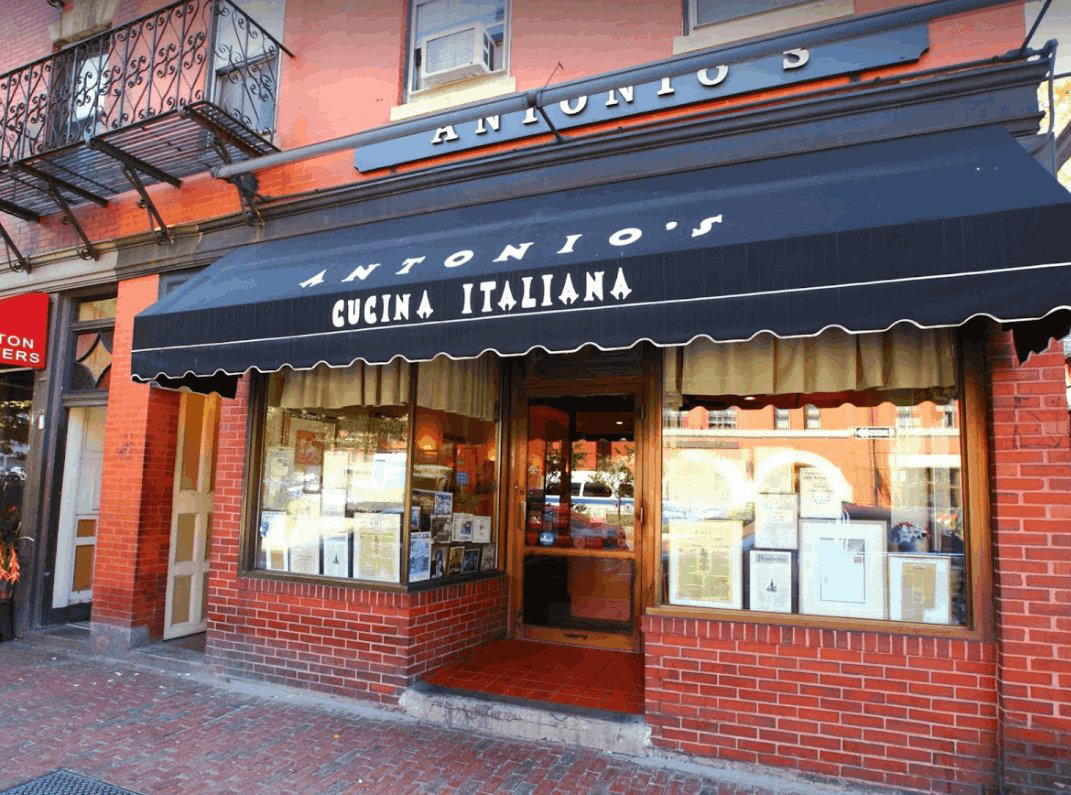
Cambridge Street and the Staying Power of Neighborhood Italian
Beacon Hill's Cambridge Street corridor sits at an interesting fault line in Boston dining: close enough to the financial district to catch expense-account traffic, yet residential enough that its restaurants are judged by repeat visits rather than debut buzz. Italian-American kitchens have anchored this kind of Boston street for generations, and Antonio's Cucina Italiano is a Boston restaurant at 288 Cambridge Street, serving Classic Italian Trattoria fare at a price point around $25 per person. The room keeps the focus on the food and the steady rhythm of service.
In Boston's current dining conversation, the dominant attention flows toward the harbor-facing concepts along the waterfront, the omakase counters of the South End, and tasting-menu formats. Venues like Agosto, with its Portuguese-inspired chef's counter, or 311 Omakase represent a tier of Boston dining where the format itself is part of the editorial story. Antonio's operates on different terms: the format is the familiar trattoria model, and the story is about consistency and the neighborhood relationship that sustains a restaurant over time.
Italian Dining in Boston: What the Category Actually Looks Like
Boston's Italian dining scene splits into at least three distinct tiers. At the leading sits a small cohort of modern Italian and Italian-influenced fine dining rooms, some of which carry Michelin recognition or appear in the city's prestige restaurant conversation. In the middle sits a large group of neighborhood trattorias and red-sauce institutions, many in the North End, where the competition is dense and the price points are closely matched. At the entry level, pizza-and-pasta operations compete on value and convenience. Antonio's positions in that middle tier, on Cambridge Street rather than Hanover Street, which means it draws from a slightly different residential catchment than the North End cluster.
The North End comparison is worth making directly. Boston's most concentrated Italian dining neighborhood packs dozens of restaurants into a few blocks, which creates a comparative-shopping dynamic that benefits diners. Cambridge Street, by contrast, operates with less direct competition from within the same cuisine category, which tends to reward restaurants that build loyalty through consistency rather than novelty. Across American cities, the Italian-American trattoria format has proven among the more durable restaurant models, sustaining neighborhood dining rooms through cycles of trend that have swept away more fashionable competitors. That durability is not incidental; it reflects a cuisine that travels well across economic registers and a format that rewards regulars without requiring them to adapt to new rules each visit.
The Sustainability Angle in Italian-American Cooking
The broader conversation around sustainability in restaurant kitchens has largely been driven by fine-dining formats: farm-to-table tasting menus at places like Blue Hill at Stone Barns in Tarrytown, the ingredient-sourcing discipline at Single Thread Farm in Healdsburg, or the hyper-regional ethics of Atelier Moessmer Norbert Niederkofler in Brunico. At the neighborhood level, the sustainability story is less visible but not less real. Italian cooking, in its classical form, is structurally suited to low-waste operations: slow-cooked ragùs built from secondary cuts, bread repurposed as thickeners and coatings, preserved vegetables that extend seasonal produce through colder months. These are not marketing positions; they are the practical economics of a cuisine developed in contexts where waste was not an option.
For a Cambridge Street Italian kitchen, the sourcing infrastructure matters. Massachusetts has a developed local agriculture network, and Boston restaurants across price tiers have greater access to regional produce, proteins, and dairy than in many American cities. The question for any neighborhood Italian operation is how much of that infrastructure it actually uses, and how much it relies on commodity supply chains that keep costs low but disconnect the kitchen from the regional food economy.
The more durable sustainability argument for neighborhood restaurants like this one is structural: a restaurant that survives on repeat local business rather than tourist traffic generates less transactional waste (fewer one-off experiences abandoned mid-evening, more kitchen planning based on known demand) and contributes more consistently to the local economic fabric. Operations like Smyth in Chicago or Lazy Bear in San Francisco have made sustainability a formal part of their editorial identity. For most neighborhood trattorias, the same principles operate quietly, without the press release.
Placing Antonio's in the Boston Restaurant Map
Boston's restaurant geography rewards understanding. The waterfront draws seafood-forward venues, with 1928 Rowes Wharf and 75 on Liberty Wharf anchoring the harbor-facing tier. The South End and Back Bay hold the city's steakhouse and upscale American dining contingent, represented by operations like Abe and Louie's. The more adventurous eating happens in pockets: Turkish at Sarma, Japanese at O Ya, the raw-bar intensity of Neptune Oyster in the North End. Antonio's on Cambridge Street sits outside most of these nodes, serving a Beacon Hill clientele that wants the reliability of a known kitchen within walking distance of home.
That positioning is not a limitation; it is a defined market. The neighborhood Italian model succeeds when the kitchen is consistent enough that regulars trust it without checking reviews each visit. The failure mode for this category is inconsistency: a kitchen that performs well on weekends but struggles mid-week, or one that holds its standards for a few years before the energy drops. The Cambridge Street location, in a neighborhood with stable residential demand and limited direct competition from within the Italian category, provides the conditions under which a well-run trattoria can sustain itself over time.
Planning Your Visit
Antonio's Cucina Italiano is at 288 Cambridge St, Boston, MA 02114, in the lower stretch of Beacon Hill close to the Charles/MGH Red Line station, which makes it accessible from most parts of the city without a car. Antonio's is open Mon through Sat from 11 AM to 10 PM and is closed Sunday; reservations are recommended. The format, a neighborhood Italian dining room rather than a reservation-intensive tasting counter, often allows for some walk-in flexibility, though weekend evenings can still be busy. Diners with dietary restrictions or allergy concerns should communicate these directly with the restaurant when booking or on arrival, as kitchen accommodations at this format level are generally handled on a case-by-case basis rather than through a fixed protocol.
A Tight Comparison
Comparable venues nearby, for context on price, style, and recognition.
| Venue | Cuisine | Price | Notes |
|---|---|---|---|
| Antonio's Cucina ItalianoThis venue — the venue you are viewing | West End, Classic Italian Trattoria | $$ | Not listed |
| Isabella | North End, Traditional Italian | $$ | Not listed |
| Ciao Roma | Not listed | $$ | North End, Southern Italian with Roman influences |
| The Salty Pig | Not listed | $$ | Back Bay, Italian Charcuterie & Wood-Fired Pizza |
| CeCarré Pizza & Provisions | Prudential, Pizza & Provisions | $$ | Not listed |
| Mast | Not listed | $$ | Downtown Crossing, Authentic Neapolitan Pizza & Southern Italian |
Continue exploring
More in Boston
Restaurants in Boston
Browse all →
Bars in Boston
Browse all →
Hotels in Boston
Browse all →

Wineries in Boston
Browse all →
At a Glance
- Cozy
- Classic
- Date Night
- Casual Hangout
- Historic Building
- Street Scene
Current opening hours
- Monday
- 11 AM–10 PM
- Tuesday
- 11 AM–10 PM
- Wednesday
- 11 AM–10 PM
- Thursday
- 11 AM–10 PM
- Friday
- 11 AM–10 PM
- Saturday
- 11 AM–10 PM
- Sunday
- Closed
Hours can change for holidays and private events. Last verified .
Cozy single-room space with warm lighting, helpful staff, and a welcoming neighborhood atmosphere.