Antojitos Guatemaltecos
On San Pablo Avenue in El Cerrito, Antojitos Guatemaltecos occupies a stretch of the corridor where Central American food culture has taken hold alongside the broader immigrant dining scene of the East Bay. The kitchen draws on Guatemalan home-cooking traditions, dishes built around corn, chiles, and slow-cooked proteins, in a neighborhood where that culinary lineage has limited representation.
Pearl is the En Primeur Club membership app — saves, bookings, and concierge access live there. Same editors, same standards.
- Address
- 11252 San Pablo Ave, El Cerrito, CA 94530
- Phone
- (510) 224-8018
- Website
- antojitosguatemaltecos.com
- Directions
- Get directions
 Saves & bookings on Pearl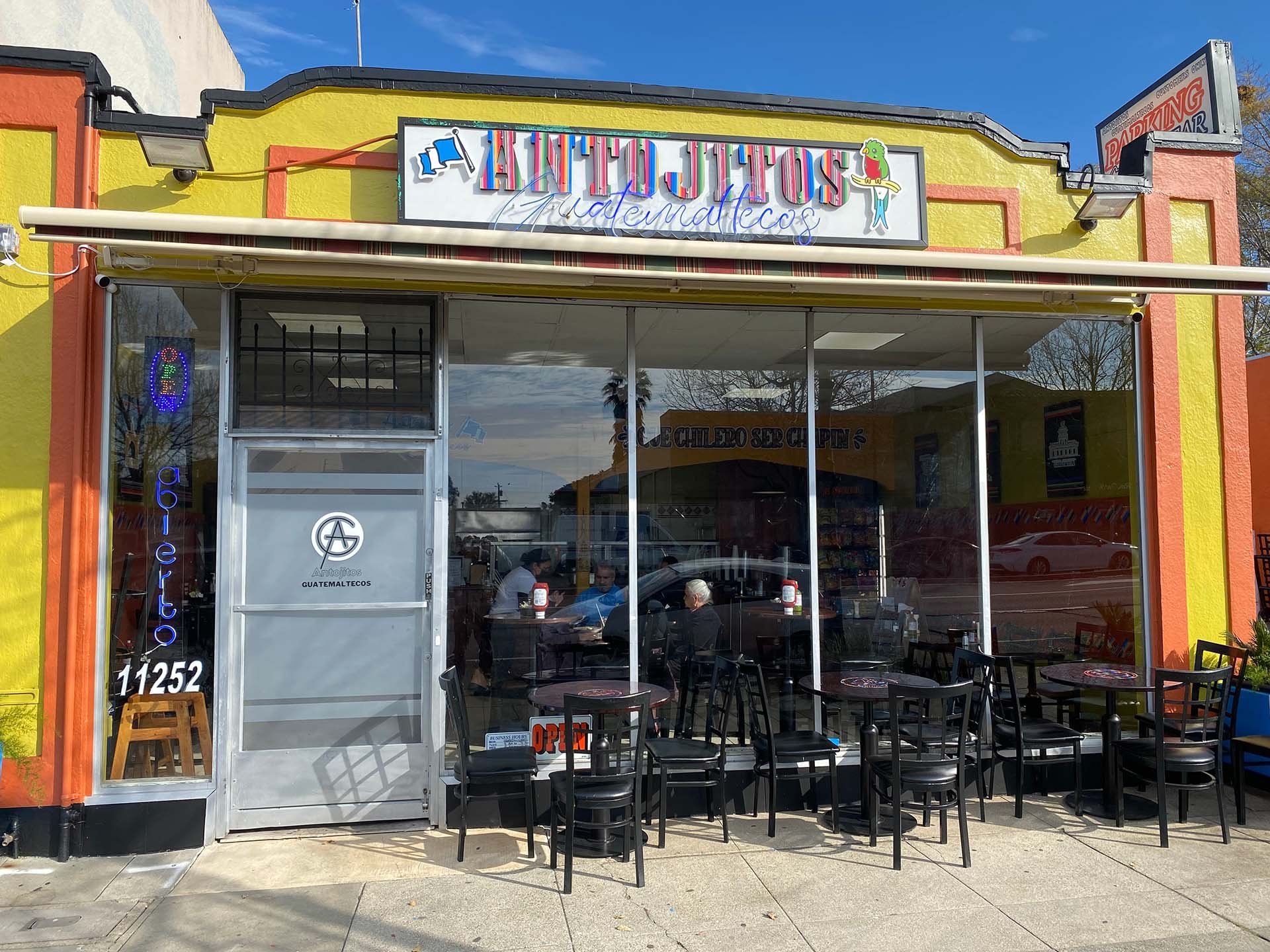
San Pablo Avenue and the Central American Counter
San Pablo Avenue in El Cerrito runs through one of the East Bay's more quietly diverse dining corridors, a strip where Korean tofu houses, Vietnamese pho shops, and Chinese kitchen tables sit within a few blocks of each other. Antojitos Guatemaltecos is a casual, walk-in-friendly restaurant at 11252 San Pablo Ave, El Cerrito, CA 94530, serving authentic Guatemalan food. In a corridor where Gangnam Tofu, Heng Heng Pho, and Little Hong Kong Restaurant each stake out a distinct culinary identity, this spot fills a gap that would otherwise go unaddressed in the neighborhood.
What Guatemalan Antojitos Actually Represent
The word antojito translates loosely as "little craving" and in Central American cooking it refers to the category of snack foods and street preparations that form the backbone of everyday eating: tostadas, tamales, chuchitos, rellenitos, and the corn-based preparations that have been present in Guatemalan food culture for centuries. This is not a cuisine of fine-dining presentations or composed plates. It is a cuisine of masa, slow-simmered beans, recado sauces built from dried chiles and charred tomatoes, and proteins cooked to tenderness over long periods. Those techniques place it in a broader pre-Columbian cooking tradition that runs from southern Mexico through Guatemala and into the rest of Central America, and what distinguishes the Guatemalan branch is a particular handling of spice, warm rather than aggressive heat, and a reliance on ingredients like chayote, plantain, and black beans that appear repeatedly across the menu.
In ingredient terms, Guatemalan cooking is disciplined about sourcing in a way that reflects its agricultural geography. Corn is not just a staple but a cultural anchor: Guatemalan maize varieties carry regional specificity, and the masa prepared from them behaves differently from commercially processed alternatives. The same logic applies to chiles, which in Guatemalan cooking are typically dried and rehydrated rather than used fresh, giving the sauces a depth that fresh-chile preparations rarely achieve.
Context in the East Bay's Central American Dining Scene
The Bay Area has a substantial Guatemalan population concentrated in Oakland, Richmond, and the surrounding East Bay cities, but the restaurant representation of that community has historically lagged behind its Mexican and Salvadoran counterparts. Spots like Antojitos Guatemaltecos serve a dual function: they operate as neighborhood resources for a diaspora community seeking specific flavors, and they act as entry points for diners who may have encountered Guatemalan food only through Mexican-adjacent contexts. The two traditions share ingredients but diverge sharply in preparation logic: Guatemalan cooking is less reliant on fresh citrus acid and more focused on the depth that comes from charring, slow reduction, and dried-chile infusion.
On San Pablo Avenue, the immediate comparable set at the more affordable end of the spectrum includes El Mono and Mugunghwa, each representing a distinct culinary tradition in a corridor that functions less as a restaurant destination and more as a working neighborhood eating strip. That context matters for understanding what Antojitos Guatemaltecos is and is not: it is not positioned for food tourists, and its value is more directly tied to the authenticity of its preparations than to any design or hospitality program.
The Ingredient Argument for Guatemalan Cooking
To understand why Guatemalan antojitos hold up as a category worth attention, consider what the ingredient logic produces in practice. Recado rojo, one of the foundational Guatemalan sauces, is built from a combination of dried chiles, roasted tomatoes, charred onion, and spices ground together to form a paste that is then cooked down in fat before being thinned with stock or water. The technique is labor-intensive and produces a sauce with a complexity that factory-made chile pastes cannot replicate. Similarly, the tamales of Guatemala differ from their Mexican counterparts in that they are typically wrapped in banana leaves rather than corn husks, a distinction that imparts a faint vegetal note to the masa and changes the steaming environment around the filling. These are not superficial differences: they reflect distinct agricultural contexts and preparation traditions that have evolved independently over generations.
Black beans in Guatemalan cooking are often cooked to the point of near-dissolution and then either left whole in their liquid or passed through a process that produces volteados, a preparation in which the cooked beans are fried in fat and turned out as a solid mass. The resulting texture is dense and concentrated, far removed from the loose bean preparations more common in other Central American traditions. That kind of ingredient specificity is what separates a kitchen working within its tradition from one offering a generalized approximation of it.
Placing This Within a Wider Dining Conversation
Places like Blue Hill at Stone Barns in Tarrytown, Single Thread Farm in Healdsburg, or Smyth in Chicago make sourcing a visible, narrativized part of the dining experience, with provenance listed on menus and relationships with specific farms foregrounded. Guatemalan antojito cooking achieves its ingredient integrity through a different mechanism: through the accumulated logic of a cooking tradition rather than through conscious procurement theater. The recado is made the way it is because that is how it has always been made, not because a chef made an ideological decision about sourcing. That is a different kind of integrity, and a more durable one. For comparison with other fine-dining contexts in the United States, venues like The French Laundry in Napa, Le Bernardin in New York City, Providence in Los Angeles, Addison in San Diego, Lazy Bear in San Francisco, Emeril's in New Orleans, The Inn at Little Washington, Atomix in New York City, and Atelier Moessmer Norbert Niederkofler in Brunico each represent the opposite end of the formality and price spectrum, but the underlying question of where ingredients come from and what that means is shared across all of them.
Visit Details
Antojitos Guatemaltecos is located at 11252 San Pablo Ave, El Cerrito, CA 94530, on a stretch of the avenue that is accessible by the 72 AC Transit line running along San Pablo. Walk-in visits are the practical approach. Hours run Monday 8 AM to 8 PM and Tuesday through Sunday 8 AM to 9 PM. This is a casual setting suited to a neighborhood antojito spot.
Quick Comparison
Comparable venues nearby, for context on price, style, and recognition.
| Venue | Cuisine | Price | Notes |
|---|---|---|---|
| Antojitos GuatemaltecosThis venue — the venue you are viewing | Authentic Guatemalan | $$ | Not listed |
| El Mono | Traditional Peruvian | $$ | El Cerrito |
| Gangnam Tofu | Authentic Korean Tofu House | $$ | San Pablo Ave |
| Mugunghwa | Korean | $$ | San Pablo Ave |
| Happy Golden Bowl | Authentic Sichuan Noodles | $ | El Cerrito |
| Yuet Foo Seafood Restaurant | Chinese Seafood | $$ | El Cerrito |
Continue exploring
More in El Cerrito
Restaurants in El Cerrito
Browse all →
Bars in El Cerrito
Browse all →
Hotels in El Cerrito
Browse all →


At a Glance
- Cozy
- Rustic
- Family
- Casual Hangout
Current opening hours
- Monday
- 8 AM–8 PM
- Tuesday
- 8 AM–9 PM
- Wednesday
- 8 AM–9 PM
- Thursday
- 8 AM–9 PM
- Friday
- 8 AM–9 PM
- Saturday
- 8 AM–9 PM
- Sunday
- 8 AM–9 PM
Hours can change for holidays and private events. Last verified .
Cozy and welcoming atmosphere well-suited for enjoying Central American comfort food.