Mugunghwa
Our verdict
Mugunghwa on San Pablo Avenue brings Korean cooking to El Cerrito's diverse dining corridor, where the name itself — Korea's national flower — signals a cultural specificity worth noting. The restaurant sits within a stretch that includes Vietnamese, Chinese, and Guatemalan options, making it part of a broader shift toward substantive ethnic dining in the East Bay's smaller cities.

Pearl is the En Primeur Club membership app — saves, bookings, and concierge access live there. Same editors, same standards.
- Address
- 10140 San Pablo Ave, El Cerrito, CA 94530
- Phone
- (510) 989-5019
- Hours
- Mon–Thu 11 AM–9 PMFri–Sat 11 AM–9:30 PMSun 11 AM–9 PM
- Website
- mugunghwago.site
- Directions
- Get directions
Korean Cooking on San Pablo: What the Name Signals
San Pablo Avenue runs like a spine through the inner East Bay, and the stretch through El Cerrito is one of the more instructive cross-sections of how immigrant and diaspora communities have shaped dining in cities that sit just north of Berkeley's gravitational pull. Korean, Vietnamese, Chinese, and Central American kitchens operate within blocks of each other here, each drawing on distinct traditions rather than converging toward a generic "international" offer. Mugunghwa, at 10140 San Pablo Ave, announces its cultural allegiances immediately in its name: mugunghwa is the rose of Sharon, Korea's national flower, a symbol that carries resonance in Korean civic and artistic life well beyond decoration. A restaurant choosing that name is positioning itself relative to Korean identity at a specific register.
That kind of naming choice matters in a city like El Cerrito, where Korean dining options are fewer than in neighboring cities with larger Korean-American populations. The East Bay's Korean dining tends to concentrate around Oakland's Temescal and the cities along the 880 corridor further south; an operation on San Pablo in El Cerrito occupies a somewhat different position, serving both a local residential community and the kind of curious diner who moves along the corridor looking for specificity over convenience.
Korean Cuisine in the East Bay: A Wider Frame
Korean cooking in the United States has undergone a substantial re-evaluation over the past decade. The casual KBBQ format — tabletop grills, banchan spread across the table, the social rhythm of communal cooking — remains the dominant popular mode, but it exists alongside a growing body of restaurants that present more regionally specific or technique-focused Korean food. Cities with established Korean-American communities, like Los Angeles's Koreatown or New York's Flushing, have long supported this range. In the Bay Area, the spectrum runs from large KBBQ halls in Daly City and the South Bay to smaller, more considered operations in San Francisco and Oakland.
For context on how Korean cuisine has performed at the highest levels of American fine dining recognition, Atomix in New York City has demonstrated that Korean culinary tradition can anchor a two-Michelin-star format with international standing. That benchmark matters not because every Korean restaurant should aspire to tasting-menu format, but because it illustrates how seriously Korean culinary tradition is now taken within American dining culture at large. El Cerrito's Korean options, including Mugunghwa and the nearby Gangnam Tofu, operate in a very different register, neighborhood-scale, accessible, but they belong to the same broader story of Korean food finding its footing in American cities outside the traditional coastal Korean-American hubs.
The San Pablo Corridor as a Dining Context
Understanding Mugunghwa means understanding the block it occupies. San Pablo Avenue through El Cerrito is not a dining destination in the way that Berkeley's Shattuck Avenue or Oakland's Temescal are, with the foot traffic and editorial attention those corridors attract. It is a working commercial strip, and the restaurants along it succeed primarily on community loyalty and word of mouth rather than on press coverage or awards infrastructure. That dynamic tends to produce a different kind of reliability: kitchens on strips like this one are accountable to returning regulars in a direct way that destination restaurants are not.
The dining variety on this stretch is genuine. Antojitos Guatemaltecos represents Central American cooking that is relatively rare even in Bay Area cities with diverse immigrant populations. Heng Heng Pho covers the Vietnamese end of the spectrum, while Little Hong Kong Restaurant and El Mono extend the range further. Mugunghwa sits within this pattern: a specialist operation drawing on a specific culinary tradition, in a corridor where that specificity is the norm rather than the exception. Visitors to El Cerrito's dining scene benefit from reading this block as a whole rather than isolating any single venue. Our full El Cerrito restaurants guide maps the corridor and its options in more detail.
What Korean Food Means at This Scale
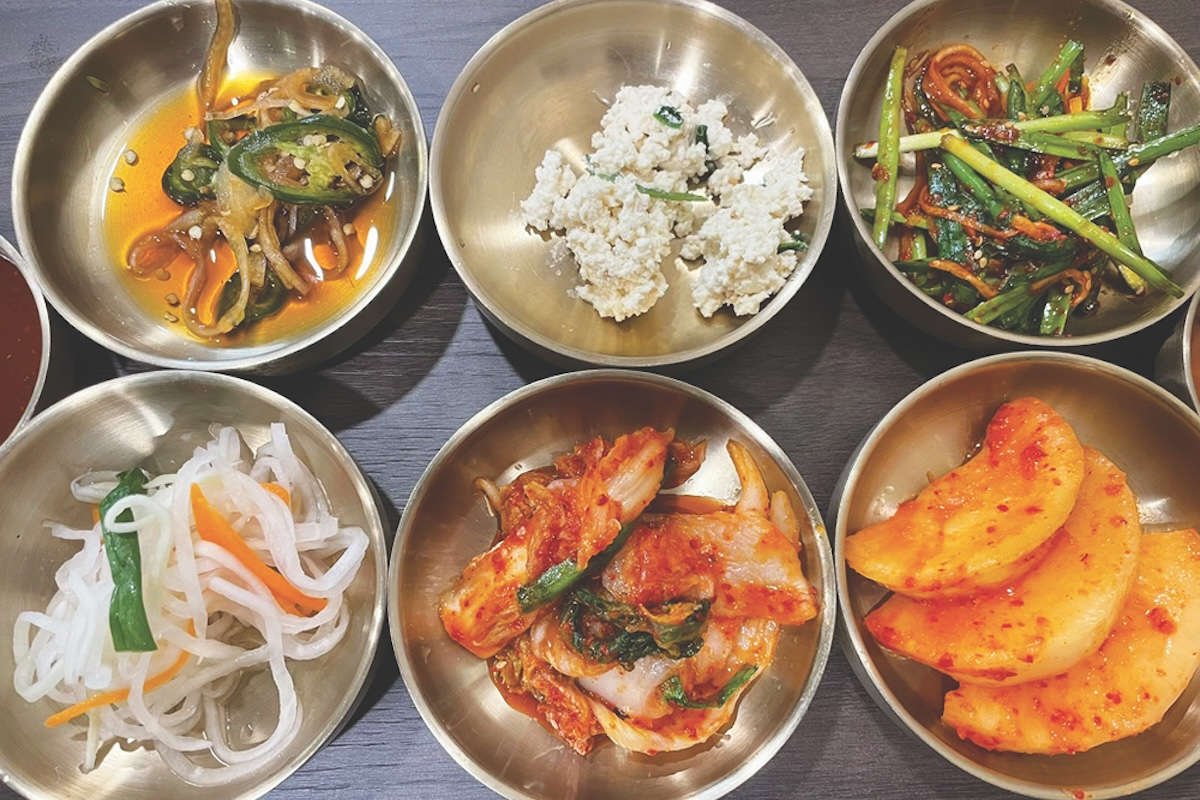
The cultural weight of Korean cuisine is not incidental to understanding a restaurant named after the national flower. Korean food carries a sophisticated internal grammar: the role of fermentation across kimchi and doenjang; the discipline of banchan as a supporting structure for a meal rather than as an afterthought; the way soups like doenjang jjigae or seolleongtang function as both comfort food and technically demanding preparations. These traditions have been sustained in Korean-American communities through home cooking and community restaurants long before Korean cuisine attracted broader American critical attention.
Neighborhood Korean restaurants, operating without the award infrastructure that surrounds operations like The French Laundry in Napa, Lazy Bear in San Francisco, or Single Thread Farm in Healdsburg, nonetheless carry genuine culinary knowledge. The absence of Michelin stars or press profiles does not indicate a lower standard of cultural authenticity; it indicates a different position in the dining ecosystem. For a diner interested in Korean food at the community scale rather than the tasting-menu scale, a restaurant like Mugunghwa is doing work that Providence in Los Angeles, Addison in San Diego, or Le Bernardin in New York City simply are not.
Planning a Visit
Mugunghwa is located at 10140 San Pablo Ave, El Cerrito, CA 94530, directly on the main commercial corridor with street parking available along San Pablo and on side streets. El Cerrito has two BART stations, El Cerrito Plaza and El Cerrito del Norte, and the San Pablo corridor is accessible from both, making the restaurant reachable without a car for visitors coming from Berkeley, Oakland, or San Francisco. Given the neighborhood-scale nature of the operation and the absence of a published reservations platform in the available record, walk-in visits are the practical approach; calling ahead during peak dinner hours is advisable for groups.
Frequently asked questions
Where is Mugunghwa in El Cerrito?
Mugunghwa is located at 10140 San Pablo Ave, El Cerrito, CA 94530, El Cerrito.
Is Mugunghwa a good option for Korean food near Richmond, CA?
El Cerrito sits directly south of Richmond on San Pablo Ave, making Mugunghwa at 10140 San Pablo Ave one of the closer Korean dining options for Richmond residents without requiring a trip to Oakland or Berkeley. The East Bay's Korean restaurant presence has historically concentrated further south, so the San Pablo corridor placement gives this spot a degree of local relevance for the north-inner-Bay community.
What should I order at Mugunghwa?
The restaurant's name references the mugunghwa, South Korea's national flower, which signals a kitchen oriented toward traditional Korean cooking rather than the casual KBBQ format that dominates the American market. Without a published menu on record, the safest approach is to ask the kitchen what is prepared fresh that day. Korean restaurants at this neighbourhood scale on San Pablo Ave typically anchor their offering around rice-based meals, stews, and banchan side dishes rather than tableside grilling.
Can I walk in to Mugunghwa?
Mugunghwa sits directly on San Pablo Ave at 10140 San Pablo Ave, El Cerrito, CA 94530, with street parking along the main commercial corridor. Smaller Korean kitchens at this address type tend to have limited seating, so arriving early in a service window reduces the risk of a wait.
What makes Mugunghwa worth seeking out?
San Pablo Avenue through El Cerrito is not a restaurant row built for destination dining, which means the places that survive there do so on neighbourhood loyalty rather than foot traffic from tourists. A Korean restaurant named after the national flower, operating on this corridor, is positioned within a tradition-conscious segment of the cuisine rather than the trend-driven end. The East Bay has seen Korean cooking gain serious critical attention over the past decade, and smaller independent operators like Mugunghwa represent the less-covered side of that shift.
A Pricing-First Comparison
Comparable venues nearby, for context on price, style, and recognition.
| Venue | Cuisine | Price | Notes |
|---|---|---|---|
| MugunghwaThis venue — the venue you are viewing | Korean | Not listed | Not listed |
| Gangnam Tofu | Authentic Korean Tofu House | $20–30 | San Pablo Ave, Authentic Korean Tofu House |
| Romano's Macaroni Grill | Italian Trattoria | $20–30 | El Cerrito Plaza, Italian Trattoria |
| El Mono | Traditional Peruvian | $20–30 | El Cerrito, Traditional Peruvian |
| Yuet Foo Seafood Restaurant | Chinese Seafood | Not listed | El Cerrito, Chinese Seafood |
| Heng Heng Pho | Vietnamese Pho & Sandwiches | Not listed | San Pablo Avenue, Vietnamese Pho & Sandwiches |
Continue exploring
More in El Cerrito
Restaurants in El Cerrito
Browse all →
Bars in El Cerrito
Browse all →
Hotels in El Cerrito
Browse all →
Details
- Cozy
- Casual Hangout
- Family
- A La Carte
Current opening hours
- Monday
- 11 AM–9 PM
- Tuesday
- 11 AM–9 PM
- Wednesday
- 11 AM–9 PM
- Thursday
- 11 AM–9 PM
- Friday
- 11 AM–9:30 PM
- Saturday
- 11 AM–9:30 PM
- Sunday
- 11 AM–9 PM
Hours can change for holidays and private events. Last verified .
Celebratory and comforting Korean dining atmosphere.