Tabelog 100 #56
Our verdict
Angetsu belongs to Osaka’s older wagashi tradition rather than its louder street-food mythology: a small Higashishinsaibashi sweets address with seven seats, take-out service, and recognition in Tabelog’s 2023 Japanese traditional sweets and sweets-cafe selection for western Japan. Its appeal is cultural as much as culinary, useful for travelers who want Osaka beyond grill smoke, ramen queues, and department-store dessert counters.

Pearl is the En Primeur Club membership app, where members save venues, book tables and use the concierge.
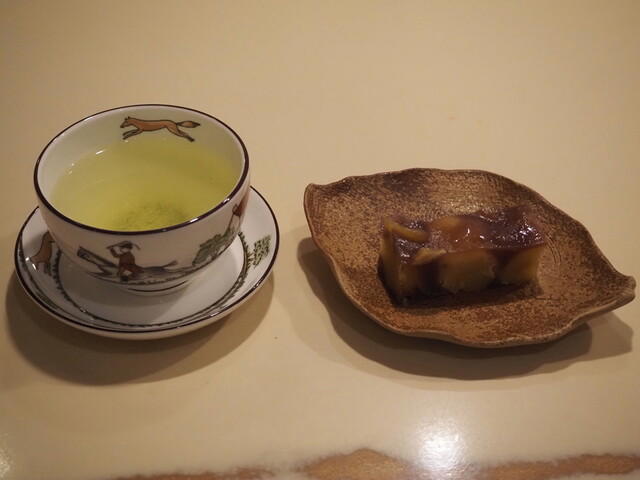
Higashishinsaibashi changes character quickly: retail corridors, late-night restaurants, and the pull of Namba sit close together, but the older Osaka habit of buying sweets as gifts or taking tea between errands has not disappeared. In that context, a small wagashi address with only seven seats reads differently from a dessert stop. It belongs to a craft tradition built around seasonality, presentation, restraint, and the social role of sweets in Japanese hospitality.
Osaka’s food reputation often leans toward appetite and immediacy: okonomiyaki, kushikatsu, takoyaki, pork buns, grills, and late counters. Wagashi asks for another tempo. The point is not excess; it is calibration. Sweetness is measured against tea, texture carries as much importance as flavor, and a purchase may function as a domestic gift as much as a personal snack. Angetsu sits inside that quieter register, with a Tabelog 100 selection for Japanese traditional sweets and sweets cafes in western Japan in 2023, plus earlier recognition in the sweets category in 2019.
Osaka's quieter sweets culture, measured against the city's louder appetite
The useful way to read this address is by category. A Tabelog score of 3.66 in Japanese traditional sweets does not place it in the same conversation as a kaiseki room or a late-night grill; it places it among craft-led confectioners where consistency, gifting culture, and repeat local custom matter. The comparison is less about dinner prestige than about how Japanese cities preserve older food rituals in commercial districts that have otherwise become faster and brighter.
That distinction matters in Osaka. A traveler can build a city itinerary around combustion and savory depth, then miss the parallel world of confectionery entirely. Wagashi shops provide the pause between the meal and the next district: something purchased for later, something eaten with tea, something chosen for its form and season rather than portion size. The format here is compact and practical, with take-out part of the service model, so the experience fits the rhythm of central Osaka rather than demanding a formal restaurant evening.
Among the comparison set in Osaka, the contrast is instructive. Grill Baranoki operates in a higher savory dining bracket, Noro sits in a markedly more expensive range, Yoshitaka signals the oden tradition, Sui Okazaki points toward Japanese dining, and Momen belongs to kaiseki. A wagashi specialist occupies a different lane: lower ceremony than kaiseki, less hunger-driven than a grill, and more tied to custom than trend. That is why the recognition carries weight. It identifies a category that many visitors overlook because it does not resemble the city’s dominant food shorthand.
A seven-seat format that keeps the focus on craft rather than spectacle
Small capacity changes expectations. Seven seats do not create a long tasting-menu performance; they make the room closer to a pause, a purchase, or a short sweets-and-tea interval. In Japanese confectionery, that brevity is not a weakness. It aligns with a tradition where the object itself carries the labor: shaping, balance, finish, wrapping, and timing. The setting also helps explain why take-out is not secondary. In wagashi culture, carrying sweets away is often part of the point, especially in a city where department stores, office districts, and family visits sustain a serious gift economy.
The opening date attached to the business, 1868, gives the address historical depth without requiring nostalgia to do the work. That year also marks the beginning of the Meiji period, when Japan’s urban food culture began absorbing new influences while older confectionery practices continued to adapt. For the reader, the date is useful less as romance than as a signal of continuity. Osaka is not only a city of new restaurant openings and reservation contests; it also has food institutions that survived because they remained useful to daily life.
The editorial case is therefore clear: seek this out when the itinerary needs a cultural counterweight. Not every Osaka food stop should be a table with a queue, a chef’s counter, or a late reservation. A short visit to a recognized wagashi specialist gives structure to the afternoon and adds a different vocabulary to the trip: confectionery as season, gift, and craft object rather than dessert as finale.
Where it fits in a wider Osaka plan
Central Osaka rewards category-switching. For the broader restaurant map, start with Our full Osaka restaurants guide, then use specialist addresses to vary pace: 551 Horai (551蓬莱) for the city’s famous pork-bun lane, 52CHO-ME BAKERY for baking, .cafe for cafe culture, 99 Pizza Napoletana Gourmet for imported technique, and a canto (Italian) for Osaka’s Italian dining thread. For trip architecture beyond restaurants, the city pages for Osaka hotels, Osaka bars, Osaka wineries, and Osaka experiences help keep the day from becoming a list of meals.
For readers comparing Japanese food culture across cities, the contrast widens outside Osaka: -Grilled beef Sukiyaki- KAMAKURA TANUKIAN 鎌倉 たぬき庵 in Kamakura. 鮪と炭火焼き うお炭 秋葉原店 in Tokyo.know in Kumamoto, (Shoku) Vietnam in Kawasaki, [Curry Senmon Ten] Maruyama Kyoju. in Sapporo, and [ki:] in Kyoto show how regional dining categories shift by city. Abroad, Jōdo Saké Bar in Los Angeles and Onigiri Time in Pasadena make a useful diaspora comparison, where Japanese food traditions are translated through bar and casual formats rather than inherited neighborhood custom.
Frequently asked questions
Where exactly is Angetsu?
Angetsu is located in Osaka.
What price level is Angetsu?
Pricing at Angetsu is listed as JPY 2,000 - JPY 2,999 JPY 2,000 - JPY 2,999.
What time does Angetsu open and close?
Hours at Angetsu: Mon: 10 AM–8 PM; Tue: 10 AM–8 PM; Wed: 10 AM–8 PM; Thu: 10 AM–8 PM; Fri: 10 AM–8 PM; Sat: 10 AM–8 PM; Sun: Closed.
What makes Angetsu worth seeking out?
Angetsu carries a Tabelog 100 selection for Japanese traditional sweets / Japanese sweets cafe in the WEST 2023 list, which gives it immediate local weight. The seven-seat format at 2 Chome-8-29 Higashishinsaibashi keeps the experience compact, and the price sits in the JPY 2,000–JPY 2,999 range.
What if I have allergies at Angetsu?
Call 06-6211-0221 before ordering and state the allergy clearly, since Angetsu operates as a Japanese traditional sweets spot with take-out service and a small seven-seat room. The website is angetsu.co.jp, which is the other practical starting point for checking ingredients before you go.
Is Angetsu okay with children?
The room is small, with seven seats and a take-out format, so it suits a short, low-key stop rather than a long sit-down. Families usually do better here if children are comfortable in a compact sweets shop in central Osaka.
Cuisine and Recognition
Comparable venues to calibrate price, style, and recognition.
| Venue | Cuisine | Price | Awards | Notes |
|---|---|---|---|---|
| AngetsuThis venue (the venue you are viewing) | Traditional Japanese Wagashi (Confectionery) | $10–20 | Tabelog 100 #56 | Not listed |
| Honneri Kwashi Suiren isshin | Japanese traditional sweets (wagashi) & cafe | Not listed | Tabelog 100 #96 | Chūō |
| Yuiitsu Muni no Ramen Senmon Ten Ibukuro Washizukami | Specialty Ramen Shop | $10–20 | Tabelog 100 #61 | Tennōji |
| Gokuraku Udon TKU | Udon & curry udon specialist | $10–20 | Tabelog 100 #7 | Higashinari |
| Fu-n@ | Japanese Shokudo / Teishoku | Not listed | Tabelog 100 #44 | Kita |
| Hagu Ne | Japanese Curry Shop | $10–20 | Tabelog 100 #40 | Kita |
Recognition history
Dated appearances from independent guides and award organizations, with the underlying list record or original source where available.
Tabelog 100 #56 · No. 56
Tabelog · Tabelog 100 - Japanese traditional sweets / Japanese sweets cafe - WEST - 2023