Alebrije occupies a Harbord Street address in Toronto's Annex-adjacent dining corridor, where Mexican-rooted cooking sits alongside some of the city's most competitive restaurant real estate. The kitchen draws on ingredient traditions that run deeper than the usual Tex-Mex register, placing it in a different conversation than the neighbourhood's European-leaning rooms.
Pearl is the En Primeur Club membership app — saves, bookings, and concierge access live there. Same editors, same standards.
- Address
- 119 Harbord St, Toronto, ON M5S 1G7, Canada
- Phone
- +16473477747
- Website
- alebrijetoronto.com
- Directions
- Get directions
 Saves & bookings on Pearl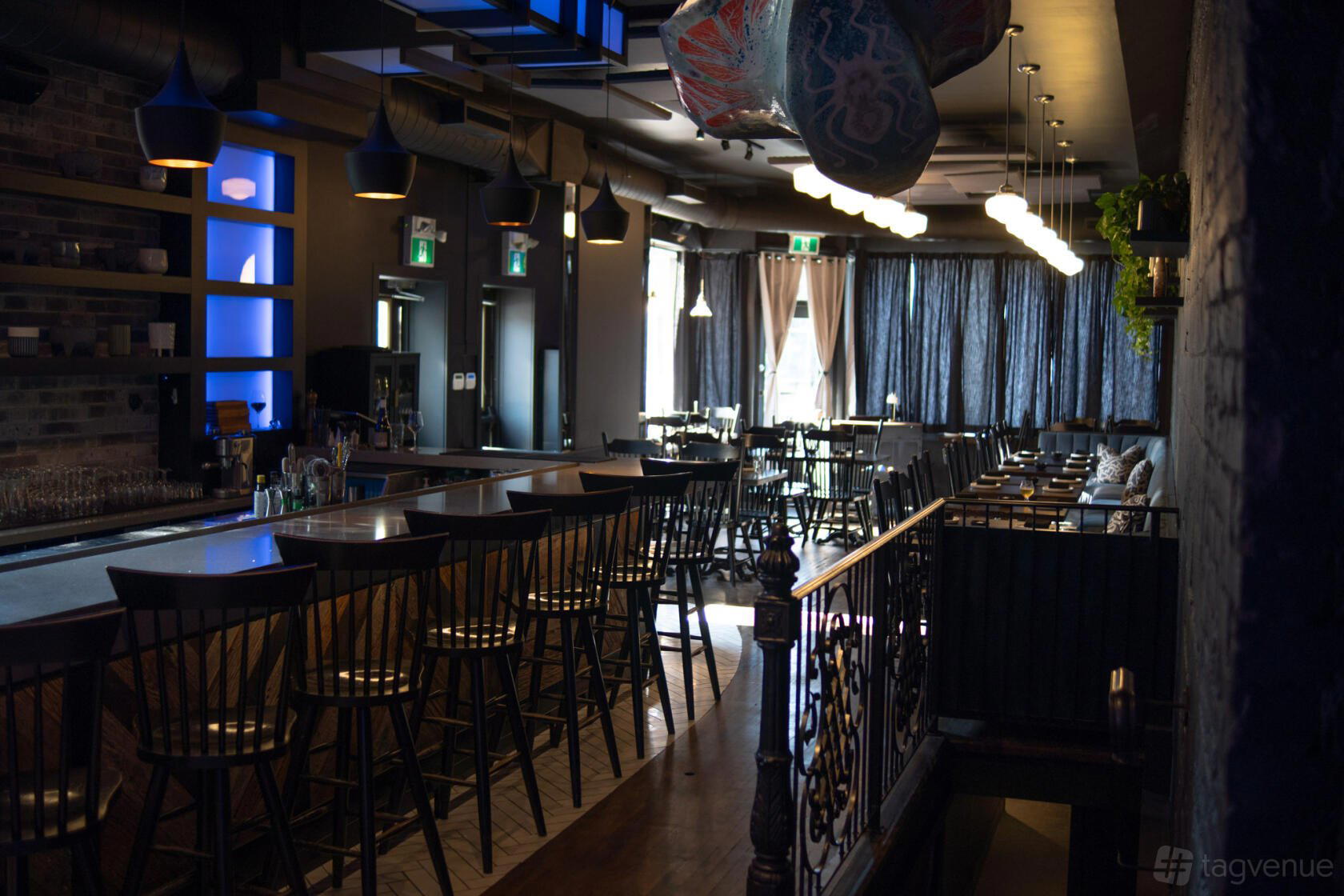
Harbord Street and the Question of What Mexican Cooking Can Be in Toronto
The restaurants that hold ground here tend to do so by occupying a specific, defensible position in the city's broader dining conversation. Alebrije, at 119 Harbord St, holds a position that remains relatively rare in Toronto at this price tier: a kitchen working in a Mexican culinary tradition that reaches past the simplified, north-of-the-border version of that cuisine most Canadian dining rooms still serve.
The high-end rooms Toronto has recognised most loudly over the past decade, places like Alo or the Japanese-counter tier occupied by Sushi Masaki Saito and Aburi Hana, operate in culinary traditions with deep local audiences and decades of critical vocabulary already built around them. A kitchen working seriously in Mexican traditions has to build that vocabulary as it goes, which is both a constraint and, for a certain kind of diner, a genuine draw.
Ingredient Logic: Where the Food Comes From and Why the Question Matters
Mexican cooking at its most considered is fundamentally an ingredient-driven cuisine: the particular variety of dried chile, the provenance of the corn, the age and regional origin of a mole's base all determine the dish in ways that have no equivalent in, say, a French cream sauce where technique carries more of the weight. Restaurants working seriously in this tradition are forced to make sourcing decisions that are unusually consequential.
In Toronto, that creates a logistical challenge that does not apply equally to European-lineage kitchens. The choice between those two approaches defines what kind of Mexican restaurant a kitchen actually is. Rooms that import with discipline tend to produce food that reads as authentically grounded; rooms that substitute without acknowledgment tend to flatten into generic territory regardless of technique.
For context, particularly ingredient-committed kitchens in Canada's broader restaurant scene, places like Tanière³ in Quebec City or Restaurant Pearl Morissette in Lincoln, treat sourcing as the primary editorial statement of the kitchen. The same logic applies here, even if the tradition is different.
The Harbord Street Room: What the Address Signals
That positioning has its own competitive logic. The Italian-leaning rooms in the broader neighbourhood, including DaNico and Don Alfonso 1890, operate at the $$$$ tier with tasting-menu formats and long lead times. A Mexican kitchen at a more accessible price point and format is not competing for the same booking, it is filling a gap in the neighbourhood's offer.
Where Alebrije Sits in the Canadian Restaurant Picture
Nationally, particularly discussed restaurants in Canada's serious-dining tier tend to cluster around European technique applied to Canadian product, or Japanese-lineage precision at counter format. The outliers, kitchens that work in traditions not typically associated with white-tablecloth dining in this country, occupy a smaller but growing niche. Eigensinn Farm in Singhampton built its reputation on farm-sourced produce decades before that framing became common; Fogo Island Inn Dining Room in Joe Batt's Arm made hyper-local Newfoundland product its entire argument. These rooms matter because they demonstrate that serious cooking is not exclusively a European or Japanese franchise.
Alebrije's argument, if the kitchen is making it consistently, belongs in the same category of places that ask: what does this specific culinary tradition look like when it is taken seriously on Canadian terms? The answer, in Mexican cooking, has to do with dried chiles, masa, and the long-cooked sauces that are the tradition's backbone, not with the grilled-protein-and-salsa format that dominates the mass market.
Internationally, the clearest models for what a rigorous Mexican kitchen can achieve in a diaspora city come from rooms in New York and London that have spent years building sourcing networks and kitchen literacy around ingredients that do not arrive easily. The contrast with rooms like Le Bernardin in New York City, where ingredient sourcing is equally obsessive but within a tradition that has full institutional support in North America, illustrates just how much more work a Mexican kitchen has to do to achieve comparable depth.
Planning Your Visit
How Alebrije Compares to Nearby Dinner Options
| Venue | Cuisine | Price Tier | Format |
|---|---|---|---|
| Alebrije | Mexican | N/A | N/A |
| Alo | Contemporary | $$$$ | Tasting menu |
| DaNico | Italian | $$$$ | À la carte / tasting |
| Don Alfonso 1890 | Contemporary Italian | $$$$ | Tasting menu |
| Aburi Hana | Kaiseki, Japanese | $$$$ | Kaiseki counter |
Recognition Snapshot
Comparable venues nearby, for context on price, style, and recognition.
| Venue | Cuisine | Price | Notes |
|---|---|---|---|
| AlebrijeThis venue — the venue you are viewing | Modern Mexican Fine Dining | $$$ | Not listed |
| MEXHICO | Contemporary Mexican | $$$ | Kensington-Chinatown |
| Tulum Mexican Restaurant | Authentic Mexican | $$$ | Entertainment District |
| Fonda Balam | Authentic Mexican Taqueria | $$ | Little Italy |
| Añejo Restaurant | Modern Mexican with Tequila Focus | $$ | Fashion District |
| Fonda Lola | Modern Mexican Cantina | $$ | Trinity Bellwoods |
Continue exploring
More in Toronto
Restaurants in Toronto
Browse all →
Bars in Toronto
Browse all →
Hotels in Toronto
Browse all →


At a Glance
- Cozy
- Elegant
- Whimsical
- Trendy
- Date Night
- Special Occasion
- Group Dining
- Private Dining
- Open Kitchen
- Craft Cocktails
- Local Sourcing
Current opening hours
- Monday
- Closed
- Tuesday
- 5–9:30 PM
- Wednesday
- 5–9:30 PM
- Thursday
- 5–9:30 PM
- Friday
- 5–10 PM
- Saturday
- 5–10 PM
- Sunday
- Closed
Hours can change for holidays and private events. Last verified .
Warm intimate setting with exposed brick walls, charcoal brick, dark-stained tables, velvet seating, soft lighting, and colorful Mexican artwork featuring fantastical creatures.