
Michelin Plate
Our verdict
A Phra Nakhon institution since 1975, Aheesah Roddee has held a Michelin Plate in both 2024 and 2025 for its Indonesian-inspired cooking rooted in migrant culinary tradition. The menu centers on aromatic biryanis and satay at prices accessible to the neighbourhood. A rare example of Bangkok's Southeast Asian immigrant food culture earning formal recognition.

Pearl is the En Primeur Club membership app, where members save venues, book tables and use the concierge.
The menu
What to order
- Beef khao mok
- Chicken biryani
- Beef satay
Where Old Bangkok Eats Like It Always Has
Thanon Tani sits in Phra Nakhon, the district that holds the old royal city, and the street carries that layered, slightly compressed energy common to Bangkok neighbourhoods where temples, schools, and family-run kitchens have coexisted for generations. At number 103-105, Aheesah Roddee occupies a shophouse format that belongs to the same urban grammar as the rest of the block: functional, lived-in, oriented entirely around the food rather than any designed impression of itself. This is a part of the city where the dining ritual begins before you sit down, in the queue, in the smell of spice that reaches the pavement, in the knowledge that a table here is earned by showing up rather than by booking ahead.
The Immigrant Kitchen as Bangkok Institution
Bangkok's food culture has long been shaped by communities whose origins lie outside Thailand. The city's Chinatown is the most documented example, but the contribution of Indonesian, Malay, and South Asian migrant families to the capital's cooking runs equally deep, if less publicised. Aheesah Roddee traces directly to that current. Helmed by the son of Indonesian migrants, the restaurant has been operating since 1975, which places it inside a generation of Bangkok kitchens that predates the city's current international restaurant scene by several decades.
That history matters for understanding what the food represents. This is not Indonesian cuisine reinterpreted for a Bangkok audience, nor is it a heritage concept deployed as a point of difference in a competitive market. It is the food that a family cooked, refined over decades, and continued to serve to the same neighbourhood. The Michelin Plate recognition it received in both 2024 and 2025 did not change that character; it simply made legible to a broader audience what the local clientele already knew.
The Ritual of the Biryani Counter
Indonesian-influenced biryani in Bangkok occupies a specific sensory register. The spicing tends toward warmth and depth rather than heat, with cardamom, clove, and dried fruit threading through the rice in a way that reflects South and Southeast Asian trade routes more than any single national tradition. At Aheesah Roddee, the menu is built around chicken and beef biryani as its central offering, flanked by satay and a hot and sour beef soup that functions as both counterpoint and companion to the rice dishes.
The dining ritual here follows the logic of the food. Biryani at this price point and in this setting is not a leisurely multi-course meal; it is a focused, deliberate act of eating. You arrive with an understanding of what you want, you order with the directness the format expects, and the meal proceeds at a pace set by the kitchen rather than by table management. The pairing of chicken biryani with the hot and sour beef soup is the combination the restaurant itself points toward, and it reflects a structural intelligence about the meal: the aromatic density of the rice against the acidic, bright character of the soup creates a balance that neither dish achieves alone.
Satay adds a further register. In the Indonesian tradition that informs this kitchen, satay is not an appetiser in the Western sense but a parallel protein, grilled to order and served with its own sauce architecture. Eating across these dishes at once, rather than sequentially, is closer to the intended rhythm of the meal.
Where This Sits in Bangkok's Recognition Map
The Michelin Plate, awarded in Bangkok since the guide's Thailand debut, signals technical competence and consistency rather than the fine-dining ambition of a starred entry. Aheesah Roddee holds that recognition at the single-baht price tier, which places it in a category almost entirely distinct from the city's starred restaurants. At the other end of Bangkok's Michelin spectrum, restaurants such as Sorn (Southern Thai), which holds three stars, and Baan Tepa (Thai contemporary), with two, operate at the ฿฿฿฿ tier, commanding per-head spends that reflect tasting menu formats and extensive kitchen brigades. Gaa (Modern Indian), Sühring (German), and Côte by Mauro Colagreco occupy the same upper tier, with two stars each.
Aheesah Roddee does not compete with any of those. Its recognition points to a different dimension of what Bangkok's food culture contains: the long-running, family-operated immigrant kitchen that achieves quality through repetition and fidelity rather than through technique signalling. In that category, a Michelin Plate sustained across two consecutive years carries real weight.
Across Thailand, the guide has similarly acknowledged restaurants working in regional and community-rooted traditions. AKKEE in Pak Kret and Angeum in Phra Nakhon Si Ayutthaya reflect the same pattern of formal recognition reaching outside Bangkok's central dining districts, while PRU in Phuket and Aeeen in Chiang Mai demonstrate how the guide's Thailand footprint extends across the country's different culinary geographies. For readers interested in the broader Southeast Asian immigrant kitchen tradition, Jun's in Dubai and taku in Cologne offer points of comparison for how Asian cooking operates across diaspora contexts.
Getting There and Planning Your Visit
Aheesah Roddee sits at 103-105 Thanon Tani in the Talat Yot area of Phra Nakhon, a short distance from the Democracy Monument and within the broader old-city neighbourhood that also contains Khao San Road and Wat Phra Kaew. The area is accessible by bus and river ferry, with Tha Phra Athit pier on the Chao Phraya Express Boat serving the neighbourhood. Given the restaurant's profile and price tier, walk-in is the expected mode of arrival; no booking infrastructure is listed. The practical implication is that visiting during off-peak lunch or dinner hours reduces wait time.
For readers building a wider Bangkok itinerary, EP Club's guides cover the full range of the city's food and hospitality offer: our full Bangkok restaurants guide, our full Bangkok hotels guide, our full Bangkok bars guide, our full Bangkok wineries guide, and our full Bangkok experiences guide map the city across categories and price tiers. For those travelling beyond Bangkok, Agave in Ubon Ratchathani and The Spa in Lamai Beach represent the range of what Thailand's restaurant scene holds outside the capital.
What to Order at Aheesah Roddee
The kitchen's most discussed combination, and the one the restaurant itself endorses, is the chicken biryani paired with the hot and sour beef soup. The biryani, built on aromatic Indonesian-influenced spicing, is the menu's central reference point, and the beef biryani offers a richer alternative for those who want more weight in the rice dish. Satay, available in chicken or beef, works alongside rather than before the biryani, and ordering across both gives a fuller read of what this kitchen does. The Michelin Plate recognition in 2024 and 2025 confirms that the consistency of these core dishes has held at a level that merits formal acknowledgement. At the ฿ price tier, the meal represents one of the more accessible entry points into Bangkok's Michelin-recognised cooking.
Frequently asked questions
What's the price range at Aheesah Roddee?
Pricing at Aheesah Roddee is listed as ฿.
What kind of recognition has Aheesah Roddee received?
Aheesah Roddee has received recognition including: Helmed by the son of Indonesian migrants, it has been serving aromatic Indonesian-inspired fare since 1975. The menu features tasty dishes such as chicken or beef biryani and satay. We recommend pairing the beautifully spiced chicken biryan….
What's the best thing to order at Aheesah Roddee?
The kitchen's own endorsed pairing is the chicken biryani with the hot and sour beef soup, the biryani draws on Indonesian-influenced spicing, and the soup adds a contrasting sour-heat note. Beef biryani and satay are also on the menu. The restaurant has held a Michelin Plate in both 2024 and 2025, and the price range sits at the budget end of Bangkok dining, marked at a single ฿ tier.
Where do I go for Aheesah Roddee?
Aheesah Roddee is located at 103 105 Thanon Tani, Talat Yot, Phra Nakhon, Bangkok 10200, Thailand, Bangkok.
Cuisine Lens
A quick peer reference to anchor this venue in its category.
| Venue | Cuisine | Price | Awards | Notes |
|---|---|---|---|---|
| Aheesah RoddeeThis venue (the venue you are viewing) | Thai Muslim Indonesian-Inspired | $10–20 | Michelin Plate | Not listed |
| Sorn | Fine Southern Thai | $200–300 | 3 Michelin Stars · World's 50 Best #12 | Southern Thai, ฿฿฿฿ |
| Côte by Mauro Colagreco | Riviera Mediterranean Fine Dining | $200–300 | 2 Michelin Stars · World's 50 Best #91 | Mediterranean, Modern Cuisine, ฿฿฿฿ |
| Baan Tepa | Creative Thai Fine Dining | $150–200 | 2 Michelin Stars · World's 50 Best #53 | Thai contemporary, ฿฿฿฿ |
| Gaa | Modern Indian Fine Dining with Thai Influences | $150–200 | 2 Michelin Stars · World's 50 Best #95 | Modern Indian, Indian, ฿฿฿฿ |
| Sühring | Modern German Fine Dining | $200–300 | 3 Michelin Stars · World's 50 Best #18 | German, ฿฿฿฿ |
Recognition history
Dated appearances from independent guides and award organizations, with the underlying list record or original source where available.
Michelin Plate
Michelin
Full recognition history (3 entries)
Michelin Plate
Michelin
Michelin Plate
Michelin
Continue exploring
More in Bangkok
Restaurants in Bangkok
All restaurants in Bangkok →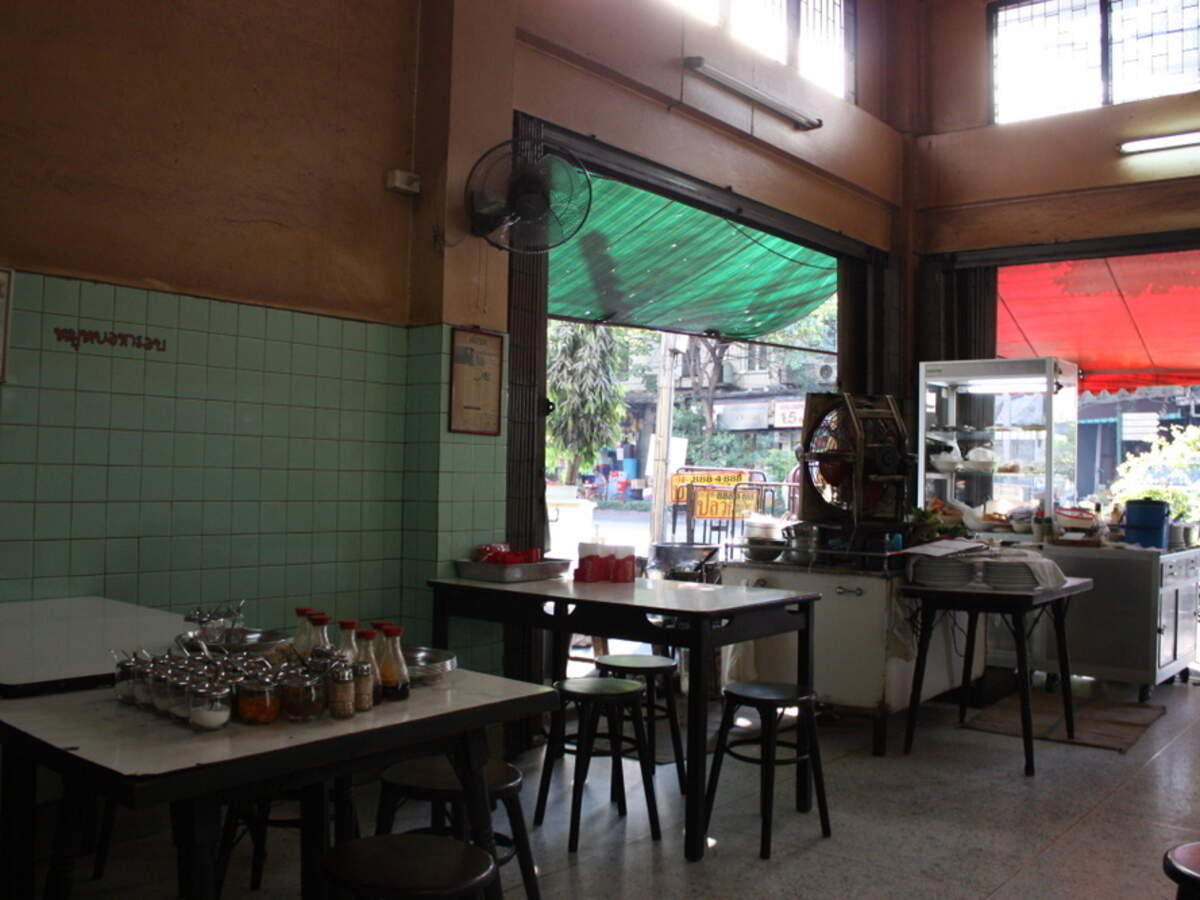
Bars in Bangkok
All bars in Bangkok →
Details
- Cozy
- Casual Hangout
- Standalone
- A La Carte
- Halal
Current opening hours
- Monday
- Closed
- Tuesday
- 8:30 AM–8 PM
- Wednesday
- 8:30 AM–8 PM
- Thursday
- 8:30 AM–8 PM
- Friday
- 8:30 AM–8 PM
- Saturday
- 8:30 AM–8 PM
- Sunday
- 8:30 AM–8 PM
Hours can change for holidays and private events. Hours as of .
Simple, no-frills shophouse setting offering comforting, flavorful street food style meals.