Standing yakiniku in Taipei's 信義 district occupies a particular niche in Taiwan's grilling culture: fast, social, and built around the quality of the meat on the grate rather than the ceremony of the meal. 新村 站著吃燒肉 operates within that format, where the sourcing of cuts and the directness of the eating experience do more to define the visit than décor or service theatre.
 Discover on Pearl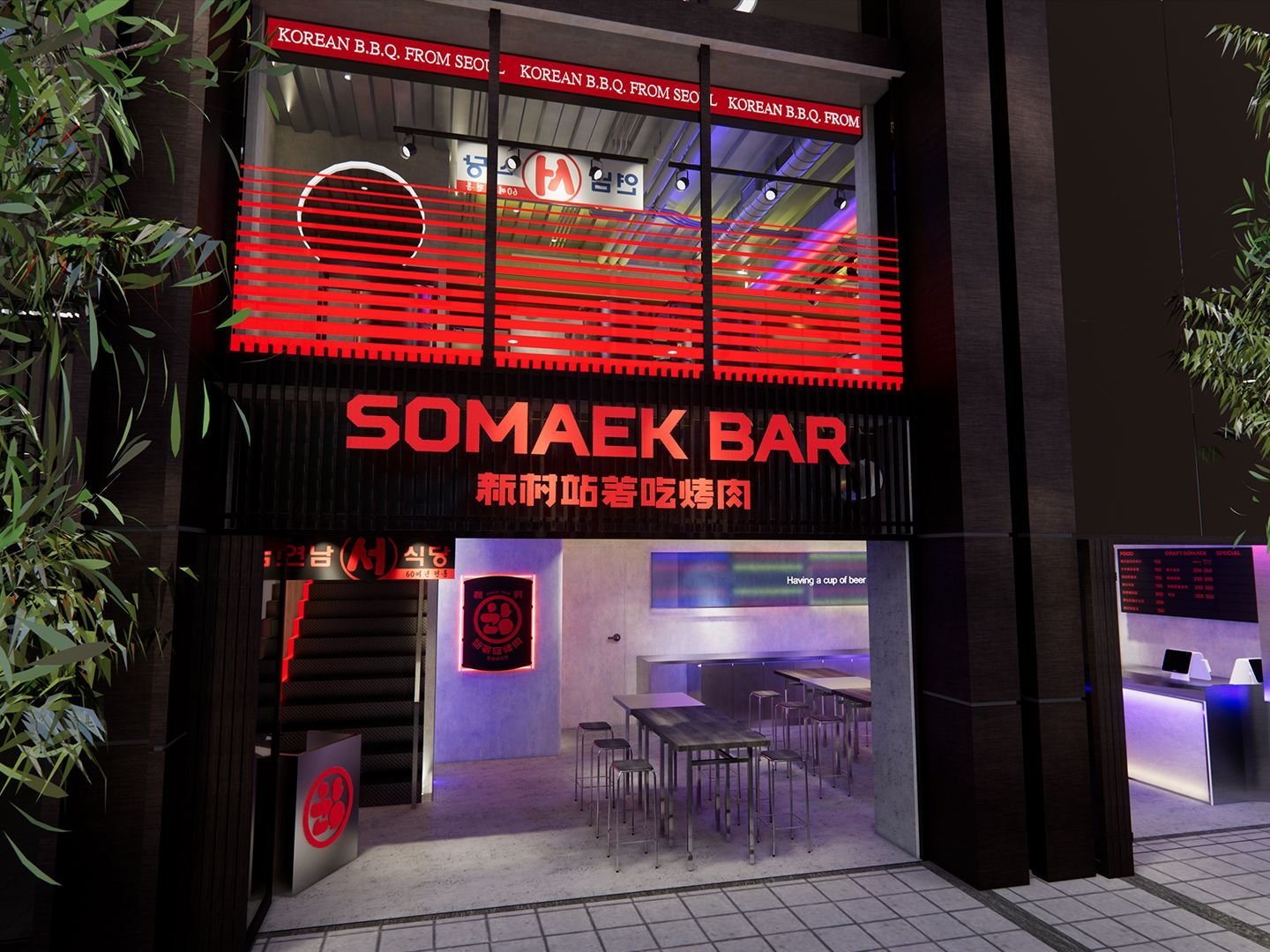
Standing Grills and the Sourcing Question Behind Taiwan's Yakiniku Scene
Taiwan's yakiniku culture has spent the last decade splitting into recognisably distinct tiers. At one end, kaiseki-influenced grilling rooms in Taipei's Xinyi and Da'an districts charge per-seat premiums and plate their beef with tweezers. At the other, the standing yakiniku format — borrowed from Japan's tachigui tradition and adapted to Taiwanese social rhythms — keeps the focus on the meat itself: where it comes from, how it's cut, and how quickly it moves from grate to hand. 新村 站著吃燒肉, operating in the 信義 (Xinyi) district of Taipei, belongs to the latter category. The standing format here is not a cost-cutting gesture; it is a structural argument about what a grilling experience should prioritise.
The Xinyi district, anchored by Taipei 101 and the commercial density around Songren and Keelung roads, has become one of the city's highest-footfall dining corridors. That context matters for understanding how a standing yakiniku counter functions here. Venues in this zone compete on throughput and product quality rather than on atmosphere design or tasting-menu prestige. The comparison set is not logy in Taipei or the Michelin-starred Cantonese rooms; it is the working lunch crowds and the after-work grilling sessions that define how Xinyi residents actually eat on a Tuesday. For a broader view of how the district's dining culture layers from street-level to fine dining, see our full 信義 restaurants guide.
The shortlist, unlocked.
Hard-to-book tables, cellar releases, and concierge-planned trips.
Get Exclusive Access →What the Standing Format Signals About Ingredient Priorities
In Japan, the tachigui yakiniku model developed as a way to lower barriers to quality beef without lowering the standard of the beef itself. The logic transfers to Taiwan's version: removing tablecloths, reservation systems, and plated garnishes compresses the cost structure enough that sourcing can absorb a higher proportion of the budget. This is the core editorial argument of the standing yakiniku format everywhere it appears , from Tokyo's Kuromon-adjacent grill stands to the iterations that have taken root in Taipei's denser commercial neighbourhoods.
Taiwan's domestic beef supply chain has matured considerably, with Taiwanese-raised wagyu crossbreeds and imported Japanese and Australian cuts now moving through specialist distributors that supply both high-end tasting rooms and counter-format operations. The meaningful question for any standing yakiniku is not whether it serves premium beef , most do, in some form , but whether the cut selection reflects genuine sourcing knowledge or simply follows the path of least resistance to a supplier catalogue. Cuts like zabuton (chuck flap), karubi variations, and hormone sets require different sourcing relationships and different grill timing than a simple sirloin programme, and the breadth of a venue's cut list is often a reliable indicator of how seriously the operation takes its supply chain.
Taiwan's broader grilling culture has parallels across the island. Venues like GEN in Kaohsiung and regional specialists such as Volcanic rock in Zhubei City have each built reputations around specific sourcing commitments, demonstrating that procurement rigour is not confined to Taipei's fine-dining corridor. Even in less urbanised contexts, places like Chenggong Douhua in Chenggong and Ah Zhen Rou Bao in Lukang anchor their identity in ingredient provenance rather than service format.
The Atmosphere of a Standing Counter in Xinyi
Approaching a standing yakiniku in Xinyi during the evening rush, the sensory cues arrive before the sign does. Smoke drifts at gutter-level, carrying the particular sweetness of binchotan charcoal or the sharper edge of gas-fired grates, depending on the operation. Inside, the spatial arrangement is deliberately anti-ceremonial: grill surfaces at standing height, diners shoulder to shoulder, the social noise of a full counter drowning out any ambient playlist. This is a format that rewards directness. You are there to eat, and the room is designed to remind you of that.
The Xinyi context adds a specific demographic texture. After-work groups from the surrounding tech and finance offices mix with younger diners for whom standing yakiniku represents a more democratic entry point to quality grilling than a booked table at one of the district's formal rooms. The pace is faster than a seated service, and the social choreography , who grills, who holds the tongs, who calls for the next round of cuts , becomes part of the experience in a way that plated service never allows. For a different register of Taiwanese casual dining built on similar social logic, Good Good Hainan Chicken Rice and Golden Formosa Taiwanese Cuisine 金蓬萊遵古台菜餐廳 in 士林 illustrate how Taipei's mid-register dining culture consistently prioritises product and atmosphere over service formality.
Planning Your Visit
信義 is well-served by Taipei's MRT system, with Taipei City Hall station (Blue Line) placing visitors within walking distance of the district's main dining clusters. The standing format at venues like 新村 站著吃燒肉 typically means no reservations are taken, which in practice makes arrival timing the only variable a diner controls. Coming before the main dinner rush , in the 6pm window rather than 7:30pm , tends to determine whether you wait at the door or walk straight to a grill. Dress is casual by default; the format makes formal wear impractical. As Taiwan's grilling scene continues to develop specialist pockets beyond Taipei, venues such as JL Studio in Taichung and A Xia in Tainan show the regional range available to travellers moving beyond the capital, while Hómee (好饗廚房) in 大園區 offers a contrasting approach to Taiwanese ingredient-led cooking in a more suburban register. For those benchmarking Taipei's dining against international reference points, Atomix in New York City and Le Bernardin in New York City represent the ceiling of the formal end of the spectrum , a useful reminder of where standing yakiniku sits in the broader topology of serious eating.
Frequently Asked Questions
- Is 新村 站著吃燒肉 suitable for children?
- Standing yakiniku formats in Xinyi generally assume an adult pace and social dynamic. The counter height, open grill surfaces, and dense evening crowds make the format less comfortable for young children than a seated restaurant. Families with older children who are accustomed to casual grill settings may find it manageable, but the Xinyi price context and crowd density skew this firmly toward adult dining.
- What should I expect atmosphere-wise at 新村 站著吃燒肉?
- The atmosphere is intentionally high-energy and informal. Standing counters in this part of Xinyi operate at pace, with a mix of after-work and social dining crowds filling the space quickly on weekday evenings. There is no ambient quietude to speak of; the draw is the directness of the grill experience and the social density of the counter, not a relaxed dining environment. Xinyi's commercial character amplifies this: the district moves fast, and so does the format.
- What should I eat at 新村 站著吃燒肉?
- Specific menu details are not confirmed in available data, so it would be misleading to name particular cuts or dishes. What the standing yakiniku format generally rewards is engaging with the full range of cuts on offer rather than defaulting to the most familiar options. In Taiwan's better grilling operations, the hormone sets and secondary cuts often reflect sourcing intelligence more clearly than the headline items. Ask what arrived most recently , freshness of supply is the most reliable guide at any yakiniku counter.
- Does the standing format at 新村 站著吃燒肉 reflect a broader trend in Taipei's grilling scene?
- Yes, and the trend has clear precedent. The standing yakiniku model has expanded across Taipei's denser commercial neighbourhoods as a format that allows operators to prioritise sourcing budgets over fitout costs. In 信義, where real estate costs are among the highest in the city, the format also makes commercial sense as a high-turnover operation. The result, when executed with sourcing rigour, is a style of eating that competes with seated grilling rooms on product quality while offering a fundamentally different social experience.
Quick Comparison
These are the closest comparables we have in our database for quick context.
| Venue | Cuisine | Price | Awards | Notes |
|---|---|---|---|---|
| 新村 站著吃燒肉 | This venue | |||
| JL Studio | Modern Singaporean, Singaporean | $$$$ | Michelin 3 Star | Modern Singaporean, Singaporean, $$$$ |
| logy | Modern European, Asian Contemporary | $$$$ | Michelin 2 Star | Modern European, Asian Contemporary, $$$$ |
| Le Palais | Cantonese | $$$$ | Michelin 3 Star | Cantonese, $$$$ |
| Taïrroir | Taiwanese/French, Taiwanese contemporary | $$$$ | Michelin 3 Star | Taiwanese/French, Taiwanese contemporary, $$$$ |
| Mudan Tempura | Tempura | $$$$ | Michelin 2 Star | Tempura, $$$$ |
Need a table?
Our members enjoy priority alerts and concierge-led booking support for the world's most difficult tables.
Get Exclusive AccessThe shortlist, unlocked.
Hard-to-book tables, cellar releases, and concierge-planned trips.
Get Exclusive Access →