3rd Samgyetang

Michelin Bib Gourmand
Our verdict
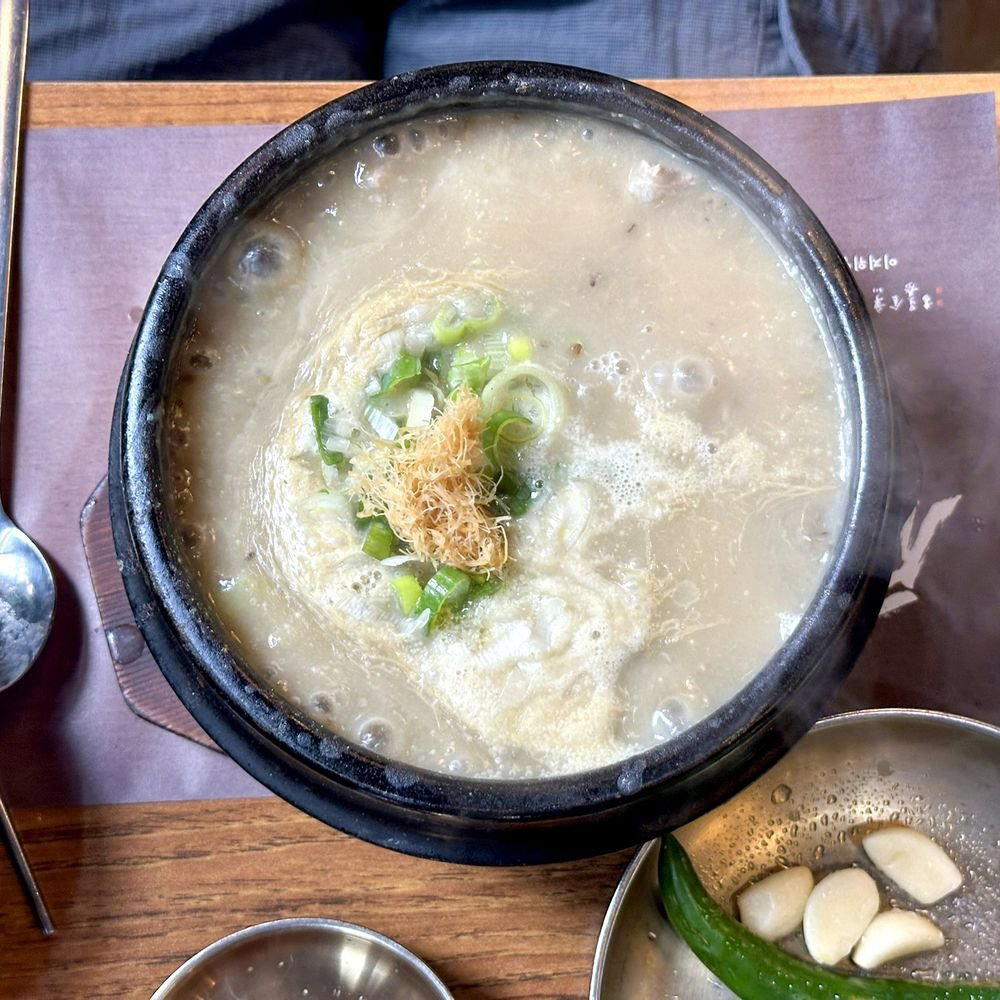
Open since 1973 and now in its third generation of family ownership, 3rd Samgyetang in Seocho-gu has built a quiet reputation among Seoul locals for its restorative chicken soup. The kitchen draws on a broth built from more than 40 ingredients, finished with mung bean and pine nut purées and mugwort paste. It is the kind of place that regulars return to for the same bowl, season after season.

Pearl is the En Primeur Club membership app, where members save venues, book tables and use the concierge.
The menu
What to order
- Samgyetang with mung bean and pine nut purées
- Samgyetang with mugwort paste
A Seocho Institution Built Around One Bowl
Seocho-gu sits on the southern side of the Han River, a district that mixes residential calm with professional Seoul, law firms, arts venues, and the quieter rhythms of a neighbourhood that has never needed to perform for tourists. On a side street off Banpo-daero, a queue forms most days before the doors open. The people waiting are not first-timers chasing a recommendation. They are regulars, office workers from nearby blocks, and families who know exactly what they are coming for. That queue is one of the more reliable signals that a place has earned its standing through consistency rather than promotion.
3rd Samgyetang opened in 1973, which means it predates much of what we now call contemporary Korean dining. It has operated through the arrival of Michelin inspectors in Seoul, through the global attention given to venues like Mingles and Jungsik, and through the proliferation of tasting-menu formats at places such as alla prima and Soigné. None of that has altered what it does. The restaurant is now in its third generation of family operation, and the bowl it serves today is recognisably the same one the neighbourhood has been ordering for five decades.
What Forty Ingredients Actually Mean
Samgyetang, at its most basic, is a whole young chicken stuffed with glutinous rice and simmered in a broth of ginseng, jujube, garlic, and ginger. The dish belongs to the Korean tradition of bogi foods, ingredients consumed specifically to restore energy and counteract seasonal fatigue, particularly during the hottest days of the summer calendar. The three major boknal heat days drive annual peaks in samgyetang consumption, though the dish is eaten year-round.
What separates kitchens in this category is almost entirely the broth. The claim of forty-plus ingredients is not unusual in Korean restorative cooking, where layering medicinal and aromatic components over long simmering times is standard practice, but the specific selection and balance of those components defines the character of each kitchen's version. At 3rd Samgyetang, the broth is finished with mung bean purée and pine nut purée alongside mugwort paste, additions that shift the soup's texture and flavour register in ways the base recipe alone would not achieve. The mung bean brings a subtle earthiness and a degree of body; pine nut purée contributes a quiet richness; mugwort introduces a faint bitterness that cuts through the fat and keeps the bowl from becoming cloying. These are considered additions, not garnishes.
The grains worked into the broth give it further structure, and the chicken itself, sourced from young birds, yields meat that separates cleanly from the bone without prompting. That texture is a product of both the age of the bird and the length of time it spends in the pot. Overcook and the meat turns stringy; undercook and the collagen in the joints hasn't had time to enrich the liquid. Getting this calibration right across service, every day, for half a century, is the work that explains a three-generation operation.
The recommended approach to the bowl is practical and worth following: spoon some of the glutinous rice directly into the broth, add a pinch of the provided glasswort salt, and work through the result as something closer to a fortifying porridge than a soup course. This is how the bowl is intended to be eaten, and the glasswort salt in particular is not decorative. It is a mineral-forward seasoning that pulls the flavours into alignment in a way that ordinary salt does not.
Where This Sits in Seoul's Dining Spread
Seoul's restaurant scene has bifurcated considerably over the past decade. The fine-dining tier, represented by multi-course Korean kitchens like Kwonsooksoo and its Gangnam-gu counterpart 권숙수 - Kwon Sook Soo, has attracted international attention and Michelin recognition. Internationally trained chefs at venues across the city have pushed Korean ingredients through European frameworks, producing results that read well to a global audience. That tier has its own merit and its own logic.
3rd Samgyetang operates in a different register entirely. It is a single-dish house with a clear identity, a neighbourhood base, and no particular interest in the fine-dining conversation. The comparison set is other serious samgyetang kitchens, not contemporary tasting rooms. For visitors orienting themselves in Seoul, this distinction matters. The restaurant is not an entry point to the modern Korean dining scene documented in our full Seoul restaurants guide; it is a reference point for the older, less theatrically presented layer of the city's food culture.
That layer exists across Korea. Restorative, ingredient-driven cooking with deep local roots appears at places like Baegyangsa Temple in Jangseong-gun and in the quieter corners of cities like Busan, where venues such as Mori pursue their own form of focused, ingredient-grounded cooking. The tradition is not confined to Seoul, but Seocho-gu's version has been at it longer than most.
Planning the Visit
The address, 56-3 Banpo-daero 28-gil, Seocho-gu, places the restaurant in a residential side-street area accessible from Seocho or Express Bus Terminal stations on the Seoul Metro. The practical advice from regulars is consistent: arrive early, especially during the summer heat calendar when samgyetang demand spikes citywide and queues at well-regarded kitchens extend considerably. Peak hours see waits that are not trivial. Phone and booking details are not publicly listed in the venue's available information, which suggests walk-in is the standard format, making timing your arrival the main variable within your control. For broader planning around your stay, the Seoul hotels guide, bars guide, and experiences guide cover the wider city. If Korean fine dining is also on the itinerary, the Seoul wineries guide provides context on the natural wine and makgeolli scene that now pairs with the upper tier of the city's restaurants.
Frequently asked questions
Where is 3rd Samgyetang in Seoul?
3rd Samgyetang is located at 56-3 Banpo-daero 28-gil, Seocho-gu, Seoul.
Is 3rd Samgyetang Michelin-listed?
3rd Samgyetang has received recognition including: Now in its third generation after opening in 1973, 3rd Samgyetang is well-regarded among Seocho locals for its restorative soup. The signature samgyetang features a rich broth of over 40 ingredients, topped with mung bean and pine nut purée….
What's the must-try dish at 3rd Samgyetang?
The signature samgyetang is the only dish that matters here. The broth draws on over 40 ingredients, finished with mung bean and pine nut purées and mugwort paste. Spoon glutinous rice into the bowl partway through and season with glasswort salt, the broth tightens into a porridge that defines the second half of the meal.
Is 3rd Samgyetang reservation-only?
No reservation system is documented for 3rd Samgyetang. The restaurant draws consistent local demand in Seocho-gu, and the venue's own guidance is to arrive early to avoid queuing during peak lunch and dinner hours.
Comparable Spots, Quickly
Comparable venues nearby, for context on price, style, and recognition.
| Venue | Cuisine | Price | Awards | Notes |
|---|---|---|---|---|
| 3rd SamgyetangThis venue (the venue you are viewing) | Traditional Korean Samgyetang | $10–20 | Michelin Bib Gourmand | Not listed |
| Budnamujip | Traditional Korean Beef BBQ | $30–50 | Michelin Plate | 서초동 |
| Jinmi Pyeongyang Naengmyeon | Pyongyang Naengmyeon | $10–20 | Michelin Plate | 압구정동 |
| Pyeongyang Myeonok | Pyongyang-style Naengmyeon | $10–20 | Michelin Plate | 을지로동 |
| Mukjung | Modern Korean Fermented Dining | Not listed | Michelin Plate | 을지로동 |
| Tongue & Groove Joint | Modern Korean BBQ | $30–50 | Michelin Plate | 이태원동 |
Recognition history
Dated appearances from independent guides and award organizations, with the underlying list record or original source where available.
Michelin Bib Gourmand
Michelin
Full recognition history (2 entries)
Michelin Plate
Michelin · 2026 Michelin Plate
Continue exploring
More in Seoul
Restaurants in Seoul
All restaurants in Seoul →
Bars in Seoul
All bars in Seoul →
Details
- Cozy
- Classic
- Family
- Casual Hangout
- Standalone
- A La Carte
- Family Style
Current opening hours
- Monday
- 10:50 AM–10 PM
- Tuesday
- 10:50 AM–10 PM
- Wednesday
- 10:50 AM–10 PM
- Thursday
- 10:50 AM–10 PM
- Friday
- 10:50 AM–10 PM
- Saturday
- 10:50 AM–10 PM
- Sunday
- 10:50 AM–10 PM
Hours can change for holidays and private events. Hours as of .