3Men's Kebab
A kebab counter on Bahnhofstrasse in Rüti, the kind of place that functions as a neighbourhood staple rather than a destination. In a canton where fine dining tends to migrate toward Zurich or the lake towns, a spot like this represents the everyday eating that sustains a small Swiss commuter town. Visit for a quick, filling meal close to the train station.
Pearl is the En Primeur Club membership app — saves, bookings, and concierge access live there. Same editors, same standards.
- Address
- Bahnhofstrasse 8, 8630 Rüti, Switzerland
- Phone
- +41556102222
- Website
- 3menskebab.ch
- Directions
- Get directions
 Saves & bookings on Pearl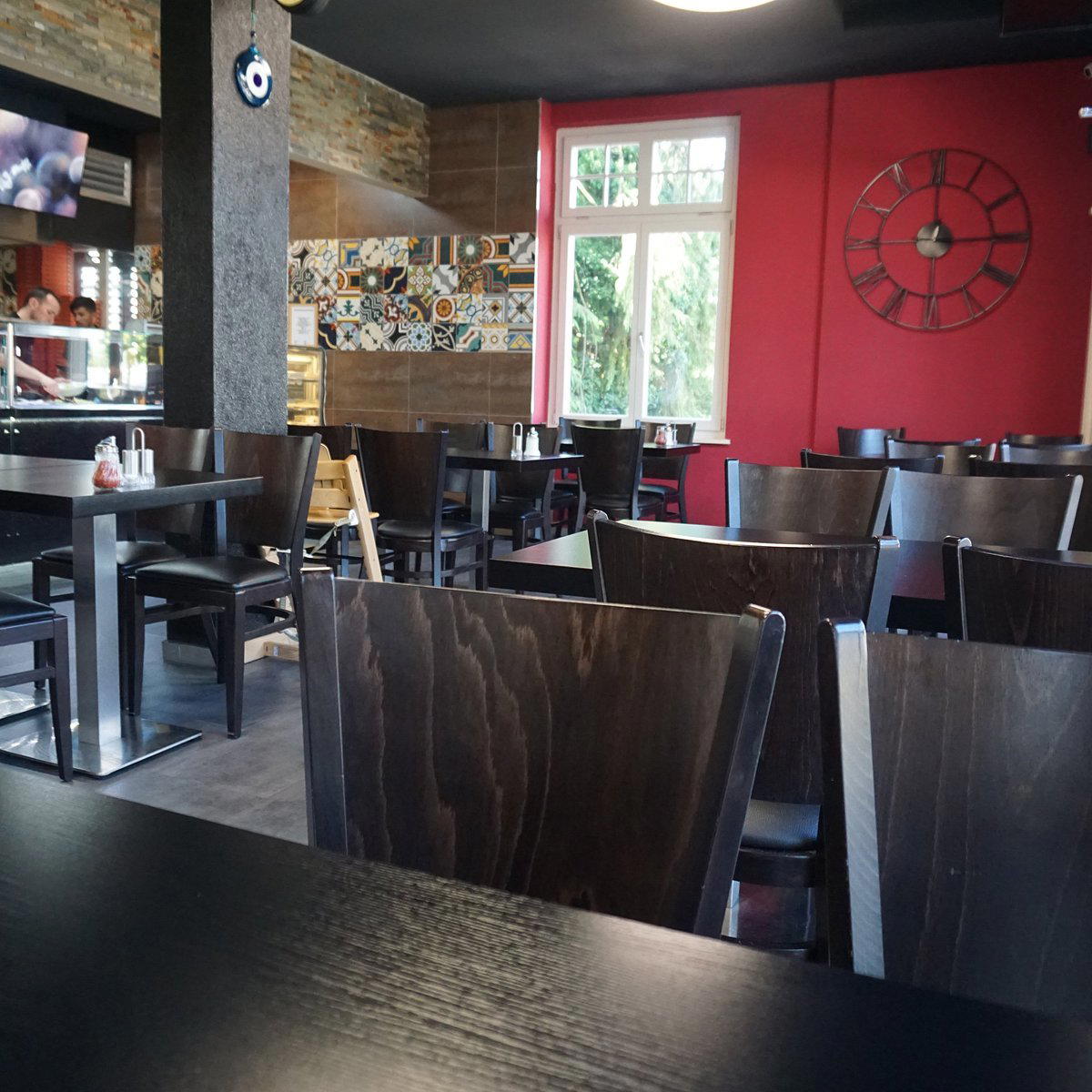
Kebab Culture in the Swiss Commuter Belt
Switzerland's relationship with döner kebab mirrors a pattern visible across Central Europe: the format arrived with Turkish and Middle Eastern guest-worker communities in the 1970s and 1980s, embedded itself in train station precincts and high streets, and has never left. 3Men's Kebab is a Turkish Kebab restaurant in Rüti, Switzerland, priced at about $15 per person. In towns like Rüti, which sits in the Zürcher Oberland roughly 30 kilometres southeast of Zurich city centre, the kebab counter is often the only hot food option within walking distance of the Bahnhof during off-peak hours. 3Men's Kebab occupies that functional position on Bahnhofstrasse 8, directly in the orbit of the station's foot traffic.
This is not the tier of Swiss dining you find when you look at IGNIV Zürich by Andreas Caminada in Zurich or the tasting-menu formality of focus ATELIER in Vitznau. Nor does it compete with the alpine-sourced precision of Memories in Bad Ragaz or the centuries-old estate setting of Schloss Schauenstein in Fürstenau. Those restaurants represent a different Switzerland entirely, one oriented around multi-course progression and regional fine-dining credentials. The kebab counter operates on a different logic: immediacy, reliability, and price accessibility for residents who commute and eat on schedule.
What the Location Signals
Bahnhofstrasse addresses in small Swiss towns carry a particular meaning. Unlike Zurich's Bahnhofstrasse, which functions as a luxury retail corridor, the same street name in a Zürcher Oberland town like Rüti signals proximity to the S-Bahn platform and the kind of patronage that comes with it: commuters heading into the city, workers on short breaks, locals running errands between trains. Food businesses in this position succeed or fail on throughput and consistency rather than on reputation built through press coverage or award cycles.
The broader Swiss restaurant scene clusters its ambition in city centres and resort destinations. When you look at the eastern Switzerland fine-dining map, names like Einstein Gourmet in Sankt Gallen or Da Vittorio - St. Moritz in St. Moritz draw from both local and visiting populations with specific spending intent. Rüti draws neither. It is a working town of around 12,000 residents, and its food scene reflects that scale and demographic. The presence of a kebab counter near the station is, in that context, not a gap in the local offer but its most dependable anchor.
Ingredient Sourcing and the Kebab Format
The ingredient question matters more for döner and shawarma-style formats than it might appear at first. The core product, seasoned rotating meat cooked on a vertical spit, depends heavily on the quality of the meat blend and the marinade, both of which vary considerably across the category. At the volume end of the market, suppliers provide pre-formed spits of mixed meat (often a lamb-beef or chicken combination) with standardised seasoning. At the craft end, operators source whole cuts, season in-house, and control the fat-to-lean ratio carefully. The difference in the finished product is significant and detectable without specialist knowledge.
Switzerland's meat supply chain is among the more regulated in Europe, with strict standards around animal welfare and traceability that apply regardless of whether the end product is a tasting-menu main course at Cheval Blanc by Peter Knogl in Basel or a kebab in Rüti. That regulatory baseline means the floor quality is higher than in less controlled markets, but it does not resolve the question of what a specific operator chooses to source above that floor.
Similarly, the bread and salad components of a kebab, the flatbread or pide, the tomato, onion, and cabbage accompaniments, range from delivered industrial product to house-prepared fresh daily. These details shape the eating experience considerably, particularly the flatbread, which in a high-turnover transit-adjacent operation can easily be dry or stale if not managed carefully. Again, the specifics here belong to the venue rather than to general category knowledge, and
How It Fits the Rüti Context
For a broader picture of Swiss dining across different price tiers and formats, Rüti offers a compact local dining scene. The context matters: Rüti is a commuter town, not a destination for visitors arriving to eat. It functions as a residential and light-industrial town in a commuter corridor, and its food businesses serve that population. Comparing it to the gastronomic gravity of, say, Hotel de Ville Crissier in Crissier or La Table du Lausanne Palace in Lausanne would misread what the local market is actually asking for.
Internationally, the standards being set at places like Le Bernardin in New York City or Atomix in New York City represent a different axis of the global dining conversation entirely. What connects them to a venue like 3Men's Kebab is only the broadest shared category of prepared food for paying customers. The metrics that matter here are speed, price, and the reliability of a familiar format for a repeat local audience.
Planning a Visit
The address, Bahnhofstrasse 8, 8630 Rüti, places the venue within a short walk of Rüti train station on the S-Bahn lines connecting the Zürcher Oberland to Zurich's main network. For visitors passing through or locals looking for a fast meal close to the platform, the location removes any logistical friction. The regular hours are Monday through Sunday, 9 AM to 11 PM, and the venue is walk-in friendly.
Those planning a broader Swiss itinerary that takes in both everyday eating and high-end restaurant experiences might also consider the Graubünden corridor, where venues like 7132 Silver in Vals or the lakeside setting of Colonnade in Lucerne offer a different register altogether. For western Switzerland, Maison Wenger in Le Noirmont and Magdalena in Schwyz round out a picture of the country's serious dining geography, while La Brezza in Ascona points toward the Italian-speaking south. The restaurant belongs to none of those itineraries, but it occupies its own functional niche with clarity.
In Context: Similar Options
Comparable venues nearby, for context on price, style, and recognition.
| Venue | Cuisine | Price | Notes |
|---|---|---|---|
| 3Men's KebabThis venue — the venue you are viewing | Turkish Kebab | $$ | Not listed |
| Rhulo Çiğköfte | Vegan Turkish Çiğköfte | $$ | old town |
| Isbilir | Turkish Döner & Kebab | $$ | Kleinbasel |
| Pinar | Authentic Turkish Anatolian | $$ | Messe |
| Hasan's Sandwich | Turkish Sandwiches & Ciabattas | $ | Oerlikon |
| Restaurant Marmaris | Turkish | $$ | Aeschen |
Continue exploring
More in Ruti
Restaurants in Ruti
Browse all →
Bars in Ruti
Browse all →
Hotels in Ruti
Browse all →

At a Glance
- Casual Hangout
- Late Night
Current opening hours
- Monday
- 9 AM–11 PM
- Tuesday
- 9 AM–11 PM
- Wednesday
- 9 AM–11 PM
- Thursday
- 9 AM–11 PM
- Friday
- 9 AM–11 PM
- Saturday
- 9 AM–11 PM
- Sunday
- 9 AM–11 PM
Hours can change for holidays and private events. Last verified .
Casual fast-food atmosphere with friendly service near the train station.