Rhulo Çiğköfte
On Winterthur's Obergasse, Rhulo Çiğköfte brings one of Turkey's most distinctive street-food traditions to a Swiss city better known for its museum quarter and mid-range dining. The format is lean and accessible: a plant-based, no-cook preparation that has spread from Anatolian street corners to European high streets over the past two decades. For Winterthur, it fills a visible gap in the city's affordable, fast-casual options.
Pearl is the En Primeur Club membership app — saves, bookings, and concierge access live there. Same editors, same standards.
- Address
- Obergasse 20, 8400 Winterthur, Switzerland
- Phone
- +41783044988
- Directions
- Get directions
 Saves & bookings on Pearl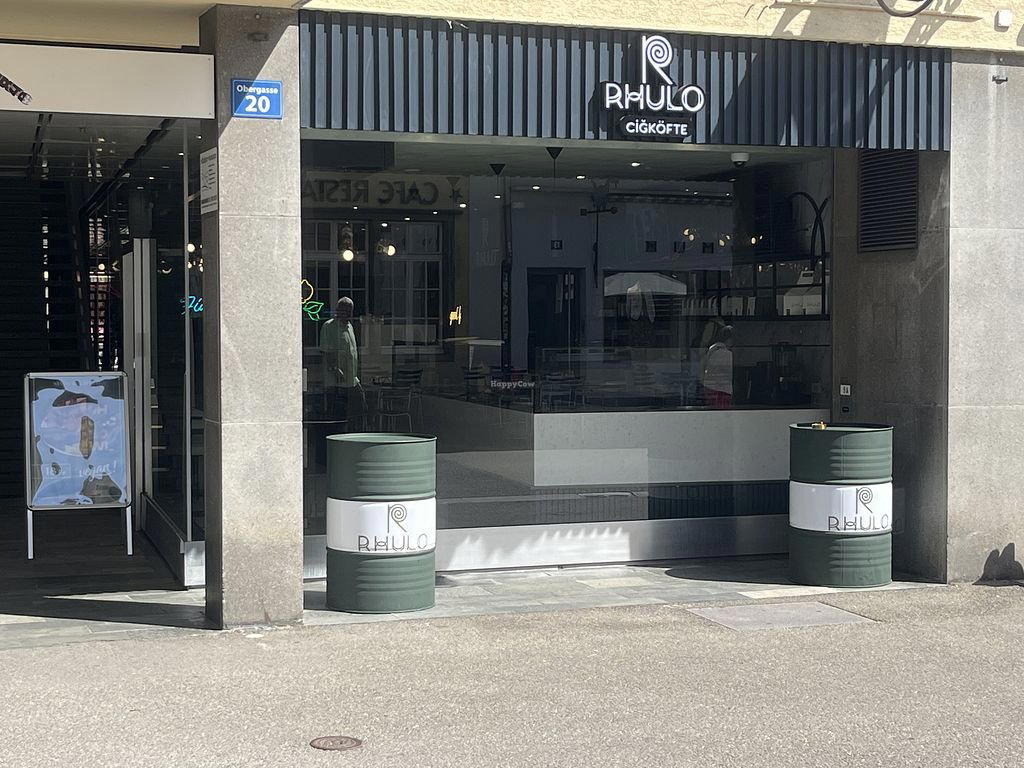
A Turkish Street Tradition Lands on the Obergasse
Winterthur's main pedestrian corridor runs through a city that has spent the past decade quietly building a dining scene capable of holding its own against Zurich's longer shadow. The old town streets around Obergasse carry a mix of Swiss-German staples, international fast-casual counters, and a handful of independents aiming at something more considered. Into this setting, Rhulo Çiğköfte drops a format almost entirely absent from the Swiss-German dining conversation: Turkish çiğköfte, a spiced, plant-based preparation that began as a raw-meat dish in southeastern Anatolia and evolved, through food-safety legislation and changing urban tastes, into one of Turkey's most widespread street foods.
The evolution of çiğköfte is worth understanding before you arrive. The original preparation, common in Urfa and the broader southeastern region, involved hand-kneading raw lamb with fine bulgur, red pepper paste, and a long list of aromatic spices until the meat was considered "cooked" by the heat and acidity of the process. Turkish food-safety regulations progressively restricted raw-meat street vending in the 1990s and 2000s, which accelerated the shift to the fully plant-based version now sold across Turkey and, increasingly, across Europe. The Rhulo chain format belongs to that second wave: no meat, no cooking, but a preparation method that preserves the spice architecture and textural character of the original. It is a case where regulatory pressure and culinary tradition met and produced something more portable than what preceded it.
What Çiğköfte Actually Is
For diners unfamiliar with the format, the core product is a dense, hand-shaped mixture of fine bulgur wheat, tomato paste, red pepper paste, pomegranate molasses, and a blend of spices that varies by producer but typically includes cumin, cinnamon, and dried mint. The mixture is kneaded extensively to develop a cohesive texture, then shaped into small cylinders or pressed portions. At the counter, these are typically served wrapped in a thin lavash flatbread with fresh lettuce, pomegranate seeds, lemon juice, and additional sauce options ranging from mild to sharply hot.
The result sits at an interesting intersection: it is fully vegan, requires no heat, relies on technique and spice balance rather than cooking skill, and travels as well as any sandwich format. That combination has made it the dominant street-food export of the çiğköfte category, with chains expanding from Istanbul and Ankara into Germany, the Netherlands, Austria, and now Switzerland. European cities with larger Turkish and Kurdish communities received the format first; secondary cities like Winterthur are part of the second expansion wave, where the product arrives into a broader, less specifically community-oriented market.
Winterthur's Position in the Swiss Fast-Casual Scene
Winterthur sits 25 kilometres northeast of Zurich and operates as Switzerland's sixth-largest city, with a population that skews toward students, working professionals, and a significant immigrant community. Its restaurant economy reflects that mix: the city supports everything from the considered seasonal cooking at Bloom to the direct burger formats at Big Burger Winterthur and BurgerChuchi, with Italian-leaning mid-range options like Cantinetta Bindella filling the middle tier. What has been less represented is the kind of sub-ten-franc street food that functions as daily lunch infrastructure for price-sensitive urban eaters rather than an occasional treat.
Çiğköfte in its chain format occupies that sub-ten-franc tier in most European markets. The Obergasse location places Rhulo Çiğköfte within walking distance of Winterthur's central train station and the old town foot traffic, a position that makes sense for a format built around speed and accessibility. Compared to the more relaxed pacing of somewhere like Bolero Club, the çiğköfte counter operates on a different time scale entirely: decisions are made in seconds, service is measured in minutes. For our full Winterthur restaurants guide, this kind of entry sits at the accessible end of a wider spectrum that, at the other extreme, includes the structured ambition of fine-dining rooms elsewhere in the Swiss-German region.
That Swiss fine-dining context is worth a brief note. Restaurants like Schloss Schauenstein in Fürstenau, Hotel de Ville Crissier in Crissier, and Cheval Blanc by Peter Knogl in Basel define one end of Switzerland's dining range. The country also supports technically focused rooms like Memories in Bad Ragaz, focus ATELIER in Vitznau, and 7132 Silver in Vals. The çiğköfte format operates entirely outside that conversation, which is part of its function: it fills space those rooms have no interest in occupying. Across the country, other cities host similarly contrasting ranges, from Colonnade in Lucerne and Da Vittorio - St. Moritz in St. Moritz to Einstein Gourmet in Sankt Gallen and IGNIV Zürich by Andreas Caminada in Zurich. Internationally, technique-driven venues like Le Bernardin in New York City and Atomix in New York City represent the extreme of considered execution. None of that is the frame for understanding what Rhulo Çiğköfte offers.
Planning Your Visit
The Obergasse address puts the restaurant at the centre of Winterthur's pedestrian zone, reachable in under ten minutes on foot from Winterthur Hauptbahnhof. The format suits a midday stop rather than a destination meal: arrive, choose your heat level and extras, and the transaction concludes quickly. No booking is required or possible for a counter-service format of this type. The menu is plant-based throughout, which removes allergen concerns around meat but does not address all dietary requirements; bulgur wheat contains gluten, making the standard product unsuitable for coeliac diners. Seasonal relevance is real here: the wrapped lavash format is genuinely better suited to warmer months when eating on the move is comfortable, though the product itself is served at room temperature year-round and the interior allows for seated consumption. Prices in European çiğköfte chain formats generally sit well below the ten-franc mark for a standard portion, placing this firmly in the daily-lunch category rather than the occasional-treat one.
Comparable Venues
Comparable venues nearby, for context on price, style, and recognition.
| Venue | Cuisine | Price | Notes |
|---|---|---|---|
| Rhulo ÇiğköfteThis venue — the venue you are viewing | Vegan Turkish Çiğköfte | $$ | Not listed |
| Fredi | Modern Swiss with Mediterranean influences | $$ | Old Town |
| Goldenes Horn | Turkish Kebab & Pizza | $ | Neumarkt |
| Bolero Club | Club Food and Drinks | $$ | city center |
| Hans Im Glück | Burger Grill | $$ | Rosenberg |
| Cantinetta Bindella | Authentic Tuscan Osteria | $$$ | Marktgasse, Old Town |
Continue exploring
More in Winterthur
Restaurants in Winterthur
Browse all →
Bars in Winterthur
Browse all →
Hotels in Winterthur
Browse all →

At a Glance
- Trendy
- Casual Hangout
- Standalone
Current opening hours
- Monday
- Closed
- Tuesday
- 11 AM–9 PM
- Wednesday
- 11 AM–9 PM
- Thursday
- 11 AM–9 PM
- Friday
- 11 AM–10 PM
- Saturday
- 11 AM–10 PM
- Sunday
- 2–9 PM
Hours can change for holidays and private events. Last verified .
Casual take-away spot in the heart of Winterthur's old town with a focus on quick, plant-based street food.