Situated in Nanping's Wufu township, 五夫晨照 draws on Fujian's tea-country agricultural traditions, where proximity to fields and mountain produce shapes the cooking before the kitchen ever gets involved. The restaurant sits within a region better known for its white lotus and Zhu Xi scholarship than its dining scene, making it an address that rewards visitors already travelling to one of Fujian's quieter rural corners.
Pearl is the En Primeur Club membership app — saves, bookings, and concierge access live there. Same editors, same standards.
- Address
- Nanping, 福建省
- Directions
- Get directions
 Saves & bookings on Pearl
Where the Ingredient Comes Before the Recipe
五夫晨照 is a restaurant in Nanping, 福建省, serving Chinese Tucun (Rustic Home-Style) cooking at price tier 2. In Fujian's interior, the distance between a field and a plate is shorter than almost anywhere else along China's eastern seaboard. Wufu township, the historic cluster of villages in Nanping that surrounds 五夫晨照, sits at the edge of the Wuyi Mountain range, a zone that supplies some of China's most prized agricultural produce: white lotus seeds, mountain vegetables, river fish from the Chongyang River, and tea harvested at altitude. Restaurants in this area do not draw their identity from brigade kitchens or imported technique. They draw it from the land immediately around them, and the cooking reflects the season's pressure rather than a chef's personal canon.
That orientation, ingredient first, places 五夫晨照 within a broader category of rural Fujian dining that operates on entirely different logic from the province's coastal restaurant scene. Xiamen's premium addresses, such as Fleurs Et Festin in Xiamen, are built on European-influenced format and urban ambition. Fuzhou's mid-tier establishments, including Jiangnan Wok‧Rong in Fuzhou, operate within a recognisable restaurant economy tied to city traffic. Wufu answers none of those forces. Its dining exists because the landscape produces notable raw material, and local establishments have historically organised themselves around serving that material with minimal interference.
The Wufu Setting and What It Means for the Food
Approaching the Wufu area from Wuyishan or from Nanping city proper, the shift in agricultural density is visible before you arrive. Lotus ponds line the approach roads in late summer. Tea plantations occupy the hillside terraces above the old Song-dynasty village core, where Zhu Xi, the neo-Confucian philosopher, studied and taught for decades in the twelfth century. The cultural significance of the site keeps Wufu on heritage itineraries, and that heritage traffic is, practically speaking, the primary reason an address like 五夫晨照 has an audience beyond purely local residents.
The produce calendar here runs on the lotus harvest, which peaks between July and September, when fresh lotus seeds appear in both savoury and sweet preparations across the region. The surrounding mountains supply bamboo shoots in spring and dried fungi through the winter months. River catches from the Chongyang add freshwater protein that does not appear in coastal Fujian cooking. Taken together, these inputs define a kitchen vocabulary that is identifiably Min interior rather than Min coastal, closer in spirit to the mountain-facing traditions of Jiangxi or northern Guangdong than to the seafood-driven identity of Fuzhou or Quanzhou.
For comparison, the ingredient-led positioning that defines Wufu's leading cooking sits at the opposite end of the sourcing philosophy visible in premium Chinese restaurants in major centres. Xin Rong Ji in Beijing and Xin Rong Ji in Chengdu operate on the strength of a branded culinary system. Ru Yuan in Hangzhou and Dai Yuet Heen in Nanjing compete on format and prestige. Wufu's restaurants, by contrast, compete on access: the locality of their supply chain is itself the credential, and there is no version of that credential available to a restaurant operating 200 kilometres away in a provincial capital.
Nanping's Position in Fujian's Dining Hierarchy
Nanping city and the townships that fall within its administrative boundary do not feature in the major Chinese restaurant award cycles. The Michelin Guide has not extended its mainland China coverage to inland Fujian, and the Black Pearl Restaurant Guide, which has recognised addresses in Fuzhou and Xiamen, has not listed Wufu venues. That absence of formal recognition does not indicate a lack of quality in the underlying produce or cooking tradition. It reflects the structural bias of award systems toward cities with large dining economies and international visitor flows. For travellers planning around awards data, Imperial Treasure Fine Chinese Cuisine in Guangzhou or Chef Tam's Seasons in Macau offer the kind of credentialed assurance that Wufu cannot. For travellers planning around provenance and agricultural access, the calculus reverses.
Within the Nanping restaurant scene itself, 五夫晨照 occupies a niche consistent with the heritage-tourism character of the Wufu area. For a broader look at where this address sits within the city's dining options, see our full Nanping restaurants guide. Restaurants such as 私膳坊·私房菜 represent the private-dining format that has grown in Nanping as a vehicle for more deliberate, produce-focused meals, a format that allows ingredient selection to drive the menu rather than the reverse.
Planning a Visit
Wufu township is accessible by road from Wuyishan District, roughly an hour east, and from Nanping's urban core to the south. The area draws the heaviest visitor numbers during the Zhu Xi Cultural Festival in autumn and during the lotus season in summer, when the village scenery is at its most photogenic and the lotus seed dishes at their freshest. Travelling outside these peaks, in late autumn or early spring, means smaller crowds and a more direct read on the local kitchen's character without the pressure of peak-season volume on produce supply. Arriving with local-language assistance or through a travel service familiar with the Wufu area is the practical approach.
For comparison points at different price and prestige registers within Chinese fine dining, 102 House in Shanghai, Ensue in Shenzhen, and Dingshan·Jiangyan in Suzhou each anchor the upper end of their respective city markets. Shang Palace in Yangzhou offers a useful reference point for how Jiangnan cooking handles provenance at a hotel-dining register. Internationally, the sourcing rigour visible in addresses like Le Bernardin in New York City and the technique-driven precision at Atomix in New York City show what happens when ingredient access combines with formal culinary infrastructure, a combination that rural Fujian approaches from the opposite direction, with access as the strength and infrastructure as the variable. Beyond Chinese and Western comparisons, Local Old Town Home in Kashgar offers a parallel case of place-defined cooking where geography does more to shape a menu than any kitchen philosophy.
- rose meat
- egg and lotus seed soup
- stir-fried snails
- smoked goose
- mudfish stew
- pork trotter with taro
- tea-scented chicken
Comparable Spots, Quickly
Comparable venues nearby, for context on price, style, and recognition.
| Venue | Cuisine | Price | Notes |
|---|---|---|---|
| 五夫晨照This venue — the venue you are viewing | Chinese Tucun (Rustic Home-Style) | $$ | Not listed |
| 私膳坊·私房菜 | Chinese Private House Cuisine | $$ | Nanping |
| Defachang | Traditional Shaanxi Dumpling House | $$ | Bell Tower |
| Ludao Seafood Restaurant (鹭岛餐厅•闽南菜(鼓浪屿店)) | Minnan Seafood | $$ | 鼓浪屿商圈 |
| Fa Sing Garden Cantonese Cuisine Restaurant | Cantonese | $$ | Zhujiang New Town |
| Drunk Whaft Hot Pot | Chengdu Hot Pot | $$ | Chengdu |
Continue exploring
More in Nanping
Restaurants in Nanping
Browse all →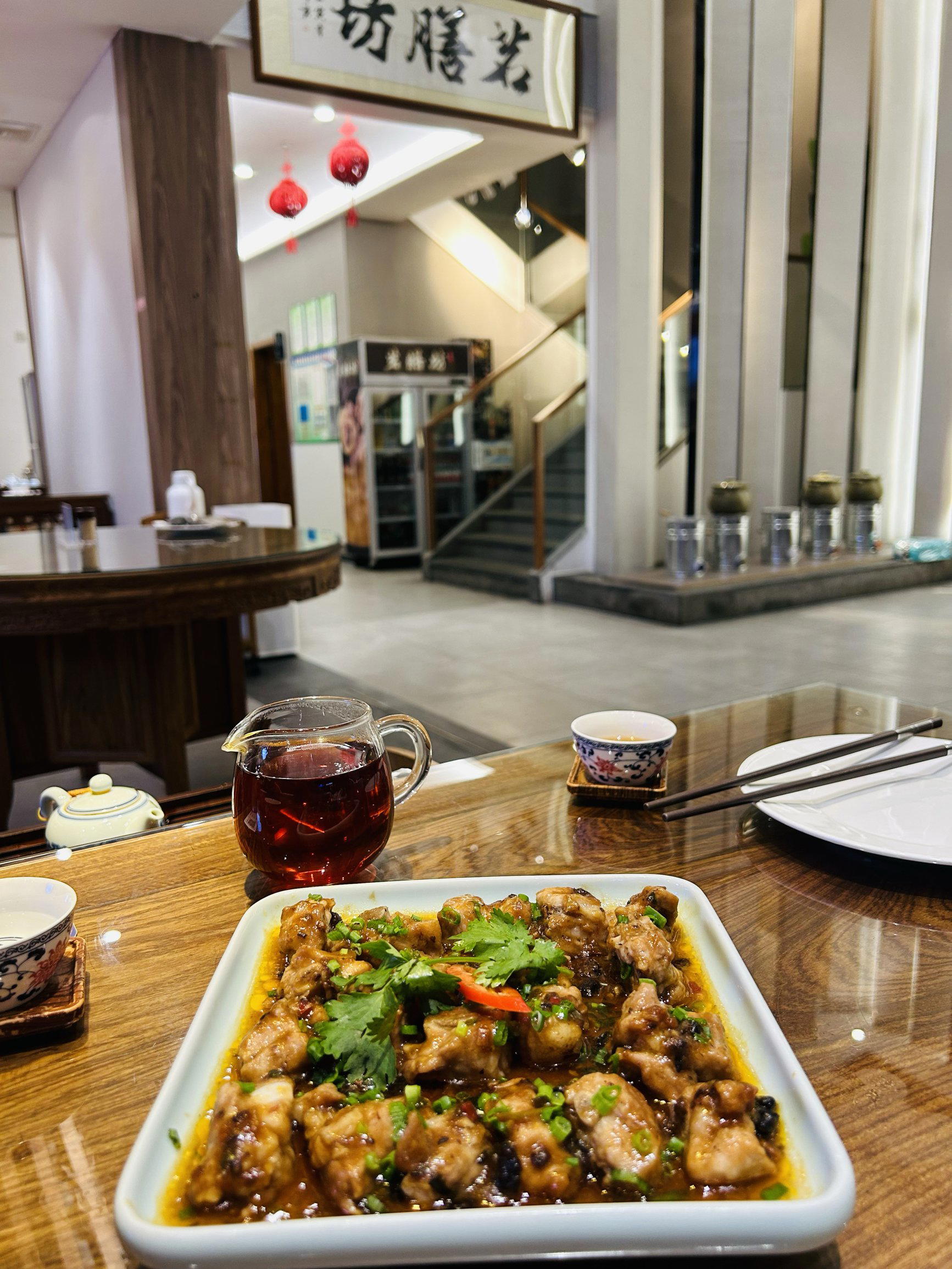
At a Glance
- Cozy
- Classic
- Group Dining
- Family
- Casual Hangout
- Standalone
- Local Sourcing
Casual and down-to-earth, with a home-style local dining atmosphere that feels suited to relaxed group meals.