

2 Michelin Keys · La Liste Top Hotels · Mr & Mrs Smith Seal of Approval
Zannier Omaanda sits on the N/a'an Ku Sê wildlife sanctuary east of Windhoek, where 15 thatched huts with clay walls, freestanding tubs, and picture windows over open savannah frame a programme built around game drives, wildlife excursions, and al fresco dining. Rated 90.5 points by La Liste Top Hotels 2026, with rates from $424 per night, it represents the more grounded, safari-focused half of Zannier's two Namibian properties.

Pearl is the En Primeur Club membership app, where members save venues, book tables and use the concierge.
Where Windhoek Meets the Wild: Safari Lodges in Namibia's Capital Orbit
Namibia's high-end lodge market has split along a clear line in recent years. On one side sit the grand wilderness properties that require multi-hour transfers or charter flights to reach, places like Wilderness Hoanib Skeleton Coast Camp in Hoanib Valley or andBeyond Sossusvlei Desert Lodge in Sesriem, which demand serious itinerary planning. On the other side sit the properties close enough to Windhoek to function as a first or last night addition to a broader trip, without compromising on the wildlife encounter itself. Zannier Omaanda occupies that second position, on Farm no. 78 in the Kapps Farm area east of the city, with direct access to the N/a'an Ku Sê wildlife sanctuary. For travellers arriving into or departing from Windhoek who want genuine savannah proximity rather than a city hotel room, this is the structural decision that matters: the wildlife is not ornamental here.
The Dining Programme: Al Fresco and Anchored in Place
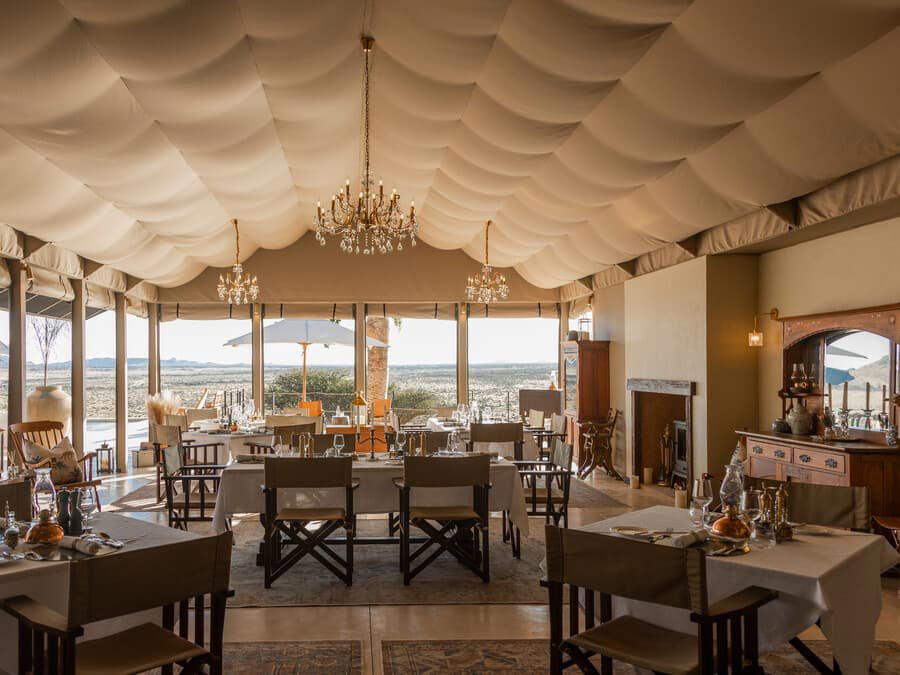
At Africa's premium lodges, the food programme tends to fall into one of two camps. The first deploys imported frameworks, European-trained chefs, wine lists calibrated against urban benchmarks, tasting menus that could exist almost anywhere. The second takes a harder look at what the surrounding environment actually offers and builds around it. Omaanda's dining approach aligns with the latter sensibility. Dinners are served al fresco across three courses, which is a deliberate format choice: eating outside, with the sounds of the reserve around you, is not an amenity add-on but the point of the meal itself. The sky above the Namibian savannah at night changes the register of any dinner conversation in ways that a dining room, however well-appointed, cannot replicate. The three-course format keeps the kitchen focused rather than sprawling, and positions the meal as a complement to the day's activity rather than a centrepiece competing with it.
This approach holds across what remains one of the defining characteristics of small-capacity southern African lodges: communal dining that forces interaction between guests who might otherwise retreat into private comfort. At 15 rooms, Omaanda operates within the tier where that communal dynamic is still possible without becoming a managed spectacle. It is a meaningfully different experience from the city-hotel dining that properties like The Windhoek offer, and sits at a different point on the spectrum from resort-scale programmes you find at internationally branded properties. For broader context on where to eat and stay across the city, see our full Windhoek restaurants guide.
The Huts: Architecture as Editorial Statement
Safari accommodation in southern Africa has long wrestled with the tension between authenticity and comfort. Canvas tents signal expedition credibility but test guests on warm nights. Permanent structures risk feeling too urban, too disconnected from the landscape they claim to inhabit. The clay-wall, thatched-roof design at Omaanda draws on traditional Namibian building forms and addresses that tension directly: the architecture reads as local in its material logic while the interiors, with their walk-in rain showers, freestanding tubs, and picture windows opening onto open savannah, are unambiguously contemporary. Nespresso machines complete the picture of a property that is not asking guests to sacrifice anything, simply to inhabit a different kind of space. The ten huts (within the wider 15-room count that includes additional accommodation configurations) achieve something that many properties at this price point do not: they feel specific to where they are.
Compared to Zannier Sonop in the Namib Desert, Omaanda's sibling property within the same group, the accommodation here is more substantial. Sonop operates with canvas tents across a dramatically different landscape, the Namib's geological scale versus N/a'an Ku Sê's savannah and wildlife density. Both properties sit at a dizzying height within Namibia's luxury tier, but the choice between them is genuinely a question of what you are there to do. Sonop rewards those drawn to landscape in its most abstract form; Omaanda rewards those who want the animals close.
Wildlife as the Primary Programme
The N/a'an Ku Sê sanctuary provides the foundation for everything that distinguishes Omaanda from a well-designed hotel that happens to be in the countryside. Sunrise and sunset game drives form the structural backbone of a stay, but Omaanda's excursion options extend into more specific wildlife encounters: dedicated rhino, elephant, and big cat experiences, plus meerkat outings for guests who want something at a smaller scale. This range of structured excursions places Omaanda closer to specialist wildlife properties than to the looser, more pastoral lodge formats found at properties like Epako Safari Lodge and Spa in the Omaruru district or Gmundner Lodge in the Dordabis District. The sanctuary access is the credential that matters most when assessing value here.
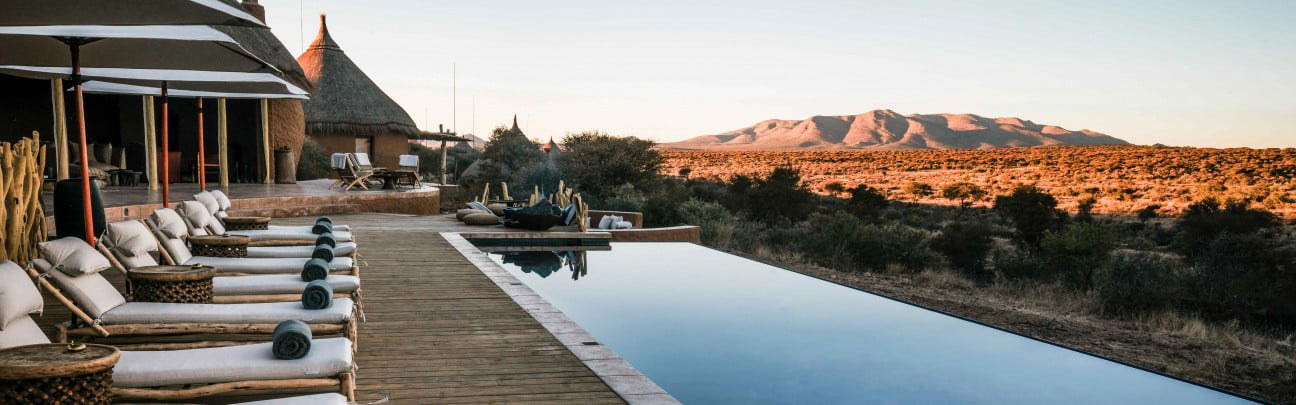
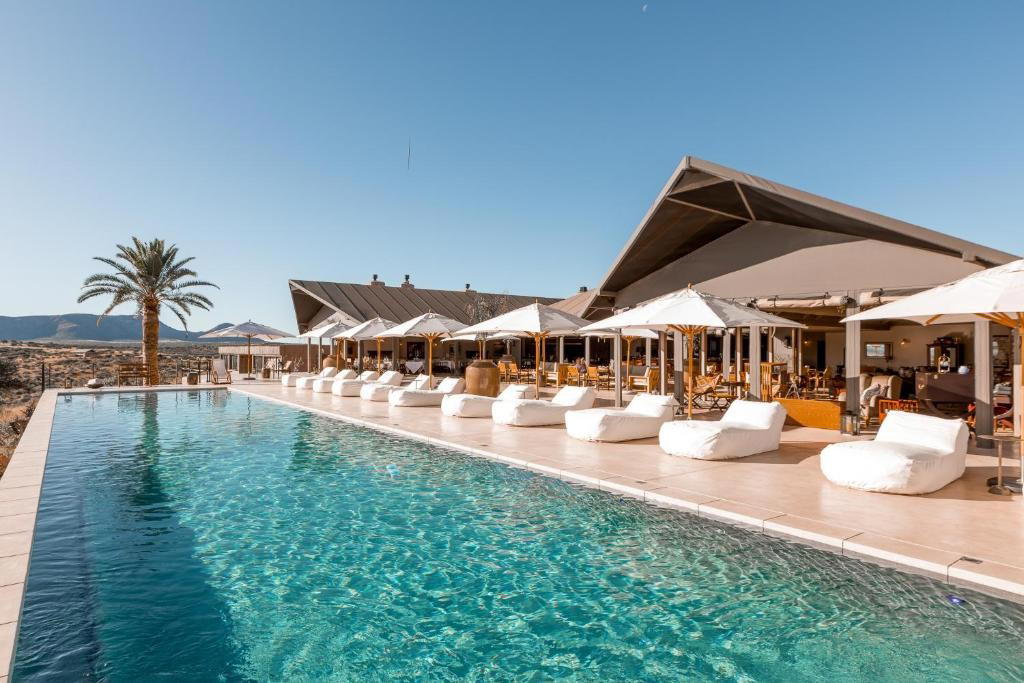
Back at the lodge, the infinity pool and spa treatments serve a function that is easy to underestimate: the recovery between activity-heavy days in a warm climate matters, and properties that handle passive rest well hold their guests more comfortably across a multi-night stay. The La Liste Leading Hotels 2026 rating of 90.5 points, with nightly rates from $424, positions Omaanda in the upper tier of Namibian lodge pricing, a tier justified by sanctuary access, the intimacy of a 15-room capacity, and the completeness of the programme rather than by room square footage alone.
Planning a Stay: Logistics and Timing
Omaanda's location on Farm no. 78 in the Kapps Farm area east of Windhoek makes it accessible as an opening or closing night for any Namibian itinerary routed through the capital, which keeps transfer logistics manageable. For those building a wider Namibian route, the property pairs naturally with a coastal extension through Swakopmund, where Atlantic Villa Boutique Guesthouse and Conferencing offers a different register, or with the more remote drama of Shipwreck Lodge in Möwebaai or Sandfontein Lodge and Nature Reserve for guests willing to push further into Namibia's less-visited territory.
Rates from $424 per night reflect a full-lodge experience rather than a room-only offering, the game drives, the al fresco dining format, and the sanctuary access are integral to how the property functions, not optional add-ons priced separately. Booking is managed directly; given the 15-room capacity, availability at peak periods (Namibia's dry season runs roughly May through October, when wildlife visibility and temperature both favour outdoor activity) tends to close well in advance. Travellers with fixed travel dates should treat this as a property to confirm early in the planning process.
Price and Positioning
Comparable venues nearby, for context on price, style, and recognition.
| Venue | Cuisine | Price | Awards | Notes |
|---|---|---|---|---|
| Zannier OmaandaThis venue (the venue you are viewing) | Not listed | Not listed | 2 Michelin Keys · La Liste Top Hotels | Not listed |
| The Windhoek | Not listed | $100–200 | World Travel Awards | Klein Windhoek, Luxurious guesthouse with designer suites |
| Our Habitas Namibia | Not listed | $500–750 | Michelin Selected · Mr & Mrs Smith Seal of Approval | Farm Coas 501, Sustainable luxury safari lodge focused on immersion in nature and communal experiences |
| Zannier Sonop | Not listed | Not listed | 3 Michelin Keys · Mr & Mrs Smith Seal of Approval | Namib Desert, Luxury tented camp evoking 1920s British colonial safari era, constructed on granite boulders with sustainable design. |
| Shipwreck Lodge | Not listed | $750–1,000 | 2 Michelin Keys · La Liste Top Hotels | Möwebaai, Shipwreck-inspired eco coastal lodge |
| Wilderness Hoanib Skeleton Coast Camp | Hoanib Valley, chic luxury tented camp | Not listed | World Travel Awards | Not listed |
Recognition history
Dated appearances from independent guides and award organizations, with the underlying list record or original source where available.
Michelin 2 Keys
Michelin
La Liste Top Hotels
La Liste
Mr & Mrs Smith Seal of Approval
Mr & Mrs Smith
Full recognition history (4 entries)
Michelin 2 Keys
Michelin
Continue exploring
More in Windhoek
Hotels in Windhoek
All hotels in Windhoek →
Restaurants in Windhoek
All restaurants in Windhoek →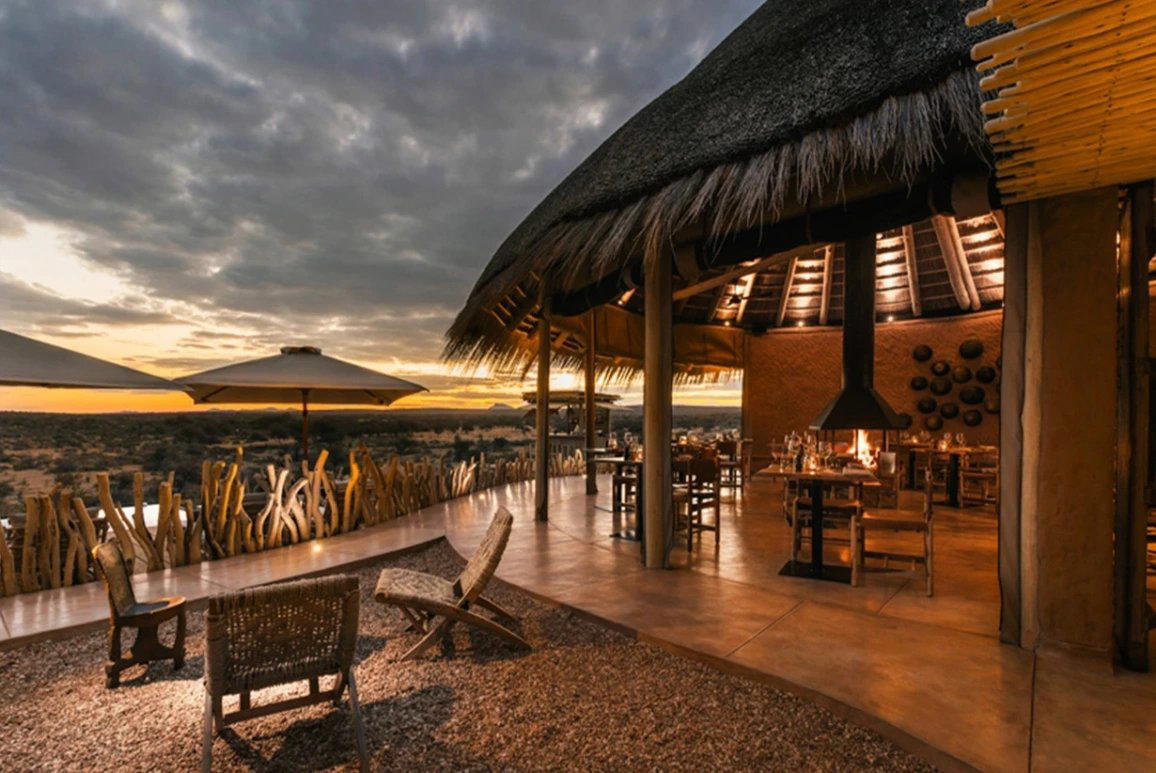
Details
- Romantic
- Quiet
- Rustic
- Elegant
- Scenic
- Intimate
- Sophisticated
- Honeymoon
- Romantic Getaway
- Anniversary
- Wellness Retreat
- Weekend Escape
- Infinity Pool
- Private Villa
- Panoramic View
- Garden
- Terrace
- Wi Fi
- Pool
- Spa
- Room Service
- Concierge
- Airport Transfer
- Garden
- Mountain
Tranquil and luxurious with natural lighting, serene wilderness views, infinity pool overlooking waterholes, and cozy fireplaces creating an intimate, earthy paradise atmosphere.