Wilderness Hoanib Skeleton Coast Camp

World Travel Awards
Wilderness Hoanib Skeleton Coast Camp sits where the arid Hoanib Valley meets the edge of one of Africa's most remote coastal wilderness zones. Named Namibia's Leading Tented Safari Camp at the 2025 World Travel Awards, it operates in a category where low guest capacity, extreme terrain, and design that defers to the surrounding landscape define the experience rather than amenity lists.

Pearl is the En Primeur Club membership app — saves, bookings, and concierge access live there. Same editors, same standards.
- Address
- Hoanib Valley, Namibia
- Website
- wildernessdestinations.com
- Directions
- Get directions
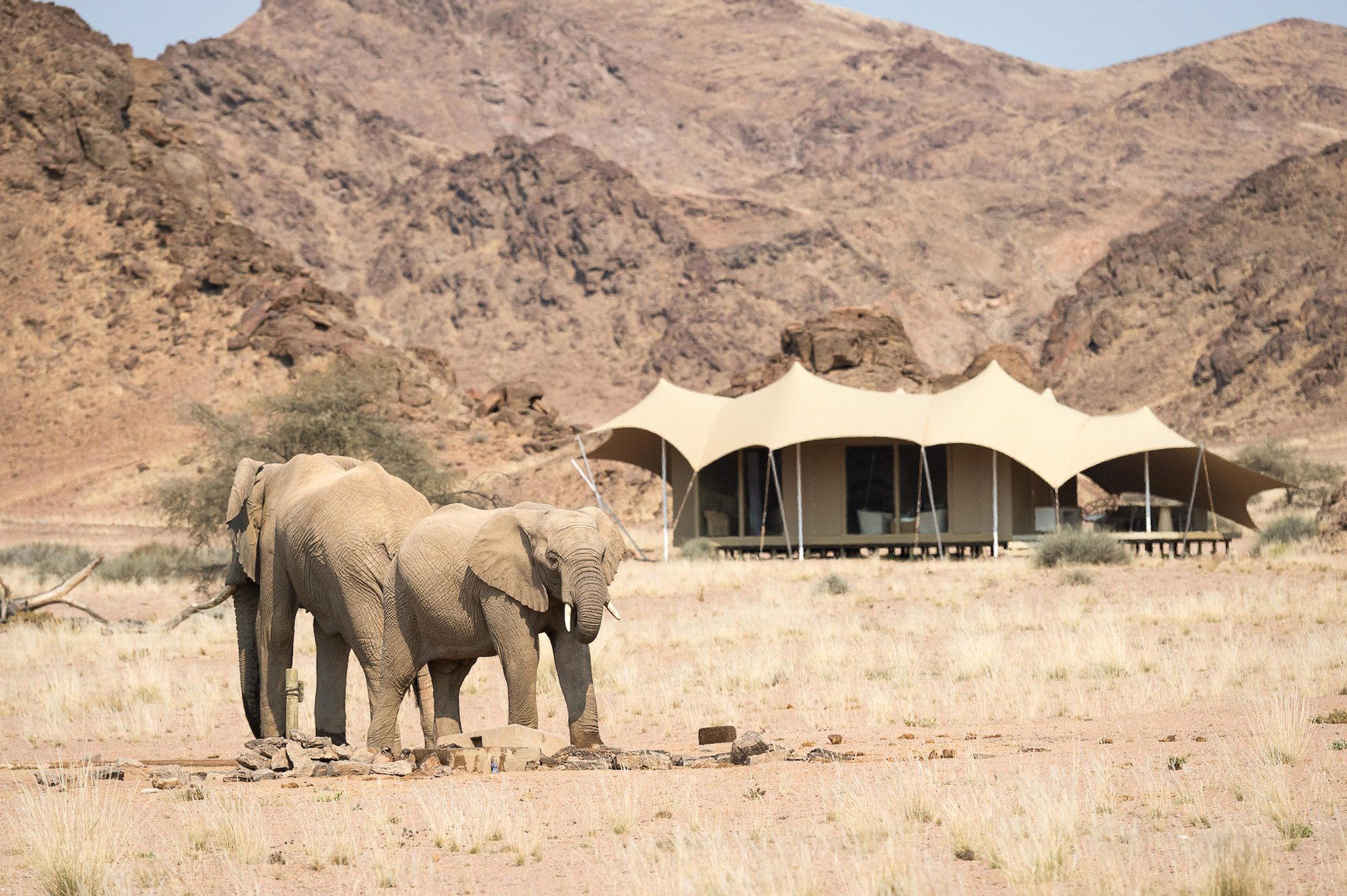
Where the Desert Meets the Skeleton Coast
The Hoanib Valley is one of those places where the scale of the terrain makes human infrastructure feel provisional. Ephemeral rivers cut through pale clay flats before the land gives way to the gravel plains and fog-belt dunes that mark the approach to the Skeleton Coast — one of Africa's most inhospitable and least-visited coastal stretches. Tented camps in this region do not compete on amenity density; they compete on access, on how precisely their placement puts guests inside an ecosystem that is otherwise genuinely difficult to reach. Wilderness Hoanib Skeleton Coast Camp operates at that intersection, offering entry to a landscape that most southern Africa itineraries never reach.
The World Travel Awards named Wilderness Hoanib Skeleton Coast Camp as Namibia's Leading Tented Safari Camp for 2025, a signal that within the regional competitive set, it is regarded as the reference point for this format. That award category matters: it does not measure against fixed lodges or large resort properties, but against camps where canvas and the terrain itself are the architecture. In a country with several sophisticated operators — including properties like andBeyond Sossusvlei Desert Lodge in Sesriem and Zannier Sonop in the Namib Desert, winning within the tented category specifically reflects a verdict on format execution rather than general luxury delivery.
Design That Reads the Land
Design language of high-end tented safari camps across southern Africa has shifted considerably over the past decade. Early iterations prioritised the romantic associations of canvas, colonial-era travelling aesthetics, brass fittings, lantern light, without necessarily integrating the structure into its site. Newer camps, particularly those operating in extreme or ecologically sensitive terrain, have moved toward a different approach: structures that follow the topography, materials that reference the palette of the surrounding environment, and interiors that keep the landscape as the dominant visual experience rather than competing with it.
In the Hoanib Valley, that philosophy is reinforced by necessity. This is not a site where elaborate fixed infrastructure sits naturally. The character of the valley, its dry riverbed, its sparse desert-adapted vegetation, the way afternoon light moves across the clay flats, demands a built response that stays low and reads lightly. The tent format is not a compromise here; it is the architecturally coherent answer to a site that would reject anything heavier. For guests arriving from properties like Epako Safari Lodge and Spa in the Omaruru district, the shift in register is immediate and deliberate.
The broader Wilderness portfolio has built its operational identity around camps that sit in remote, low-traffic wilderness areas, a positioning that places them in direct competition with operators like andBeyond rather than with the larger fixed-lodge market. Within that positioning, the Hoanib property is among the most remote in the entire Wilderness network, which is itself a meaningful data point about the kind of access it offers.
The Ecosystem as Primary Attraction
Tented camps in extreme environments derive their authority from what is outside the tent rather than what is inside it. The Hoanib Valley is desert-elephant country, one of the few places in the world where elephant populations have adapted to survive in near-hyperarid conditions, moving along dry riverbeds and modifying their ranging behaviour in ways that differ measurably from savanna populations. The Skeleton Coast to the west adds a further register: fog, shipwrecks, Cape fur seal colonies, brown hyena, and a coastal ecosystem shaped by the cold Benguela Current pushing up from the south Atlantic.
Fly-in access is the standard approach for this part of Namibia; the road distances and terrain make ground transfers impractical for most itineraries. That logistical requirement functions as a self-selecting filter on the guest profile, this is not a camp reached by travellers passing through on a standard circuit. The commitment required to get there shapes the character of the visit in ways that a more accessible property cannot replicate. Guests considering properties like Shipwreck Lodge in Möwebaai, another property operating in the Skeleton Coast corridor, will recognise the same logic of remote access as a defining feature rather than an inconvenience.
Placing It in the Namibian Safari Tier
Namibia's high-end safari market occupies a distinct position in the broader African context. Unlike East Africa's Masai Mara or Serengeti circuits, which handle significant visitor volumes, Namibia's appeal rests on its low population density, its protected wilderness areas, and an infrastructure that keeps guest numbers deliberately small across most premium properties. The competitive tier for Wilderness Hoanib Skeleton Coast Camp within Namibia includes camps in the Damaraland, the Namibrand, and the southern Namib, properties that similarly rely on fly-in logistics, limited capacity, and ecosystem access as their primary value proposition.
Within that tier, the Skeleton Coast and Hoanib Valley location is genuinely differentiated by ecology and remoteness. The central Namib, home to properties like andBeyond Sossusvlei and Zannier Sonop, draws from the same high-end traveller pool but offers a different ecological experience, dune systems and dry pan landscapes rather than the Skeleton Coast's coastal fog belt and desert-river corridors. Both are positioned at the premium end of Namibian travel; they serve different parts of a longer itinerary rather than competing directly for the same nights. For readers building a multi-property Namibian route, our full Hoanib Valley guide covers the regional context in depth.
Travellers calibrating Namibia against other extreme-environment luxury properties globally, Amangiri in Canyon Point being the most obvious comparison in the desert-luxury category, will find that the tented camp format here operates on a different principle. Amangiri is architecture as statement; the Hoanib camp is architecture as disappearance. The logic is inverted, and that inversion is the point.
Planning the Visit
Access to Wilderness Hoanib Skeleton Coast Camp is by light aircraft, with charter flights operating from Windhoek and from other camps across the Wilderness network. For travellers beginning or ending their Namibia trip in the capital, The Windhoek in Windhoek functions as a practical base before or after fly-in transfers. The dry season, broadly May through October, aligns with the clearest conditions for game viewing along the Hoanib riverbed, though the Skeleton Coast's fog patterns are a year-round characteristic rather than a seasonal variable.
Wilderness operates on an all-inclusive model across its remote camps, which is standard for this tier of the market and reflects the logistical reality of supplying properties in areas with no nearby service infrastructure. Guests considering a broader Namibian itinerary might also examine Sandfontein Lodge and Nature Reserve in Sandfontein or Gmundner Lodge in the Dordabis District as part of a more varied route that incorporates different ecosystems and property formats. For those arriving internationally through coastal gateways, Atlantic Villa Boutique Guesthouse in Swakopmund offers a useful stopover before moving into the interior or the Skeleton Coast zone.
Comparable Spots, Quickly
Comparable venues nearby, for context on price, style, and recognition.
| Venue | Cuisine | Price | Awards | Notes |
|---|---|---|---|---|
| Wilderness Hoanib Skeleton Coast CampThis venue — the venue you are viewing | chic luxury tented camp | Not listed | World Travel Awards | Not listed |
| andBeyond Sossusvlei Desert Lodge | Contemporary minimalist desert luxury with stone and glass architecture reflecting the surrounding landscape; sustainability and uncompromised luxury integrated throughout. | $1,000–1,500 | La Liste Top Hotels · Preferred Hotels Member | Sesriem |
| Epako Safari Lodge & Spa | Contemporary African chic safari lodge | $500–750 | Relais Chateaux Award | Omaruru district |
| Wilderness Little Kulala | Luxury desert eco-lodge in private reserve | Not listed | World Travel Awards | Sesriem |
| Gmundner Lodge | Sustainable luxury safari lodge blending classic exploration charm with modern comfort in unspoiled Namibian wilderness. | $1,500–2,500 | Relais Chateaux Award | Dordabis District |
| The Windhoek | Luxurious guesthouse with designer suites | $100–200 | World Travel Awards | Klein Windhoek |
Recognition history
Dated appearances from independent guides and award organizations, with the underlying list record or original source where available.
World Travel Awards
World Travel Awards
Details
- Scenic
- Rustic
- Intimate
- Elegant
- Romantic Getaway
- Honeymoon
- Weekend Escape
- Panoramic View
- Pool
- Wi Fi
- Laundry Service
- Room Service
- Mountain
Cozy lounge with open fireplace, neutral tones with color splashes, sophisticated communal dining, and dramatic desert views from canvas tents blending seamlessly into rugged landscape.