Gmundner Lodge

A Relais & Châteaux member lodge in Namibia's Dordabis District, Gmundner Lodge pairs private 2,200-sq-ft tented accommodation with a farm-to-table kitchen rooted in Namibian-German culinary tradition. Under chef Mark Lundgaard, the dining program draws from the surrounding land.
Pearl is the En Primeur Club membership app — saves, bookings, and concierge access live there. Same editors, same standards.
- Address
- 6GM5+VH, Brack, Namibia
- Phone
- +264 81 803 0749
- Website
- gmundner-lodge.com
- Directions
- Get directions
 Saves & bookings on Pearl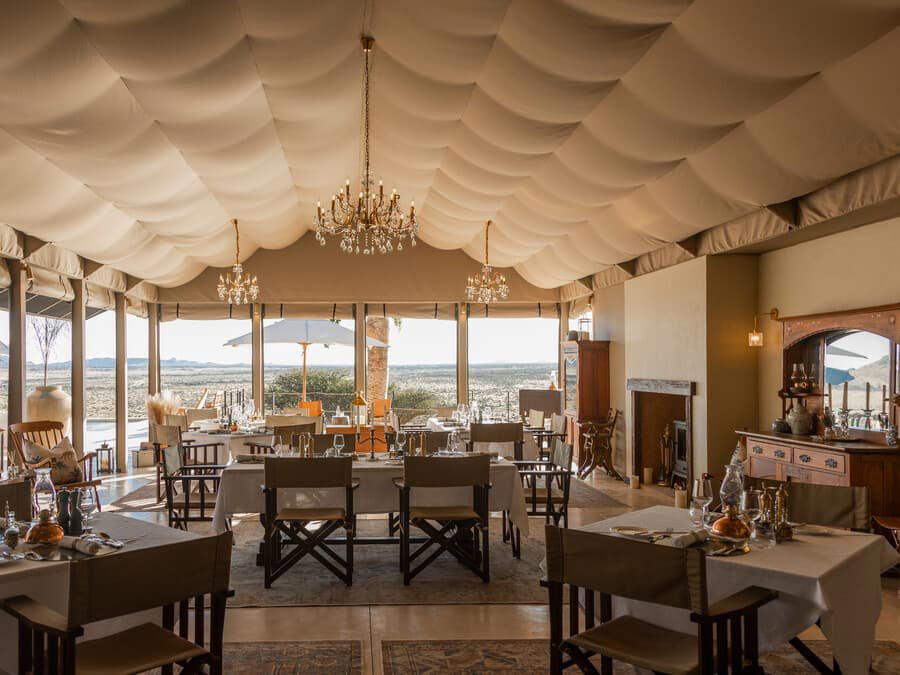
Where the Karoo Fringe Meets the German Table
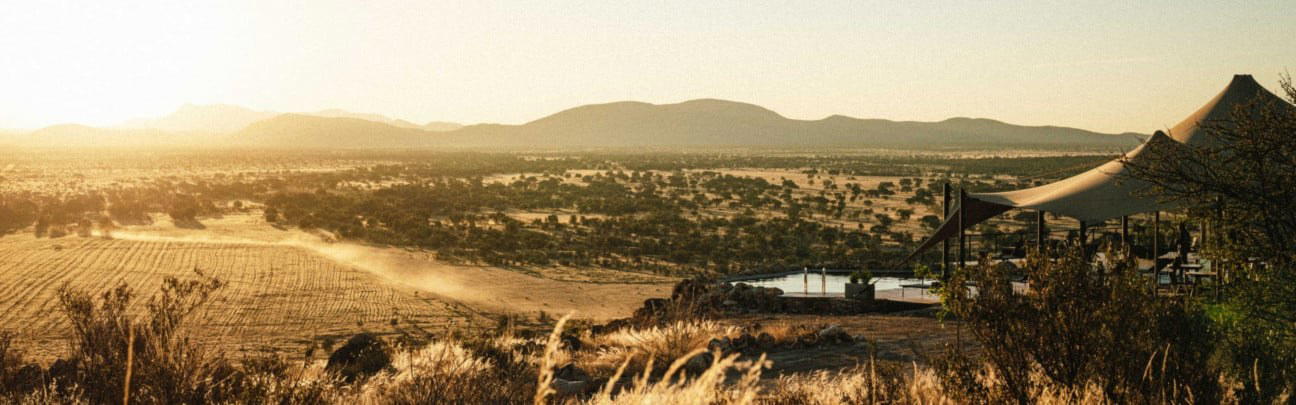
Southern Namibia's interior is a place of long silences and short distances between the earth and the sky. The Dordabis District, east of Windhoek, sits at the edge of the Kalahari transition zone, where the pale gravel plains of the central plateau give way to thorn scrub and camel-thorn woodland. The scale of the land here is not scenic in the postcard sense; it is spatial in a way that requires physical presence to register. Gmundner Lodge, a Relais & Châteaux member property, occupies this particular stretch of Namibia with a format calibrated to that landscape: private tented accommodation of significant proportions, a kitchen that draws from the farm, and a cooking program that threads Namibian produce through a German culinary inheritance that has been part of this country's food culture for well over a century.
That German thread is not decorative. German colonial settlement brought specific livestock breeds, curing and preservation techniques, and a protein-led cooking sensibility that became genuinely embedded in Namibian food culture rather than remaining simply an imported overlay. Today, Namibian-German cuisine occupies a niche that few kitchens outside the country treat with any seriousness. Across the broader safari lodge category, most properties default to a continental or broadly African format. Gmundner's decision to hold to this hybrid tradition places it in a distinct and smaller peer group, closer in spirit to destination lodges that have a defined culinary identity than to the more generic luxury-bush model. For comparison, properties like Epako Safari Lodge & Spa in Omaruru district reflect the broader African safari lodge format; Gmundner sits on a different axis, where the food program carries as much weight as the game or the landscape.
The Kitchen and What It Says About the Land
Farm-to-table as a concept has been so widely claimed that it has nearly lost descriptive value. At a property operating in the Dordabis District, however, the supply logic is not a marketing choice but a practical one: proximity to production is a function of remoteness rather than intention. Chef Mark Lundgaard works within this constraint as a condition of the kitchen rather than a philosophy to announce. The Relais & Châteaux membership aligns with this approach, and the framework provides a meaningful external reference point for what the kitchen commits to delivering.
Namibian beef is one of the country's strongest agricultural claims, with communal and commercial herds raised on open range with minimal input, and exports regulated to EU standards. Venison, particularly oryx and kudu, occupies a parallel track, with game meat that is leaner, more mineral, and more demanding of technique than beef. A kitchen working in the Namibian-German tradition will apply curing, slow-roasting, and reduction-based saucing to these proteins in ways that reflect German culinary grammar applied to southern African raw material. The result is a cuisine that has genuine regional specificity, something that the world's most decorated tables, from Arpège in Paris to Aponiente in El Puerto de Santa María, pursue through entirely different ingredient languages but with the same underlying logic: cook what the place produces, and cook it in a way that reflects how the place thinks about food.
Scale, Format, and the Meaning of Private Space
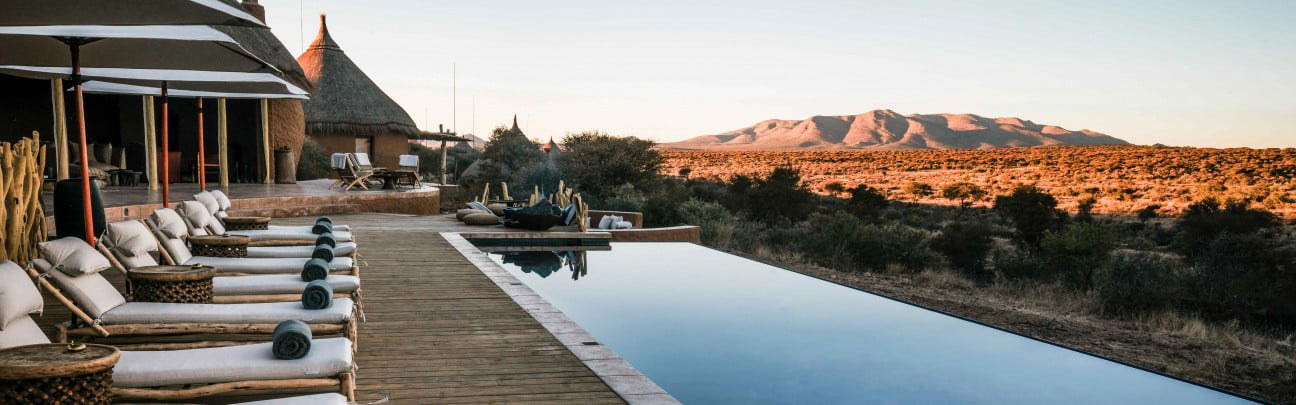
The 2,200-sq-ft tent figure is worth sitting with. At that footprint, a single accommodation unit is larger than many urban apartments and most boutique hotel suites. This format has become the premium signal in the high-end African lodge category, where privacy and the sense of unmediated space are the primary luxury proposition rather than thread count or in-room technology. The Relais & Châteaux membership reinforces this positioning; the collection does not include properties that pursue volume over quality, and membership functions as a signal about the comparable set the property is competing in.
High volume at high rating in the lodge category, where a significant portion of guests are first-time visitors with calibrated expectations, suggests consistent execution rather than isolated peak experiences. The review base also implies a degree of accessibility: Gmundner draws from a broad enough audience to generate that volume, which places it in a different bracket from the deliberately limited-access properties in this tier.
Getting There and Thinking About Timing
Dordabis sits roughly 70 kilometres east of Windhoek, making Gmundner Lodge accessible from Hosea Kutako International Airport in a drive that is direct by Namibian standards. The road infrastructure in this part of the country is gravel for the final approach sections, which is standard for the region and should be factored into transfer planning, particularly if arriving in the late afternoon when light conditions change quickly. For access details, booking, and current availability, the lodge's contact channels are through gmundner-lodge.com or by email at gmundner@relaischateaux.com, with telephone contact at +264 818030749.
Seasonally, the Dordabis District sits outside the major wildlife migration corridors that drive peak bookings at northern and north-western Namibian lodges. This means the lodge operates on a different seasonal logic: the dry season months from May through October bring cooler temperatures and clearer skies, while the January to April wet season transforms the surrounding bush and brings a different, greener quality to the landscape. Neither window is obviously superior; they offer different versions of the same place. Those planning a broader Namibia itinerary should cross-reference the Dordabis stop with our full Dordabis District restaurants guide, hotels guide, and experiences guide to build out the surrounding days. The bars guide and wineries guide round out the full picture for those spending more than a night or two in the district.
Placing Gmundner in a Wider Dining Frame
It is useful to think about what a property like Gmundner Lodge represents in the context of serious dining more broadly. The world's most technically demanding tables, places like Alinea in Chicago, Le Bernardin in New York City, or Alain Ducasse at Louis XV in Monte Carlo, derive their authority from codified culinary traditions, extreme technical precision, and a deep supply chain built over decades. Gmundner operates on a different axis: its claim on a serious diner's attention is the rarity of the cuisine type, the quality of the underlying ingredients, and the irreplicability of the setting. You are not going to find Namibian-German farm cooking prepared at this standard in many other places. For guests arriving from the calibrated urban dining circuits represented by venues like Atomix in New York, Amber in Hong Kong, or Lazy Bear in San Francisco, the shift in register is part of the experience. Gmundner is not competing with those tables on their terms. It is competing on the terms set by this particular piece of southern Africa, and on those terms it makes a coherent case for itself.
Fast Comparison
Comparable venues nearby, for context on price, style, and recognition.
| Venue | Cuisine | Price | Notes |
|---|---|---|---|
| Gmundner LodgeThis venue — the venue you are viewing | Refined Namibian Fine Dining | $$$$ | Not listed |
| Epako Safari Lodge & Spa | Namibian Fusion with French Techniques | $$$$ | Omaruru district |
| EPAKO Restaurant | Namibian fine dining with African influences and French techniques | $$$$ | Omaruru district |
| Ocean Cellar | Namibian Seafood & Oyster Bar | $$$ | Molen Weg, On the Mole |
| Anchors @ The Jetty | Fresh Seafood Waterfront | $$ | Walvis Bay Waterfront |
Recognition history
Dated appearances from independent guides and award organizations, with the underlying list record or original source where available.
Relais Chateaux Award
Relais Chateaux
Continue exploring
More in Dordabis District
Restaurants in Dordabis District
Browse all →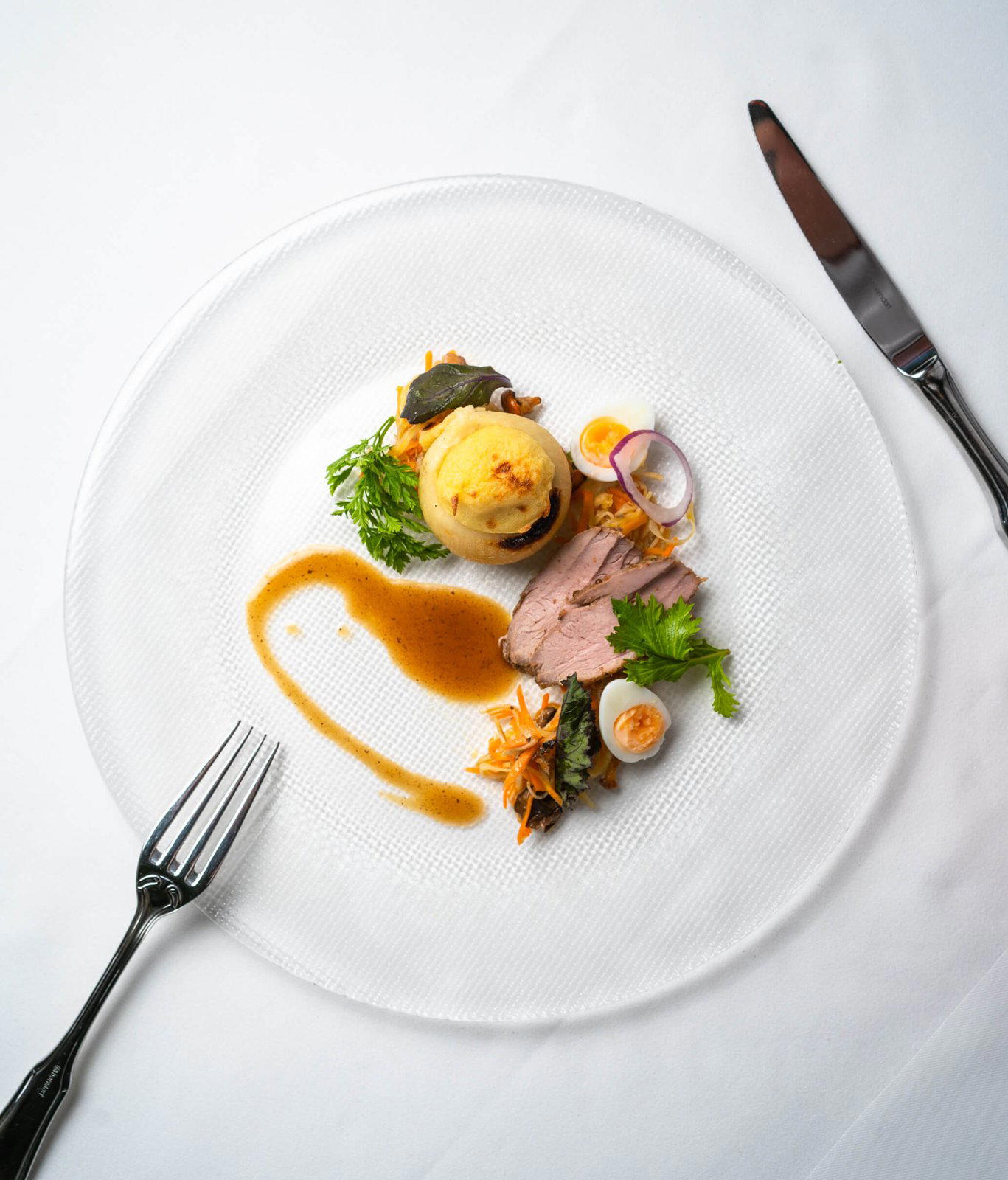
At a Glance
- Romantic
- Rustic
- Cozy
- Scenic
- Elegant
- Intimate
- Date Night
- Special Occasion
- Family
- Celebration
- Open Kitchen
- Terrace
- Historic Building
- Extensive Wine List
- Farm To Table
- Organic
- Local Sourcing
- Mountain
- Garden
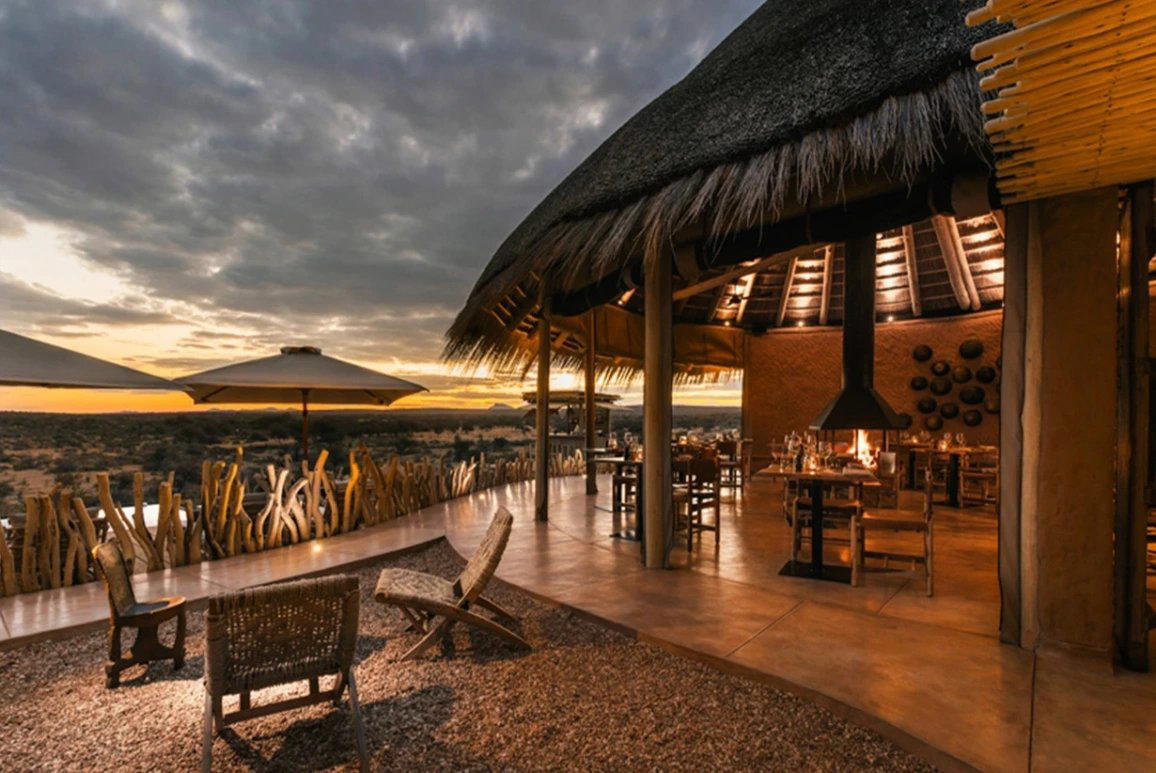
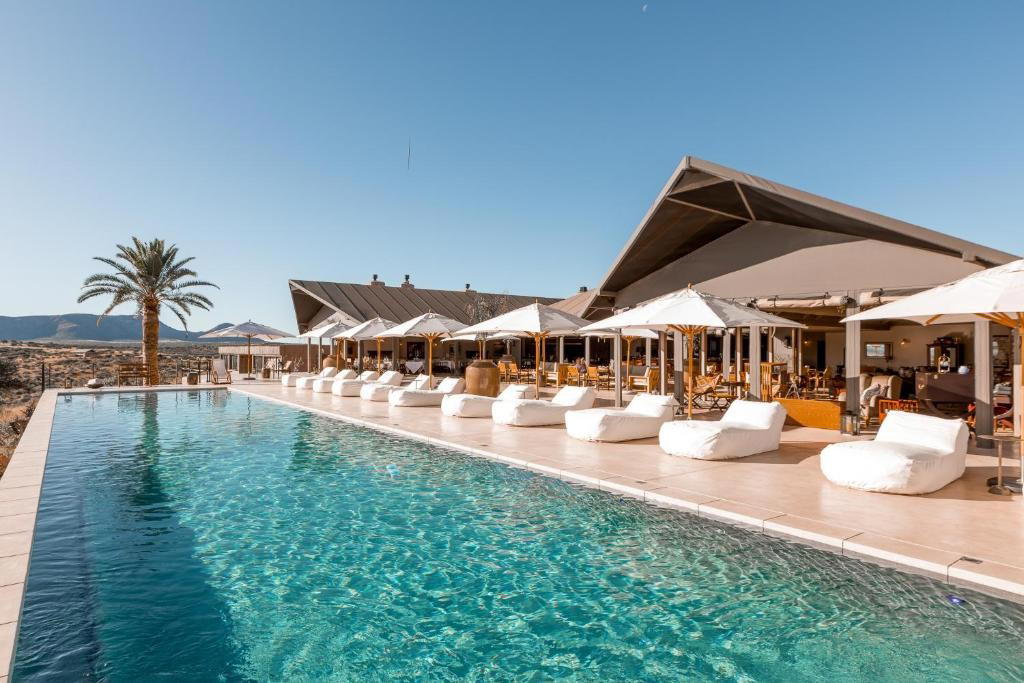
Nostalgic safari elegance with polished curation of antiques, indoor/outdoor canvas walls opening to desert vistas, warm lighting, and a relaxing atmosphere praised for its beauty and tranquility.