

Michelin Selected · Mr & Mrs Smith Seal of Approval
Our Habitas Namibia, selected for the Michelin Hotels guide 2025, occupies a working farm outside Windhoek and positions itself within the smaller, design-led tier of southern African luxury lodges. The property draws travellers who want proximity to Windhoek's infrastructure without sacrificing a sense of genuine wilderness.

Pearl is the En Primeur Club membership app, where members save venues, book tables and use the concierge.
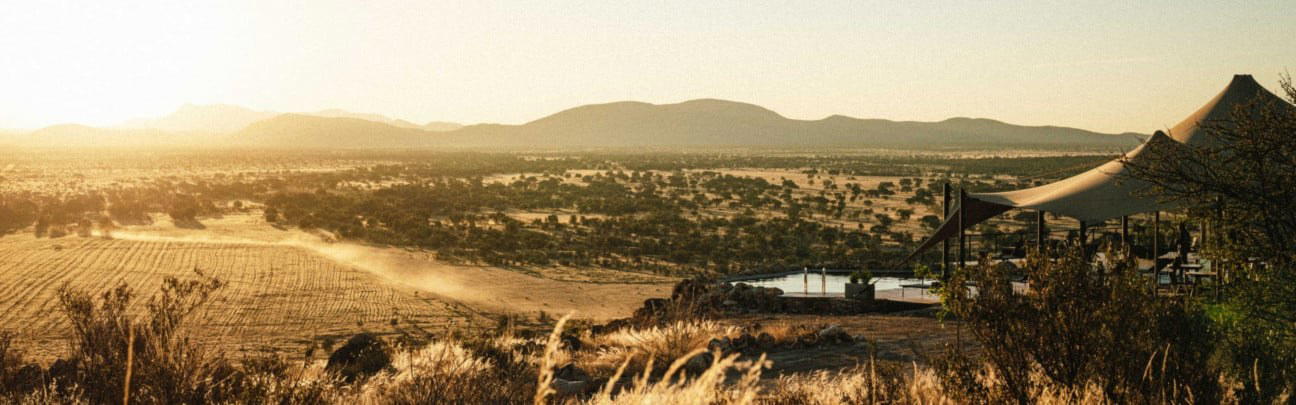
Desert Architecture as Editorial Statement
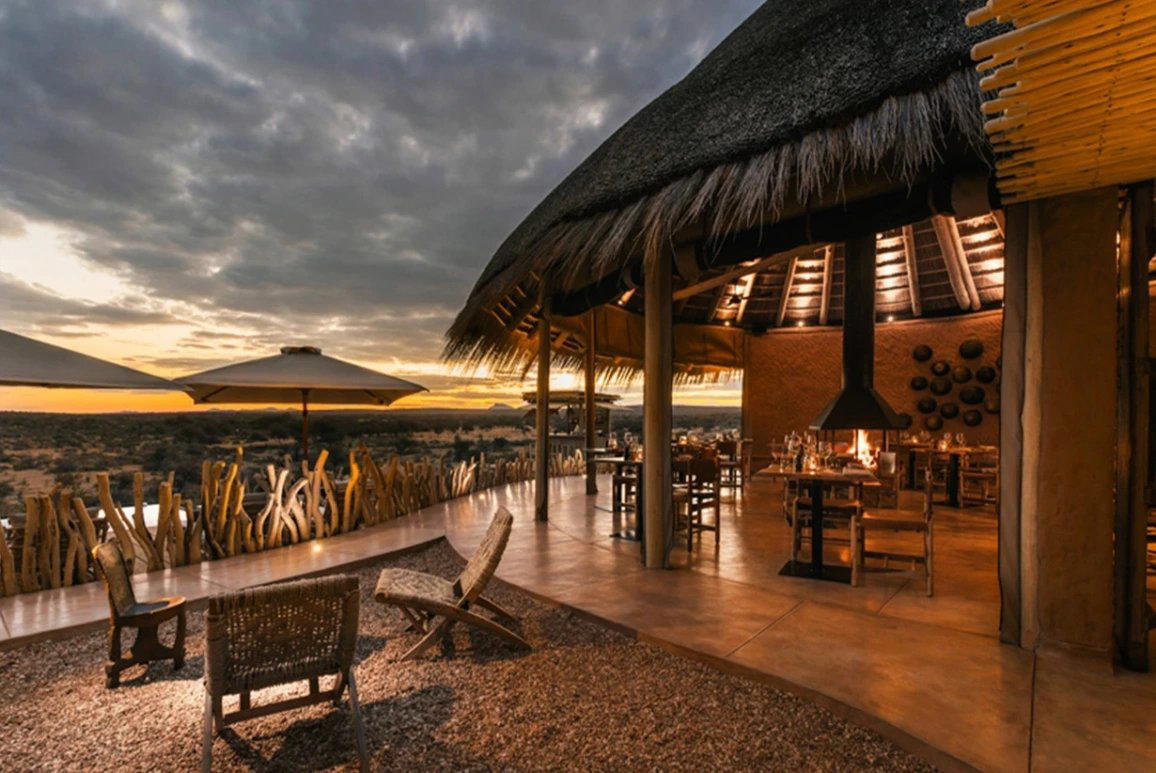
The dominant design conversation in southern African luxury lodging has shifted decisively over the past decade. Large resort formats with imported materials and European interiors have given way, at least in the premium niche, to properties that treat local landscape and craft as structural arguments rather than decorative gestures. Our Habitas Namibia, located on Farm Coas 501 outside Windhoek, belongs to that second school. The Our Habitas group has built a recognisable spatial language across properties in multiple countries, and the Namibia iteration applies that language to one of the continent's most demanding environments: semi-arid scrubland, extreme temperature swings between day and night, and a quality of light that exposes every material choice.
That environmental specificity matters. Properties that read coherently in tropical settings often feel stranded in the Namibian interior, where the palette runs to ochre, pale grey, and bleached grassland. The design approach at Our Habitas Namibia addresses this by working with the land's own tonal register rather than against it, placing structures that read as extensions of the terrain rather than impositions on it. This is a design position, not just an aesthetic preference, and it places the property in a different competitive bracket from urban hotels like The Windhoek, which operates in a city-centre context with a correspondingly different set of spatial priorities.
Where It Sits in the Namibian Lodge Spectrum
Namibia's premium accommodation market has developed along two broad axes. The first runs through remote, single-biome camps, properties such as Wolwedans Dunes Lodge in Namibrand, andBeyond Sossusvlei Desert Lodge in Sesriem, and Zannier Sonop in the Namib Desert, where isolation is the primary offering and access requires significant logistical commitment. The second axis runs through properties with farm or peri-urban settings that offer wilderness character alongside reasonable proximity to Windhoek's airport and infrastructure.
Our Habitas Namibia occupies the second axis, which is a practical position for travellers building a multi-stop Namibian itinerary. Windhoek functions as the country's main entry point, and a property that delivers a genuine landscape experience without requiring an additional charter flight or four-hour transfer has a specific utility in trip-planning terms. Compare this with the more remote Wilderness Hoanib Skeleton Coast Camp in the Hoanib Valley or Shipwreck Lodge in Möwebaai, both of which demand dedicated fly-in access and sit at the far end of the remoteness spectrum.
Within the Windhoek-proximate bracket, the competition is thinner. Zannier Omaanda occupies a similar geographic zone with a different design sensibility, drawing on traditional Ovambo architecture for its circular thatched structures. Gmundner Lodge in the Dordabis District represents another variation on the farm-lodge format. Our Habitas Namibia differentiates itself through its brand architecture: the Our Habitas group has built an international reputation for a specific visual and experiential language, and guests booking this property are often selecting that language as much as the location.
The Michelin Selection and What It Signals
In a Namibian context, Michelin recognition carries specific weight because the guide's hotel programme has been relatively selective in sub-Saharan Africa, meaning inclusion signals something about quality standards rather than simply reflecting the size of the local market. For comparison, properties like Aman Venice, Le Bristol Paris, and Badrutt's Palace Hotel in St. Moritz occupy the same Michelin Selected category, which illustrates the breadth of the designation rather than a strict typological equivalence.
The Michelin hotel programme evaluates properties across dimensions that include service consistency, design coherence, and quality of experience rather than applying the star logic of its restaurant guides. For a design-led lodge like Our Habitas Namibia, coherence is arguably the most relevant dimension: does the spatial concept hold up across different guest touchpoints, and does the overall experience deliver on the promise the architecture makes? The 2025 listing suggests the answer is affirmative, at least by the guide's assessment criteria. Other Michelin-recognised properties in the broader Namibian and southern African region include Epako Safari Lodge and Spa in the Omaruru District.
The Our Habitas Brand Context
Understanding Our Habitas Namibia requires some understanding of the group it belongs to. Our Habitas operates across multiple continents with a design philosophy that emphasises community-oriented spaces, locally sourced materials, and a particular approach to the relationship between indoor and outdoor environments. This is not the approach of a traditional safari operator, nor does it replicate the heritage-heavy aesthetic of older southern African lodge brands. The target guest is someone as likely to be familiar with Aman New York or Bvlgari Hotel Tokyo as with traditional safari lodges, which reflects a broader trend in luxury travel toward brand loyalty that crosses geography and category.
That positioning has consequences for the guest experience. Communal spaces tend to play a larger role than in more traditional lodge formats, and the programming leans toward shared activities and social design rather than pure privacy and seclusion. For travellers seeking the isolation of a property like Sandfontein Lodge and Nature Reserve, the Our Habitas model may feel more animated. For travellers who want a Namibian setting alongside design coherence and a community-oriented atmosphere, the fit is more direct.
Planning a Stay
Farm Coas 501 is accessible from Windhoek, which keeps the property usable as either a standalone destination or a first or final night of a broader Namibian itinerary. Travellers moving through to the Namib or Skeleton Coast can treat it as a decompression point, arriving from an international flight without immediately committing to a remote camp transfer. The property sits at a price point consistent with the Michelin-selected tier of Namibian accommodation, though specific rate information is best confirmed directly through the Our Habitas booking channels given seasonal variation. For those building wider Namibian routing, the Atlantic Villa Boutique Guesthouse in Swakopmund offers a coastal complement on the Atlantic side. Our full Windhoek restaurants and hotels guide covers the broader range of options in and around the capital.
At-a-Glance Comparison
| Venue | Price | Awards |
|---|---|---|
| Our Habitas NamibiaThis venue (the venue you are viewing) | $500–750 | Michelin Selected · Mr & Mrs Smith Seal of Approval |
| Epako Safari Lodge & Spa | $500–750 | Relais Chateaux Award |
| Gmundner Lodge | $1,500–2,500 | Relais Chateaux Award |
| Zannier Omaanda | Not listed | 2 Michelin Keys · La Liste Top Hotels |
| The Windhoek | $100–200 | World Travel Awards |
| Wolwedans Dunes Lodge | $750–1,000 | Michelin Selected |
Recognition history
Dated appearances from independent guides and award organizations, with the underlying list record or original source where available.
Michelin Selected
Michelin
Mr & Mrs Smith Seal of Approval
Mr & Mrs Smith
Continue exploring
More in Windhoek
Restaurants in Windhoek
All restaurants in Windhoek →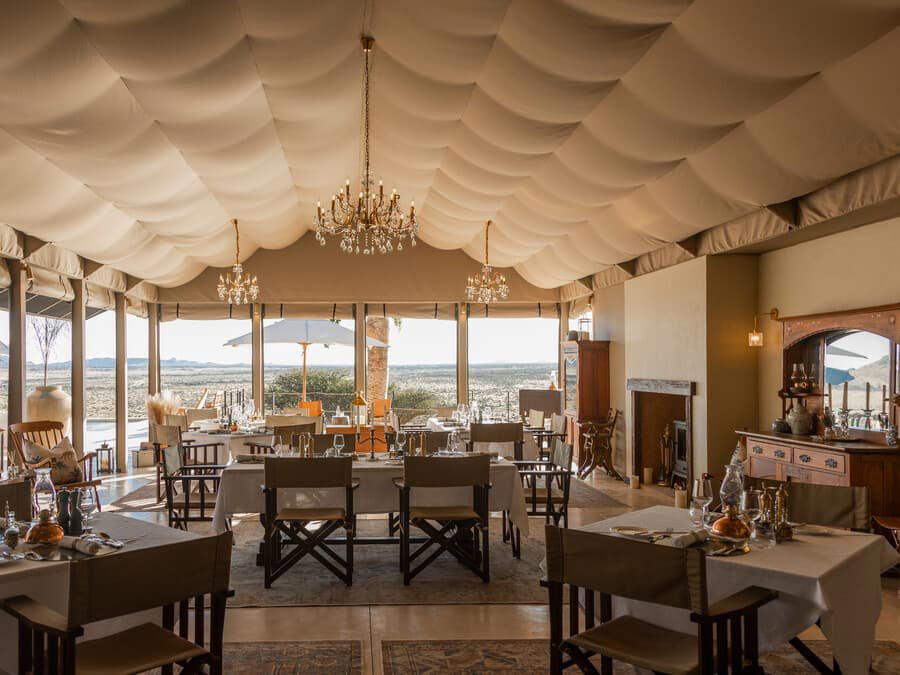
Details
- Bohemian
- Modern
- Scenic
- Intimate
- Minimalist
- Romantic Getaway
- Wellness Retreat
- Honeymoon
- Weekend Escape
- Panoramic View
- Infinity Pool
- Pool
- Spa
- Wi Fi
- Concierge
- Restaurant
- Mountain
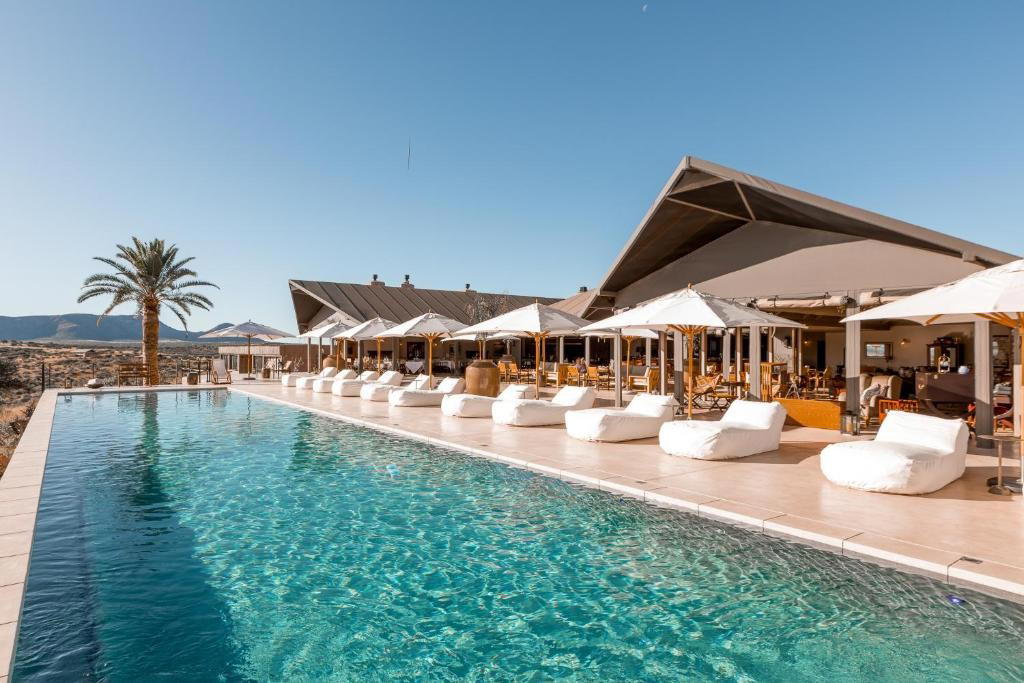
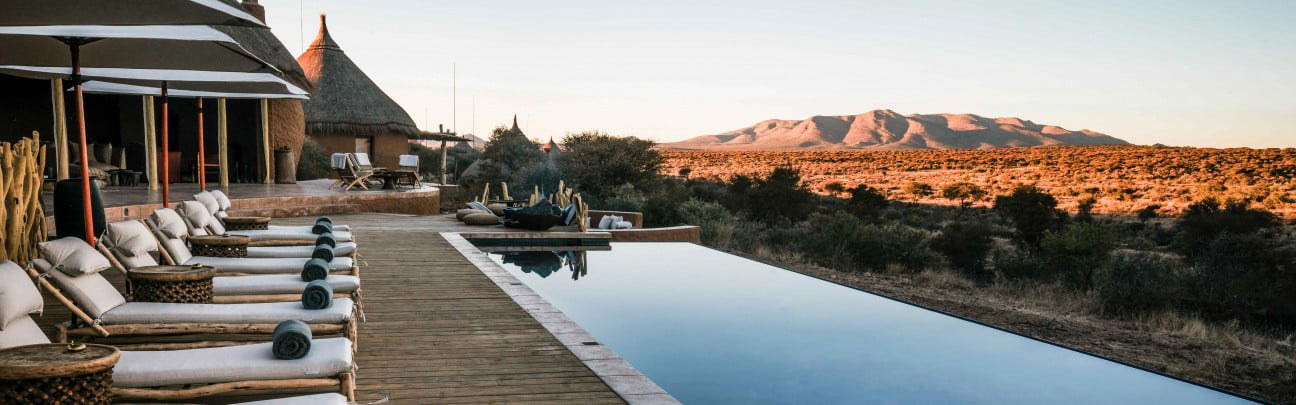
Modern design with quiet, serene atmosphere enhanced by natural light through floor-to-ceiling windows and communal spaces fostering connection amid the stillness of the landscape.