Sandfontein Lodge & Nature Reserve

World Travel Awards
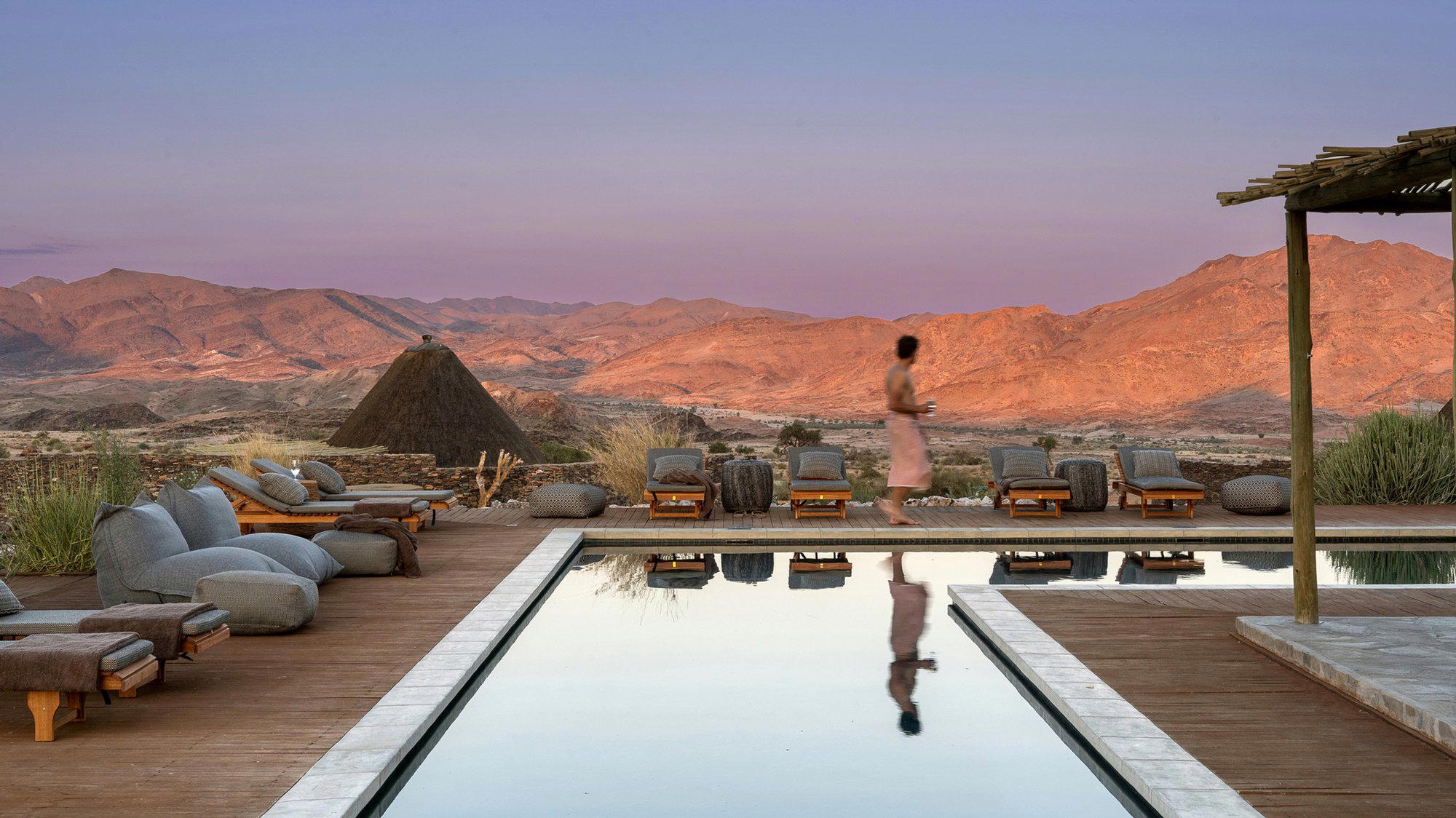
Named Namibia's Leading Safari Lodge at the 2025 World Travel Awards, Sandfontein Lodge sits inside a private nature reserve along the Orange River corridor — one of southern Africa's more remote desert environments. The architecture works with the terrain rather than against it, placing guests inside a landscape that operates on geological time. For travellers who treat the lodge as destination rather than stopover, the distance from Namibia's main tourist circuits is the point.

Pearl is the En Primeur Club membership app — saves, bookings, and concierge access live there. Same editors, same standards.
- Address
- Sandfontein, Namibia
- Website
- sandfontein.com
- Directions
- Get directions
Where the Desert Meets the River: Sandfontein's Sense of Place
Approach Sandfontein Lodge and Nature Reserve from any direction and the land makes its argument before the buildings come into view. The Orange River cuts through the Namib's southern reaches here, and the collision of arid dune country with a permanent water source produces a desert ecology that functions differently from the famous dune fields around Sossusvlei to the north. Oryx move through the reserve in patterns that predate any human structure. The lodge sits inside that system rather than in front of it, and that spatial decision — building with the terrain, not against it — defines the property's architectural identity more than any single design choice.
In a country where the premium safari category has expanded rapidly over the past decade, properties now split along a recognisable axis: large-footprint operations positioned for accessibility, and smaller, remote lodges that treat distance as a design asset. Sandfontein belongs firmly to the second group. The Orange River corridor rarely features in first-tier Namibia itineraries, which tend to route through Etosha, Sossusvlei, and the Skeleton Coast. That means the reserve absorbs significantly less visitor pressure than those circuits, and the guest experience reflects it. See also: Wilderness Hoanib Skeleton Coast Camp in Hoanib Valley and Shipwreck Lodge in Möwebaai for properties that similarly use geographic remoteness as a core part of their offering.
Architecture as Landscape Argument
Desert lodge architecture in Namibia has moved through several phases. The earliest generation of properties built for shelter against the environment; a later wave built for spectacle, using glass and cantilever to frame dune views. The most considered lodges of the current era take a different position: materials and form that acknowledge the geology, that produce shade rather than panoramic transparency, and that age into the landscape rather than contrasting with it. Sandfontein's structures read as belonging to this third approach, where the built environment draws from vernacular logic rather than imported resort typology.
The private nature reserve itself functions as a frame for the lodge rather than a backdrop. Game within the reserve moves freely across terrain that includes the river edge and the surrounding arid plains. This dual-habitat dynamic, permanent water alongside true desert, means wildlife presence here operates on rhythms that differ from savanna reserves. For guests, that translates into sightings that are contingent rather than managed, which is, in this tier of safari travel, the preferred condition. Compare this with the design-led desert immersion at Zannier Sonop in the Namib Desert or the architectural precision of andBeyond Sossusvlei Desert Lodge in Sesriem, both of which approach landscape integration from distinct design philosophies.
Award Context and Competitive Position
The 2025 World Travel Awards named Sandfontein Lodge the winner in the Namibia's Leading Safari Lodge category. World Travel Awards operates a trade and consumer voting model across the African safari sector, and the Namibia category includes the country's most-recognised properties. The recognition matters less as a seal of approval than as a signal about where the property sits in Namibia's premium tier: not as a boutique outlier, but as a lodge that the broader industry considers a benchmark at the national level.
Namibia's safari lodge category has deepened considerably since 2010, with new openings in the Kunene, Damaraland, and southern corridor pushing the overall standard higher. Sandfontein's position in the south, anchored to the Orange River rather than to the more photographed northern circuits, gives it a distinct geographic identity within that competitive field. For a broader survey of Namibia's lodge landscape, Epako Safari Lodge and Spa in the Omaruru district and Gmundner Lodge in the Dordabis District represent different regional and stylistic positions within the same national conversation.
Planning a Stay
Sandfontein's location in Namibia's deep south means it sits outside the standard fly-in safari circuits that serve Etosha and the Skeleton Coast. Self-drive access through the southern Namib requires appropriate vehicle preparation; the roads in this region demand high-clearance four-wheel-drive travel and advance planning around fuel and water. That logistical threshold is part of what keeps the reserve in the lower-volume tier. For guests routing through southern Namibia, the lodge works as a natural anchor point rather than an add-on, particularly for itineraries that include the Fish River Canyon or continue into South Africa's Northern Cape. Reaching out directly via the lodge's official website for current booking availability, rate structures, and seasonal programming is the appropriate first step, as details are subject to change and are not published here.
Seasonally, the southern Namib operates differently from the north. Austral winter (May through August) delivers cooler temperatures and clear skies, which align with the preferences of most international travellers. Summer months bring heat that limits midday activity but also produce a different ecological dynamic at the river. Neither window is clearly superior; they suit different travel priorities. Those comparing Namibia to other remote desert lodge experiences globally might find useful reference points at Amangiri in Canyon Point, where desert architecture and seasonal programming face analogous planning questions in a North American context.
For travellers building a broader Namibia itinerary from Windhoek, The Windhoek provides a logical base at either end of a self-drive route. Those arriving via international connections through Cape Town or Johannesburg should factor in the considerable overland distances involved, Namibia's scale routinely surprises first-time visitors unfamiliar with its road infrastructure. See our full Sandfontein guide for regional orientation and additional context on the area's appeal relative to Namibia's better-known destinations.
For travellers accustomed to the service architecture of properties like Atlantic Villa Boutique Guesthouse in Swakopmund or urban hotels such as Cheval Blanc Paris, Hotel Plaza Athénée, or La Réserve Paris, Sandfontein represents a deliberate shift in register. The currency here is landscape and ecological encounter rather than amenity density. That recalibration is not a compromise, it is the offering.
Side-by-Side Snapshot
Comparable venues nearby, for context on price, style, and recognition.
| Venue | Cuisine | Price | Awards | Notes |
|---|---|---|---|---|
| Sandfontein Lodge & Nature ReserveThis venue — the venue you are viewing | Luxury eco-lodge in remote wilderness | Not listed | World Travel Awards | Not listed |
| The Windhoek | Luxurious guesthouse with designer suites | $100–200 | World Travel Awards | Klein Windhoek |
| Strand hotel | Contemporary beachfront hotel blending German and Namibian architectural influences. | $300–500 | Not listed | Swakopmund Mole |
| Atlantic Villa Boutique Guesthouse & Conferencing | Oceanfront boutique guesthouse with conferencing | Not listed | World Luxury Hotel Awards WLHA Continent Winner | Swakopmund |
| Epako Safari Lodge & Spa | Contemporary African chic safari lodge | $500–750 | Relais Chateaux Award | Omaruru district |
| Wilderness Little Kulala | Luxury desert eco-lodge in private reserve | Not listed | World Travel Awards | Sesriem |
Recognition history
Dated appearances from independent guides and award organizations, with the underlying list record or original source where available.
World Travel Awards
World Travel Awards
Details
- Quiet
- Scenic
- Rustic
- Intimate
- Romantic Getaway
- Family Vacation
- Weekend Escape
- Panoramic View
- Private Villa
- Pool
- Wi Fi
- Bar
- Mountain
- Garden
Serene and tranquil with vast silence, starry skies, and a personal family-like atmosphere amid far-reaching arid landscapes.