

The Ritz-Carlton, Haikou occupies Hainan Island's premier golf resort address, marking the brand's first Asian property in this format. More than 200 rooms and 16 private-pool villas sit alongside a golf academy, a Cantonese restaurant at Tin Lung Heen, and a 20th-floor bar at Flair. The design fuses modern structure with traditional Chinese reference points, producing a resort that reads as a serious proposition rather than a beach-holiday afterthought.
Pearl is the En Primeur Club membership app — saves, bookings, and concierge access live there. Same editors, same standards.
- Address
- Longhua District, Haikou, Haikou, China, 570208
- Phone
- +86 898 6683 6888
- Website
- ritzcarlton.com
- Directions
- Get directions
 Saves & bookings on Pearl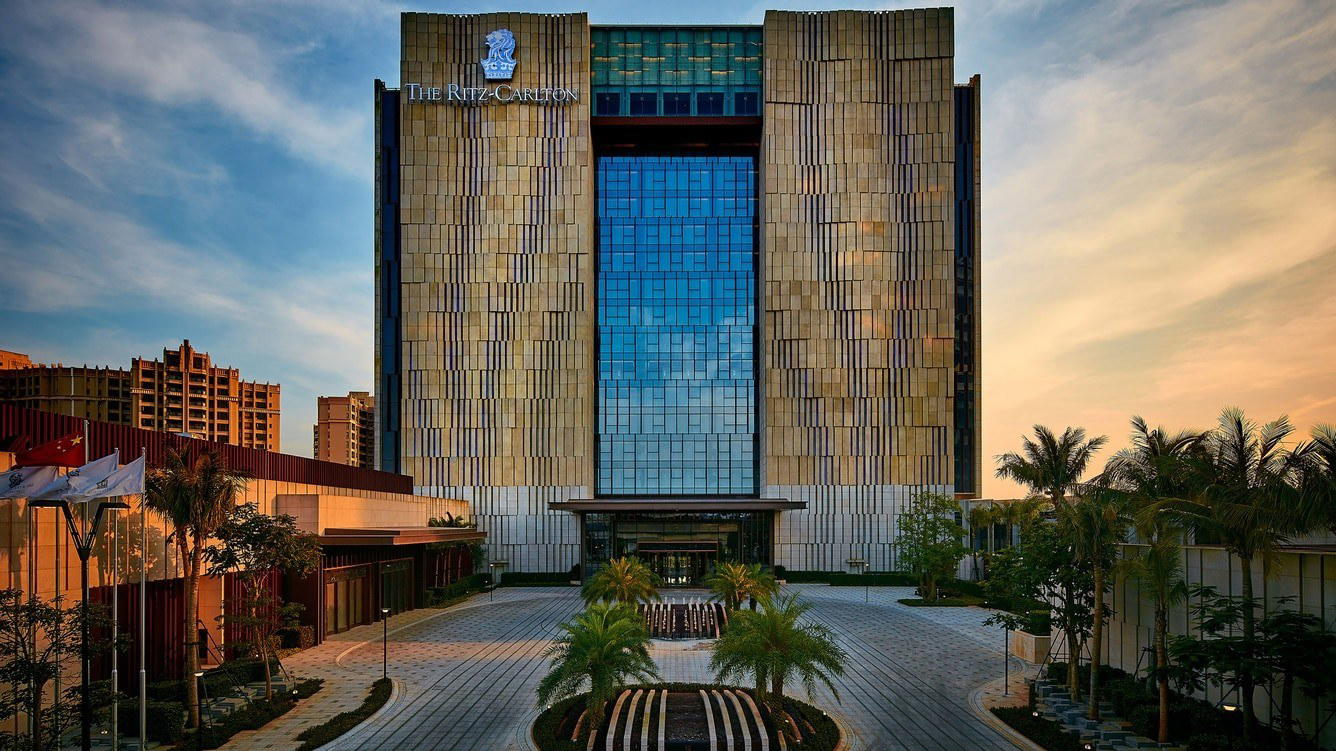
Where the Architecture Sets the Terms
Hainan Island has spent the past decade repositioning itself in the Chinese luxury travel market, shifting from a domestic beach destination toward a resort economy with international ambitions. That shift is legible in the built environment, and nowhere more clearly than in Longhua District, where The Ritz-Carlton, Haikou planted a flag that still defines one end of the island's accommodation spectrum. The property's facade reads as a serious architectural statement: modern in its structural geometry, but threaded with traditional Chinese visual language. The result sits closer to considered synthesis than decoration.
This was the Ritz-Carlton brand's first golf resort in Asia. Golf resorts in this part of the world tend to split between courses bolted onto existing hotel infrastructure and properties conceived from the ground up around play. The Ritz-Carlton, Haikou belongs to the second category, with the architectural logic of the building organized around access to the Mission Hills complex rather than treating the course as an amenity added afterward. For those who care about that distinction, it matters considerably when you are standing in the lobby planning a day's schedule. For a broader view of how Hainan compares to other Chinese resort destinations, the 1 Hotel Haitang Bay, Sanya in Sanya offers a useful counterpoint further down the island's coastline.
The Villa Tier and What It Signals
Chinese luxury resort design has increasingly separated into two tiers: the standard room block and a villa collection that functions almost as a separate property within the property. At The Ritz-Carlton, Haikou, that separation is pronounced. The 16 villas were designed with privacy as the primary brief, with multi-bedroom floor plans and private pools. That last detail is worth noting: double-height ceilings at resort scale are direct to achieve in a standalone structure, but they signal a commitment to spatial generosity that could have been redirected toward more saleable square footage. The 221 rooms and suites in the main building offer views toward the Mission Hills development, but the villa tier operates in a different register entirely.
Comparable design ambition in the Chinese luxury market appears at properties like Amandayan in Lijiang and Amanfayun in Hangzhou, though those properties work with heritage architectural forms rather than the modern-meets-traditional fusion approach taken in Haikou. The Ritz-Carlton's solution is less intimate than the Aman model but better suited to the golf resort format, where guests need functional space for groups rather than a contemplative retreat. See also how other properties in the Marriott portfolio approach design at scale, including Conrad Guangzhou in Guangzhou and Andaz Shenzhen Bay in Shenzhen.
Three Venues, Three Different Registers
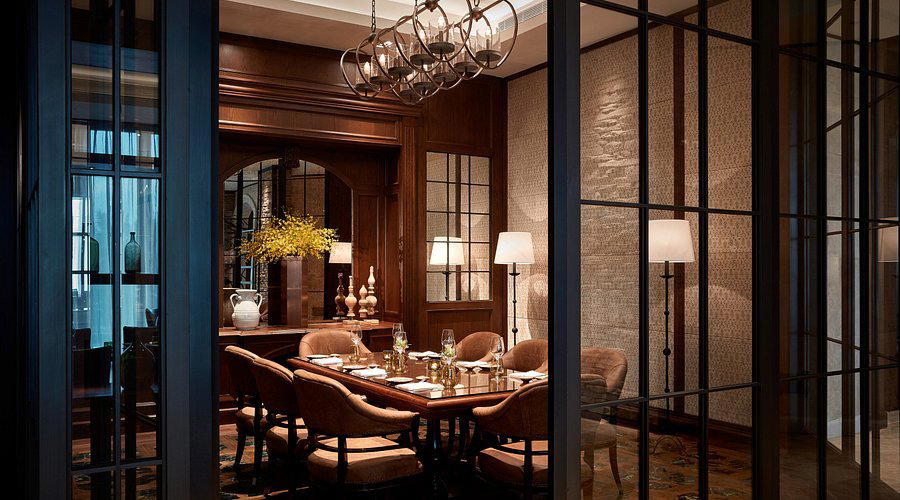
The food and beverage program at a golf resort of this scale typically follows a predictable pattern: one Chinese restaurant, one international option, one bar with a view. The Ritz-Carlton, Haikou follows that structure but executes each component with some specificity. Tin Lung Heen is the Cantonese anchor, with Hainanese chicken among the regional plates and a dim sum lunch format that uses local ingredients as an organizing principle. The restaurant's design is described as elegant, which in Cantonese fine dining context implies the kind of controlled formality that the cuisine demands at this price tier.
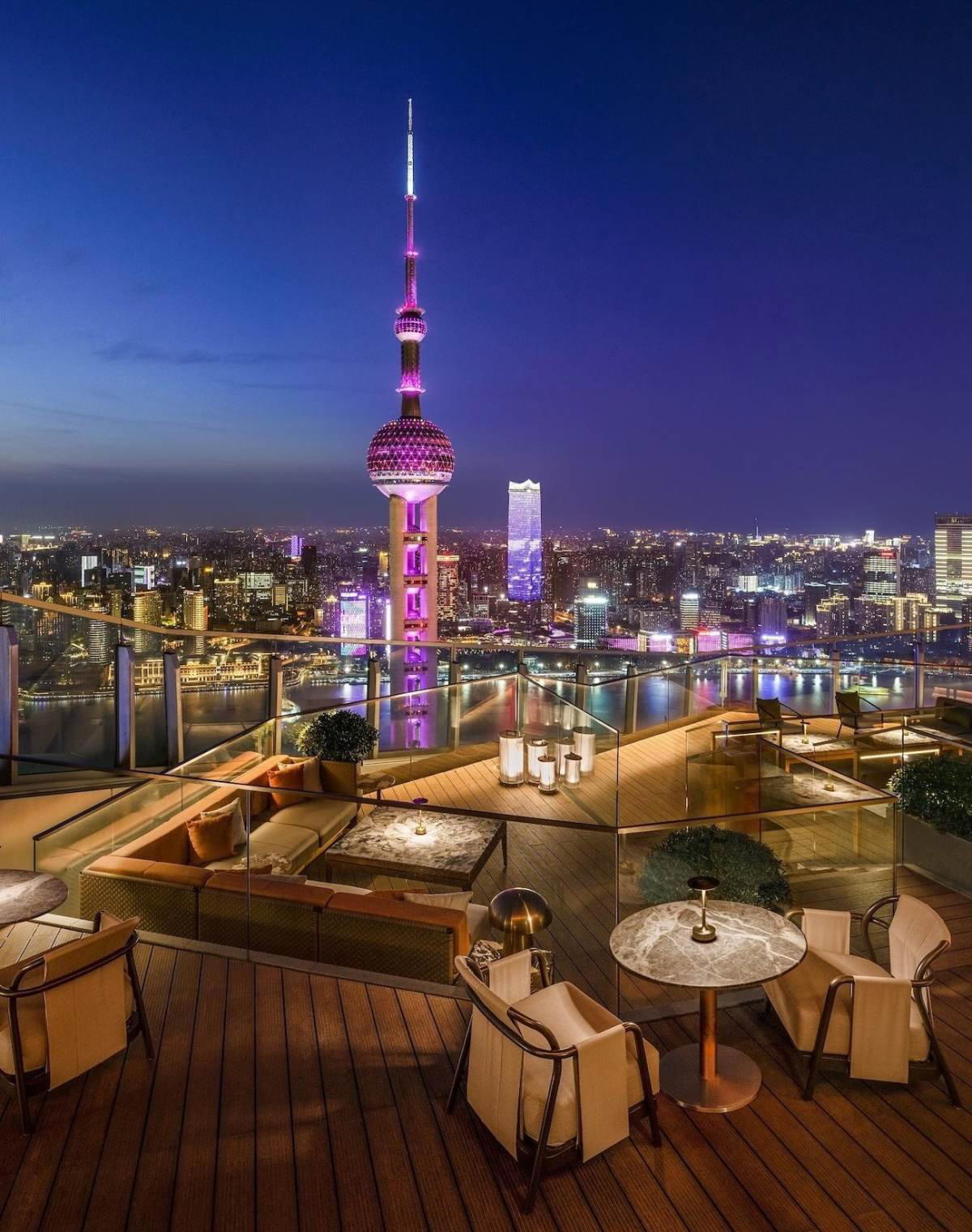
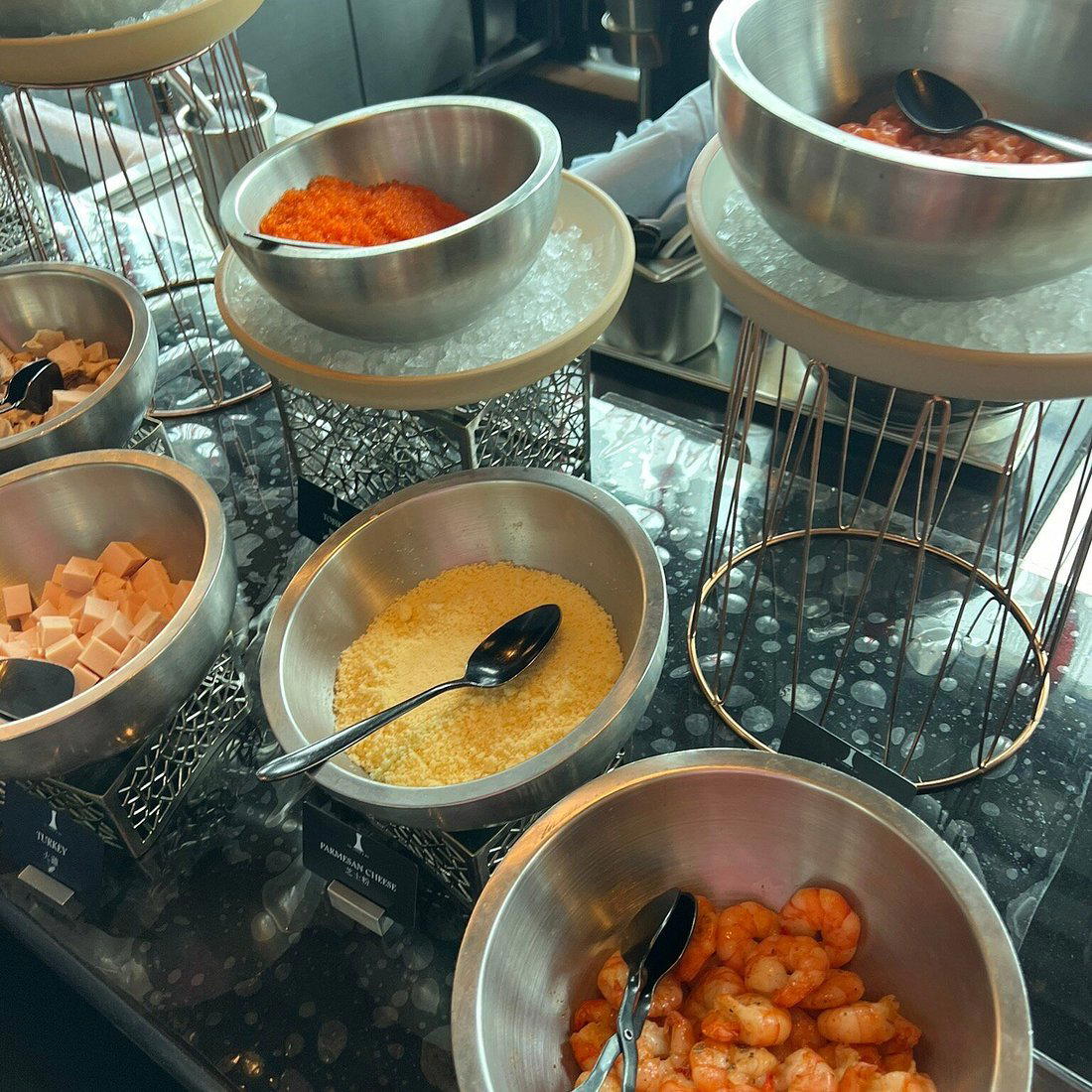
Terra takes a different approach: contemporary interiors with live cooking stations positioned as much for visual interest as for food production. The format runs Italian classics in the evening and a breakfast buffet in the morning, a structure common to international hotel restaurants but executed here with a design intent that makes the cooking stations a theatrical element rather than an afterthought. Flair occupies the 20th floor and functions as the property's most sharply positioned venue, with Asian-inspired small plates, a cocktail program, and sunset views across the resort grounds. The bar's positioning at that elevation gives it a reason for being beyond its menu, and the Ritz-Carlton Bar and Lounge at the base of the property handles the quieter moments: morning coffee, afternoon tea, and a whiskey selection that anchors the pre-dinner hour.
The Golf Academy as Architectural Logic
What distinguishes this property from a resort that happens to have golf nearby is the presence of one of Asia's first comprehensive golf academies on-site. The academy includes custom club fitting and structured practice facilities, which changes the architectural relationship between the building and the courses. Mission Hills' Blackstone course, at 350 acres with trees, lakes, and lava stone topography, is the headline course in the complex, but the academy makes the property function as a destination for developing players as much as for experienced ones. That positions the hotel differently from golf resorts where the course is purely recreational.
The spa connects to this logic. The Ritz-Carlton Spa, Haikou combines sports-oriented treatments with more conventional spa rituals, including massage programs designed for golf recovery and a coconut-based body treatment that draws on Hainan's agricultural identity. It is a sensible combination for a property whose guests arrive with physically specific needs after a day on the course. Properties in other Chinese destinations take different approaches to the spa-as-identity question: Banyan Tree Ringha in and Banyan Tree Chongqing Beibei in Chongqing both position their spa programs as central to the guest experience, though neither operates within a golf resort framework.
Planning a Stay
The hotel sits in Longhua District, Haikou, China, 570208. As part of Marriott International's portfolio, bookings can be made through Marriott Bonvoy channels, which also apply to properties across the network including the JW Marriott Hotel Shanghai at Tomorrow Square in Shanghai and Conrad Tianjin in Tianjin. Given the golf academy's capacity limitations and the villa tier's small inventory of 16 units, planning ahead is advisable. The property includes 24-hour room service, an outdoor pool, a gym, tennis, and meeting rooms.
For travelers comparing luxury options across China's major hotel markets, reference points include Mandarin Oriental Qianmen in Beijing, Altira Macau in Macau, Amanfayun in Hangzhou, Conrad Jiuzhaigou in Jiuzhaigou, and Xiamen Yunding Resort in Xiamen, each of which approaches Chinese luxury resort design from a different regional and architectural starting point.
In Context: Similar Options
Comparable venues nearby, for context on price, style, and recognition.
| Venue | Cuisine | Price | Awards | Notes |
|---|---|---|---|---|
| The Ritz-Carlton, HaikouThis venue — the venue you are viewing | Luxury contemporary golf resort blending modern comfort with natural volcanic landscape architecture. | $$$$ | 5-Star | Not listed |
| InterContinental Haikou Seaview | Luxury beachfront resort with seaside gardens and marina proximity | $$$$ | 5-Star | Meilan District |
| W Xiamen | Trendy luxury hotel fusing local Fujian culture with high-energy W Hotels design. | $$$$ | 5-Star | East Business District |
| The Ritz-Carlton Sanya, Yalong Bay | Luxury beachfront resort combining Art Deco design with contemporary tropical aesthetics, featuring expansive grounds with multiple interconnected buildings. | $$$$ | 5-Star | Yalong Bay |
| 百萬石温泉飯店 Hyakumangoku Onsen Hotel | Contemporary Japanese luxury resort with wabi-sabi design philosophy and Eastern Zen aesthetics, featuring eight architectural pavilions integrated with natural forest and snow elements. | $$$$ | 5-Star | 浦东 |
| Green Lake Hotel Kunming | Historic luxury landmark with modern renovations | $$$$ | 5-Star | Wuhua District |
Recognition history
Dated appearances from independent guides and award organizations, with the underlying list record or original source where available.
Forbes 4-Star
Forbes
Michelin Guide New Hotels New Hotel
Michelin Guide New Hotels
Forbes 4-Star
Forbes
Michelin Selected
Michelin
At a Glance
- Elegant
- Sophisticated
- Scenic
- Quiet
- Family Vacation
- Romantic Getaway
- Wellness Retreat
- Celebration
- Group Retreat
- Golf Course
- Destination Spa
- Private Villa
- Rooftop Pool
- Panoramic View
- Garden
- Terrace
- Private Dining
- Wi Fi
- Pool
- Spa
- Fitness Center
- Room Service
- Concierge
- Business Center
- Kids Club
- Golf Course
- EV Charging
- Restaurant
- Garden
- Wi Fi
- Pool
- Spa
- Fitness Center
- Room Service
- Concierge
- Business Center
- Kids Club
- Golf Course
- EV Charging
- Restaurant
Serene and refined with elegant modern décor, professional service, and peaceful surroundings ideal for relaxation and family leisure.