The Oberoi Rajgarh Palace, Khajuraho




Travel + Leisure It List Hotels · Conde Nast Hot List Hotels · Town & Country Hotel Awards
A 350-year-old Bundela dynasty fort turned Oberoi property, Rajgarh Palace opened to guests in November 2025 across 76 acres of sal and palash forest near Khajuraho's UNESCO temples and Panna Tiger Reserve. Sixty-six rooms split between the historic palace wing and garden-level accommodation, with rates from $830 per night. The property rewards guests who resist the urge to fill every hour with excursions.

Pearl is the En Primeur Club membership app — saves, bookings, and concierge access live there. Same editors, same standards.
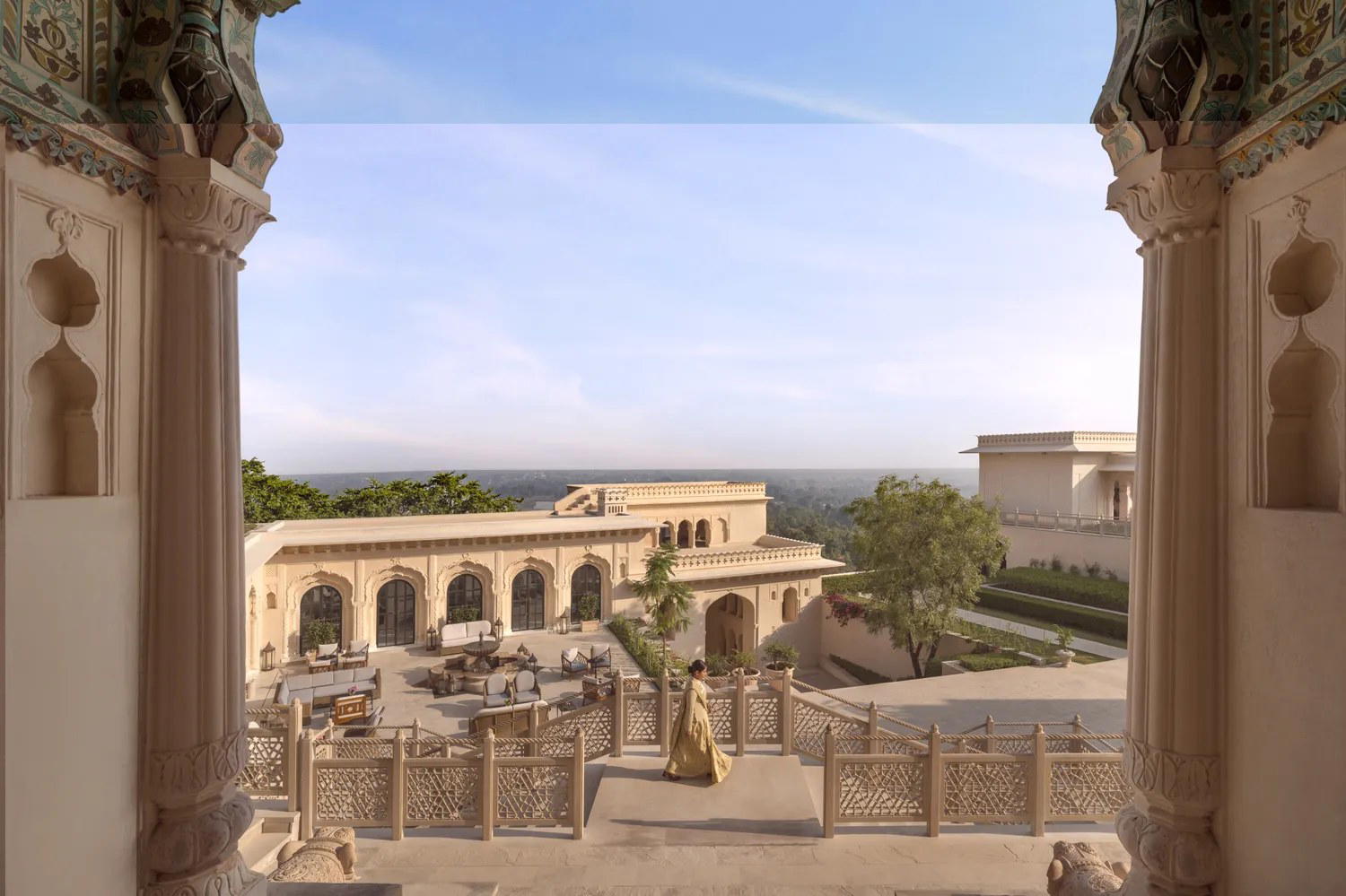
Stone, Silence, and the Maniyagarh Hills
The approach to The Oberoi Rajgarh Palace, Khajuraho prepares you before the lobby does. As the highway gives way to a country road, the palace resolves out of the tree line, its beige sandstone crown set against the freckled green of the Maniyagarh Hills in a tableau that reads more like a landscape painting than a hotel arrival. That visual sequence is not incidental. The architecture here carries three and a half centuries of Bundela dynasty history, and Oberoi's restoration has been calibrated to let that weight land rather than dress it up. The latticed stonework, the scalloped arches, the open-air arcaded corridors: these are not decorative references to a Rajput past. They are the past, preserved and inhabited.
Rajgarh was originally commissioned as a fort in the late 17th century, serving as an administrative and cultural seat for the Bundela rulers who presided over a temple town already ancient by their standards. The Khajuraho Group of Monuments, a UNESCO World Heritage Site whose 10th-century temples are among the most studied examples of medieval Indian sculpture anywhere in the world, sit barely 30 minutes from the property. The fort itself has passed through several configurations of use in the intervening centuries. Its current life as an Oberoi property, which opened formally in November 2025, represents the most recent and arguably the most considered chapter.
The Architecture as Argument
Indian palace hotels have proliferated across Rajasthan and Madhya Pradesh in the past two decades, and the category has developed clear fault lines. The dominant approach tends toward aggressive restoration that prioritizes photogenic splendor over structural authenticity. Rajgarh takes the opposite position. The palace wing houses only 17 rooms and suites across three levels, occupying what were once the private chambers of the Bundela rulers. That low room-to-floor-area ratio is deliberate: it preserves the sense of wandering a working palace rather than a converted one.
The corridors remain open to the air. The stone is original where it can be. The views from the upper palace levels across the hills and the 76-acre estate below carry no visual interference from modern additions. This is a meaningful departure from how comparable Indian heritage properties have handled the tension between conservation and commercial hospitality. Properties like Amanbagh in Ajabgarh operate with similar restraint in Rajasthan, and Suján Jawai in Pali has built its identity around design decisions that defer to landscape rather than compete with it. Rajgarh belongs to that sensibility, filtered through the Oberoi group's particular approach to formal luxury.
Below the palace hill, under a canopy of sal and palash trees, the garden rooms occupy a different register entirely. These are modern constructions, better suited for families and guests with mobility requirements; all public areas are accessible by wheelchair and the property maintains a fleet of golf carts for on-site movement. Several garden rooms come with private pools. The estate's one wheelchair-adapted room is located in this zone. The two wings read as complementary rather than competing, though guests who booked for the architecture will want to be specific when requesting accommodation.
Scale and Tempo
At 66 keys across 76 acres, the density at Rajgarh is low by design. That ratio produces something increasingly rare in Indian luxury hospitality: genuine solitude inside a fully staffed property. The open corridors of the palace wing can feel entirely private on a weekday morning. The two restaurants, Maanya and Neerangan, overlook the Maniyagarh Hills with enough space and staffing that guests seldom contend with the crowd dynamics that follow from higher occupancy ratios.
Maanya draws its kitchen reference points from India's royal culinary traditions, with a menu framed by the same courtly heritage the building embodies, accompanied by live sitar. Neerangan operates in a more relaxed register suited to daytime dining. The courtyard bar Amrava, positioned within the palace itself, functions as the property's social hinge point in the evenings. These three food and beverage outlets are calibrated to the pace of the property rather than designed to generate independent destination dining traffic, which is a deliberate editorial choice by the hotel's operators.
Rates open from $830 per night for doubles, with some configurations reaching $1,090 depending on room category and season. That pricing places Rajgarh within the upper band of Indian heritage hospitality, alongside properties like The Oberoi Amarvilas in Agra and Taj Lake Palace in Udaipur, which also trade on proximity to UNESCO-listed monuments. What differentiates Rajgarh is its lesser-traveled geography. Khajuraho draws serious visitors but has not accumulated the high-season overcrowding of Agra or Udaipur, which gives the surrounding area a quieter character that the property reflects.
The Surrounding Context
Panna National Park, one of India's tiger reserves with a documented recovery story after near-extinction of its tiger population in the late 2000s, sits close enough to make a morning safari a realistic component of a three-night stay. The Khajuraho temples themselves reward at least half a day, ideally two visits at different times of day when the light and the foot traffic differ significantly. The hotel arranges both, though the property's design and atmosphere make a compelling argument for the less-scheduled alternative: gardens to walk, a lakeside pool, a spa running sound healing and extended massage formats, and enough architectural detail in the palace corridors to occupy an unhurried eye for longer than expected.
For travelers building a central India itinerary, Rajgarh sits at a logical junction between the Madhya Pradesh temple circuit and the wildlife corridor. It occupies a different geographic register from the Rajasthan-focused luxury portfolio represented by properties like The Leela Palace Jaipur, Suryagarh in Jaisalmer, or Suján Sher Bagh in Ranthambhore. It is also less India-circuit-standard than flagship urban properties such as The Taj Mahal Palace, Mumbai or The Leela Palace New Delhi. That relative unfamiliarity is part of what makes the journey worthwhile. For additional context on India's wellness-led heritage alternatives, Ananda in the Himalayas and Shakti Prana in Kasar Devi represent the mountain end of a similar philosophy applied to Indian luxury hospitality. Other regional comparisons worth considering include Kumarakom Lake Resort, Anantya By The Lake in Kaliyal, and Woods at Sasan in Sasan Gir. For our broader coverage of the region's dining and hospitality scene, see our full Chandranagar restaurants guide.
Planning a Stay
The Oberoi Rajgarh Palace opened in November 2025, which means the property's reputation is still forming inside the international travel press. Bookings should be made through Oberoi's central reservations given the 66-room cap and what will likely be constrained availability during the November-to-March high season, when central India's wildlife and temple circuits draw the heaviest visitor concentrations. Guests with mobility requirements should confirm room configuration in advance, as only one room is fully adapted for special needs, despite all public areas meeting accessible standards. The 76-acre grounds are navigable by golf cart on request.
Comparable Venues
Comparable venues nearby, for context on price, style, and recognition.
| Venue | Cuisine | Price | Awards | Notes |
|---|---|---|---|---|
| The Oberoi Rajgarh Palace, KhajurahoThis venue — the venue you are viewing | Restored 350-year-old royal Bundelkhand palace with British colonial influences and contemporary elegance. | Not listed | Travel + Leisure It List Hotels · Conde Nast Hot List Hotels | Not listed |
| Taj Theog Resort & Spa, Shimla | Lodge-style luxury resort blending contemporary architecture with mountain tranquility. | Not listed | Michelin Selected | Theog |
| Dharana at Shillim - A Luxury Wellness Retreat | Sustainable eco-wellness resort with dispersed private villas immersed in nature. | Not listed | Michelin Selected | Shilimb |
| Taj Fort Aguada Resort & Spa | Portuguese-colonial heritage resort with modern luxury | $100–200 | Michelin Selected | Candolim |
| Taj Green Cove Resort & Spa, Kovalam | Luxury tropical resort combining contemporary Balinese design with traditional Kerala architecture on a hillside setting. | $300–500 | Michelin Selected | Kovalam |
| Kumarakom Lake Resort | Traditional Kerala heritage resort with modern luxuries | $300–500 | Michelin Selected | Kumarakom |
Recognition history
Dated appearances from independent guides and award organizations, with the underlying list record or original source where available.
Conde Nast Hot List Hotels
Conde Nast
Prix Versailles World Selection
Prix Versailles
Town & Country Hotel Awards
Town & Country
Travel + Leisure It List Hotels
Travel + Leisure
Continue exploring
More in Chandranagar
Bars in Chandranagar
Browse all →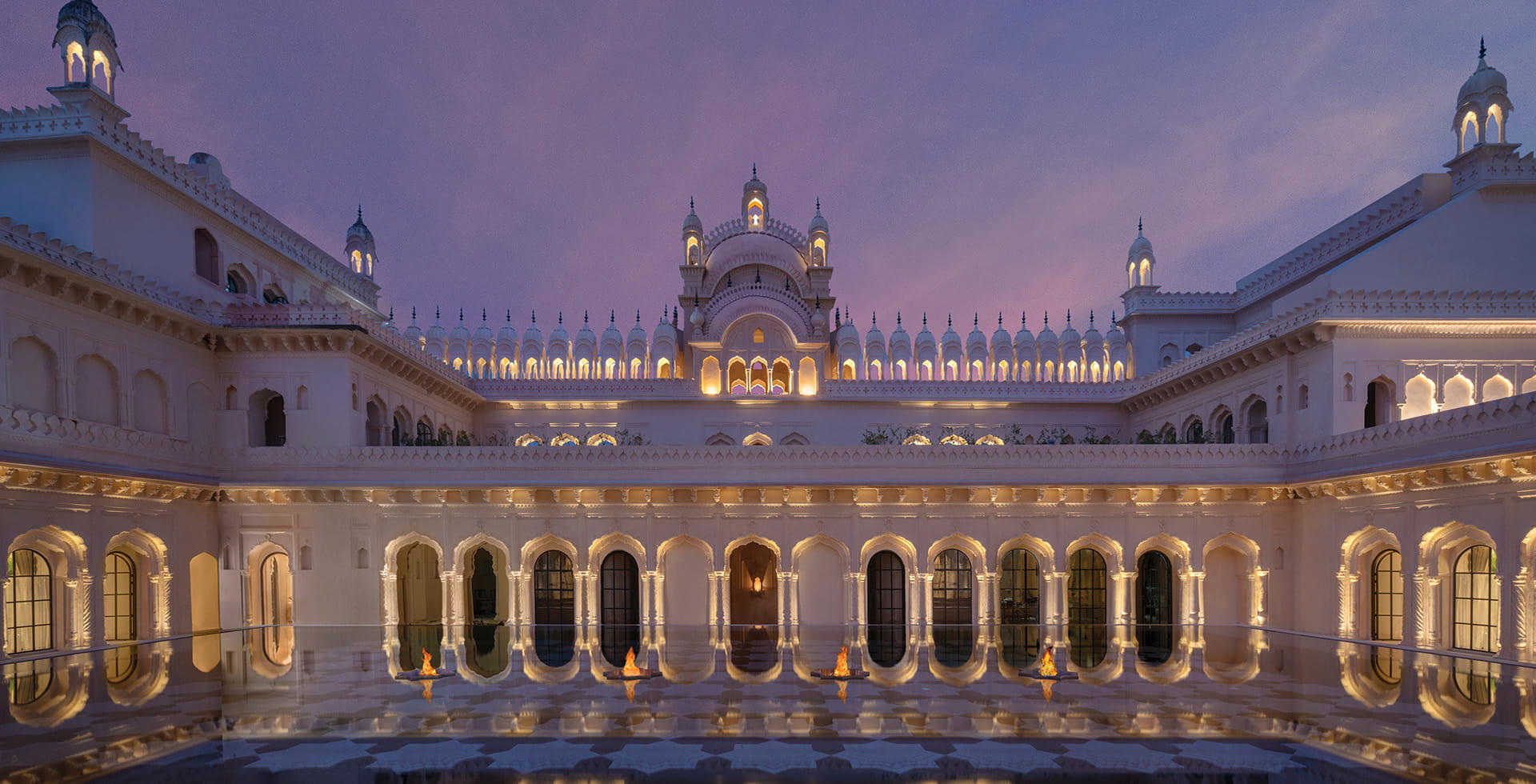
Details
- Elegant
- Scenic
- Ornate
- Sophisticated
- Romantic
- Honeymoon
- Romantic Getaway
- Anniversary
- Wellness Retreat
- Destination Wedding
- Infinity Pool
- Historic Building
- Panoramic View
- Private Dining
- Garden
- Pool
- Spa
- Fitness Center
- Room Service
- Concierge
- Wi Fi
- Valet Parking
- Garden
- Mountain
Timeless elegance with grand vaulted interiors, intricate frescoes, serene lighting, and panoramic views creating a regal, peaceful atmosphere.